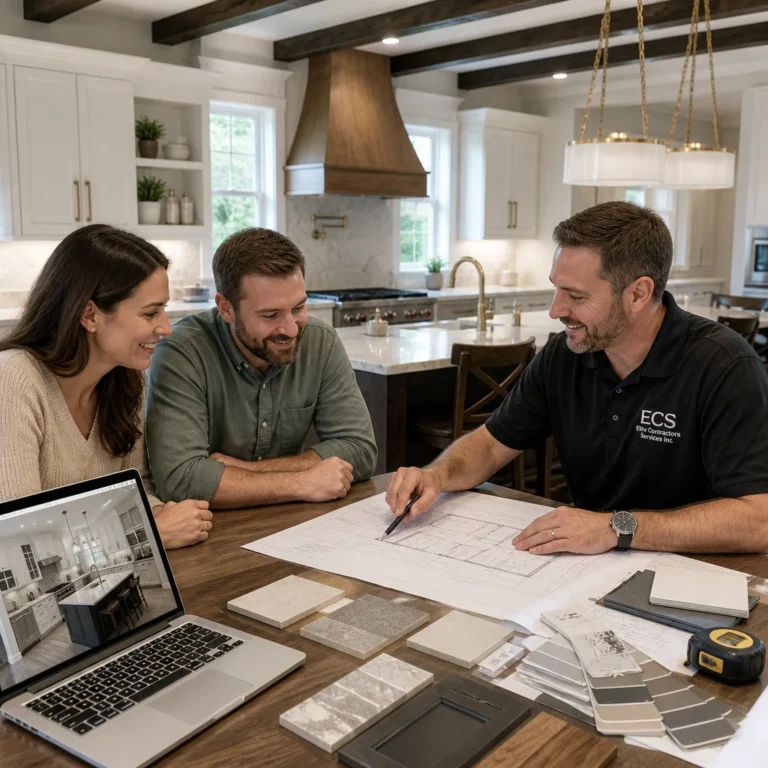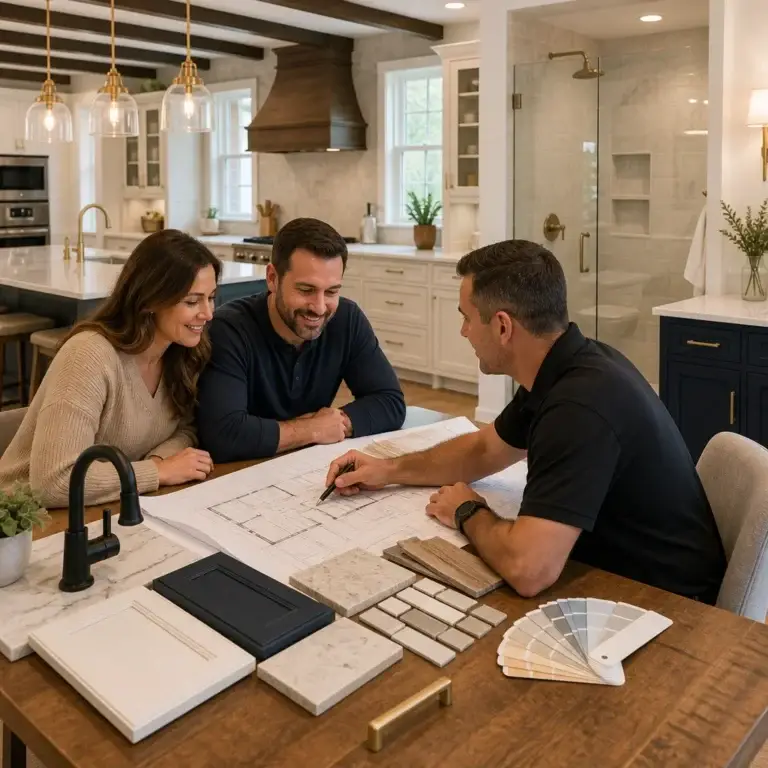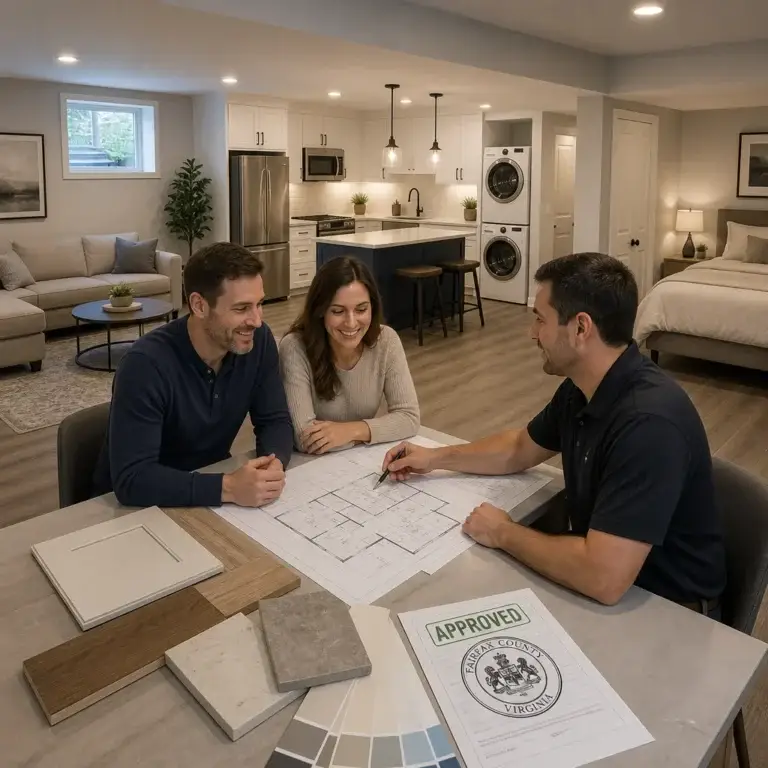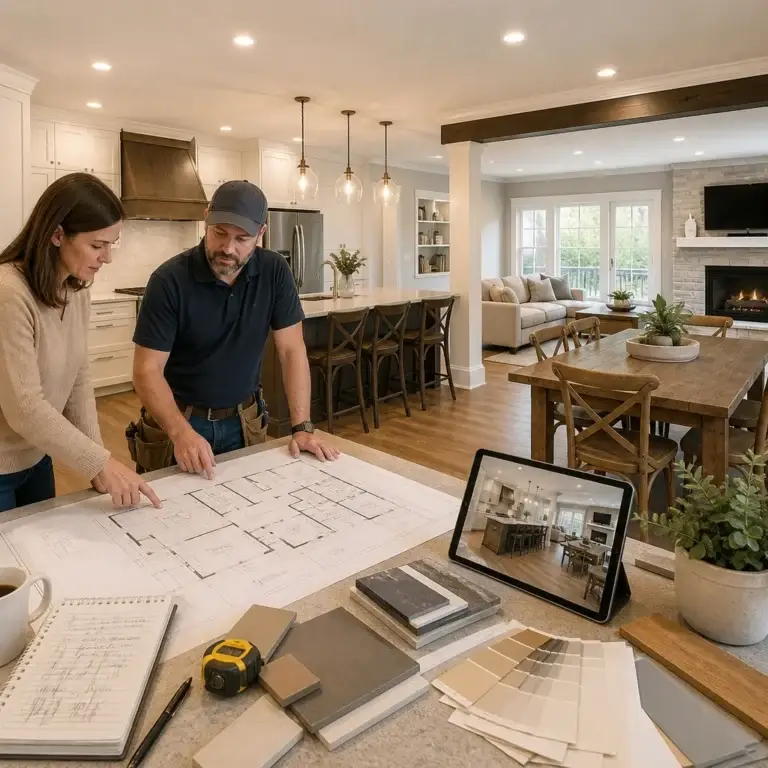
A neighbor’s objection can shape discussion about a project, but it does not automatically determine the outcome. Whether concerns affect development plans depends on the project and applicable neighborhood requirements. Managing neighbor relations during construction starts with sharing information early and giving people a clear way to raise questions. By managing neighbor relations during construction effectively, you can prevent misunderstandings and foster a collaborative atmosphere.
It’s understandable to worry that construction could disrupt routines, block access, or bring dust and noise nearby. Clear, considerate communication helps neighbors know what to expect and whom to contact if a concern arises.
When managing neighbor relations during construction, it’s also beneficial to hold informal meetings to address any immediate concerns.
Managing neighbor relations during construction is vital for maintaining a positive environment. Regular updates about the project’s progression can help alleviate concerns about noise, dust, and access.
Advance outreach, useful construction notices, and a clearly named contact can make communication smoother. Practical steps to address dust, noise, vibration, deliveries, and changing site conditions also help you approach a project with clarity and consideration.
Utilizing technology, such as group messaging apps, can further enhance managing neighbor relations during construction by creating an easy platform for communication.
Key Takeaways
The importance of managing neighbor relations during construction cannot be overstated, as it directly impacts community trust and project success.
-
- Reach out before work begins so neighbors can understand the project and raise concerns early.
By prioritizing managing neighbor relations during construction, you can ensure that everyone feels heard and valued, which can lead to fewer conflicts.
-
- Make construction notices useful by explaining expected timing, working hours, and potential disruptions.
Effective strategies for managing neighbor relations during construction include proactive outreach and transparent communication about project developments.
- Give neighbors one clear contact for questions or complaints, and keep a record of concerns and responses.
- Plan practical measures to manage dust, noise, vibration, debris, deliveries, and access around the site while managing neighbor relations during construction.
- Keep communication open as conditions change, and respond calmly when an issue affects nearby residents.
Noise, vibration, and dust precautions
Managing neighbor relations during construction is essential to mitigate any potential issues that arise from noise and disruption.
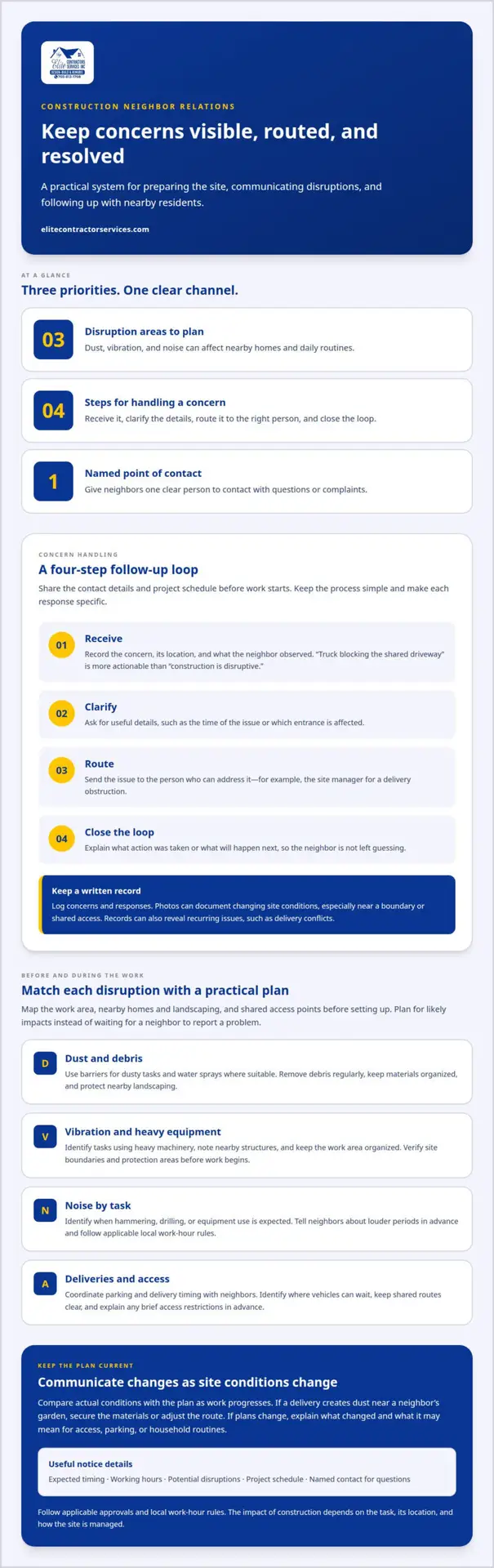
Hammering, drilling, and heavy machinery can interrupt conversations, sleep, or work-from-home routines nearby. Dust and debris may affect outdoor spaces, settle on neighboring property, or reach landscaping. The impact depends on the task, its location, and how the site is managed. Plan for each likely disturbance before work begins instead of waiting for a neighbor to report a problem.
Before setting up, map the work area, nearby homes and landscaping, and any shared access points as part of managing neighbor relations during construction. Use barriers for dusty tasks, apply water sprays where suitable, and remove debris regularly.
Permits and local ordinances vary by location and project. Follow applicable approvals and local work-hour rules, and verify site boundaries, temporary structures, and protection areas before work begins.
Plan for noise by task, not just by workday. Identify when hammering, drilling, or equipment use is expected, then communicate those periods in advance. A brief notice can help a neighbor with a young child or remote-work schedule plan around louder activity. White noise, earplugs, or noise-cancelling headphones may also help during peak construction hours, but they do not replace careful site management.
- For dust: Use barriers and water sprays where suitable, and clear debris from the site.
- For vibration: Identify tasks using heavy machinery, note nearby structures, and keep the work area organized.
- For noise: Explain when disruptive tasks are planned and avoid unnecessary noise outside approved work hours.
Construction vehicles and delivery trucks can take up street parking or temporarily block a driveway. Coordinate access and parking with neighbors before deliveries, identify where vehicles can wait, and keep materials clear of shared routes. If a shared driveway needs brief access restrictions, communicate the timing and maintain a clear route for residents.
Proactively managing neighbor relations during construction can lead to a smoother project execution and stronger community ties.
As work progresses, compare actual site conditions with the plan. If a delivery creates dust near a neighbor’s garden, for example, secure the materials or adjust the route. Keep the site clean, protect nearby landscaping, and address concerns calmly. These steps help limit disruption, keep construction orderly, and support constructive communication.
Centralized complaint and inquiry contact
A clearly identified contact gives neighbors a direct route for questions and concerns. Without one, a resident might tell a delivery driver about a blocked driveway and assume the site manager knows. Naming one responsible contact helps prevent messages from getting lost between the crew, homeowner, and project team.
Share the contact details before work starts, along with the project schedule, emphasizing the importance of managing neighbor relations during construction.
A useful complaint process has a few practical parts:
- Receive: Record the concern, the location, and what the neighbor observed. “Truck blocking the shared driveway” is more actionable than “construction is disruptive.”
- Clarify: Ask for relevant details, such as the time or which entrance is affected.
- Route: Send the issue to the person who can address it, such as the site manager for a delivery obstruction.
- Close the loop: Explain what action was taken, or what will happen next, so the neighbor isn’t left guessing.
Keep a written log of concerns and responses. For example, note when a neighbor reports construction debris near a fence, who inspected the area, and whether it was removed. Photos can document changing site conditions, especially when a concern involves a boundary or shared access. Clear records also help the team spot recurring issues, such as delivery conflicts, and improve site coordination.
Regular follow-ups and updates are crucial in managing neighbor relations during construction to ensure ongoing communication.
A single contact does not mean every concern has the same solution. A question about work timing may need a schedule update, while a blocked driveway calls for prompt coordination with the driver or crew. The contact should acknowledge the specific issue, avoid disputing a neighbor’s experience, and explain practical next steps. Raise any immediate site safety concern with the responsible site lead promptly.
Neighbors can use the contact to request project information, such as the construction schedule and the person overseeing the site. Making that information accessible helps residents raise concerns calmly and directly. During a whole-house remodel, for instance, knowing whom to reach lets a neighbor report a delivery problem without chasing individual workers. A consistent channel supports organized follow-up and specific, useful responses.
During any construction activities, managing neighbor relations during construction helps in addressing any emerging concerns effectively.
Communicating with neighbors during construction
Neighbors experience a project through its daily effects: a delivery truck on the street, a blocked driveway, or changing work activity. Share information from their perspective, explaining what may affect access, parking, or household routines. A schedule is more useful when it describes the work and likely disruption than when it lists dates without context.
Responsibility for damage depends on how it occurred, who controlled the work, and applicable agreements and law. Document the affected area and notify the project contact promptly so the concern can be reviewed with the relevant people.
Keep communication open as construction moves through different phases, focusing on managing neighbor relations during construction.
Explain the schedule in practical terms. Neighbors may need to know when crews or delivery trucks could occupy street parking or temporarily block a driveway. Longer projects and work in the early morning, evening, or on weekends can cause more irritation. Share planned work periods and flag changes that affect those routines. Follow local work-hour rules and avoid disruptive times when possible.
Useful updates answer the questions residents are likely to have:
- What’s happening? Describe the next phase, such as excavation, exterior work, or a major delivery.
- Managing neighbor relations during construction involves sharing progress updates to prevent misunderstandings.
- What could change nearby? Identify likely effects on parking, driveway access, noise, or street movement.
- What should residents do? Explain any temporary access change and how to raise a question.
- What changed? Correct outdated schedule information when conditions shift.
Keep photos and written records of site conditions. A dated image of a driveway before a delivery, for instance, can clarify what the crew observed and when. Records also make follow-up more specific if a neighbor reports damage or a changed condition. Describe observations neutrally, without assuming fault before the issue has been reviewed.
When a concern comes in, listen for the practical problem beneath the frustration. If a resident reports debris near a fence, acknowledge the location and explain the next step. If a driveway is blocked, coordinate with the responsible crew or driver and follow up once access is clear. Calm, specific responses are more useful than debating whether the disruption should bother someone.
Consistent updates help neighbors plan around construction, while accurate records support clear conversations about changing conditions. Together, these practices make communication more constructive throughout the project.
Advance neighbor outreach
Contact nearby residents before construction begins, while expectations and plans can still be discussed. Early outreach gives neighbors time to understand the project and raise concerns before work affects their routines.
Prioritize managing neighbor relations during construction by ensuring that all residents are informed of the project’s timeline.
Reaching Out Before Construction
Advance outreach means greeting neighbors before work starts and explaining what project details you will share. It gives residents time to ask questions about changes that may affect their homes or daily routines.
Managing neighbor relations during construction starts with a clear understanding of the project’s impact on the surrounding area.
Consider what nearby residents might notice, not only what the project team intends to build. A new home may block sunlight, alter views, or reduce privacy. Sharing plans early can surface these concerns while the design is still under discussion.
One homeowner shared replacement-house plans with three neighbors. Another example describes offering three neighbors a local nursery gift card while building a home in 2008. Whether working with a custom home builder like Galloway Realty on a new build or managing an addition yourself, the useful lesson is to make contact personal and specific, rather than relying only on a notice.
Choosing to focus on managing neighbor relations during construction can lead to better cooperation and reduced conflict.
Construction Notice Information
A construction notice briefly explains the project, its expected duration, and planned working hours. It helps neighbors understand what to expect and how the work may affect their routines.
Greet residents in advance and clarify which project details you will explain. Include the expected duration and working hours, then describe notable phases or disruptions. Specific details help residents plan around the work and understand that information may change.
Choose an outreach approach that suits the block and project, keeping in mind the importance of managing neighbor relations during construction.
- Project scope: Briefly explain whether the work involves rebuilding, an addition, or another residential project.
- Expected duration: Give the anticipated project period and explain that the schedule may change as work progresses.
- Working hours: State planned hours, follow local work-hour regulations, and avoid early mornings, late evenings, and weekends when possible.
- Likely effects: Identify relevant changes, such as altered views, reduced sunlight, or construction activity near a boundary.
Use the first conversation to listen, not just to deliver information, while managing neighbor relations during construction.
Before work begins, update residents if the expected duration or working hours change. A revised notice keeps the information current and gives neighbors a clearer picture of the project. Early, consistent outreach can make later conversations more focused and constructive.
What information should a construction notice to neighbors include?
Managing neighbor relations during construction means being transparent about what to expect throughout the project.
A useful notice gives nearby residents a practical picture of the project, its expected duration, and planned working hours. Explain what will happen, what neighbors may notice, and how the information could change. For example, “exterior work near the side boundary” tells residents more than “construction begins soon.” Clear wording helps people relate the schedule to their routines.
Start with a brief project description and identify the property or work area. Then give the anticipated duration and working hours. Avoid presenting a schedule as fixed if the sequence may shift. If a delivery, excavation, or other disruptive phase has a likely period, describe it plainly. That context helps residents plan without having to interpret construction terminology.
-
- Project scope: Describe the work in familiar terms, such as a home rebuild, interior remodel, or addition.
- Timing: State the expected duration and planned working hours, following local work-hour regulations.
The details shared should support managing neighbor relations during construction and help foster understanding.
- Likely disruptions: Mention relevant activity near residents, such as deliveries, temporary parking pressure, or work close to a property line.
- Schedule changes: Explain that the sequence may shift and how residents will receive important updates.
- Questions and concerns: Include the designated project contact and a clear way to raise an issue.
Make each detail specific to the site. If construction vehicles may use street parking, say so instead of writing “some inconvenience is possible.” If a delivery could affect a shared driveway, describe the access issue and how residents will be informed. Do not imply a driveway will be blocked unless that is planned. Accurate wording builds trust and avoids unnecessary alarm.
Effective communication is central to managing neighbor relations during construction to avoid conflicts.
Use a simple layout that neighbors can scan quickly. Put the project description, expected duration, and working hours near the top. Use short paragraphs or labeled details instead of dense technical text. Replace unfamiliar construction terms with plain explanations of the work. Include only information that helps people understand the project or its effects on nearby homes.
One notice cannot cover every later change. If the schedule shifts or a new phase creates a different disruption, send an update that explains what changed and what residents should expect. A revised message is more useful than an outdated notice. Keep a copy of each version so the project team can distinguish the original schedule from later updates.
Before distributing a notice, read it from a neighbor’s perspective. Can a resident identify the property, understand the timing, and see how to raise a concern? If not, revise the wording. A concise, accurate notice helps neighbors plan and keeps project communication organized.
Regular updates can be a part of managing neighbor relations during construction, ensuring everyone is kept informed.
Elite Contractor Services: Design-Build Services
Elite Contractor Services provides design-build services for homeowners planning substantial residential projects. If a whole-house remodel or home addition may affect nearby residents, coordinated project planning can account for construction activity alongside your goals for the home. The company also offers kitchen remodeling and accessory living unit construction.
Raise neighbor access, site boundaries, and likely disruptions early in the project conversation. This gives the team useful context for planning the work and communicating with nearby residents. For a major remodel, design-build support connects project decisions with construction, keeping your priorities in view while helping minimize disruption.
If you’re considering a home project, contact Elite Contractor Services to discuss your plans.
Carry a considerate approach into your next project
Good neighbor relations take more than one conversation. Make them an ongoing part of project planning, and revisit expectations when decisions could affect nearby homes. Managing neighbor relations during construction is an active practice, not a notice delivered once and forgotten.
Always bear in mind that managing neighbor relations during construction is a continuous effort throughout the project.
As you prepare for a remodel or addition, consider the project from the other side of the property line. Whether you are updating a family residence or preparing an investment property for lease or sale with guidance from eliteagents.net.au, a respectful approach leaves room to address concerns as they arise and keeps communication grounded in the realities of the work. The goal is not to eliminate every inconvenience, but to approach the project thoughtfully and respond constructively.
Use your project’s early planning conversations to clarify what matters most in your home and how construction will be managed. Elite Contractor Services can discuss your residential project and help you consider the next planning decisions. Contact Elite Contractor Services today to start a conversation about your plans.
Ultimately, managing neighbor relations during construction helps in building a positive community atmosphere.
Careful preparation and open communication help you move forward with greater confidence and consideration for the people around you.
A proactive approach to managing neighbor relations during construction can significantly improve project outcomes.
Frequently Asked Questions
Can My Neighbor Influence My Development Plans?
A neighbor generally cannot control a home’s appearance or a by-right development plan that complies with zoning and building codes. A homeowners’ association is an exception, as neighborhood rules may apply. Listen to concerns about privacy, sunlight, or views, then distinguish feedback from formal project requirements. Early conversations can reveal design impacts worth considering, even when a neighbor has no decision-making authority over the plans.
Do Neighbors Mind When a Home is Built Next Door?
Some neighbors may be concerned about disruption, particularly when construction affects their routines, parking, or access. A household with a young child, health concerns, or work-from-home needs may experience noise differently. Project duration and the timing of disruptive work can also matter. Understand the specific effect on each neighbor rather than assuming everyone has the same concern.
How should homeowners notify neighbors before construction begins?
Speak with nearby residents before work starts and give them a clear picture of what to expect. A personal conversation can reveal concerns a general notice might miss, such as reliance on a particular driveway entrance. Managing neighbor relations during construction means making those early conversations specific and respectful. Follow up with written project details residents can refer to, invite questions, and avoid treating concerns as demands to change the plans.
How much advance notice should be given for residential construction?
Notify neighbors before construction begins, with enough time for them to understand the project and raise practical concerns. The right lead time depends on when the schedule and likely disruptions become clear. For example, tell a household about a planned delivery that could affect access as soon as the timing is known. If the schedule changes, send an update before the change affects nearby residents.
What are typical construction hours and noise rules in the United States?
Construction hours and noise rules depend on local requirements, so there is no single nationwide schedule for every residential project. Follow the rules that apply to the specific location, and avoid early mornings, late evenings, and weekends when possible. Communicate planned hours to nearby residents before work begins. If a noisy task must be rescheduled, explain the change so neighbors are not surprised by activity outside the original plan.
How can construction dust, debris, and vibration be minimized near neighboring homes?
Contain dust and debris, and organize work so materials do not spread toward neighboring homes or yards. For a dusty task near a property line, use barriers and suitable water sprays, then inspect the area afterward. Remove loose debris regularly. If vibration or dust appears to affect a neighbor’s property, document the location and conditions, pause to assess the cause, and discuss an appropriate response.
How should disputes or complaints from neighbors during construction be handled?
Address a complaint calmly by identifying the exact problem and location first. Ask whether the concern is about access, debris, or a particular work activity rather than debating whether the neighbor should be bothered. Managing neighbor relations during construction also means documenting the concern, agreeing on a practical next step, and following up. If there is disagreement about what happened, photographs and clear notes can keep the discussion focused on observable conditions.
What are the best ways to maintain good neighbor relations during a long renovation?
For a long renovation, treat neighbor communication as an ongoing relationship, not a one-time announcement. Set regular points to share meaningful schedule changes, and acknowledge when a phase is complete. If an inconvenience lasts longer than expected, address it directly instead of waiting for neighbors to ask. A steady, respectful approach makes it easier to discuss new concerns as the project changes and helps residents plan around disruption.