Table of Contents
- 1. Verify Licensing and Insurance Credentials
- 2. Evaluate Design-Build Project Management Expertise
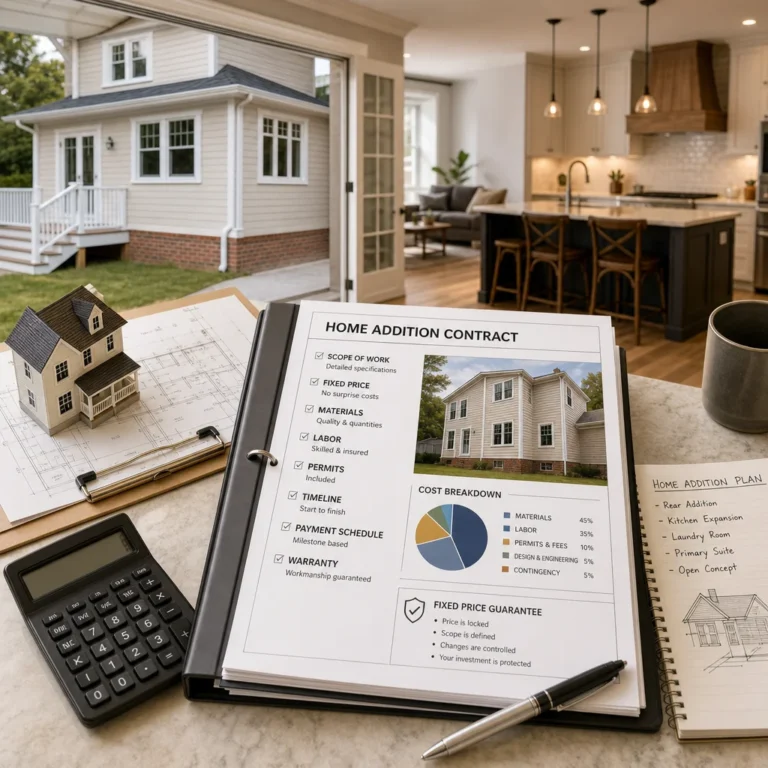
- 3. Review Transparent Pricing and Detailed Contracts
- 4. Assess Kitchen and Bathroom Remodeling Portfolios
- 5. Check Local References and Community Reputation
- 6. Compare Timeline Delivery and On-Budget Performance
- 7. Understand Home Addition and ADU Specialization
- Frequently Asked Questions (FAQ)
1. Verify Licensing and Insurance Credentials
Choosing the right remodeling company is one of the most important decisions you’ll make as a homeowner. Your contractor will spend weeks or months in your home, manage a significant budget, and shape the quality of your living space for years to come. Yet many homeowners rush this decision or rely on a single referral without doing proper diligence.
The good news: evaluating contractors doesn’t require a construction degree. You just need to know what questions to ask and what red flags to watch for. We’ve guided hundreds of Fairfax County and Northern Virginia homeowners through major renovations, home additions, kitchen remodels, and basement finishes. Based on that experience, here are seven essential practices that will help you identify a remodeling company you can trust.
Your first step is always verification. A licensed, insured contractor isn’t just following the law; they’re demonstrating accountability and protecting your investment.
In Virginia, residential contractors must hold a license from the Department of Professional and Occupational Regulation (DPOR). You can verify any contractor’s license status on the DPOR website for free. Check not only that the license exists but also its class (Class A contractors can handle projects of any size; Class B and C have dollar limits), expiration date, and any disciplinary history.
Insurance is equally critical. General liability insurance protects you if someone is injured on your property. Workers’ compensation insurance is required in Virginia for any contractor with employees. Ask for certificates of insurance directly from your contractor and verify the policy numbers with the insurance companies. Don’t just accept a copy; verify it’s current and covers the scope of work you’re planning.
Why this matters: Unlicensed or underinsured contractors may offer lower bids, but they expose you to massive liability. If a worker is injured on your property and your contractor lacks workers’ compensation, you could be responsible for medical bills and legal costs. If property damage occurs and they’re uninsured, you’re left paying for repairs.
We maintain full Virginia Class A licensing and comprehensive general liability and workers’ compensation coverage. This isn’t just compliance for us; it’s a foundation of trust with every homeowner we work with. Before you call any contractor, spend five minutes verifying these credentials online. This single step eliminates a major category of risk.
What to do next: Request proof of current Virginia licensing and insurance certificates from any contractor you’re considering. Verify the information independently before moving forward.
2. Evaluate Design-Build Project Management Expertise
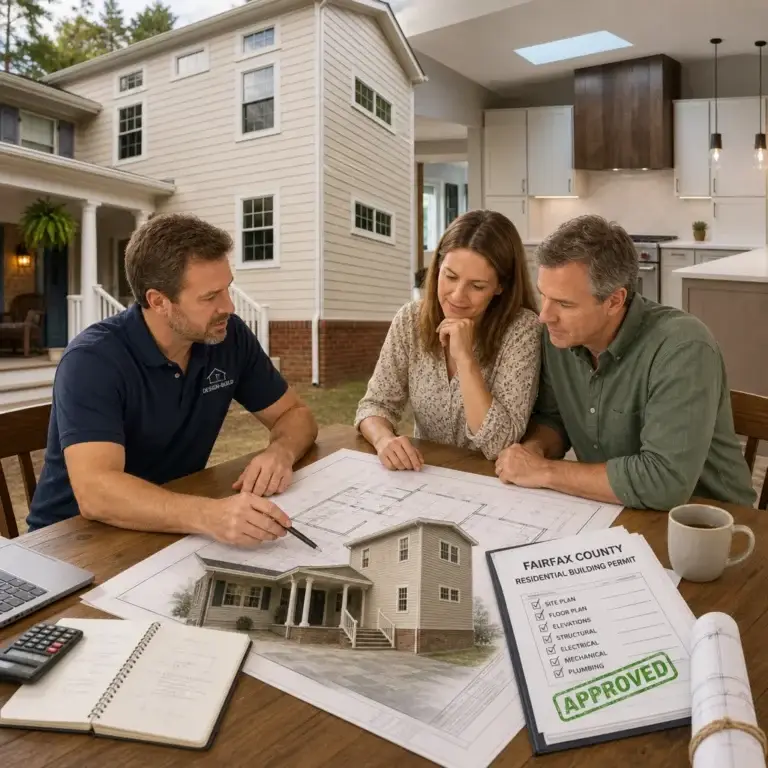
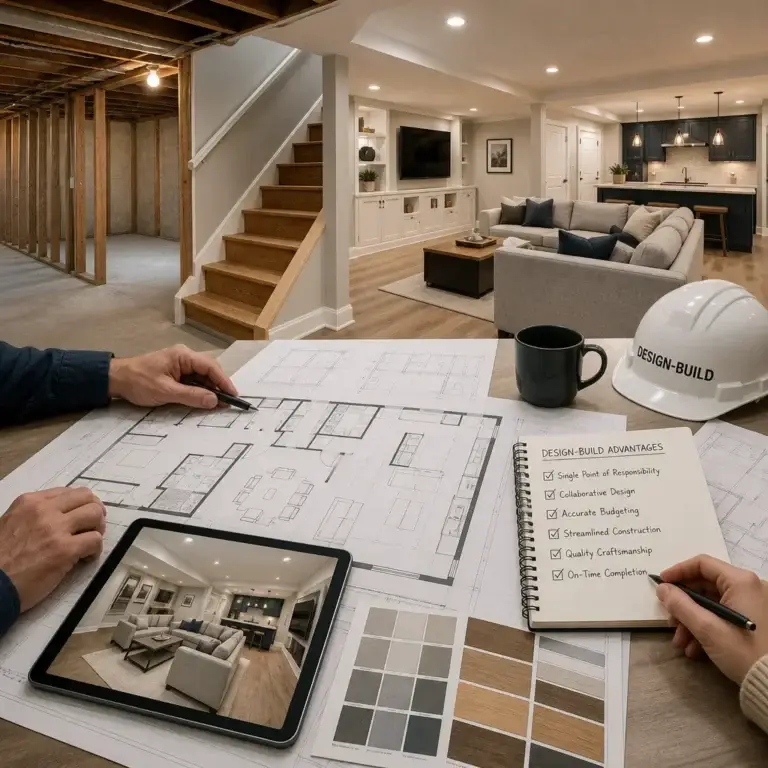
The design-build approach is fundamentally different from the traditional method of hiring a separate architect, selecting materials on your own, and then finding a contractor to build it. It’s also dramatically different from hiring a general contractor who subcontracts most of the work to disconnected trades.
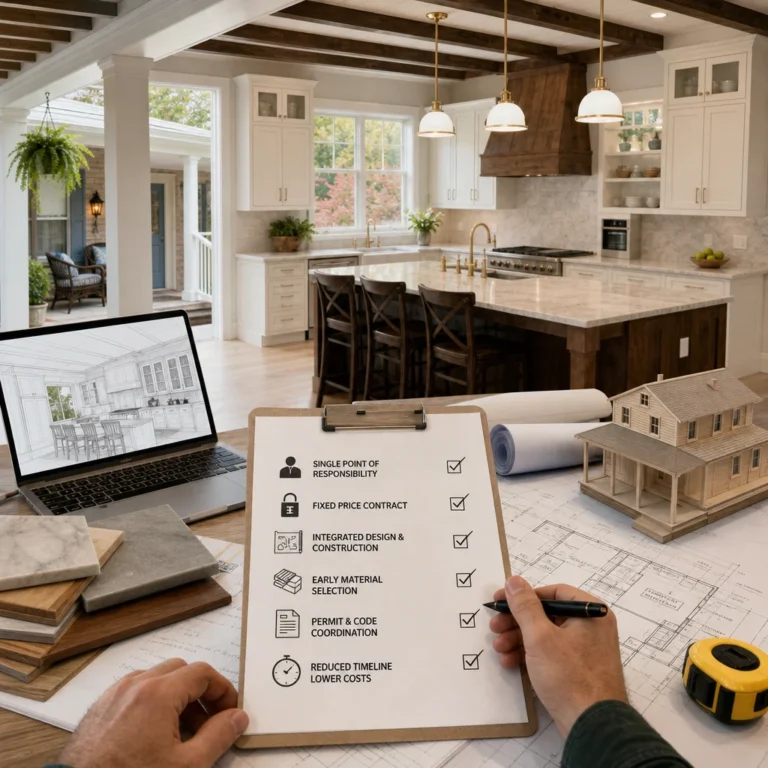
In a design-build model, one experienced team handles architectural planning, permit coordination, material selection, and construction. This integrated approach means the people designing your space understand construction constraints, cost implications, and building codes from day one. Decisions aren’t made in a vacuum; they’re made with full knowledge of impact and feasibility.
This matters because a beautiful design that ignores structural reality or building code requirements creates problems downstream. Material selections are made with input from the craftspeople who’ll install them, not by someone who’s never considered installation difficulty or long-term durability. Permit timelines are built into the schedule by people who’ve navigated Virginia permits dozens of times before.
When you interview contractors, ask how they integrate design and construction. Do they have an in-house architect or designer? Do they maintain regular communication between the design team and the crew building the project? Can they show you examples of projects where design decisions were refined during construction to improve outcomes?
Contractors who subcontract everything typically don’t have this integration. They’re managing vendors rather than owning the process. Communication gaps multiply, and the homeowner ends up being the central point of contact for every decision and problem.
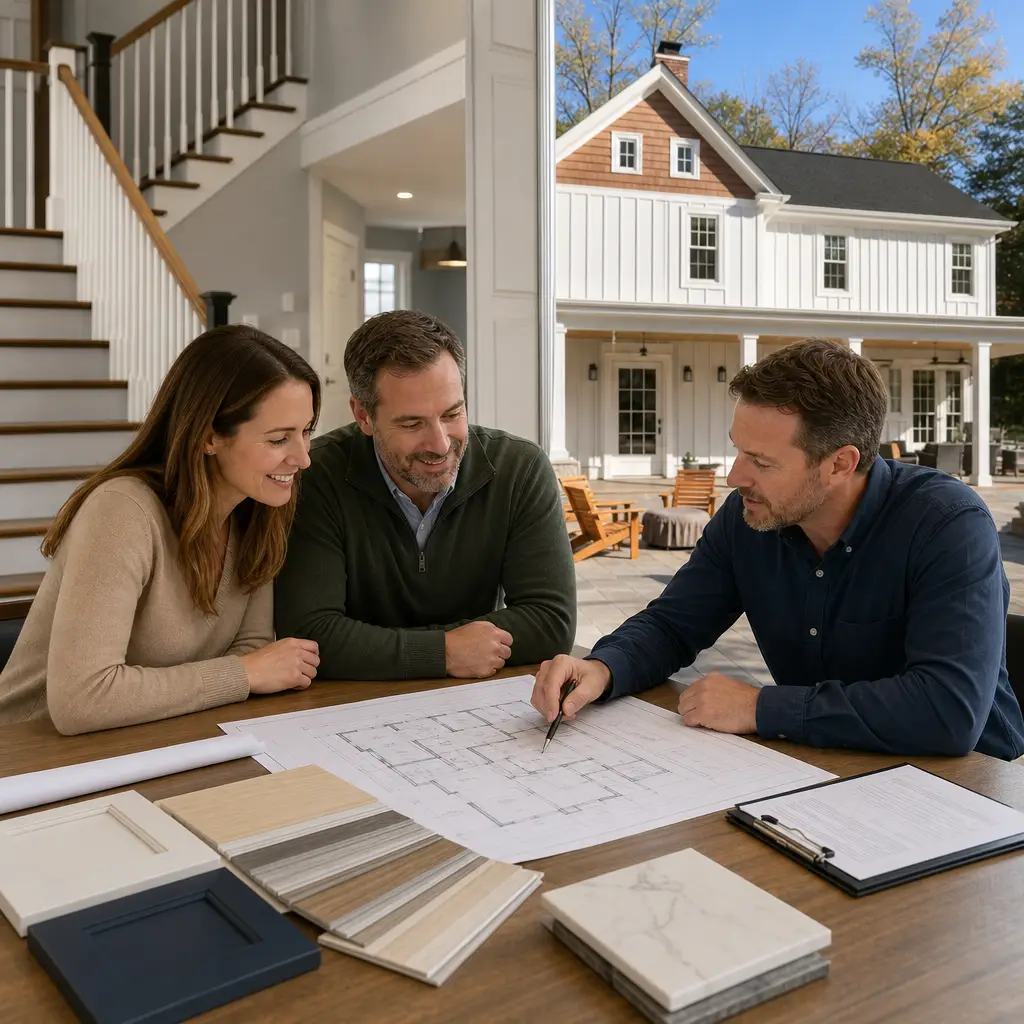
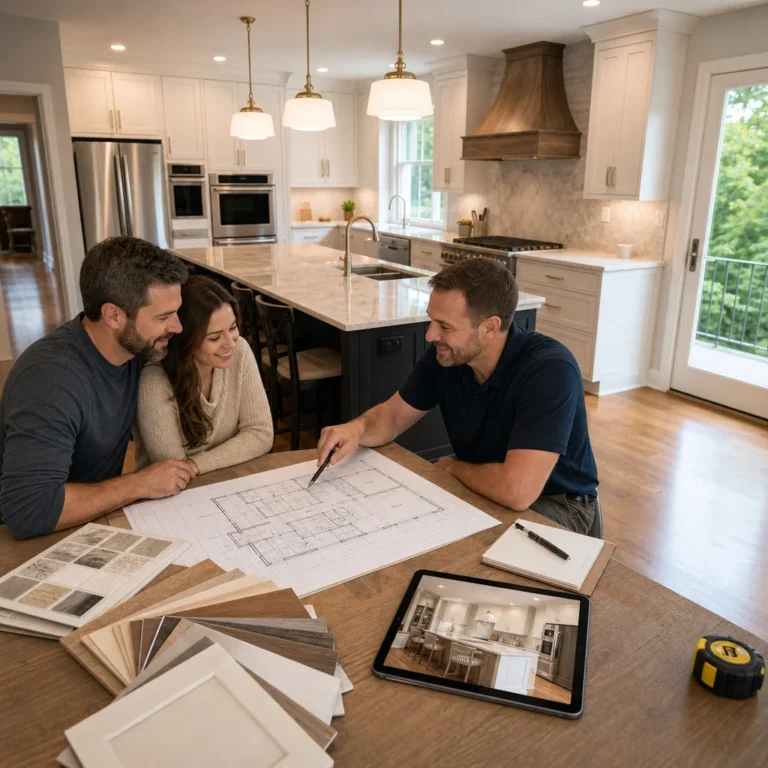
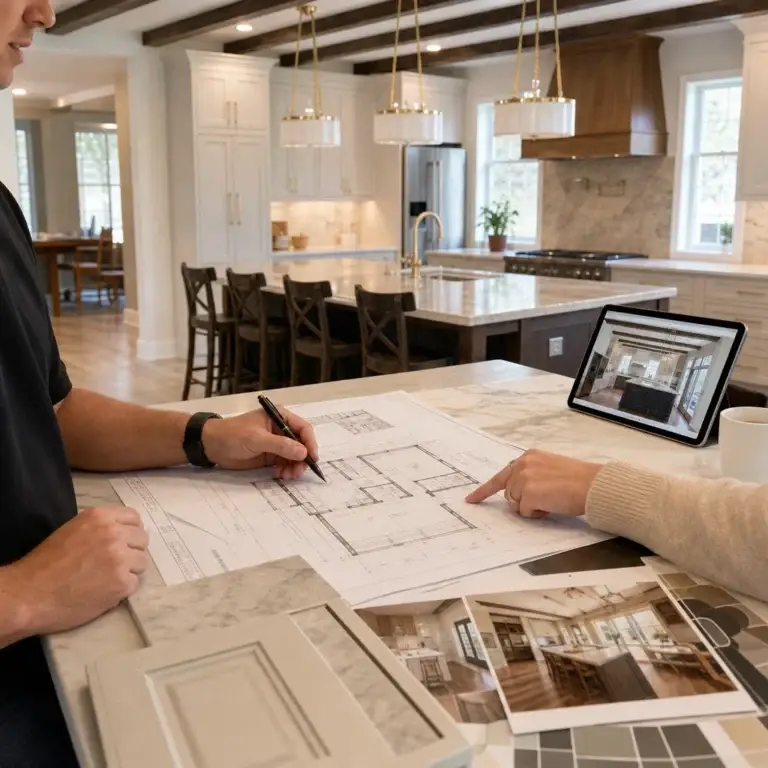
We bring architectural expertise, permit knowledge, and construction experience into every project from the start. Our design-build process means your kitchen remodel, home addition, or bathroom renovation benefits from deep coordination between every discipline. We don’t just build what someone else designed; we collaborate with you to refine the design as we learn more about your home, site, and budget.
What to do next: Ask potential contractors how they structure communication between design and construction. Request to speak with recent clients about the decision-making process and whether they felt coordinated or fragmented.
3. Review Transparent Pricing and Detailed Contracts
One of the biggest sources of stress in remodeling projects is unexpected costs. You approved a $75,000 kitchen and suddenly you’re facing $95,000 in change orders. This often happens because the initial contract lacked detail and clarity.
A thorough contract should include a detailed scope of work that lists every major element of the project: specific materials, finishes, labor, permits, demolition, disposal, and contingencies. It should specify exactly what’s included and what’s not. If you’re not sure whether electrical upgrades, plumbing relocations, or structural changes are included, that ambiguity invites disputes later.
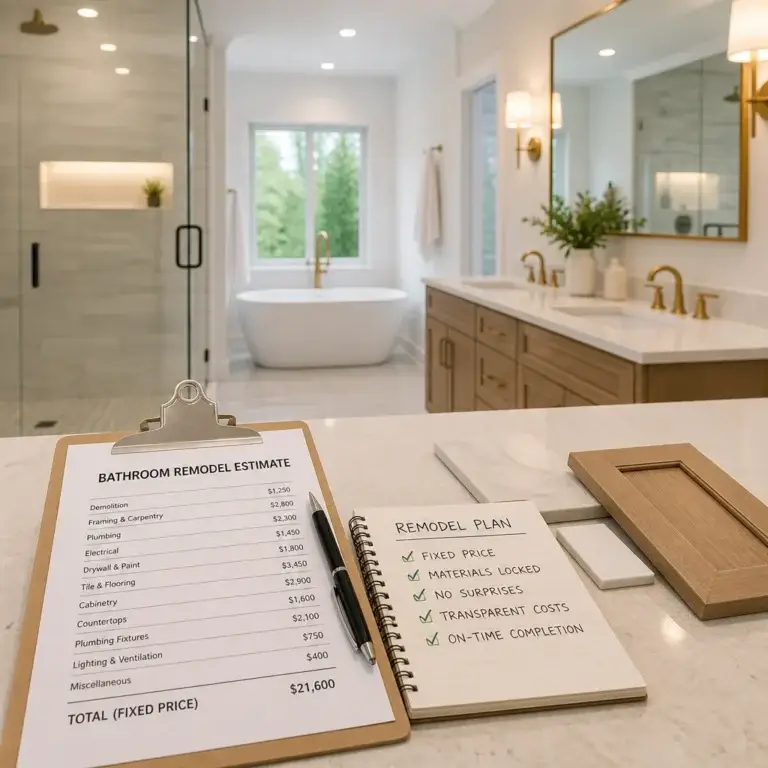
Pricing should be broken down by phase or trade so you understand where the money is going. A lump sum of “$85,000 for kitchen renovation” tells you nothing about contingency, material quality, or where cost overruns might occur. A detailed estimate shows kitchen cabinetry ($22,000), countertops ($8,500), appliances ($12,000), electrical and plumbing ($15,000), labor and installation ($18,000), permits ($2,500), and contingency ($7,000). This transparency lets you make informed decisions about where to invest and where to adjust.
The contract should also clearly define the contingency amount. Contingency is money set aside for unexpected conditions (like hidden structural damage or code upgrades discovered during work). A typical range is 10-15% of the project cost. Knowing this upfront means you’re not blindsided when the contractor finds issues that cost money to address.
Many remodeling companies avoid detailed pricing because it limits their flexibility and makes cost overruns more obvious. A vague contract protects them, not you.
We provide detailed specifications and line-item pricing for every project. Our contracts clearly outline what’s included, what’s not, and what the contingency covers. We’ve found that homeowners make better decisions and feel more confident in the process when they understand exactly what they’re paying for. This transparency also means fewer disputes and fewer surprises.
What to do next: Ask contractors for a sample contract and a detailed estimate before hiring. If a contractor refuses to provide this level of detail, keep looking.
4. Assess Kitchen and Bathroom Remodeling Portfolios
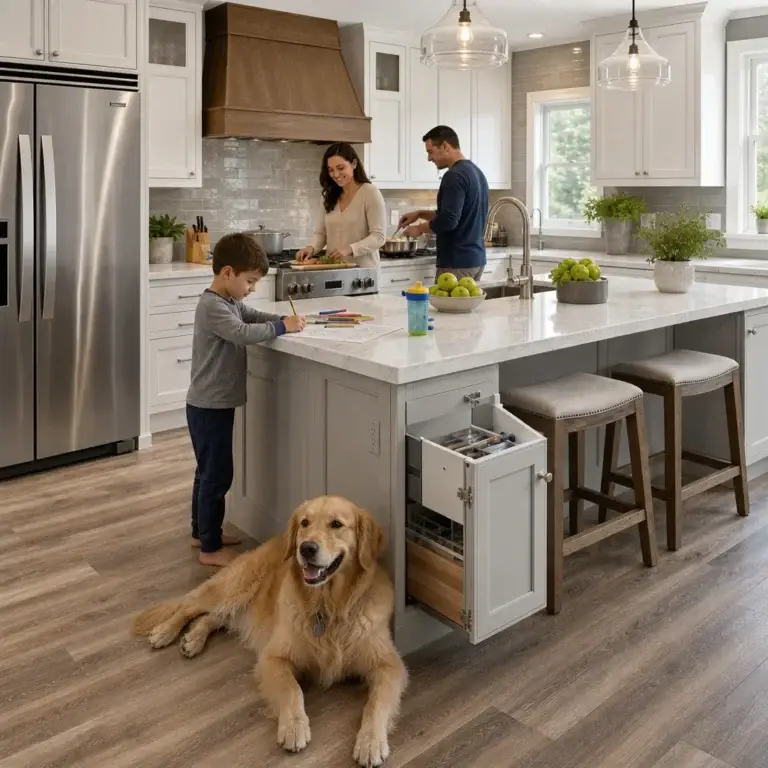
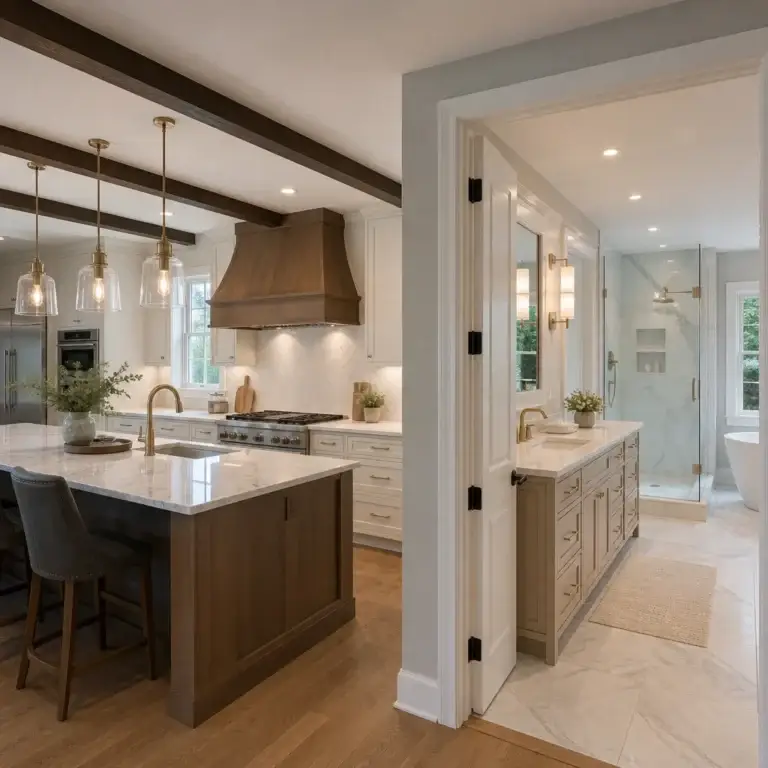
Kitchens and bathrooms are the most visible, most frequently used rooms in your home and often the heart of a remodeling project. A contractor’s portfolio of kitchen and bathroom work tells you a lot about their attention to detail, material quality, design sensibility, and craftsmanship.
When reviewing portfolios, look for consistency. Does the quality hold up across multiple projects? Do finishes look well-executed in every photo? Are tile work, cabinetry, and countertop transitions clean and professional? Are appliances installed properly and integrated thoughtfully into the design?
Also pay attention to the range of styles and budgets. A contractor who can execute a modern, minimalist kitchen and also a traditional, warm kitchen is demonstrating versatility and skill. Look for evidence of problem-solving. Did they adapt designs to existing spaces? Did they work around structural limitations and find elegant solutions?
Don’t just look at photos. Ask the contractor if you can visit recent completed projects or speak directly with clients. Photos are curated; a real site visit shows you the actual quality and durability of the work. You’ll also get a sense of whether past clients are genuinely satisfied or just being polite.
Beyond aesthetics, ask about material choices. What cabinet brands do they use? What countertop materials do they recommend for different budgets? Can they explain the differences between laminate, quartz, and granite in terms of durability, maintenance, and cost? A contractor who can guide you through these decisions is adding real value.
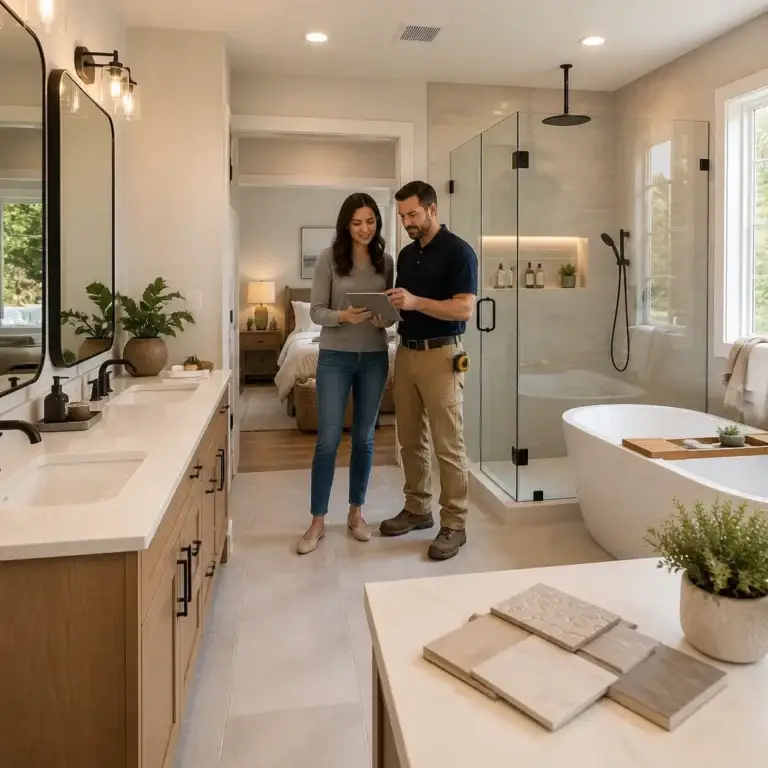
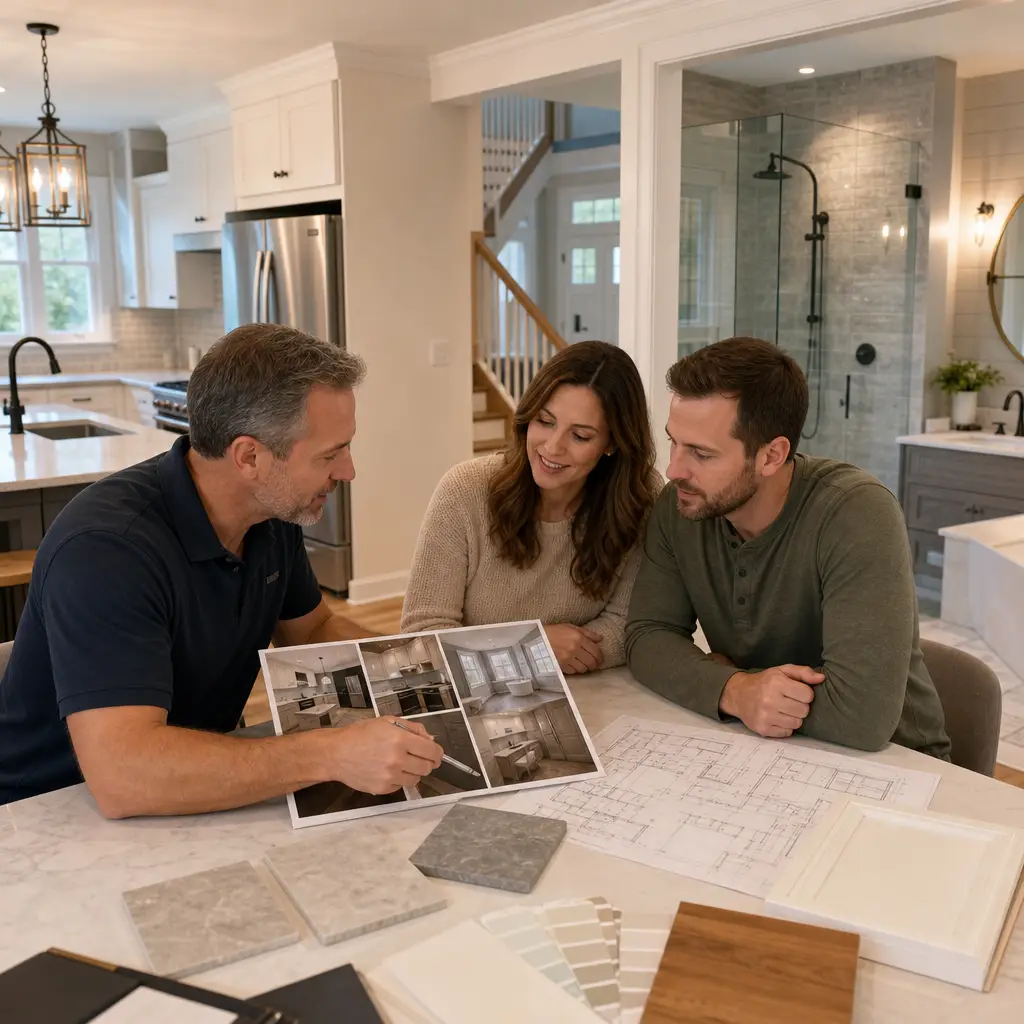
Our kitchen remodeling portfolio showcases the variety and quality of work we’ve completed across Fairfax County and Northern Virginia. We’re happy to connect you with recent clients or arrange a visit to a completed project. Seeing the actual execution, material quality, and attention to detail gives you confidence in what you’re committing to.
What to do next: Request a portfolio of recent kitchen and bathroom projects. Ask for contact information for at least two or three clients willing to discuss their experience. Visit completed projects in person if possible.
5. Check Local References and Community Reputation
References matter, but they need to be recent and specific. A contractor who did great work five years ago might not be the same contractor now. Personnel changes, standards shift, and skill levels vary.
When you speak with references, ask targeted questions: Did the project stay on schedule? Were there unexpected costs, and how were they handled? Did the contractor communicate regularly? Were problems addressed promptly? Would you hire this contractor again? How does your home feel now compared to before the renovation?
Listen for consistency in answers. If one person raves about communication and another felt left in the dark, that’s telling. If some references mention multiple change orders and others had none, it might reflect different client decision-making or unclear initial scoping.
Beyond individual references, check community reputation. Search online reviews on Google, the Better Business Bureau, and industry platforms. Look for patterns. A single negative review doesn’t mean much, but multiple complaints about the same issue (late completion, communication problems, quality concerns) should raise a red flag.
Also ask about local reputation directly. Are they involved in the Fairfax County or Northern Virginia business community? Do they maintain consistent work in the area? Contractors rooted in the local community have an incentive to do quality work because they see clients at the grocery store and their reputation follows them.
We’ve been serving Fairfax County and Northern Virginia homeowners for years, and our reputation is built on consistent, quality work and strong client relationships. We’re not just passing through; we’re invested in this community. We encourage you to check our references, our online reviews, and our track record. Our clients’ satisfaction is the foundation of our business.
What to do next: Ask for references and actually call them. Google the contractor and check their rating with the Better Business Bureau. Ask friends, neighbors, and your real estate agent if they’ve heard of the company.
6. Compare Timeline Delivery and On-Budget Performance
Two contractors might have identical qualifications and portfolios, but they differ dramatically in how reliably they deliver on time and on budget. This difference often separates a smooth project from a stressful one.
Ask potential contractors about their typical project timelines. A kitchen remodel might take 8-12 weeks; a home addition could take 4-6 months depending on complexity. If one contractor promises to finish your addition in 12 weeks and another says 18-20, there’s usually a reason. The faster timeline might reflect unrealistic planning or a willingness to cut corners.
More important than the timeline itself is the contractor’s track record of meeting it. Ask references specifically: Did they finish when they said they would? If not, why? Was the delay due to factors beyond their control (permit delays, supply chain issues) or contractor issues (poor planning, scheduling conflicts)?
On-budget performance is equally important. A contractor might quote $80,000 but almost always deliver at $95,000 through change orders. Another might quote $80,000 and regularly finish at $79,500. These aren’t equivalent. Ask about their typical range of overruns or underruns. Ask whether change orders are handled smoothly or whether cost discussions become contentious.
Some variation from quote to final cost is normal, especially in renovation work where hidden conditions are common. But the difference should be small (5% or less if the contingency is properly sized) and well-managed.
We take pride in delivering projects on time and on budget. We do this through detailed upfront planning, experienced crew scheduling, and proactive material management. We communicate regularly about timeline and budget status so you’re never surprised. Our clients know that when we commit to a timeline and a price, we honor it. This reliability comes from years of experience and disciplined project management.
What to do next: Ask contractors about their last five projects and whether they were completed on time and within budget. Get specific numbers, not just “mostly on time.”
7. Understand Home Addition and ADU Specialization
If you’re planning a home addition, accessory dwelling unit (ADU), or whole-house renovation, your contractor’s specialization matters tremendously. These projects are more complex than typical kitchen or bathroom remodels. They involve structural engineering, permit coordination with municipalities, site planning, utility extensions, and often foundation work.
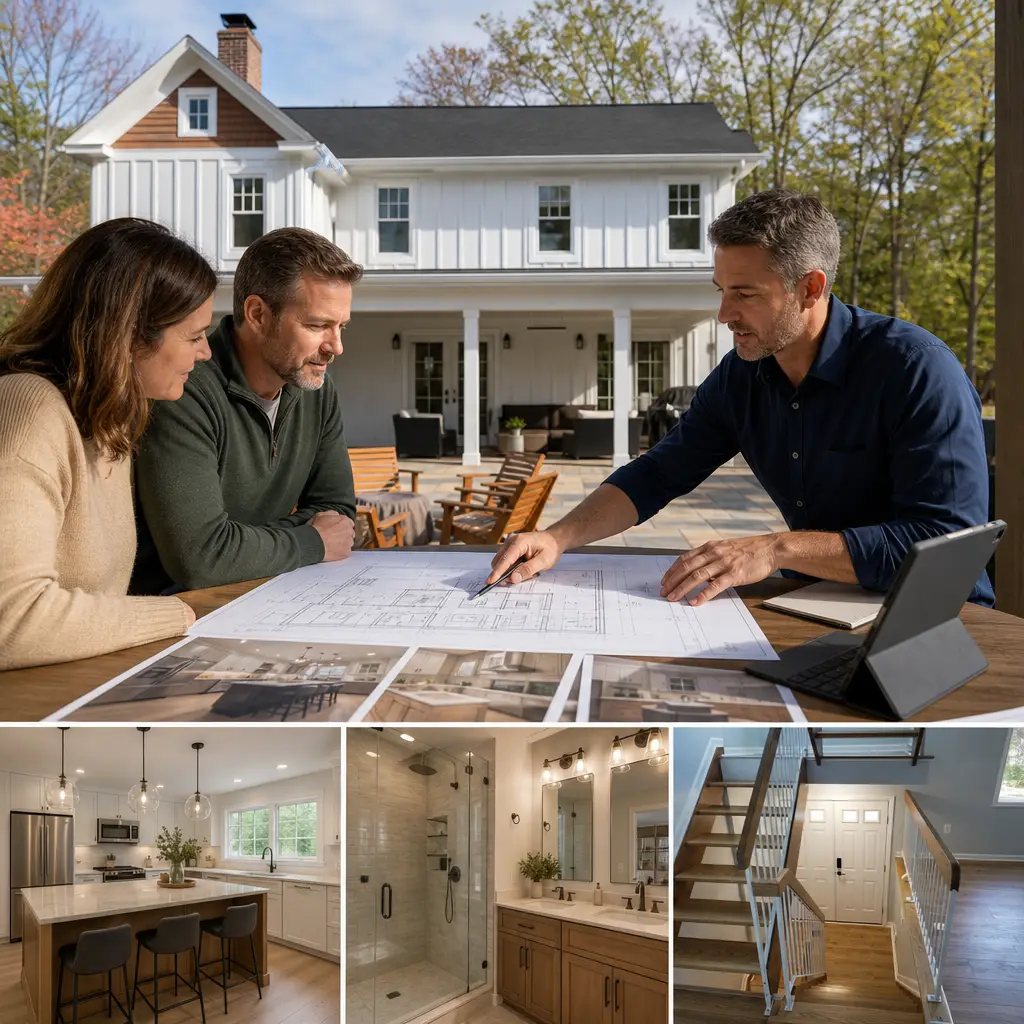
A general remodeling contractor can handle most kitchen and bathroom work. But home additions and ADUs require deeper expertise. You need a contractor who understands structural design, has relationships with structural engineers, knows the specific permitting requirements for additions and ADUs in Fairfax County and Northern Virginia, and has proven experience building additions that don’t leak, settle, or develop structural problems years later.
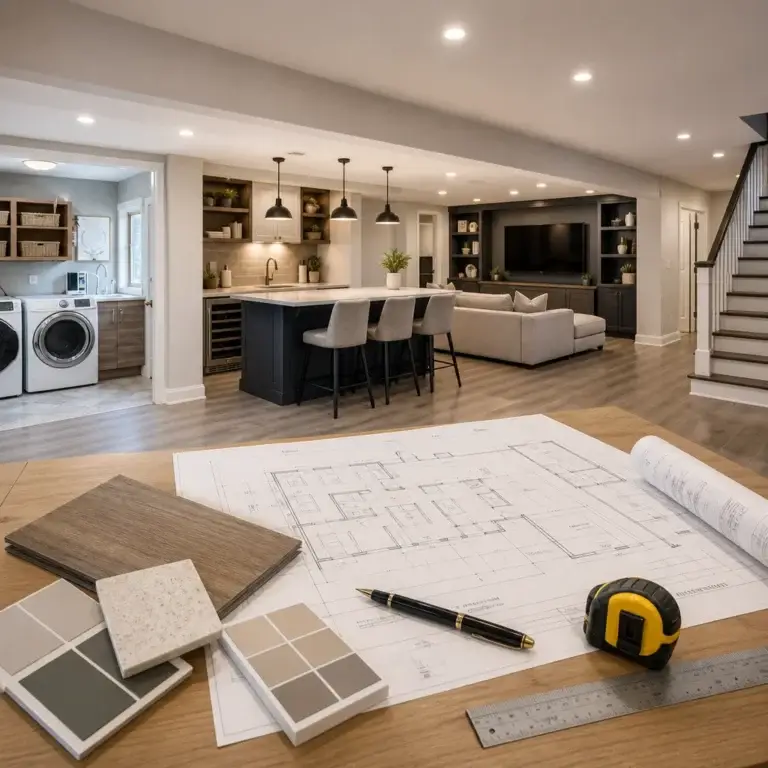
When evaluating contractors for an addition or ADU project, ask about their structural design process. Do they work with licensed structural engineers? Do they use building information modeling or detailed drawings to plan the project? Have they handled additions similar to yours in scale, style, and complexity?
Also ask about permitting experience. Virginia’s building codes and Fairfax County’s permit requirements are specific. A contractor who’s navigated these dozens of times can anticipate requirements and avoid delays. One who’s unfamiliar with local codes might miss something that costs you time and money later.
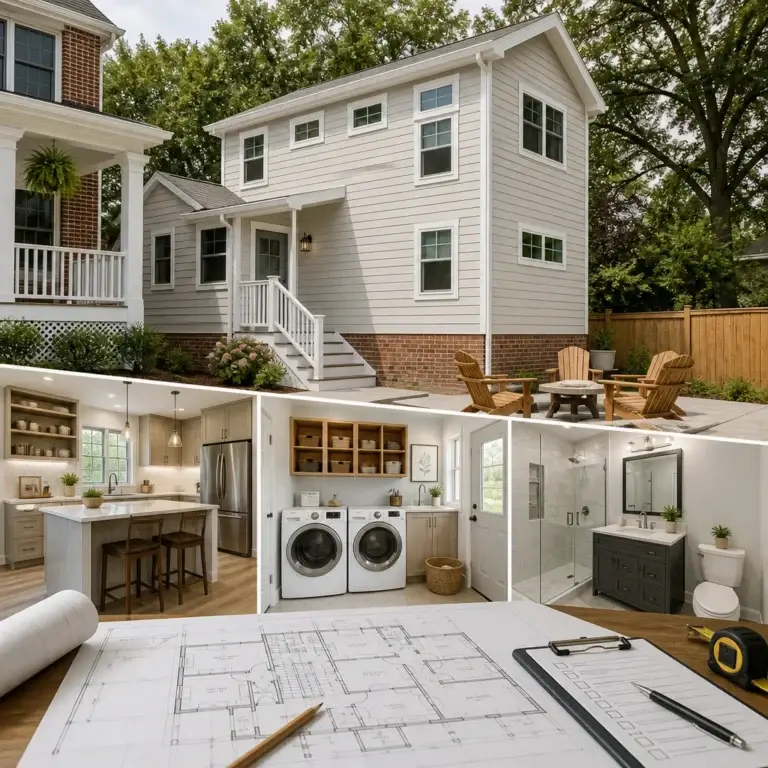
ADU construction adds another layer. Local zoning requirements, setback rules, utility connections, and Virginia-specific ADU regulations vary by jurisdiction. We’ve successfully completed ADU construction Fairfax VA projects that comply with local regulations while maximizing livable space and value. This specialization only comes from doing the work repeatedly and staying current with regulations.
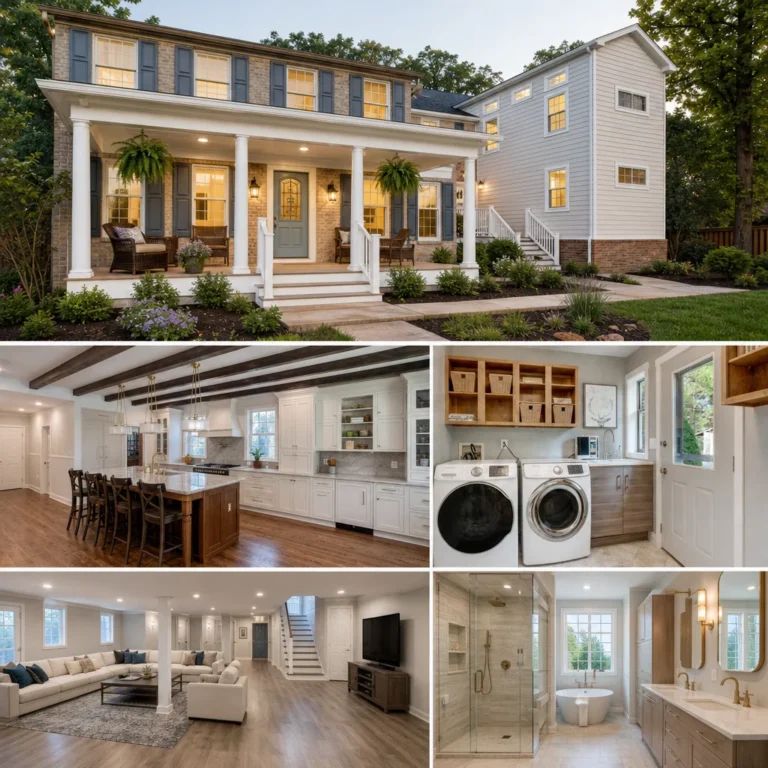
We specialize in home additions and ADU construction across Fairfax County and Northern Virginia. This isn’t just one service we offer; it’s a core part of our business. Our design-build approach means we handle structural design, permit coordination, and construction as an integrated process. We have relationships with trusted structural engineers, we know the permit landscape intimately, and we’ve built dozens of additions and ADUs that are beautiful, functional, and built to last.
What to do next: If you’re planning an addition or ADU, ask contractors specifically about their experience with these project types. Request examples of completed additions and ADUs in your area. Ask about their structural design process and permitting timeline.
—
Choosing the right remodeling company doesn’t require luck or guesswork. Use these seven practices to evaluate contractors systematically, and you’ll eliminate most of the risk. Verify credentials, understand their process, review detailed pricing, assess their portfolio, speak with references, confirm their track record on time and budget, and assess specialization for your specific project type.
The investment you make in selecting the right contractor typically pays dividends throughout the project and long after. A great contractor communicates clearly, handles problems professionally, delivers quality work, and becomes a trusted advisor as you invest in your home.
We’d be honored to be your remodeling partner. We bring two decades of experience, design-build expertise, a strong track record on time and budget delivery, and a commitment to making your project stress-free and rewarding. If you’re planning a kitchen remodel, bathroom renovation, home addition, basement finishing, or ADU in Fairfax County or Northern Virginia, we’d welcome the opportunity to discuss your project and show you why homeowners choose us again and again.
Contact us Today For a Free Estimate !
Frequently Asked Questions (FAQ)
What makes our design-build approach different from hiring separate architects and contractors?
We bring architectural planning, permit coordination, material selection, and construction together under one experienced team. This unified process eliminates miscommunication between designers and builders, reduces project delays, and gives you a single point of contact throughout your entire renovation. You’ll have clear accountability and streamlined decision-making from your initial concept through final completion.
How do we ensure projects stay on budget and on schedule?
We provide detailed upfront contracts with transparent pricing before any work begins, so there are no surprises down the road. Our team manages all phases of the project with professional oversight and consistent communication, keeping you informed of progress and addressing any issues immediately. We’ve built our reputation on delivering quality work within the timelines and budgets we establish.
Can we handle both large additions and smaller kitchen or bathroom updates?
We specialize in everything from full home additions and ADU construction to focused kitchen and bathroom remodeling projects. Whether you’re expanding for a growing family, creating multigenerational space, or modernizing a single room, we apply the same thoughtful design and quality craftsmanship to every project size. Our experience serving Fairfax County and Northern Virginia means we understand the specific needs and challenges of homes in your area.