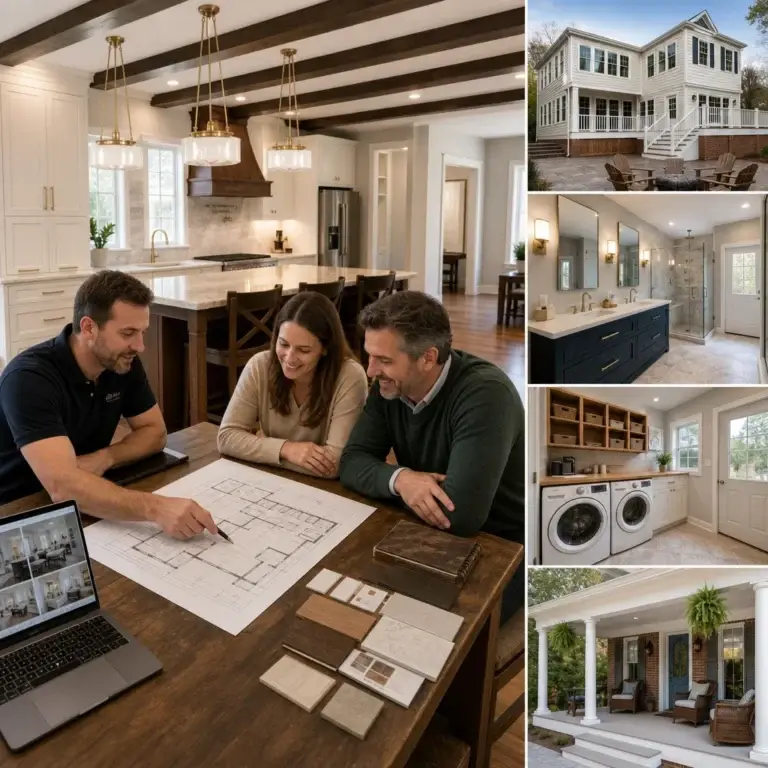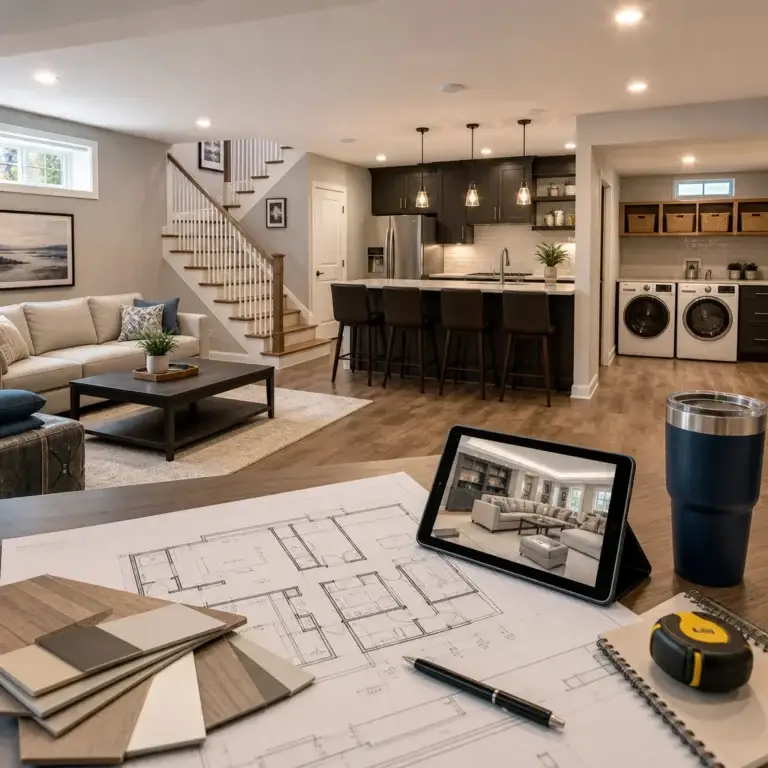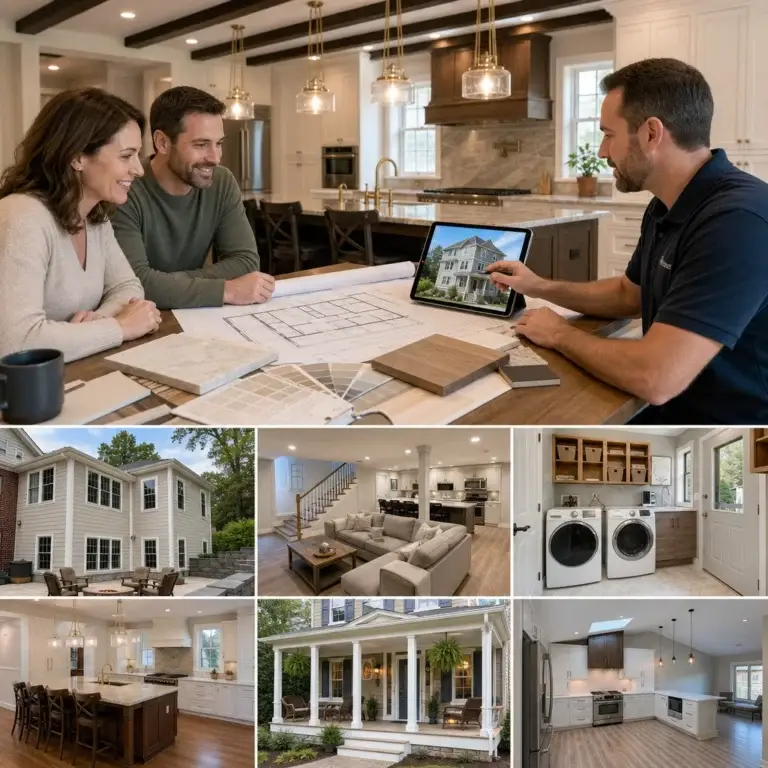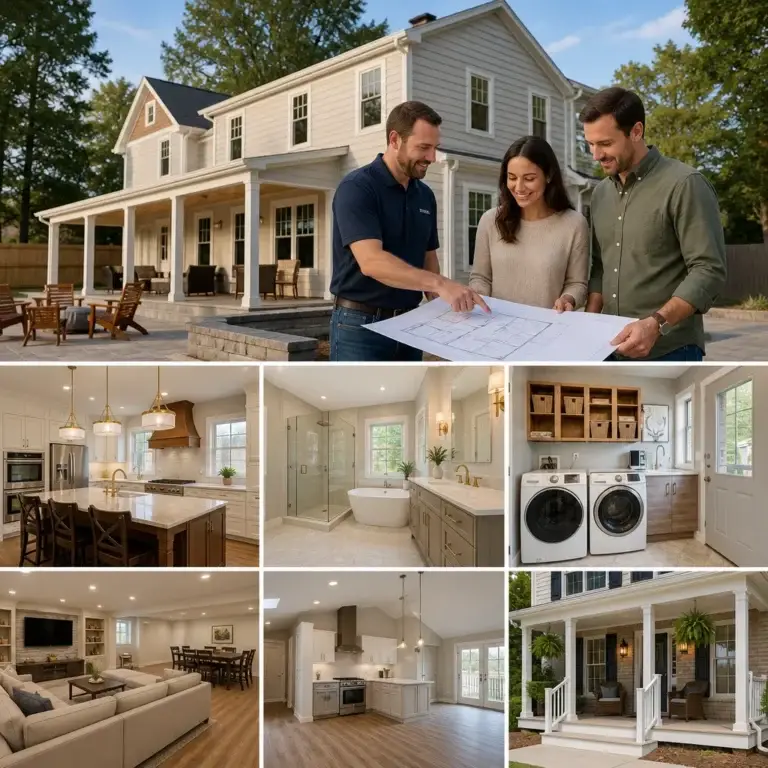
Table of Contents
- 1. Maximize Space Efficiency in Compact Footprints
- 2. Plan for Complete Independence and Privacy
- 3. Design Accessible Entryways and Universal Layouts
- 4. Create Separate Utility Systems and Mechanical Areas
- 5. Navigate Local Zoning and Fairfax County Regulations
- 6. Integrate Seamless Architectural Styling with Your Home
- 7. Plan for Long-Term Flexibility and Aging in Place
- Frequently Asked Questions (FAQ)
1. Maximize Space Efficiency in Compact Footprints
Most ALUs occupy 400 to 800 square feet. That constraint doesn’t mean compromise; it means intentional design. We’ve learned that maximizing usable square footage starts before construction begins.
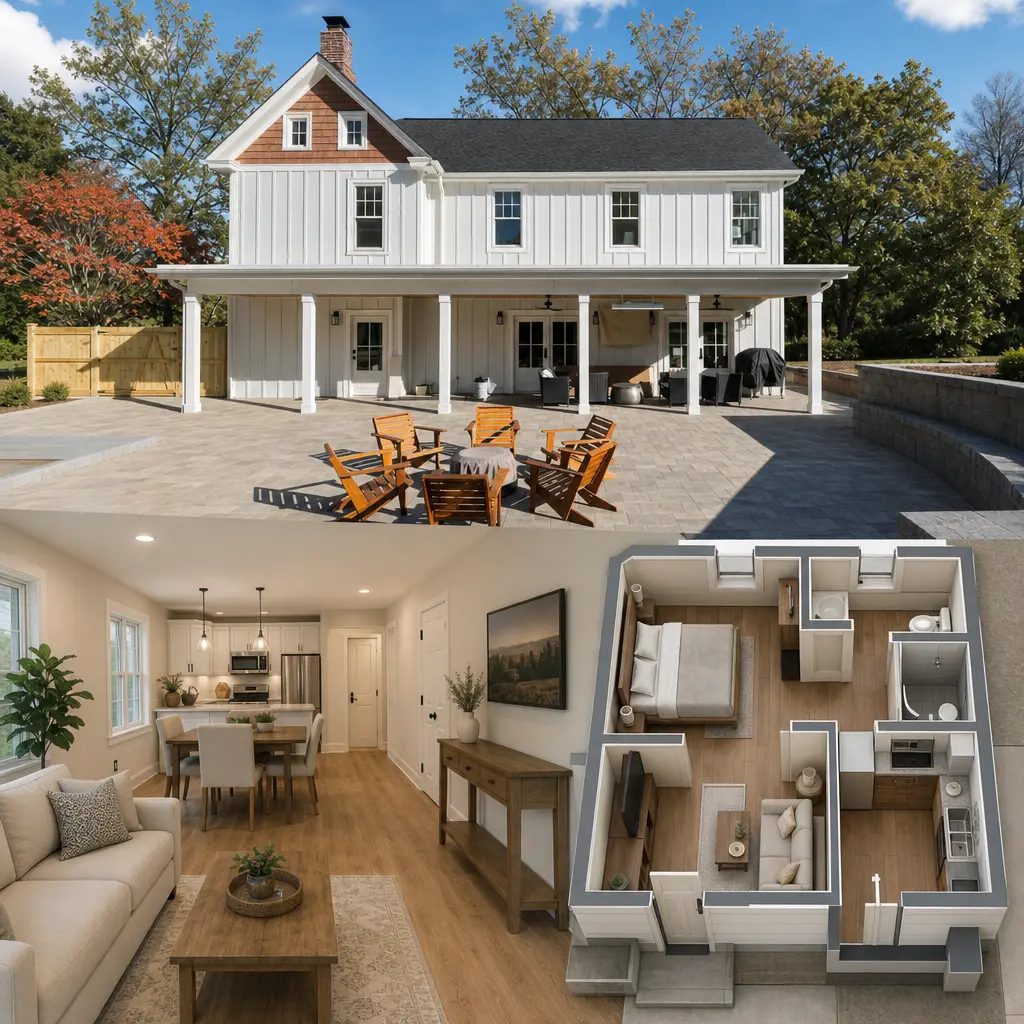
Open floor plans remain the gold standard for smaller spaces. A single great room that combines living, dining, and kitchen areas eliminates wasted hallway space and creates an airy feel that counters the small footprint. Unlike traditional layouts with separate rooms, open plans let natural light travel through the entire unit and make 600 square feet feel significantly larger.
Vertical storage changes everything. Built-in cabinetry along walls, high shelving above doorways, and under-stair storage solutions absorb clutter without consuming floor space. Lofted beds (when ceiling height allows) free up bedroom square footage for a seating area or desk. These decisions happen during the design phase, not the decorating phase, so they’re permanent assets rather than band-aid solutions.
Multifunctional spaces serve double duty. A second bedroom becomes a guest room and home office with a murphy bed or a quality sofa bed. The kitchen nook serves as dining, workspace, and overflow area. Flexible furniture selections and smart lighting enhance these transitions without structural changes.
Compact mechanical systems also preserve square footage. High-efficiency HVAC, tankless water heaters, and stacked laundry units occupy far less space than traditional equipment. During design-build planning, we coordinate these selections upfront so the layout works with the systems, not around them.
Actionable takeaway: Request detailed floor plans with clear dimension labels and furniture layouts before construction starts. This reveals dead zones and opportunities you might miss in a generic sketch.
2. Plan for Complete Independence and Privacy
True independence means the ALU resident never needs to pass through the main house to access their space. This single principle eliminates resentment, maintains boundaries, and increases both family comfort and home resale appeal.
A separate exterior entrance is non-negotiable. This can be a direct entry from the driveway, a side door onto a small patio, or an entrance from a front-facing alcove. The entrance should feel intentional and dignified, not hidden or tucked into a back corner. Adequate landing space, proper drainage, and clear sight lines matter for both daily living and accessibility.
Separate utilities deserve equal priority. This means dedicated electric panels, independent water lines, and isolated HVAC zones where possible. Beyond practical independence, separate utilities simplify future lease arrangements (if circumstances change) and clarify financial responsibility for everyday costs. Fairfax County regulations increasingly favor this separation, so planning it early streamlines permit approval.
Soundproofing creates psychological privacy even when units share a wall. Insulation in shared walls, resilient channels on framing, and acoustic caulking around outlets and fixtures minimize sound transmission. A resident shouldn’t hear the main house’s daily activity, and vice versa. This often comes down to construction details that only matter if they’re specified before framing begins.
Visual privacy protects both the main house and the ALU. Strategic window placement, fencing, or landscape screening ensures neither space looks directly into the other. Residents appreciate knowing they’re not visible from the main house, and homeowners appreciate the same assurance.
Actionable takeaway: During the design phase, walk through the entrance and key sightlines yourself. Does the ALU feel separate and welcoming, or does it feel like a back-door addition? That feeling translates directly to daily living satisfaction.
3. Design Accessible Entryways and Universal Layouts
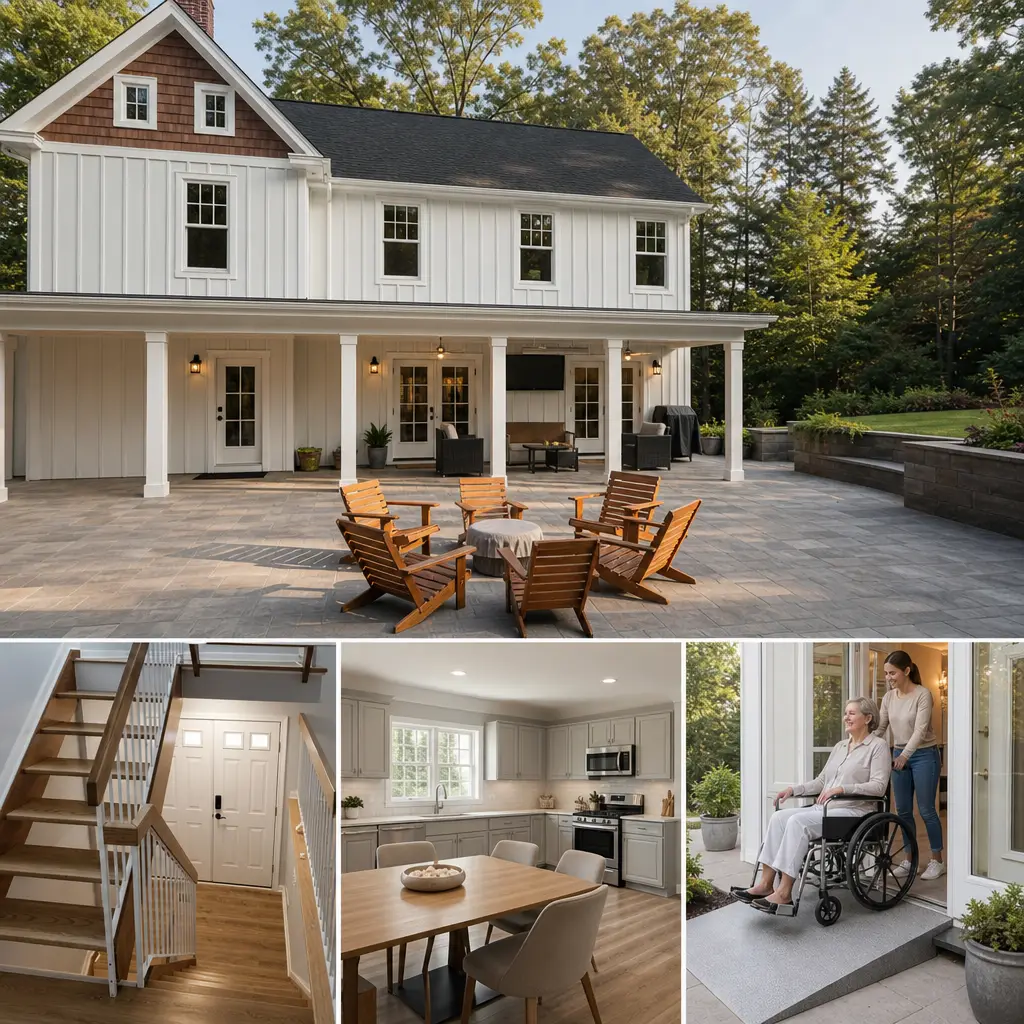
Multi-generational living often involves aging family members, mobility concerns, or changing health situations. Building accessibility into the original design costs far less than retrofitting later and ensures the unit serves everyone, regardless of physical ability.
Zero-step or minimal-step entryways eliminate the most common barrier. A ramped approach (at proper slope per ADA guidelines) or a sunken landing that meets exterior grade work far better than asking residents to navigate stairs daily. If ground conditions require steps, a future platform lift installs with minimal disruption.
Wide doorways (36 inches minimum for ADA compliance; 42 inches offers genuine comfort) allow wheelchair access and simply feel spacious. Interior door widths matter too. We’ve seen families manage with main doors at code minimum but regret narrow bedroom and bathroom entries when mobility needs emerge.
Bathroom accessibility demands early planning. Curbless showers with grab bars roughed in during framing cost nearly the same as traditional setups but serve residents across decades of potential mobility changes. Accessible vanity heights (32 to 34 inches) and clear floor space in front of fixtures create comfort for everyone, not just wheelchair users. A powder room doesn’t need full accessibility, but the primary bathroom should.
Flexible kitchen design accommodates varying mobility levels. Adjustable-height counters serve standing cooks and seated users. Open space under a main counter allows wheelchair approach. Upper cabinets at reachable heights (not stretched access, not stooped access) mean the kitchen remains functional across life stages.
Wider hallways, open sightlines, and level transitions throughout the unit reinforce accessibility. These features cost nothing during construction but become extremely expensive to retrofit. They also benefit everyone: moving furniture, maneuvering with luggage, and general comfort improve when hallways exceed minimum code.
Actionable takeaway: Request a “universal design” review from your architect or design-build partner. This takes 30 minutes and identifies accessibility gaps before they’re built into the budget.
4. Create Separate Utility Systems and Mechanical Areas
Utility independence is both practical and regulatory. Northern Virginia municipalities increasingly require or encourage utility separation in ALUs, particularly when future rental or independent occupancy is possible.
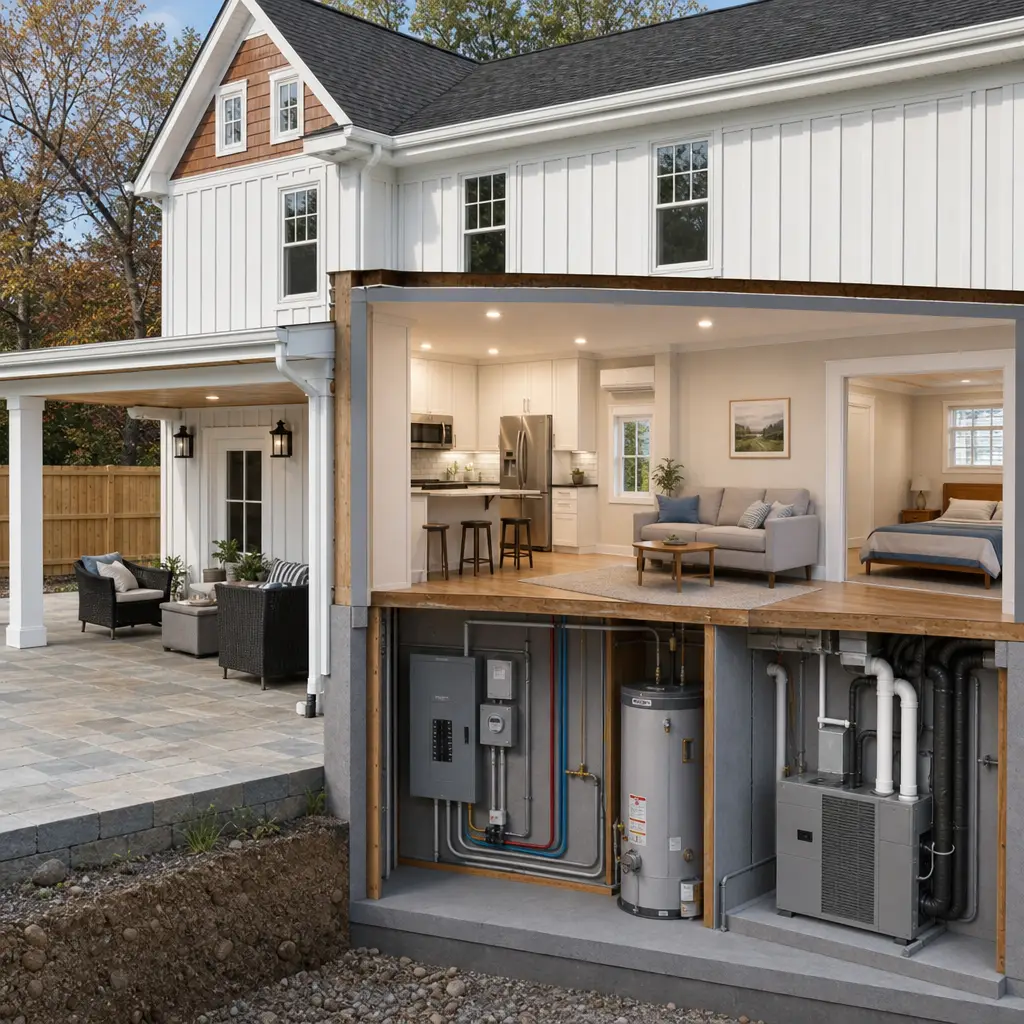
Electric service separation is straightforward. A dedicated 100-amp or 200-amp panel in the ALU eliminates shared circuit loads and future disputes about who pays for what. It also simplifies any future rental or sale scenario. Sub-panels work in some cases but cost nearly as much as a true separate service; true separation is cleaner long-term.
Water and sewer lines warrant individual consideration. Where municipal service allows, a separate water meter and sewer connection keep costs transparent and prevent cross-usage disputes. Plumbing from the main house through the ALU sometimes proves unavoidable, but a clear isolation point and dedicated metering system should be planned accordingly.
HVAC zoning or complete separation depends on the ALU’s location and size. A detached unit naturally needs independent heating and cooling. An addition sharing the main house’s HVAC benefits from a dedicated zone with its own thermostat and dampers. Ductwork design matters here: undersizing the zone saves money but creates comfort problems. We specify zoning during design so equipment sizing reflects actual demand.
Mechanical closet placement affects daily life more than most homeowners realize. A small closet housing the water heater, electrical panel, and mechanical systems should be accessible but not create hallway traffic through living space. During design review, confirm this space is accessible for routine maintenance and future equipment replacement without demolishing walls.
Drainage and grading prevent the single most common ALU problem: water intrusion. Proper slope away from the unit, adequate guttering, and sometimes a sump pump or French drain keep basements and crawl spaces dry. This investment during construction prevents thousands in remediation later.
Actionable takeaway: Request a detailed utility schematic showing every service line and isolation point. This document becomes invaluable for future homebuyers, contractors, and for your own reference.
5. Navigate Local Zoning and Fairfax County Regulations
Fairfax County allows ADUs under specific conditions, and Northern Virginia municipalities each maintain unique code requirements. Understanding these rules before design prevents costly revisions and delays.
Fairfax County’s ADU ordinance permits accessory living units on single-family lots in unincorporated areas, with clear restrictions on unit size, lot coverage, and occupancy. Zoning districts determine whether ADUs are allowed. Some areas permit them as-of-right; others require conditional use permits. This categorization changes the timeline and complexity significantly.
Size limitations vary by location. Many zones cap ADU square footage at 800 square feet, with additional restrictions on height, setbacks, and lot coverage. Total lot coverage cannot exceed a certain percentage, which affects whether you can add an ALU if you’ve already built additions. Understanding your lot’s remaining capacity before design starts prevents heartbreak.
Parking requirements differ across jurisdictions. Some require dedicated off-street parking for the ALU; others require additional parking for the main house. A corner lot might satisfy this through existing driveway configuration, while an interior lot might need creative solutions or variances.
Rental restrictions vary dramatically. Fairfax County permits independent rental of many ADUs; Arlington and Falls Church have stricter policies. If future rental flexibility matters, confirm the rules before design. Some municipalities prohibit rental entirely; others allow it without restriction. This affects your design timeline and your property’s future value.
Permit coordination and code compliance require specialized knowledge. Building setbacks, flood zones, easements, and utilities create invisible constraints that only survey and code review reveal. A design-build team familiar with Northern Virginia regulations catches these issues during design, not during permit review.
Actionable takeaway: Before sketching anything, request a zoning verification letter from your local building department. This one-page document confirms what’s permitted on your specific lot and eliminates assumptions.
6. Integrate Seamless Architectural Styling with Your Home
An ALU that clashes with your home’s architecture reduces curb appeal and resale value. Thoughtful design integration makes the addition feel intentional, not like a bonus structure grafted onto the property.
Architectural consistency starts with roof lines and exterior materials. An ALU with the same roofline style, pitch, and material as the main house reads as a purposeful addition, not an afterthought. When roof lines differ dramatically, the unit looks disconnected. We typically match existing materials, though complementary alternatives work when the overall proportions align.
Window and door styles set the tone for visual cohesion. Matching existing trim profiles, muntin patterns, and door styles creates a unified aesthetic. A cottage-style home gains nothing from contemporary flat-panel doors and glass block windows, even if individual elements are beautiful. The addition should feel like it belonged all along.
Siding, brick, and stone choices matter enormously. If your main house features Craftsman-style siding with a brick chimney, the ALU should echo these materials and details, not contradict them. We’ve seen additions with identical floor plans fail one home’s aesthetic and elevate another’s, purely based on material selection and detailing.
Grading and landscaping complete the integration. An ALU sitting above or below surrounding grade creates visual tension. Retaining walls, terracing, and strategic planting soften transitions and make the addition feel grounded. These landscape details sometimes cost as much as subtle architectural changes but transform curb appeal entirely.
Color and finish coordination extends throughout. Trim color, paint selections, hardware finishes, and even mailbox styles contribute to a cohesive presence. When every element reinforces the home’s existing character, the ALU enhances the property rather than competing with it.
Actionable takeaway: Collect photos of your home’s best architectural features (trim details, corner boards, window patterns) and share them with your design team. This visual reference eliminates ambiguity about style direction.
7. Plan for Long-Term Flexibility and Aging in Place
The most successful ALUs adapt to changing family needs. A unit designed only for today’s situation often becomes problematic within 10 years. Building flexibility into the original design eliminates future renovation expense and stress.
Structural flexibility means designing systems that adapt without major work. Bathroom plumbing roughed in for future grab bars, ceiling joists sized to support lofted beds later, and electrical circuits planned for future equipment additions preserve options. These details cost nothing during construction but cost thousands if retrofitted.
Adaptable room configurations serve multiple purposes across time. A second bedroom functions as guest space, office, storage, or future bedroom depending on circumstances. Built-in elements should enhance rather than trap this flexibility. Extensive cabinetry that locks down one use limits adaptation; flexible shelving that suits multiple purposes ages better.
Aging-in-place considerations extend usable lifespan. Lever-style door handles work better than knobs for arthritic hands. Adjustable shelving suits mobility needs better than fixed built-ins. Non-slip flooring materials and anti-scald fixtures protect across life stages. These aren’t “senior citizen features” but sensible long-term design that serves everyone.
Technology infrastructure supports future needs without renovation. Rough-in conduits for future internet, electrical outlets at strategic heights for future equipment, and mechanical space for future HVAC upgrades eliminate walls being opened for routine improvements. Smart planning during construction prevents invasive retrofits.
Outdoor space flexibility complements interior adaptation. A deck or patio with future ramp potential, covered areas that could become enclosed porches, and drainage adequate for future modifications leave options open. Once poured and constructed, these become nearly irreversible, so over-specifying flexibility during design prevents regret.
Actionable takeaway: Ask your design team: “What could change in the next 15 years, and how does this plan support those changes?” The answers reveal whether your design is truly flexible or simply optimized for today.
—
Multi-generational living is reshaping how Northern Virginia families approach home design. Whether you’re creating space for aging parents, adult children, or extended family members, an accessory living unit (ALU) offers independence without the disruption of relocation. But designing one that truly works requires balancing spatial efficiency, privacy, accessibility, local codes, and architectural harmony with your existing home.
We’ve guided dozens of families through this process, and the difference between a cramped afterthought and a genuinely livable space comes down to thoughtful planning. Each of the seven essential practices above depends on decisions made during the design phase, before construction begins and changes become expensive or impossible.
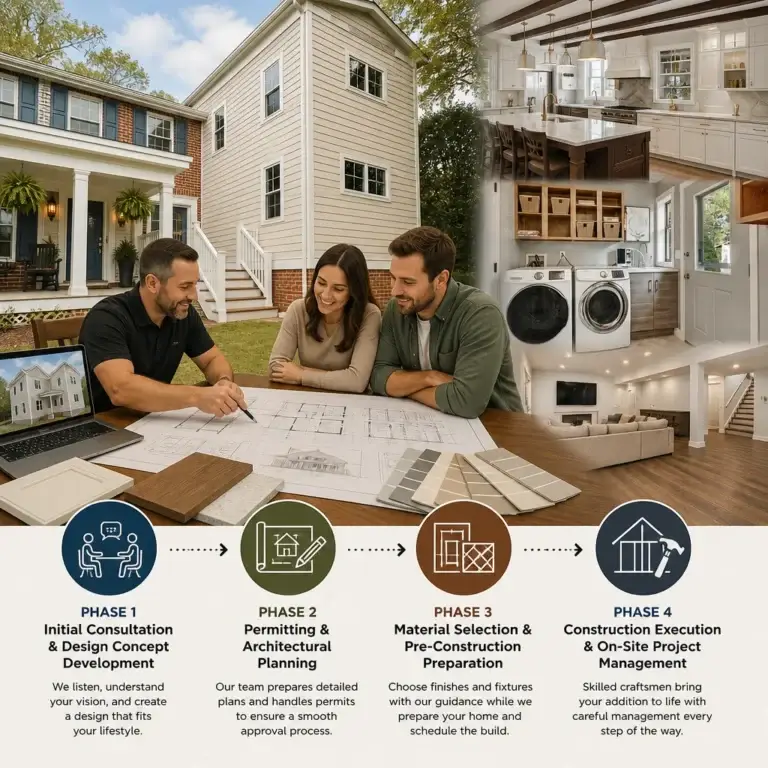
Designing a multi-generational ALU in Northern Virginia involves coordinating efficiency, independence, accessibility, code compliance, architectural harmony, and long-term flexibility as one integrated system. We’ve guided families through this entire process at Elite Contractors Services. Our design-build approach means architecture, permits, construction, and project management work as one integrated team from the first sketch through final occupancy. We handle Fairfax County regulations, coordinate utilities, ensure accessibility without sacrificing aesthetics, and deliver transparent pricing upfront.
Your family’s multi-generational living situation is unique. The right design respects your home’s character, meets your family’s specific needs, complies with local code, and adapts as circumstances change over the years. That’s what separates genuinely livable multi-generational ALUs from structures that simply meet minimum code.
Ready to explore your ALU possibilities? We’d welcome a conversation about your home, your family’s needs, and what’s actually possible on your lot. Contact us today to discuss how a design-build approach transforms multi-generational living from a logistical challenge into a graceful home expansion.
For further reading: ADU construction Fairfax VA.
Contact us Today For a Free Estimate !
Frequently Asked Questions (FAQ)
What permits and zoning approvals do we typically handle for multi-generational ADU projects in Fairfax County?
We manage the full permitting process for accessory dwelling units, which involves navigating Fairfax County’s specific zoning requirements, lot size restrictions, and design guidelines. Our team coordinates with local authorities to ensure your ADU meets setback requirements, parking standards, and any deed restrictions that may apply to your property. We handle the documentation and submissions so you can focus on the design details that matter most to your family.
How do we ensure our ADU designs work for both current needs and future aging in place?
We incorporate universal design principles from the start, including zero-step or ramped entries, wider hallways and doorways, and accessible bathroom layouts that accommodate mobility aids without appearing institutional. Our design-build approach lets us build flexibility into mechanical systems and structural elements so modifications down the road won’t require major renovations. We’ve found that thoughtful upfront planning around accessibility makes multi-generational spaces comfortable for everyone, regardless of age or ability.
Can we design separate utility systems for an ADU, and what does that involve?
Yes, we routinely design independent electrical panels, water meters, and HVAC zones so your ADU functions as a self-contained unit with its own utilities. This requires coordination with local utility companies and code officials, which we manage as part of our permitting and construction process. Separate systems offer privacy and flexibility while simplifying billing and maintenance for both the main home and the accessory unit.