Table of Contents
- 1. Understanding Fairfax County Zoning Districts and Setback Requirements
- 2. Lot Coverage Limits and How They Affect Your Addition Plans
- 3. Height Restrictions for Residential Additions in Fairfax
- 4. Variance and Conditional Use Permit Applications
- 5. Building Permits and the Inspection Process
- 6. Floodplain and Environmental Compliance Considerations
- 7. Why Professional Design-Build Coordination Simplifies Compliance
- Frequently Asked Questions (FAQ)
1. Understanding Fairfax County Zoning Districts and Setback Requirements
Planning a home addition in Fairfax County? Before you break ground, you need to navigate zoning restrictions, lot coverage limits, setback requirements, and permitting processes that can make or break your project timeline and budget. Many homeowners start their addition dreams without understanding these requirements, only to discover months into planning that their vision doesn’t comply with local codes. That’s where clarity upfront saves thousands in redesign costs and delays.
We’ve guided homeowners through this complexity for years. Whether you’re adding a bedroom for a growing family, expanding your kitchen, or building an accessory dwelling unit (ADU), understanding Fairfax’s regulations isn’t optional. This guide covers the seven critical zoning and permit requirements you must know before submitting your first application.
Fairfax County divides residential areas into different zoning districts, each with unique rules about how far your home must sit from property lines. Your specific district determines what’s possible on your lot.
The most common residential zones are R-1 (1-acre minimum), R-2 (1/2-acre minimum), R-4 (1/4-acre minimum), and R-E (estate). A typical setback in R-1 zoning might require your home to be 50 feet from the front property line, 25 feet from the rear, and 20 feet from each side. R-2 zones often have more modest setbacks like 35 feet front, 20 feet rear, and 12 feet sides. These aren’t arbitrary numbers; they protect neighborhood character and prevent overcrowding.
Before you design anything, request your property’s zoning district classification and setback requirements from the Fairfax County Department of Planning and Development. Your address alone determines which rules apply. If your lot is zoned R-1 and your neighbor is R-2, their addition rules differ from yours even though you live on the same street.
The practical impact: if you want to extend a room toward the rear of your property, your rear setback limits how far you can build. Adding a side-entry garage means respecting side yard setbacks. Many homeowners find that their initial addition concept violates setback rules, requiring architectural redesign before permit submission.
What to do next: Contact Fairfax County Planning and Development (703-222-1000) or check their online mapping portal to confirm your zoning district and setback measurements. Take measurements from your property lines to your current home structure. Document everything so your designer knows the actual constraints.
2. Lot Coverage Limits and How They Affect Your Addition Plans
Lot coverage is the percentage of your total lot that structures (house, garage, decks) can occupy. Fairfax County limits vary by zoning district. In R-1 zones, lot coverage often maxes out at 25 percent. In R-2, it might be 30 percent. In denser R-4 zones, you might see 35 percent or higher.
Here’s a real scenario: suppose your lot is one acre (43,560 square feet) zoned R-1. You can cover roughly 10,890 square feet total with structures. If your existing home is 3,500 square feet and your garage is 500 square feet, you’ve used 4,000 square feet. That leaves you about 6,890 square feet for additions. A 20-by-30-foot addition (600 square feet) fits comfortably. But a 30-by-50-foot great room expansion (1,500 square feet) might violate your lot coverage limit.
Lot coverage violations aren’t minor infractions. If your plans exceed limits, the county won’t issue a building permit. You can’t proceed, can’t start construction, and can’t grandfather in noncompliance. This is why calculating lot coverage early prevents costly redesigns.
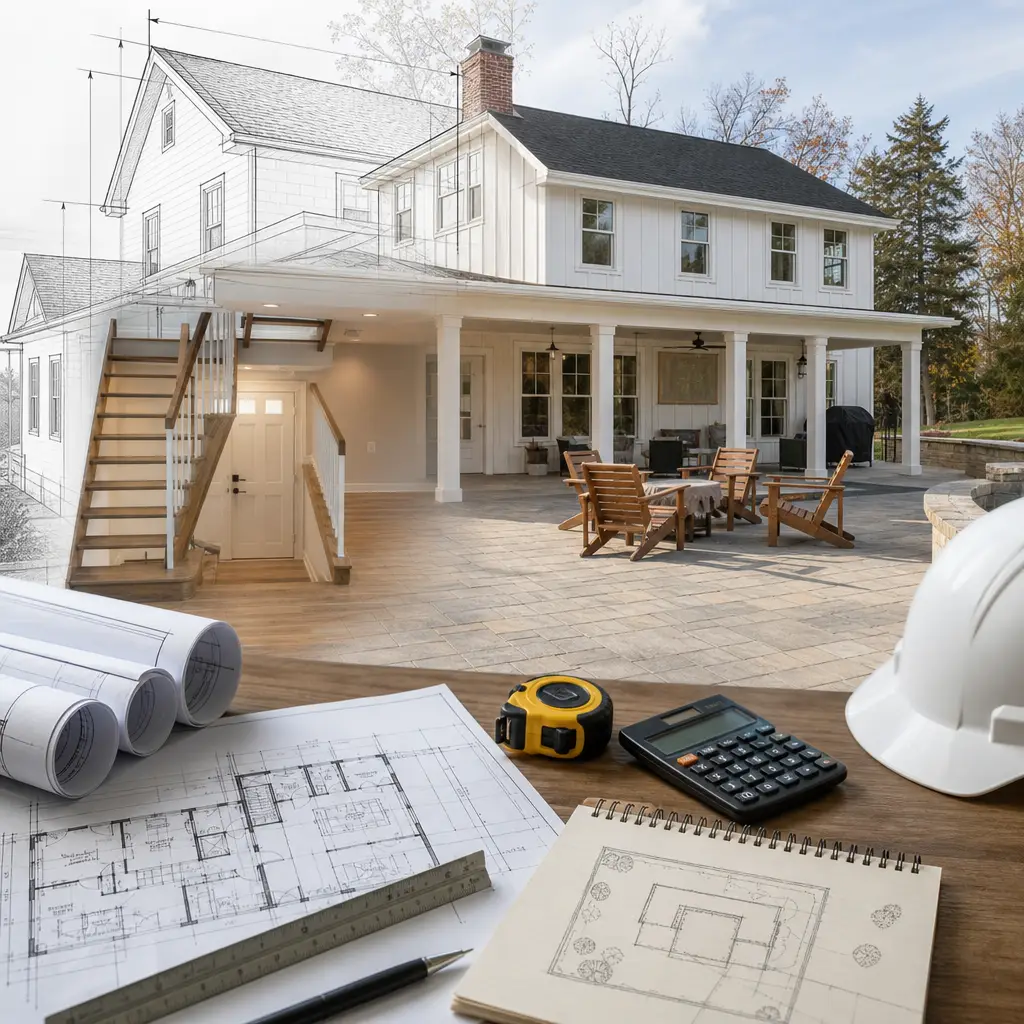
Decks, patios, and covered porches count toward lot coverage in different ways depending on whether they’re enclosed. An open deck might not count; an enclosed sunroom definitely does. Pool houses, detached garages, and accessory structures all add to your total.
What to do next: Measure your current home’s footprint and any existing outbuildings. Calculate your lot’s total square footage (your survey or deed lists this). Divide structures by lot size, multiply by 100, and compare to your zoning district’s limit. If you’re at or above 70 percent of your limit, a large addition becomes difficult without a variance.
3. Height Restrictions for Residential Additions in Fairfax
Height limits protect sightlines and neighborhood consistency. Most Fairfax residential zones cap residential structures at 35 feet. Some areas allow 40 feet. A two-story addition is typically fine; a three-story addition almost always violates height restrictions.
Height measurement matters. The county measures from the average finished grade (ground level) at the base of your structure to the highest point of the roof (including ridge and any roofline features). A vaulted ceiling, steep roof pitch, or second-floor master bedroom can push you over limits quickly. An architect who doesn’t account for height codes may design you into noncompliance without realizing it.
If your addition includes a second story on a lot with slopes, be careful. Fairfax’s measuring methodology accounts for terrain. If your lot slopes downward from front to rear, the average finished grade at the rear might be significantly lower than at the front, potentially allowing slightly greater height. But if terrain slopes upward, the opposite happens, and your allowable height shrinks.
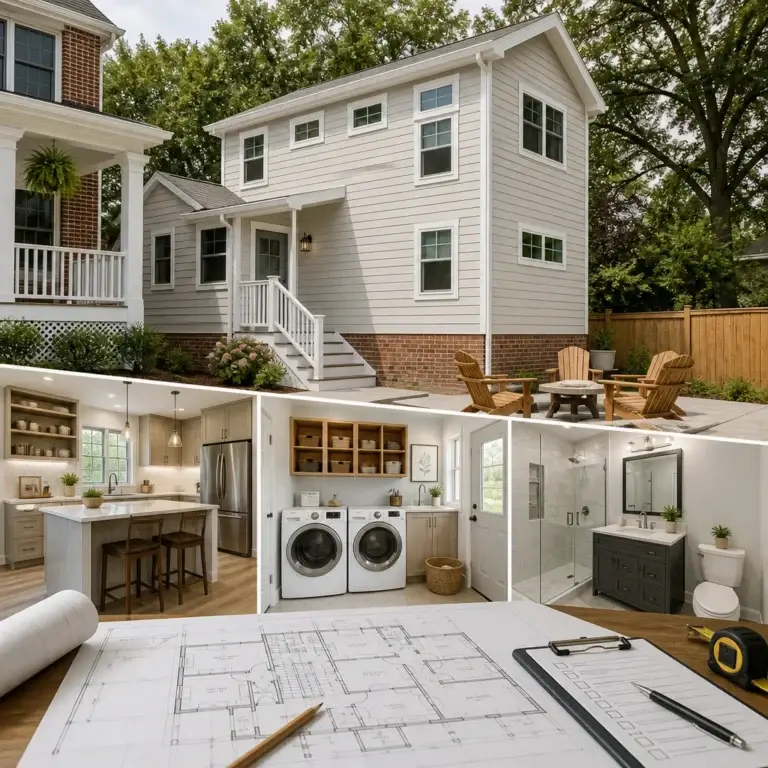
Height restrictions also govern accessory structures. Sheds, pool houses, and detached garages have their own limits, often 15 to 20 feet. If you’re planning an accessory dwelling unit (ADU) for aging parents or rental income, height codes apply strictly.
What to do next: Have your property surveyed to establish elevation data. When your architect or designer proposes an addition, ask specifically whether it complies with Fairfax’s 35-foot (or applicable) height limit. Request written confirmation of height compliance before finalizing designs.
4. Variance and Conditional Use Permit Applications
Sometimes your vision doesn’t fit standard zoning. Maybe your lot is smaller than the minimum for your district, or its irregular shape creates unusual constraints. That’s when you apply for a variance or conditional use permit.
A variance is a request to waive a zoning requirement because of unique hardship. You can’t get a variance simply because you want to; you must demonstrate that enforcing the code causes undue hardship due to your property’s specific characteristics. Variances are difficult. The Board of Zoning Appeals requires substantial evidence that denial causes genuine hardship not shared by other properties in the area. A judge-like hearing happens, neighbors can object, and approval is never guaranteed.
A conditional use permit (CUP) is different. It allows a use that isn’t normally permitted in your district but is conditionally allowed with approval. For example, some residential zones allow ADUs only with a conditional use permit. The process involves public notification, a hearing, and board approval, but the bar is typically lower than for variances because the use is already recognized as potentially acceptable.
We’ve seen homeowners spend $10,000 to $20,000 on variance applications that were denied. Others succeeded because they worked with experienced professionals who built a compelling case. The timing also stretches your project; variances can add four to six months before you even apply for a building permit.
What to do next: Before pursuing a variance, consult a professional designer or architect familiar with Fairfax zoning. They can honestly assess whether your situation qualifies for variance consideration or whether redesign is the smarter path. Get a second opinion; the cost of clarity is far less than a denied variance and wasted effort.

5. Building Permits and the Inspection Process
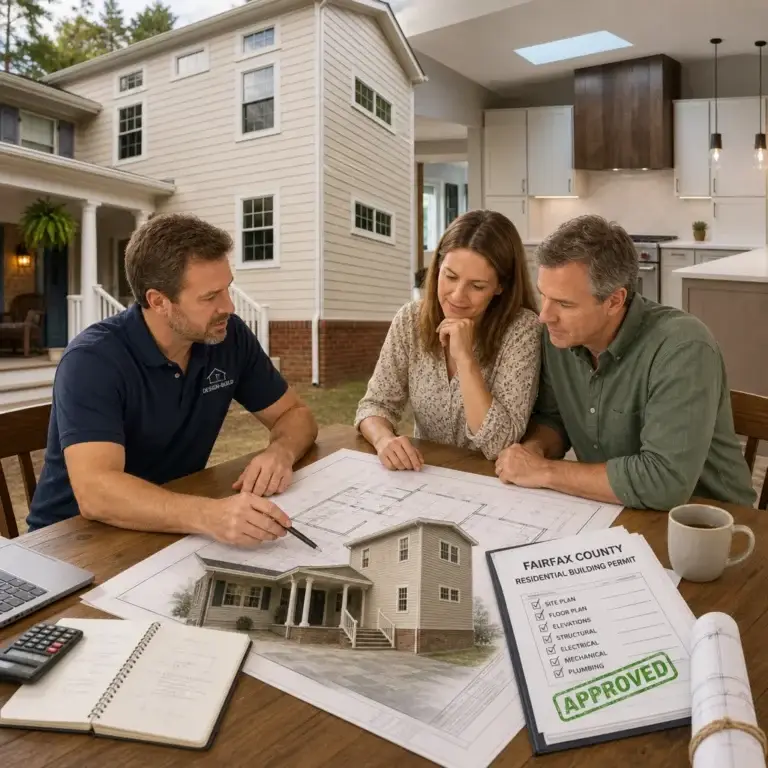
Once zoning and design compliance are confirmed, you apply for a building permit. Fairfax County requires detailed plans: architectural drawings, electrical plans, mechanical plans (HVAC), plumbing plans, and structural details. You can’t submit rough sketches; the county wants construction-ready documents.
The permit application includes a zoning compliance form confirming that your addition meets setbacks, lot coverage, height, and other restrictions. False statements on this form create liability. Your designer or contractor should certify compliance honestly.
Review takes 20 to 30 days typically. The county examines plans against building codes, zoning requirements, and utility considerations. If deficiencies are found, you revise and resubmit. Multiple rounds aren’t uncommon, adding weeks to the process.
Once issued, your building permit triggers mandatory inspections. Footing and foundation inspections happen before concrete is poured. Framing inspections occur after rough framing is complete. Mechanical, electrical, and plumbing inspections follow system rough-in. Final inspection happens before you occupy the space. Each missed inspection means stopping work until the inspector can return, delaying your timeline.
The county also requires proof of property owner authorization, proof of liability insurance, and sometimes proof that contractors are properly licensed. Fairfax takes contractor licensing seriously; unlicensed work invalidates your permit and exposes you to fines.
What to do next: Hire a contractor or design-build firm experienced with Fairfax permitting. They know what documents the county requires, how to submit correctly, and how to schedule inspections efficiently. Attempting DIY permitting coordination often causes delays and rework that cost more than professional coordination saves.
6. Floodplain and Environmental Compliance Considerations
Fairfax County maintains floodplain maps showing areas prone to flooding. If your property sits in or near a mapped floodplain, special rules apply. You may not be able to build below the base flood elevation (the highest water level during a 100-year flood event). Additions in floodplains require elevation certificates and compliance with floodplain codes, adding cost and complexity.
Environmental screening is also required. Fairfax examines whether your property contains protected resources: streams, wetlands, steep slopes, or rare vegetation. Stream buffers often extend 100 feet or more from water’s edge. You cannot build within these buffers without special permits. Wetlands have even stricter protection; filling wetlands violates federal law.
A Phase 1 Environmental Site Assessment identifies these issues before design. It costs $800 to $2,000 but saves heartbreak later. We’ve seen homeowners complete addition designs only to discover that a stream buffer crossed their planned footprint, forcing complete redesign.
Fairfax also screens for historic properties and districts. If your home sits in a historic overlay district, additional architectural review may apply, potentially delaying approval and requiring design modifications to maintain district character.
What to do next: Before finalizing addition plans, request a floodplain determination and environmental screening from Fairfax County Planning and Development. If concerns exist, commission a Phase 1 Environmental Site Assessment. These upfront investments prevent expensive late-stage surprises.
7. Why Professional Design-Build Coordination Simplifies Compliance

Navigating zoning, permits, inspections, and environmental compliance alone is possible but risky. Missed requirements mean permit rejection, project delays, or worse, code violations that affect your home’s resale value and marketability.
At Elite Contractors Services, our design-build approach integrates architectural expertise, permit knowledge, and construction experience into one seamless process. Unlike traditional models where your architect, engineer, and contractor operate separately (often with conflicting priorities), our team coordinates every aspect under one roof from day one.
Here’s what that means practically: our designers understand Fairfax zoning and building codes as deeply as they understand architecture. They don’t design beautiful spaces that violate setbacks or height limits; they design beautiful spaces that comply from the beginning. We pre-screen your property for floodplain and environmental issues before sketching anything. We prepare permit applications that the county approves on first submission rather than through multiple revision rounds. When inspectors arrive, our crews are ready because we’ve coordinated inspection timing and work sequencing.
For homeowners planning additions in Fairfax County, this integration eliminates the frustration of discovering compliance problems after months of design work. It also accelerates your timeline. We’ve seen projects move from initial consultation to occupancy in six to nine months when coordination is tight. Without coordination, the same project stretches to 12 to 18 months as agencies, designers, and contractors work in isolation.
We specialize in room additions Fairfax VA and ADU construction Fairfax VA, where zoning complexity is highest. We’ve obtained variances when justified, navigated floodplain compliance, and guided homeowners through conditional use permits. Our project managers are known for clear communication; you’re never surprised by zoning issues or permit delays because we surface everything early and present your options with full transparency.
Your addition should enhance your home and quality of life, not become a regulatory nightmare. That’s why we take compliance seriously from day one. When you’re ready to explore whether your addition vision is feasible in Fairfax’s zoning environment, reach out for a consultation. We’ll evaluate your lot, your goals, and the regulatory landscape, then give you honest guidance about timeline, feasibility, and what’s required to make your project succeed.
Contact us Today For a Free Estimate !
Frequently Asked Questions (FAQ)
How do we handle the permit process for home additions in Fairfax County?
We manage the entire permit coordination process as part of our design-build approach, which means we handle applications, submissions, and inspections so you don’t have to navigate the system alone. Our team is familiar with Fairfax County’s specific zoning requirements, setback rules, and lot coverage limits, and we build compliance into our designs from the start. We also coordinate with local inspectors throughout the process to ensure your project meets all building codes and moves forward on schedule.
What happens if our property doesn’t meet standard zoning requirements for an addition?
If your lot has constraints like limited setbacks or higher lot coverage than typical zoning allows, we explore variance or conditional use permit options with you. We prepare the necessary documentation and work with Fairfax County to present your case, though approval ultimately depends on county review. Our experience helps us identify whether a variance is feasible for your specific situation before you invest significant time or money.
Can we add onto our home if it’s in a floodplain or has environmental restrictions?
We assess environmental factors like floodplain status and wetland proximity during our initial site evaluation. If restrictions apply, we design solutions that work within those constraints, such as elevated construction or strategic placement of additions. We coordinate with environmental compliance requirements and obtain any necessary permits, ensuring your addition is both compliant and functional.