Table of Contents
- Why Northern Virginia Homeowners Struggle with Traditional Renovation Models
- Understanding the Architect and Separate GC Approach
- The Design-Build Advantage: One Team, Unified Vision
- How Our Design-Build Process Eliminates Communication Gaps
- Cost Control and Budget Transparency in Design-Build Projects
- Timeline Efficiency: Getting Your Project Done Faster
- Quality Assurance When Design and Construction Work Together
- Why We Chose Design-Build for Northern Virginia Homeowners
- The Long-Term Value of Choosing the Right Project Delivery Model
- Frequently Asked Questions (FAQ)
Why Northern Virginia Homeowners Struggle with Traditional Renovation Models
When you’re planning a major home renovation in Northern Virginia, one of the most important decisions you’ll make before sketching a single line is choosing how to deliver the project. Should you hire an architect to design your dream kitchen, then find a general contractor to build it? Or should you work with a design-build firm that brings design and construction together under one roof?
The answer directly affects your timeline, budget, communication experience, and final result. We’ve guided hundreds of homeowners through this choice, and we want to share what we’ve learned so you can make the decision that’s right for your home and your family.
Most homeowners in our area have never managed a large renovation before. When they start researching, they often assume the traditional path is the only path: hire an architect, wait for complete plans, get multiple contractor bids, sign contracts with separate firms, and hope everything works out.
What happens instead is frustration.
With separate architects and general contractors, you’re managing two different vendors with different goals and incentives. The architect’s job is to design something beautiful and compliant with code. The contractor’s job is to build it on time and within budget. When these two teams aren’t working together from day one, problems emerge.
A homeowner calls us regularly saying, “My architect designed this beautiful space, but the contractor said it would cost 40% more than expected.” Or, “We’re three months behind schedule because the design changes the contractor suggested weren’t approved by the architect.” These situations aren’t failures of individual professionals, they’re structural problems baked into a fragmented process.
The stress compounds as the project unfolds. You’re fielding calls from two different teams, clarifying conflicting priorities, and often becoming the middleman when disagreements arise. Meanwhile, your kitchen or bathroom remains unusable, and the end date feels like a moving target.
Understanding the Architect and Separate GC Approach
Let’s be clear about what the traditional model is and when it makes sense.
When you hire an architect separately, you get a licensed design professional whose primary focus is creating a comprehensive set of construction documents. These documents show every detail of what you want built, from wall placements and electrical layouts to material specifications and finishes. The architect produces drawings that are essentially a contract between you and whoever builds it.
Then you take those completed drawings to three or four general contractors and request bids. Each contractor estimates the cost and timeline based on those fixed plans. You choose one, sign a contract, and construction begins.
The traditional model has real advantages in certain situations. If you have unlimited budget, if your project is small and straightforward, or if you want absolute architectural purity without compromise, the separation can work fine. Some homeowners also prefer having an independent designer before committing to a builder.
But here’s what gets overlooked: the separation creates handoffs, and handoffs create problems. The architect doesn’t know the latest material costs or whether your preferred window style can be integrated as seamlessly as the drawings suggest. The contractor discovers issues during bidding that should have been caught earlier. Questions arise that require back-and-forth emails between three parties. Every clarification takes time and often costs money in change orders.
In Northern Virginia’s competitive and detail-intensive market, where permit timelines are tight and material availability fluctuates, this traditional model adds risk and expense to projects that are already complex.
The Design-Build Advantage: One Team, Unified Vision
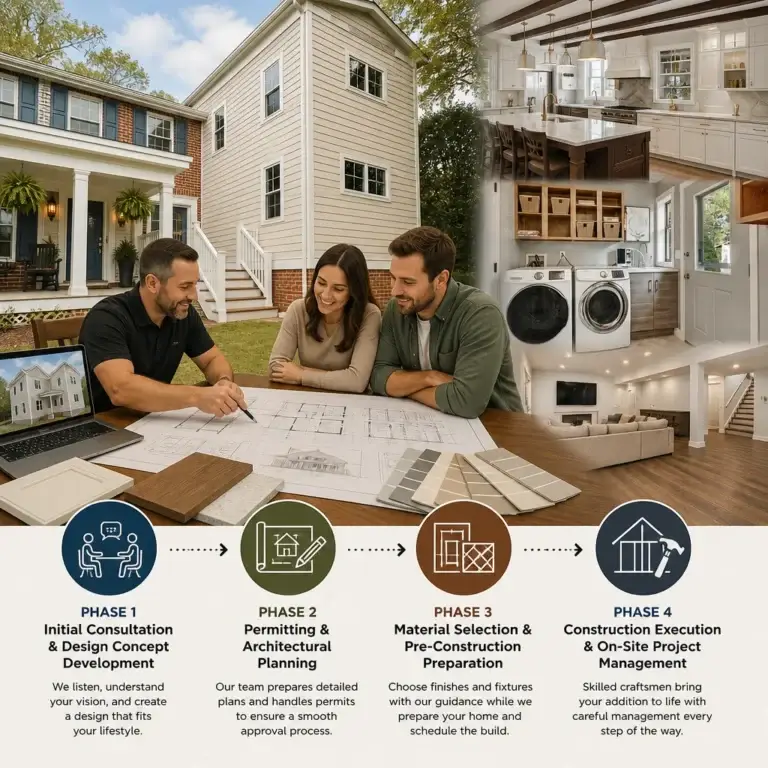
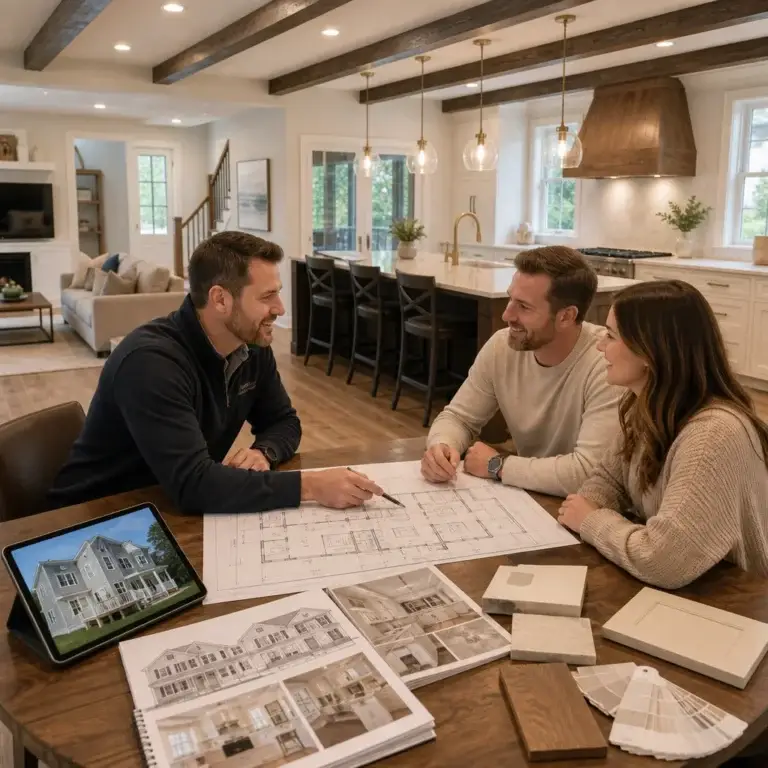
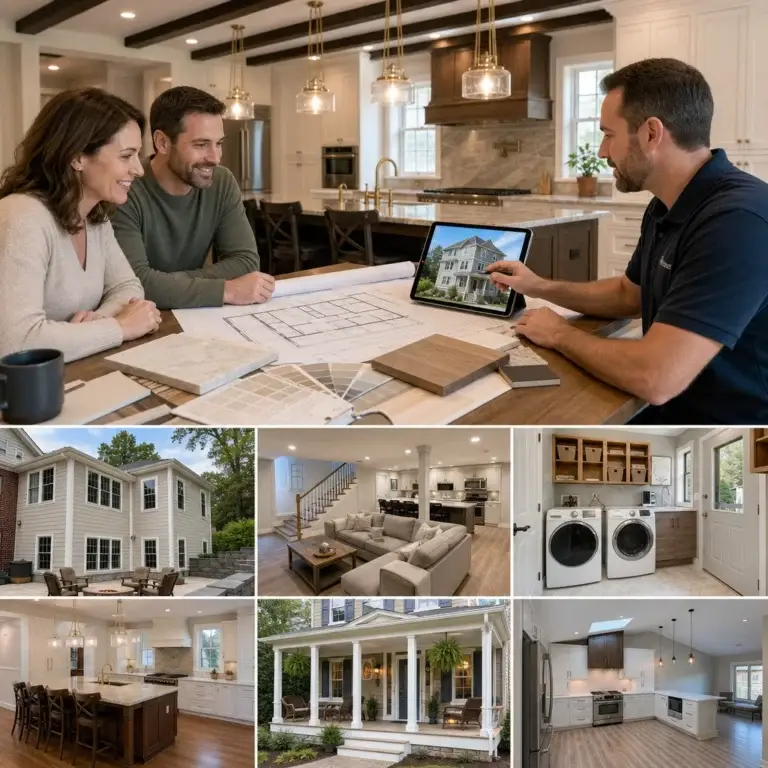
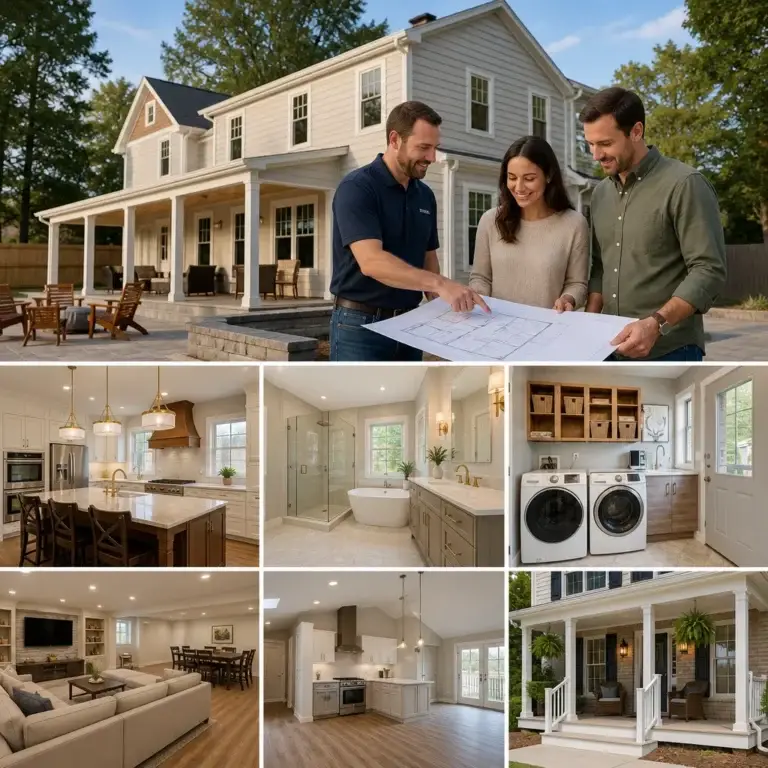
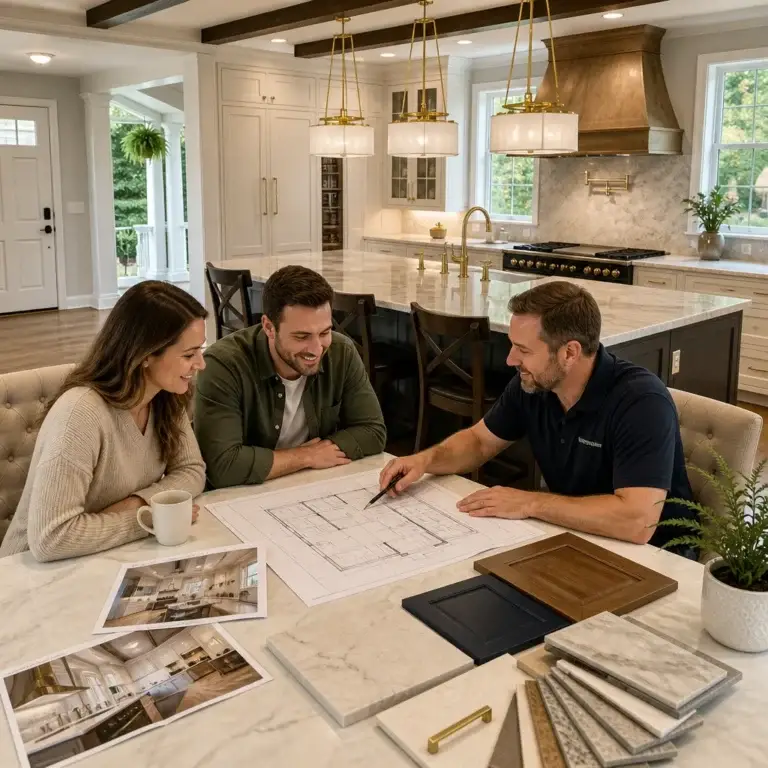
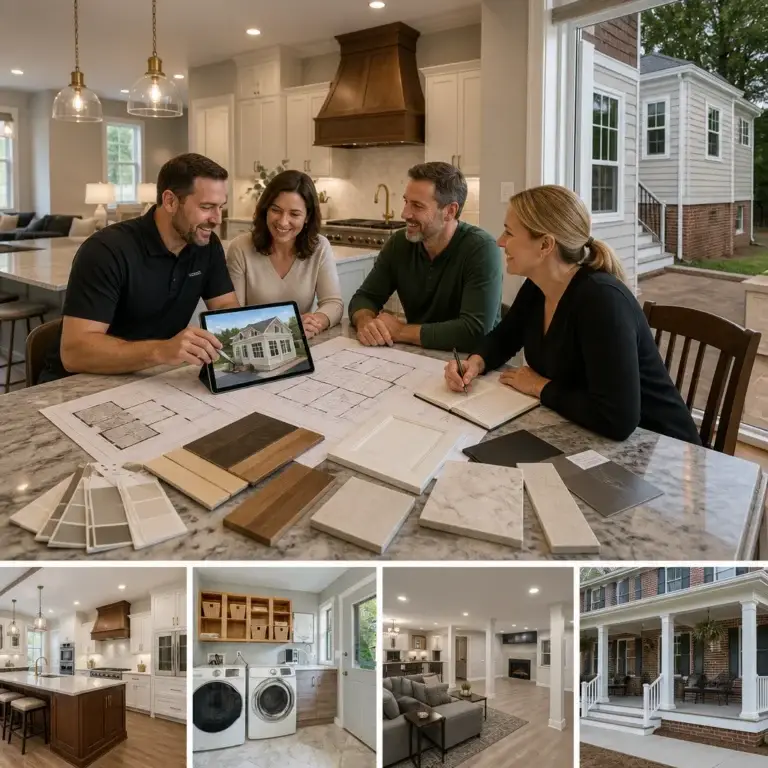
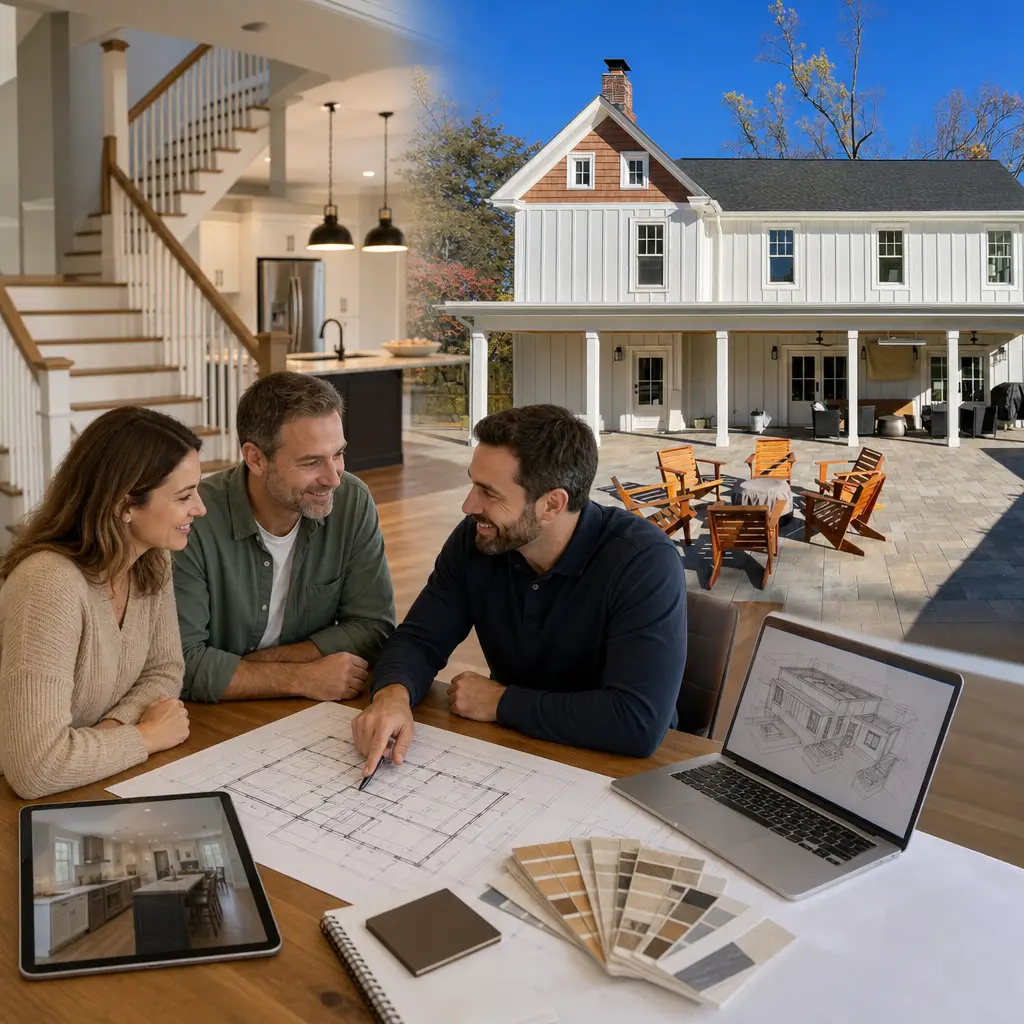
A design-build approach works differently. We bring architects, designers, and builders together from the first conversation, ensuring that feasibility, budget, timeline, and aesthetics are considered simultaneously.
When we meet with you during the initial consultation, we’re not just listening to your wishes, we’re assessing constructability, understanding local building codes, thinking about material availability in the current market, and considering realistic timelines. Your designer isn’t sketching something beautiful that’s later declared impractical or unaffordable. Your builder isn’t discovering surprises that contradict the design. Both perspectives inform every decision from the start.
This unified approach means design decisions are made with full awareness of their cost and construction impact. If you love a certain architectural detail, we can tell you immediately whether it’s feasible, what it costs, and how it affects your timeline. If material prices spike, we work together to find alternatives that preserve the design intent without compromising your budget. There’s no finger-pointing, no deflection, no gap between what was promised and what’s buildable.
We deliver construction documents that are both beautiful and realistic, because they’ve been developed by people who understand both design excellence and real-world construction.
How Our Design-Build Process Eliminates Communication Gaps
Imagine you’re three weeks into a traditional renovation. A coordination issue arises between the electrical plan and the plumbing: there’s a conflict neither team anticipated. The architect and contractor disagree on the solution. You’re waiting for an answer that affects your timeline and potentially your budget.
In our design-build process, that conflict gets resolved in minutes, not weeks, because the architect and contractor are already in the same room.
Clear communication runs through our entire workflow. You have one primary point of contact for your project, not two competing teams. Our project manager coordinates all decisions, changes, and updates through a single channel. When design questions arise during construction, they’re answered collaboratively within our team and communicated to you clearly, without delay or ambiguity.
We build transparency into every stage. Before we finalize design direction, we’re discussing buildability and cost implications. Before construction begins, you understand exactly what’s included, what isn’t, and what could potentially change. Throughout construction, our team communicates proactively, not reactively.
We also document decisions clearly. When you request a change or when we identify an issue that needs solving, everything is documented in writing so there’s no confusion later. This protects both you and us, and it means every decision can be traced back to when and why it was made.
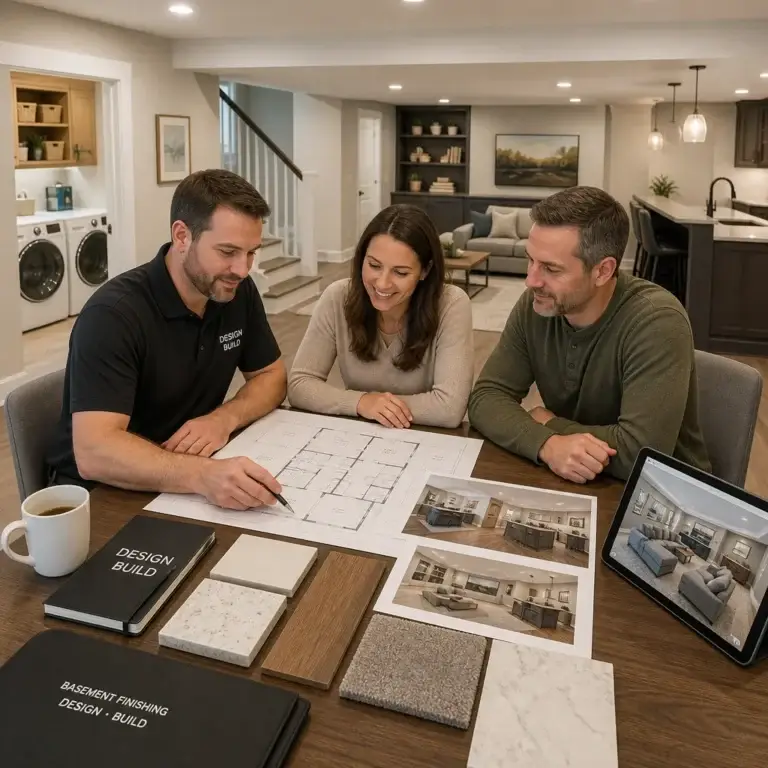
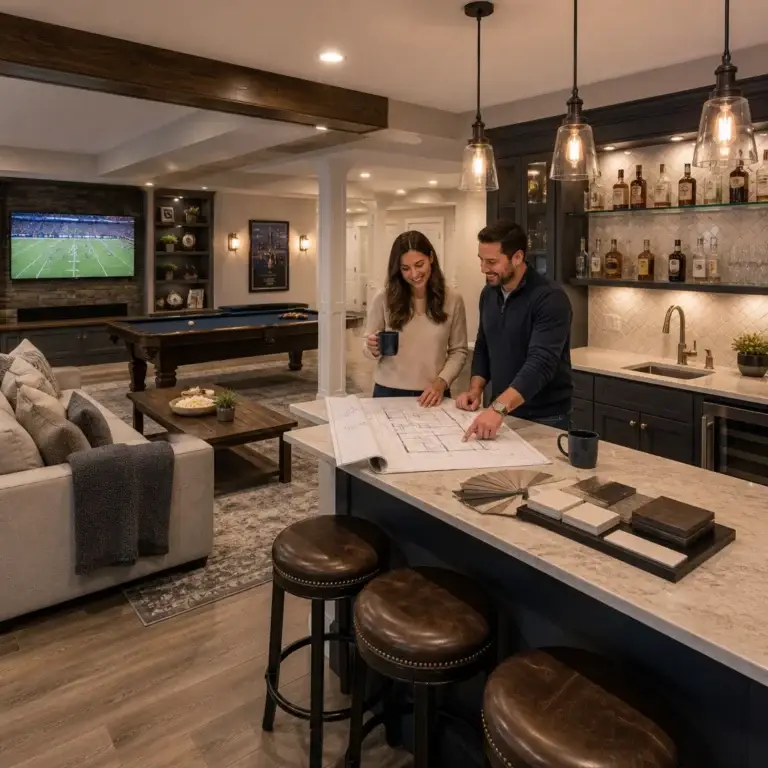
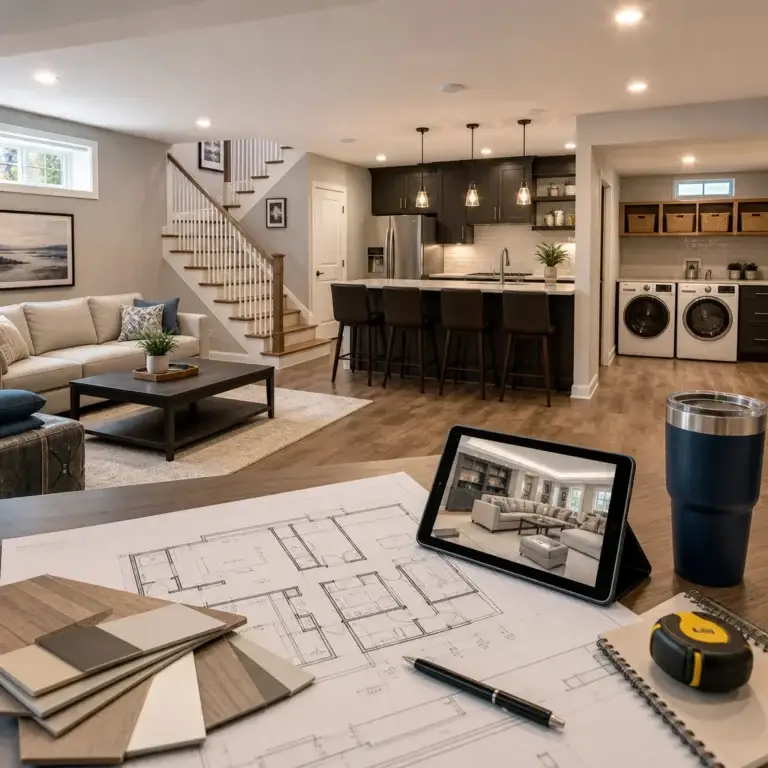
Real scenario: A homeowner working with us on a basement finishing project wanted to relocate a bearing wall three feet to create a larger recreation space. In a traditional setup, the architect would have to redraw the structure and get engineer approval, then the contractor would bid the change, and back-and-forth would ensue. In our process, our structural engineer and lead carpenter discussed it the day after the request, determined it was feasible, estimated the cost impact, and presented options before the end of the week. That’s the efficiency of having everyone working toward the same goal together.
Cost Control and Budget Transparency in Design-Build Projects
Budget stress is one of the biggest sources of renovation anxiety. Homeowners fear that their design will cost far more than expected, or that unexpected costs will ambush them mid-project.
In our design-build model, we establish your budget early and design specifically within it. We don’t create a fantasy design and then shock you with a price tag. Instead, we ask what you want to invest, we understand your priorities, and we design something excellent within those constraints.
As we develop the design, we’re continuously tracking costs. We know current material pricing in Northern Virginia’s market. We understand labor rates for the specific trades your project requires. When we present the design, the budget surprise is gone because cost has been part of the conversation from day one.
This approach also minimizes change orders. Because you and our team have been collaborating throughout the design phase, the final construction contract reflects what you actually want. You’re not discovering mid-project that you’d prefer different finishes or a different layout. Those decisions were made thoughtfully, with full information, while you could still change direction affordably.
When change orders do occur, they’re typically driven by your own requests or by genuine site conditions discovered during construction (a hidden water line, asbestos material, structural issues). We document these clearly and discuss cost impact before proceeding. You maintain control over your budget even as the project evolves.
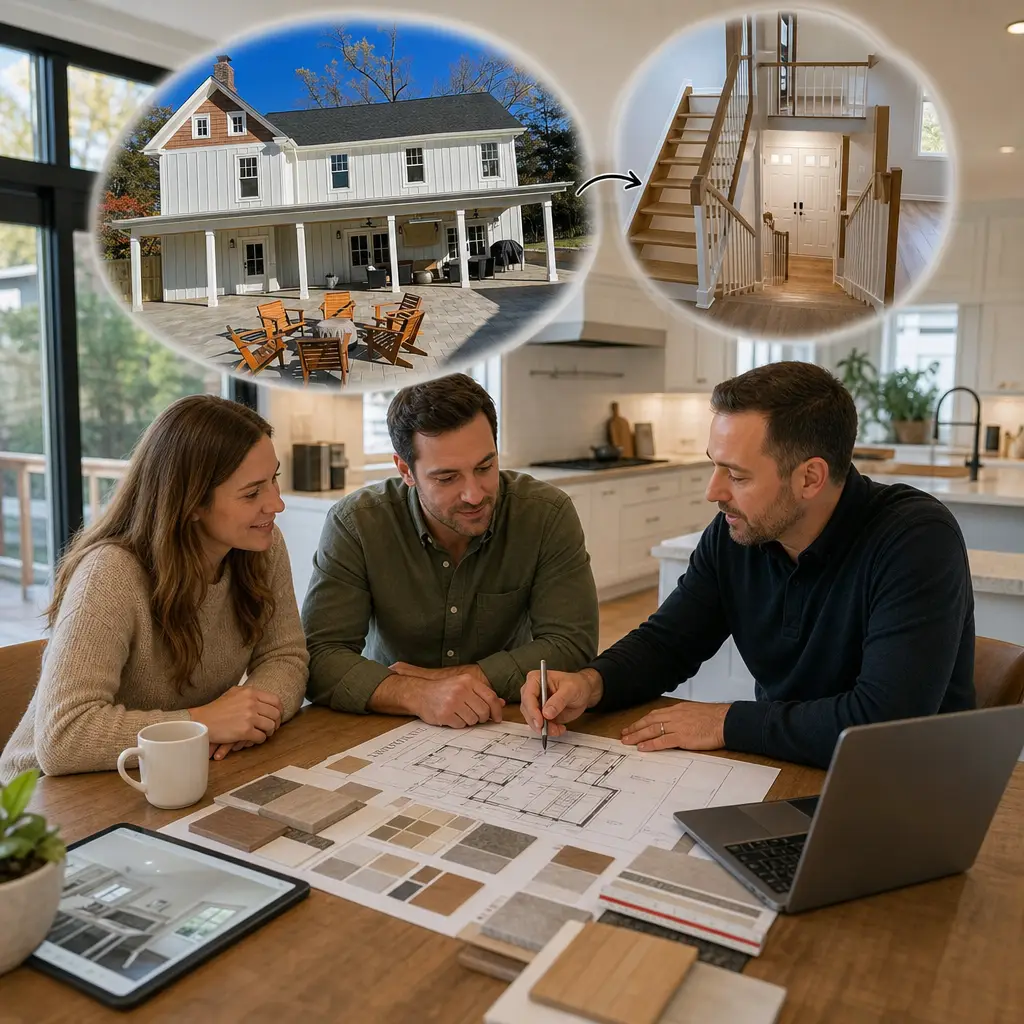
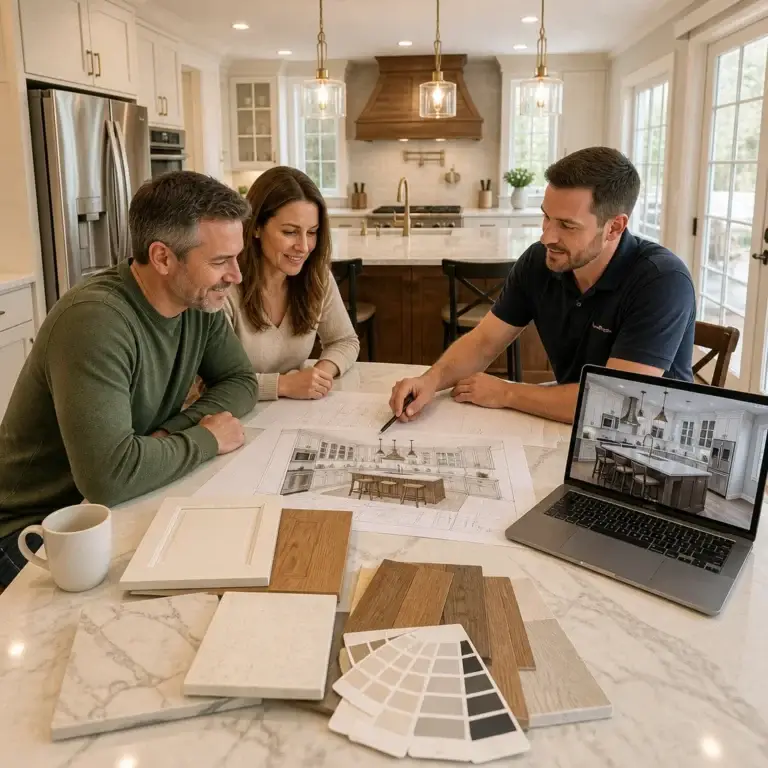
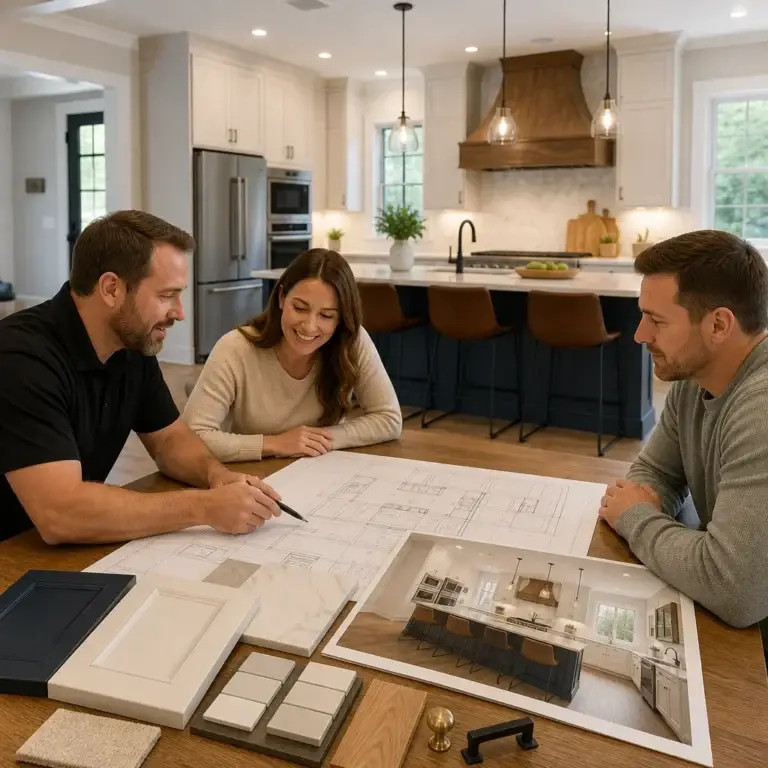
For a kitchen remodel, our design-build approach means you’re not choosing cabinets in a vacuum. You’re choosing them while understanding exactly how they fit into your total project cost, your timeline, and your overall design. You can see trade-offs in real time: upgrade the countertops and adjust cabinetry elsewhere if needed, rather than discovering mid-project that you’re over budget with no good options.
Timeline Efficiency: Getting Your Project Done Faster
Separate architects and contractors typically extend timelines simply through process inefficiency. The architect takes 8-12 weeks to produce final drawings. Getting contractor bids takes another 2-3 weeks. Contractor selection, permit processing, and material ordering adds more time. By the time construction starts, 4-5 months may have passed, and you’re still in the early stages.
Our design-build timeline is compressed because we work in parallel instead of in sequence. While our designer is developing your floor plan, our project manager is researching permit requirements and preliminary costs. While we’re refining design details, we’re identifying long-lead materials and getting them ordered. By the time construction begins, we’ve already started solving logistical problems that in a traditional model would emerge during construction and cause delays.
Northern Virginia’s permit process requires detailed coordination with local building departments. Our experience means we know exactly what’s needed, what the likely review timeline is, and how to structure applications for faster approval. We’re not learning the process during your project; we’ve guided dozens of projects through Fairfax County and surrounding municipalities.
Material lead times are also better managed in design-build. Custom cabinetry, specialty windows, and high-end finishes can take months to arrive. In our process, we’re locking in orders early because design and construction are coordinated. You’re not waiting around wondering if your materials have shipped.
A realistic home addition that might take 6-9 months in a traditional model often completes in 4-6 months with our design-build approach, not because we cut corners, but because we eliminate coordination delays and start intelligent project planning earlier.
Quality Assurance When Design and Construction Work Together
Quality means different things to different people, but in renovation work, it fundamentally means that what you see, use, and live with matches what was promised, and that it’s built to last.
When design and construction are integrated, quality control is embedded in every decision. Our carpenters aren’t just following drawings they had no input on. They’ve been part of conversations about how something should be built, so they understand the intent and can identify better approaches if they see them. Our designer isn’t making material selections in isolation; the contractor’s experience with durability, maintenance, and real-world performance informs those choices.
This collaboration surfaces problems before they become problems. A design detail that looks good on paper might be difficult to execute or prone to issues. When a skilled carpenter has input during design, they can suggest alternatives that are easier to build and more durable, or they can explain exactly how to build it correctly, so there are no surprises on site.
We also maintain consistent quality standards because everyone on our team is accountable to the same project manager and the same client. There’s no separation where the architect’s standards are different from the builder’s standards. We’re all working toward the same quality target, checked and verified consistently throughout.
Inspections and quality checks happen regularly, not as a final punch-list at the end. Issues are caught early when they’re still affordable and quick to address. You’re not discovering after move-in that something was installed incorrectly.
Why We Chose Design-Build for Northern Virginia Homeowners
We selected the design-build model specifically because it’s what Northern Virginia homeowners deserve and what this market demands.
This region has complex building codes, tight neighborhoods, sophisticated homeowners, and a premium building market. Your home is probably your largest asset, and a renovation is a significant investment. You shouldn’t have to navigate a fragmented process where two firms blame each other for problems or mistakes.
We also know that Northern Virginia neighborhoods often have challenging lot conditions, mature trees, existing utilities, and tight spaces. Design decisions made without input from the builder often create construction challenges that cost time and money. A design-build team identified these constraints earlier and works within them intelligently.
Our clients also value transparency and clear communication. They’re professionals who understand projects and want to be informed partners, not kept in the dark until the bill arrives. Design-build naturally supports this because progress is visible, decisions are explained, and trade-offs are discussed openly.
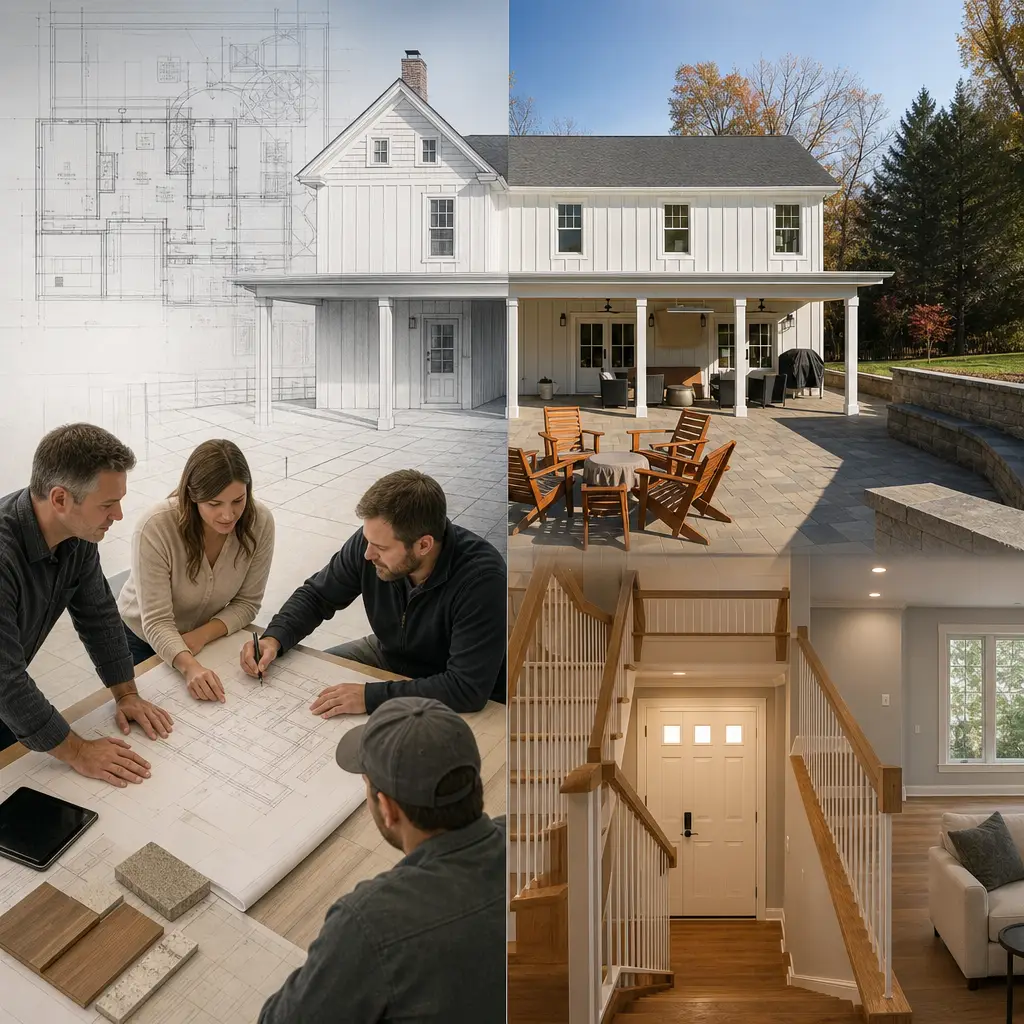
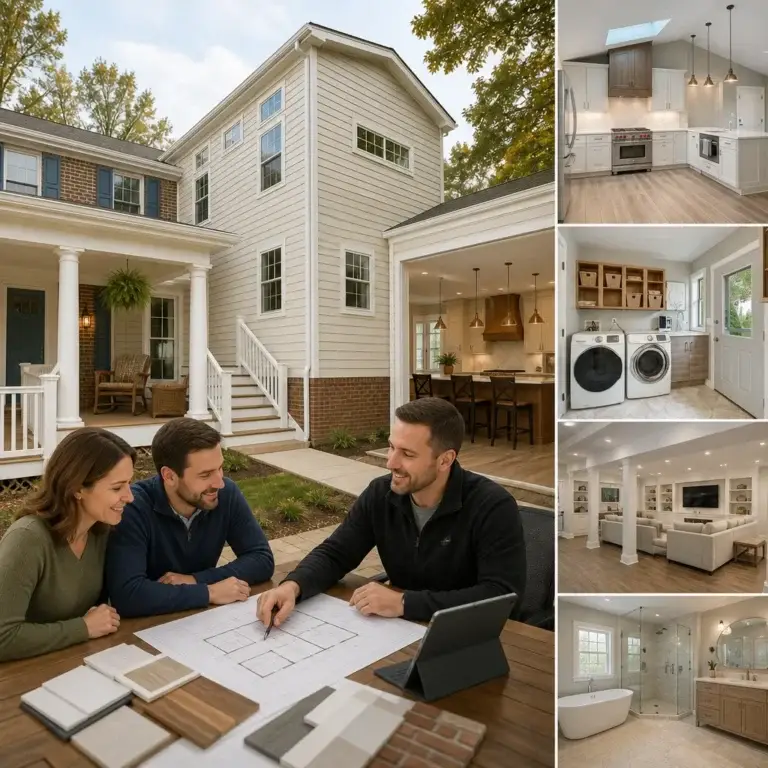
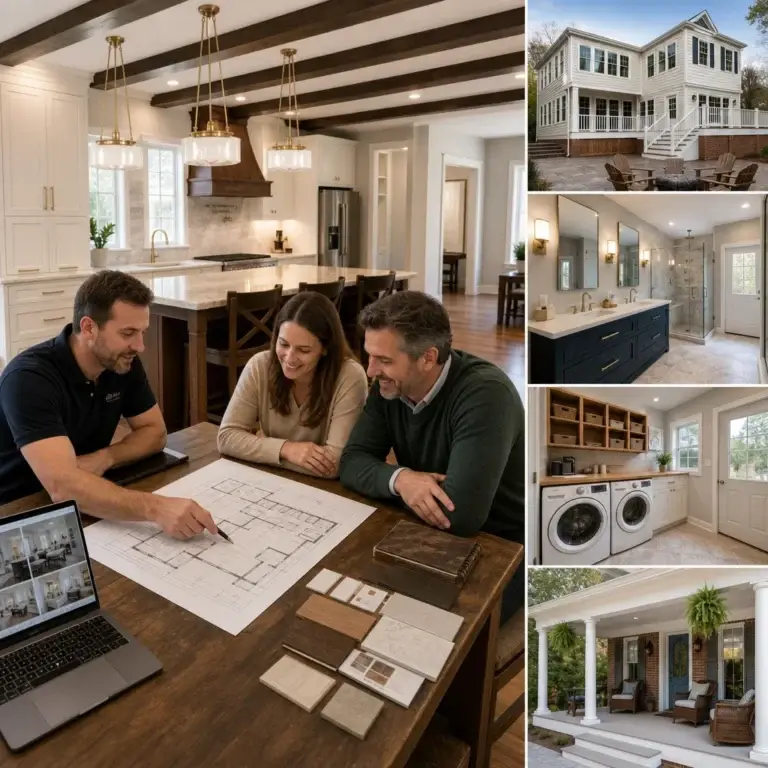
The homeowners we serve want to age in place or grow in place, not move. Whether you’re adding a second story for a growing family, finishing a basement to create multigenerational space, or expanding your kitchen and living areas, design-build means we’re designing something that works specifically for your home and your life. We’re not imposing a generic solution; we’re collaborating to create something personal.
The Long-Term Value of Choosing the Right Project Delivery Model
Choosing design-build isn’t just about efficiency or convenience, though those matter. It’s an investment in the long-term quality and value of your home.
Homes built through a well-integrated design-build process often perform better over time. Because design and construction have worked together, details are thoughtfully developed and properly executed. Material selections consider maintenance and longevity, not just initial cost. Systems are designed and installed as a coherent whole, not pieced together from separate specifications.
You also avoid the financial stress that often accompanies traditional renovations. When change orders and delays happen in a fragmented process, they feel like failures. Homeowners end up spending more than they expected, stressed about decisions, and frustrated by the length of the project. None of that leaves you feeling proud of your renovation or confident in your investment.
With design-build, you typically complete the project closer to your original budget and timeline. You’ve made your decisions thoughtfully, with full information. Your relationship with your contractor is collaborative, not adversarial. You understand why things cost what they cost and when they’ll be completed. That’s a vastly different emotional experience, and it matters.
The long-term value is also financial. A thoughtfully designed addition or remodel, executed with integrated planning and quality craftsmanship, holds its value better and often delivers a stronger return on investment than a poorly coordinated project. Buyers recognize the difference. More importantly, you’ll enjoy your improved home for years to come, knowing it was done right.
Moving forward, if you’re considering a renovation, home addition, basement finishing, or any significant home improvement, we encourage you to think carefully about your project delivery method. Request an initial consultation where you can explore design-build as an option. Ask potential contractors about their design-build capabilities and their integrated approach.
If you’re in the Fairfax County or Northern Virginia area and want to explore how design-build could work for your specific project, we’d welcome the conversation. You can reach out to discuss your vision, your timeline, and your budget. We’re here to help you understand the best path forward for turning your home into exactly what your family needs.
For further reading: Design Build Experts.
Contact us Today For a Free Estimate !
Frequently Asked Questions (FAQ)
What’s the main difference between our design-build approach and hiring an architect separately from a general contractor?
We handle both design and construction under one roof, which means our architects and builders collaborate from day one instead of working in isolation. This integrated approach eliminates the disconnect that often happens when an architect hands off plans to a separate contractor who then discovers conflicts or cost issues. We take full responsibility for the final outcome because we’re invested in both the design vision and the construction quality.
How does our design-build process keep projects on budget and on schedule?
We establish detailed upfront pricing and timelines before we break ground because our team has already aligned on materials, methods, and sequencing. Unlike traditional models where hidden conflicts emerge mid-project and delay work, we identify and resolve issues during planning when changes are inexpensive. Our single point of accountability means we have direct control over both design decisions and construction execution, so we deliver the home you envisioned without costly surprises.
Will we still have input on the design and material selections throughout the project?
Absolutely. We guide you through every design and material decision as part of our collaborative process, and your preferences shape the final outcome. Our team presents options tailored to your home, lifestyle, and budget rather than presenting you with a completed design you must accept or reject. You remain involved and informed from concept through completion.