Table of Contents
- 1. Verify Proper Licensing and Insurance Coverage
- 2. Look for Design-Build Experience and Expertise
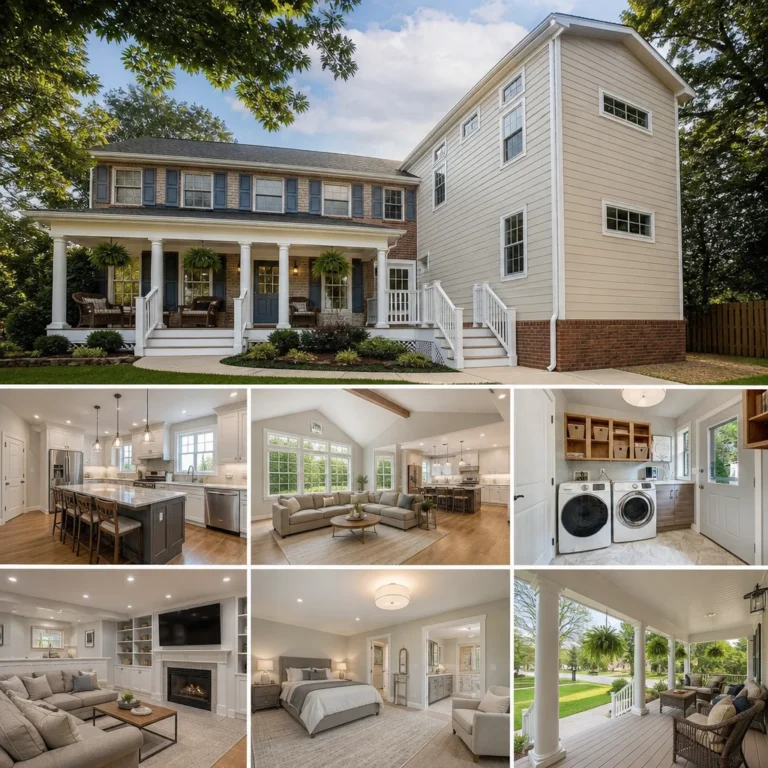
- 3. Review Their Portfolio and Completed Projects
- 4. Check Local References and Homeowner Reviews
- 5. Understand Their Permitting and Code Compliance Process
- 6. Compare Detailed Contracts and Transparent Pricing
- 7. Evaluate Communication Style and Project Management Approach
- Frequently Asked Questions (FAQ)
1. Verify Proper Licensing and Insurance Coverage
A finished basement transforms your home’s functionality, livability, and resale value. Whether you’re adding a family room, home office, or extra bedroom, the contractor you choose makes all the difference. We know that selecting the right basement finishing company in Annandale and Northern Virginia can feel overwhelming, so we’ve outlined the seven critical factors that separate excellent contractors from the rest.
Before you schedule a consultation, confirm that any contractor you’re considering holds a valid Virginia contractor’s license and carries comprehensive insurance. This is non-negotiable.
A licensed contractor has demonstrated competency, stayed current with building codes, and maintains accountability through the state licensing board. If a contractor cannot readily provide their license number or proof of insurance, that’s a red flag. Verify their credentials directly through the Virginia DPOR (Department of Professional and Occupational Regulation) website.
Insurance protects both you and the contractor. You need to see proof of:
- General liability insurance (covers property damage and bodily injury)
- Workers’ compensation coverage (protects you from liability if a worker is injured on your property)
- Tool and equipment coverage (ensures materials and equipment are protected)
Request certificates of insurance and confirm they’re current before work begins. Legitimate contractors view this transparency as routine; if there’s hesitation, move on.
Actionable takeaway: Call your homeowner’s insurance provider and ask what proof of insurance they recommend seeing before any work starts. This conversation often clarifies what you should require.
2. Look for Design-Build Experience and Expertise
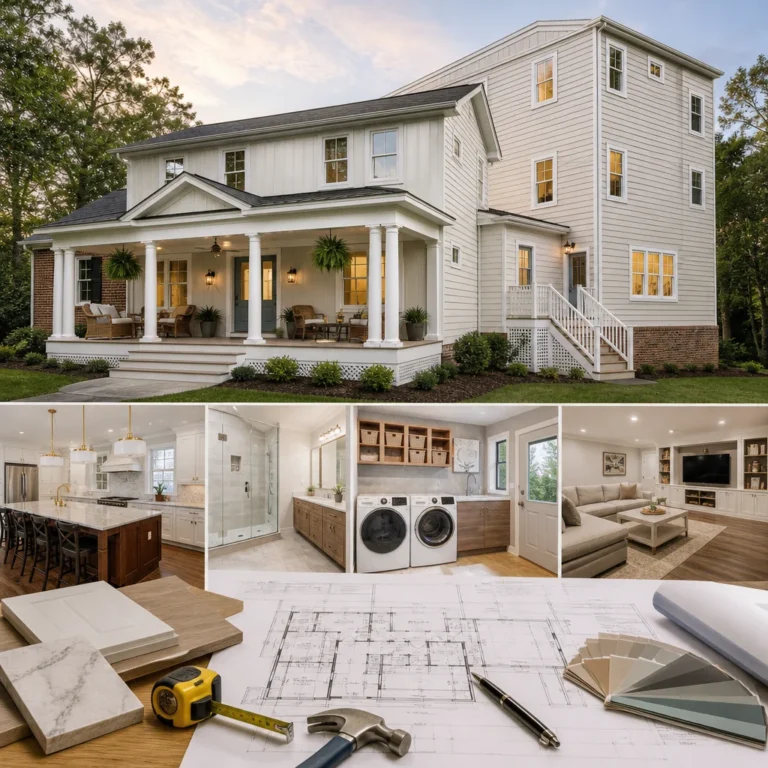
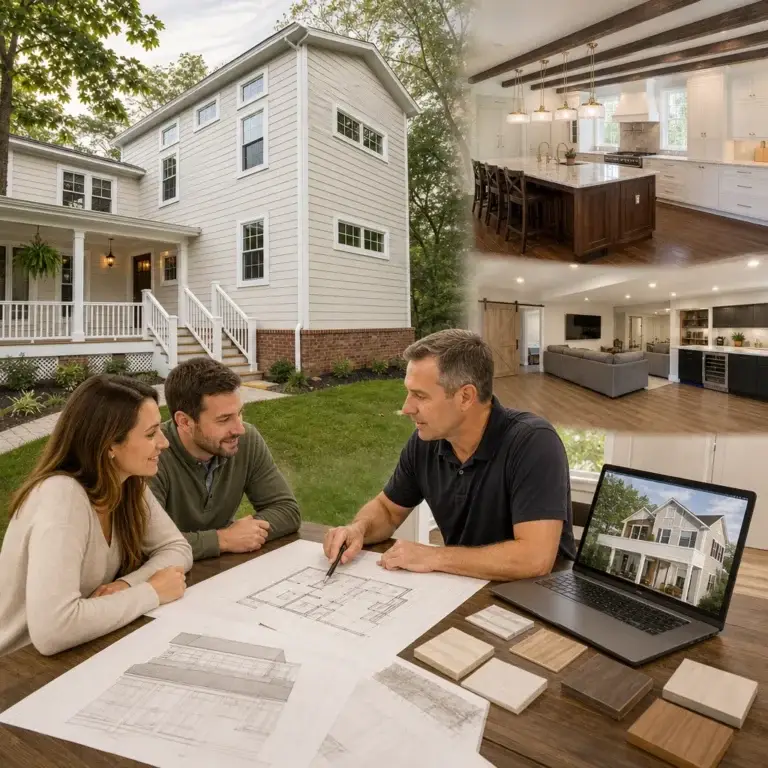
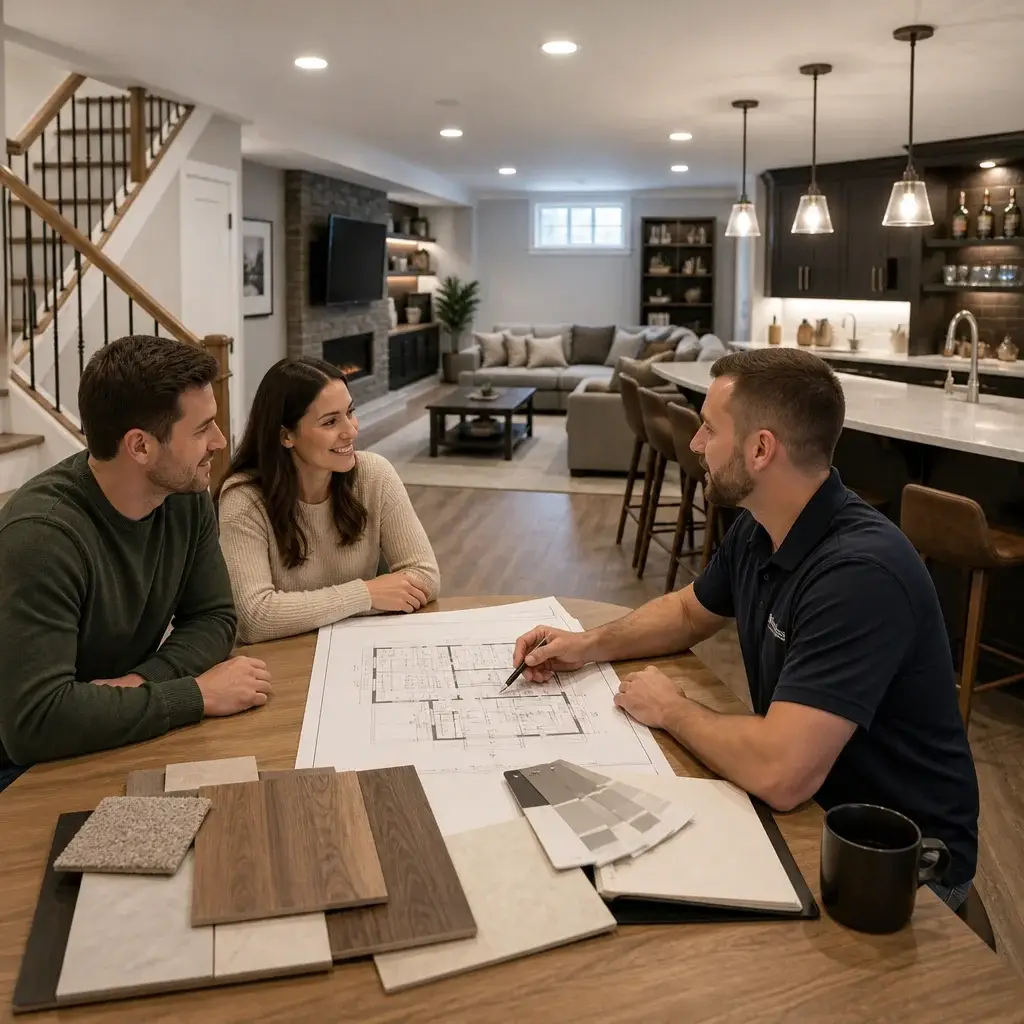
The design-build approach integrates architectural design, permit coordination, and construction under one unified team. This matters enormously for basement projects, which often involve structural considerations, mechanical systems, egress windows, and code compliance that demand coordinated expertise.
When a single company owns both the design and construction phases, accountability is clear, communication flows seamlessly, and problem-solving happens in real time rather than across multiple contractors pointing fingers. You get one point of contact managing the entire scope, not a fragmented process where designer, builder, and trade partners operate independently.
Experience matters too. Contractors who have finished dozens of basements in Northern Virginia understand our region’s specific challenges: frost lines, soil conditions, moisture management, and local permitting quirks. They know what works and what doesn’t because they’ve already solved these problems.
Ask prospective contractors:
- How long have you operated as a design-build firm?
- Do you handle design, permits, and construction in-house?
- How many basement projects have you completed in Fairfax County?
- What’s your approach to moisture control and vapor barriers?
[Design-build basement remodeling] gives homeowners a smoother, more predictable experience than traditional contractor-hire-architect fragmentation.
Actionable takeaway: Request three recent basement projects completed in your neighborhood or similar Northern Virginia communities. Visit them if possible, or ask the contractor for homeowner contact information.
3. Review Their Portfolio and Completed Projects
A strong portfolio tells the story of a contractor’s craftsmanship, design sensibility, and attention to detail. Don’t just glance at photos; dig into the context.
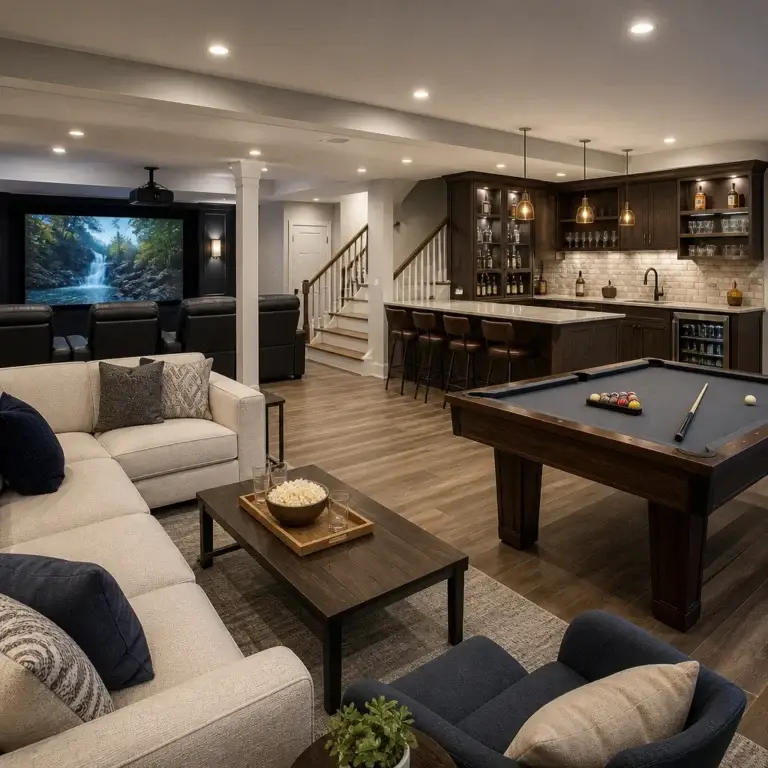
Look for basements that match your vision: if you want a modern family room with a bar and media setup, see how they’ve handled electrical routing, lighting design, and finishes. If you’re planning a guest suite, review how they’ve incorporated bedroom-level comfort and privacy into basement spaces. Quality contractors document ceiling heights, flooring choices, wall finishes, and lighting solutions because these details matter to homeowners.
Pay attention to the evolution of their work too. A contractor’s 2024 projects should show refinement and sophistication compared to 2020 work. This suggests continuous improvement and adaptation to changing homeowner preferences.
Red flags include:
- Portfolio photos that are low quality or poorly lit
- Projects that look generic or lack design cohesion
- No visible range (everything looks identical regardless of client needs)
- Minimal documentation or before-and-after sequences
Professional contractors invest in photography and portfolio presentation because they’re proud of their work and understand that visual communication matters.
Actionable takeaway: Create a Pinterest board or folder with three to five basement finishes you love. Show these to your contractor during the consultation to gauge their design perspective and flexibility.
4. Check Local References and Homeowner Reviews
References from previous clients provide genuine insight into what it’s actually like to work with a contractor. Online reviews offer valuable data, but direct conversations reveal nuances that star ratings can’t capture.
When you call references, ask about more than just quality. Inquire about communication frequency, how the contractor handled unexpected issues, whether the project stayed on timeline and budget, and whether they’d hire the contractor again. A contractor who communicates proactively when problems arise earns far more loyalty than one who avoids difficult conversations.
Check reviews on Google, Yelp, Angie’s List, and the Better Business Bureau. Look for patterns rather than isolated comments. One negative review in a sea of five-star ratings is normal; multiple complaints about the same issue (delays, poor communication, quality concerns) suggest a systemic problem.
Pay special attention to reviews mentioning:
- Timeline adherence
- Budget transparency
- Responsiveness to questions or concerns
- Worksite cleanliness and professionalism
- Warranty and follow-up support
Ask the contractor for at least five references from basement projects completed in the last two years. Any reluctance to provide references is suspicious.
Actionable takeaway: Before calling references, write down five specific questions you want answered. This ensures consistency and helps you compare contractor-to-contractor feedback more objectively.
5. Understand Their Permitting and Code Compliance Process
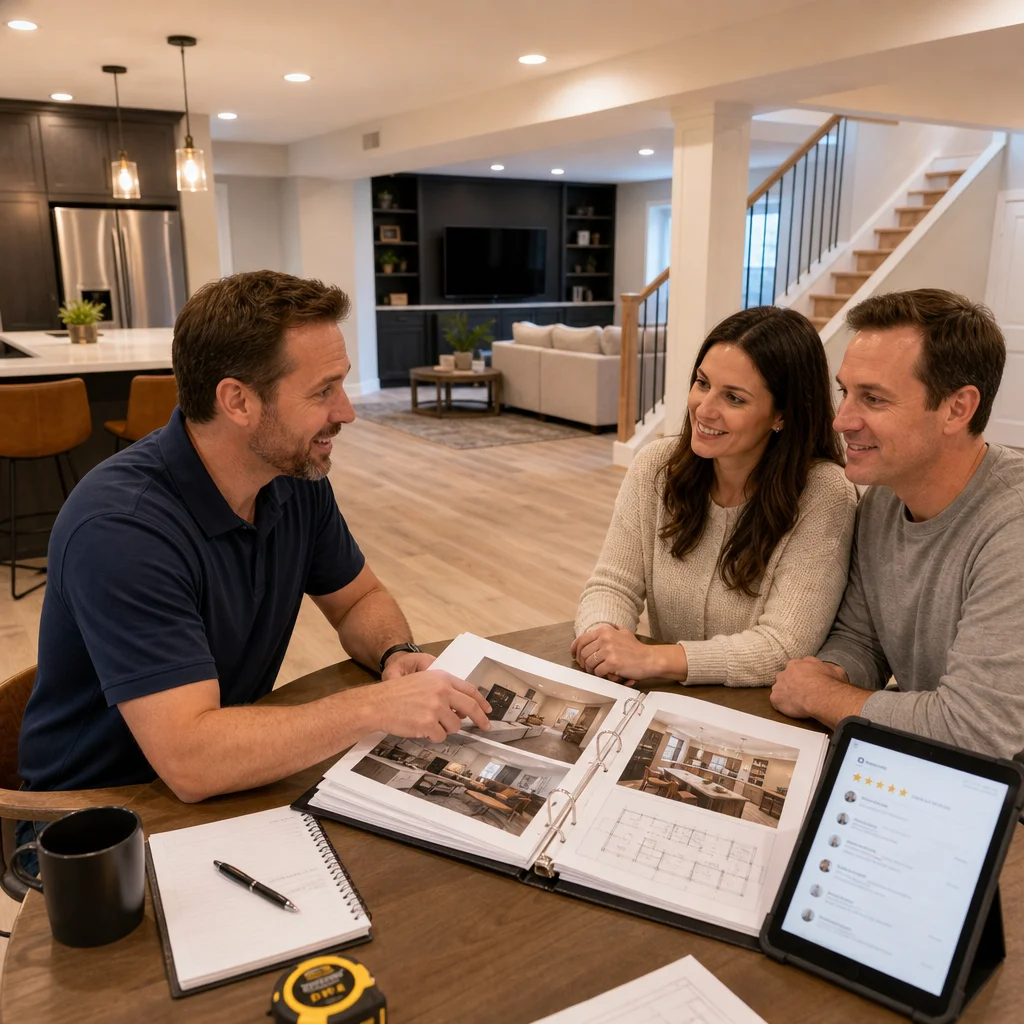
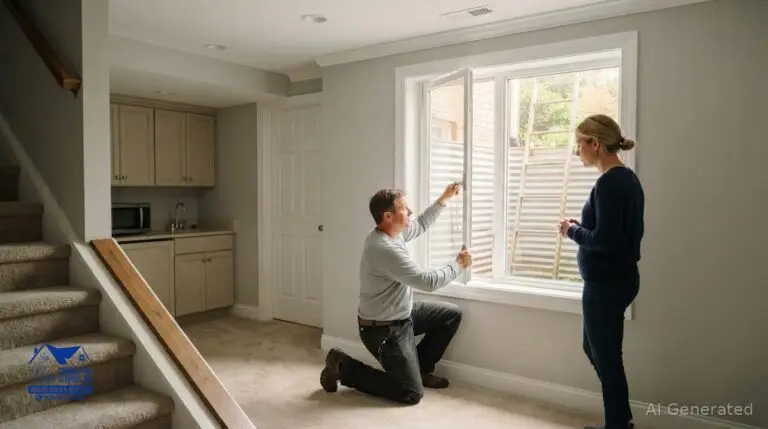
Basement finishing in Fairfax County requires proper permits, inspections, and adherence to building codes. The specific requirements vary by project scope, but egress windows, ceiling heights, electrical work, and mechanical systems all demand code compliance.
Many homeowners underestimate permitting costs and timelines. Experienced contractors factor these into project planning and budgets from the start. They know the process intimately and manage it efficiently, keeping your project on track rather than discovering code violations mid-construction.
Ask your contractor:
- Do you obtain permits, or do I?
- What’s your typical timeline for permit approval in Fairfax County?
- How many inspections does a typical basement project require?
- What happens if an inspection fails? Who corrects it?
- Are permit costs included in your bid?
Contractors who proactively explain the permitting process and answer these questions confidently have done this many times. Those who downplay or defer permitting responsibility might be cutting corners.
The right contractor views permitting not as a burden but as protection for you. A permitted, inspected basement is a legally compliant asset that protects your home’s resale value and safety.
Actionable takeaway: Call Fairfax County’s building permit office (703-877-8500) and ask what permits are required for your specific project. Compare this to what your contractor tells you; it confirms they know the rules.
6. Compare Detailed Contracts and Transparent Pricing
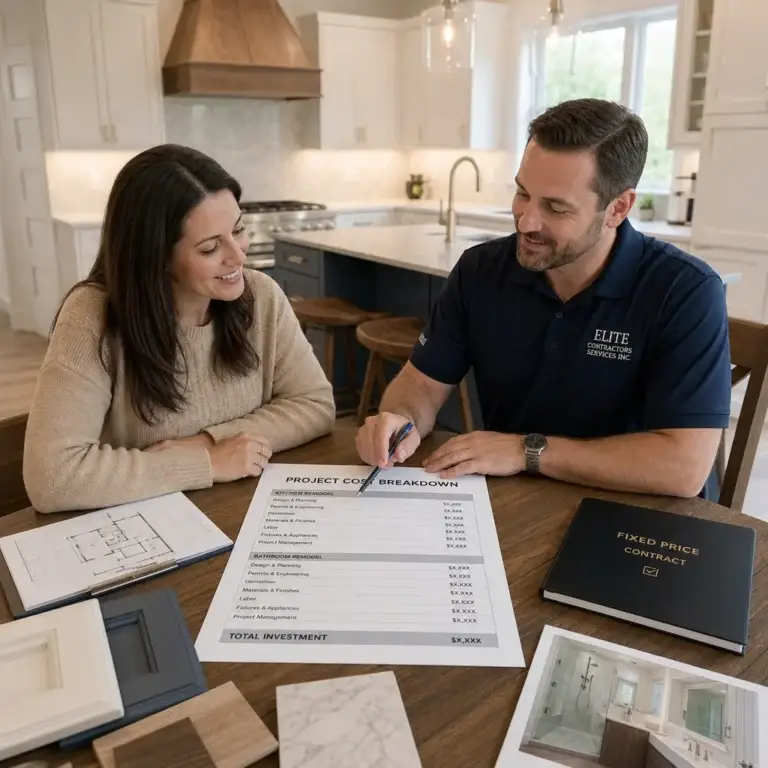
A professional contractor provides a detailed contract that outlines scope, timeline, payment schedule, warranty terms, and change order procedures. This contract protects both parties and eliminates ambiguity.
Detailed pricing breakdowns matter more than a single bottom-line number. You should see line items for demolition, framing, drywall, flooring, electrical, HVAC adjustments, permits, and finishes. This transparency allows you to understand where money goes and identify cost-saving opportunities if needed.
Be wary of:
- Vague scope descriptions (“finished basement” without specifications)
- Pricing that seems significantly lower than competitors (often signals corner-cutting)
- Contracts lacking payment schedules or milestone definitions
- No warranty language or unclear terms for defects
- Reluctance to put promises in writing
Payment structure varies, but a typical schedule involves a deposit (often 10-20%), progress payments tied to specific milestones, and final payment upon completion and inspection approval. Avoid contractors demanding large upfront payments or cash-only arrangements.
Our approach emphasizes upfront contracts and transparent pricing because we believe homeowners deserve to know exactly what they’re paying for and when. No surprises, no ambiguity, no change orders buried in fine print.
Actionable takeaway: Request detailed contracts from at least two contractors and compare line-item pricing. If one contractor’s basement bid is dramatically lower, ask specifically why (different materials? fewer inspections? smaller scope?). The answer reveals a lot.
7. Evaluate Communication Style and Project Management Approach
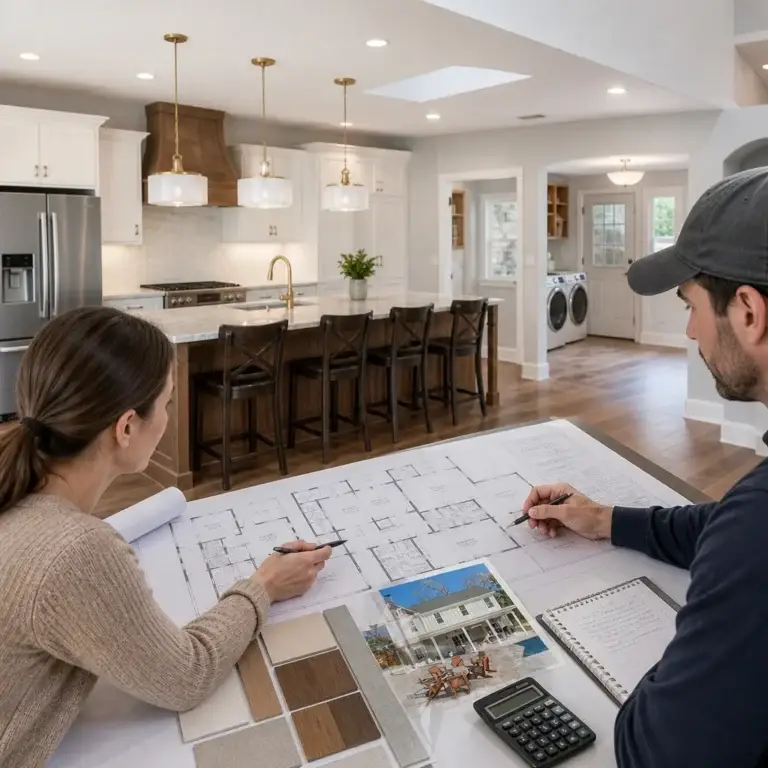
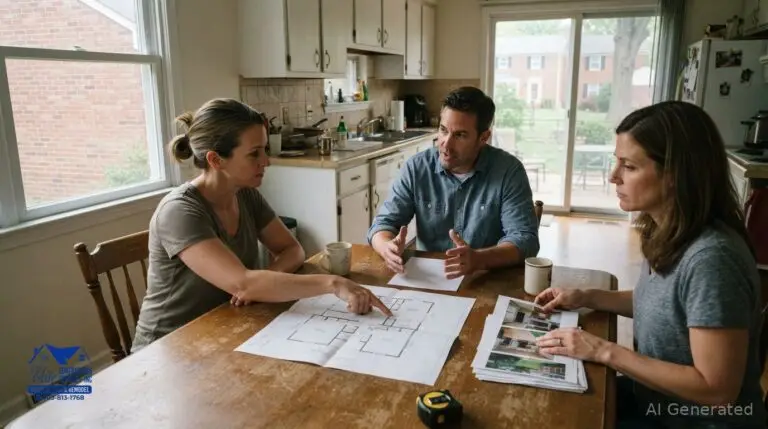
The quality of communication during your consultation predicts the quality of communication during construction. Does the contractor listen carefully to your goals, ask clarifying questions, and explain their process clearly? Or do they talk at you, push a standard package, and seem eager to move to the next client?
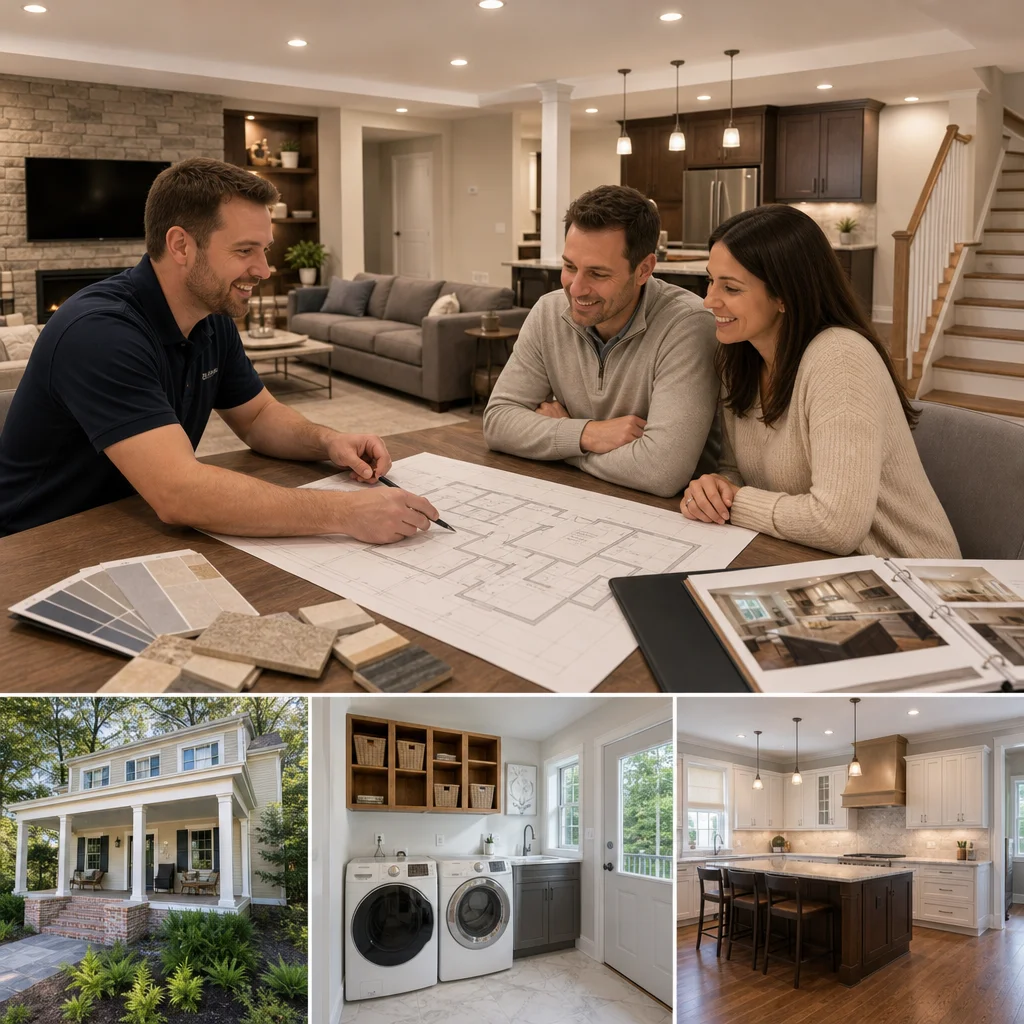
Excellent contractors provide regular updates without you having to chase them. Weekly emails or calls during active work, prompt responses to questions, and honest communication about delays or challenges are hallmarks of professional project management. You should know exactly what’s happening on your job site.
Ask during your consultation:
- How will you keep me updated during construction?
- What’s your response time for homeowner questions?
- How do you handle unexpected issues or change requests?
- Will I have a single point of contact, or will I interact with multiple team members?
- What’s included in your warranty, and who do I contact for post-project issues?
[Design-build renovation advantages] include clearer communication pathways because one team owns both design and construction accountability. When questions arise, they’re answered by the same leadership that designed the space, not passed between separate entities.
The contractor you choose should make you feel heard, respected, and confident that your project is in capable hands. If you feel pressured, dismissed, or like you’re just a job number, keep looking.
Actionable takeaway: After your consultation, jot down your impression of how well the contractor listened and communicated. Trust your gut. If something feels off about their approach, it likely will during the project too.
—
Selecting the right basement finishing company requires diligence, but it’s an investment that pays dividends in comfort, function, and home value. At Elite Contractors Services, we embody all seven of these standards: we’re fully licensed and insured, we operate as an integrated design-build firm with deep Northern Virginia expertise, we maintain a robust portfolio of finished basements throughout Fairfax County, we handle permitting and code compliance seamlessly, we provide detailed contracts and transparent pricing, and we prioritize clear communication and professional project management.
We’ve spent years perfecting the basement finishing process for homeowners just like you. When you’re ready to transform your basement into the space you’ve imagined, reach out to schedule a consultation. We’ll listen, explain our process, show you our work, and provide the clarity and confidence you deserve.
For further reading: Design-build basement remodeling.
Contact us Today For a Free Estimate !
Frequently Asked Questions (FAQ)
What makes our design-build approach different from hiring separate architects and contractors?
We combine architectural design, permitting, material selection, and construction under one roof, which means you work with a single team throughout your entire project. This eliminates the coordination gaps that often occur when homeowners manage multiple vendors, reduces timeline delays, and gives us accountability for the final result. We handle everything from your initial vision through final completion, keeping communication clear and decisions centralized.
How do we ensure basement finishing projects meet all local codes and permit requirements in Fairfax County?
We manage the full permitting process on your behalf, working directly with local authorities to secure all necessary approvals before construction begins. Our team stays current with Fairfax County codes and regulations specific to basement finishing, egress windows, HVAC systems, and moisture control. We build every project to code from day one, so you avoid costly rework or compliance issues down the road.
What should homeowners expect regarding pricing transparency and contracts with us?
We provide detailed, upfront contracts that outline scope, materials, timeline, and total cost before we break ground. Our pricing reflects the quality and craftsmanship you’re receiving, and we stand behind our on-time, on-budget commitment. You’ll have no surprises along the way because we discuss every decision and cost factor clearly from the start.