Table of Contents
- 1. Detailed Upfront Contracts That Eliminate Hidden Costs
- 2. Experienced Design-Build Project Managers Keep Timelines on Track
- 3. Pre-Planning and Material Sourcing to Prevent Delays
- 4. Clear Communication Checkpoints Throughout Your Project
- 5. Licensed and Insured Craftsmanship That Requires No Rework
- 6. Fixed-Price Budgets We Stand Behind
- 7. Permit Coordination Handled by Our Team
- 8. Realistic Scheduling Based on Fairfax County Project Realities
- Frequently Asked Questions (FAQ)
1. Detailed Upfront Contracts That Eliminate Hidden Costs
When you’re planning a major home remodeling project in Fairfax County, the biggest concerns are usually the same: Will it cost more than quoted? Will workers still be in my home six months from now? Will decisions change mid-project and blow the schedule?
These worries are legitimate. Countless homeowners have experienced scope creep, surprise expenses, and delays that turned a six-month kitchen remodel into a ten-month headache. The difference between those painful projects and smooth ones often comes down to how the contractor structures their process.
At Elite Contractors Services, we’ve built our design-build approach specifically to protect you from these common pitfalls. Our goal is straightforward: deliver exactly what we promise, when we promise it, and at the price we quote.
The root of most budget overruns isn’t miscalculation, it’s ambiguity. When a contract leaves room for interpretation, costs hide in the fine print or emerge later as “change orders.”
We address this by creating contracts that spell out every detail before the first nail is driven. Our agreements include:
- Exact materials and brands (not vague descriptions like “quality tile” or “contractor-grade cabinets”)
- Precise scope of work with measurements and finishes clearly defined
- Labor costs broken down by phase
- Allowances for items you’re still deciding on, with realistic price ranges
- What’s included and, equally important, what isn’t
This level of specificity removes the guesswork. When both you and our team know exactly what’s being built and how much it costs, surprises become extremely rare.
Consider a kitchen remodel where the contract specifies “Shaker-style maple cabinets, Carrara marble counters, and stainless steel appliances from the XYZ brand.” Compare that to a vague contract that just says “custom kitchen cabinets and countertops.” The detailed version tells you what you’re getting; the vague one leaves room for escalating costs.
We also build in a contingency line item, typically 5-10% of the project total, which covers unexpected issues like hidden water damage or obsolete plumbing code violations. You know this money exists, you know roughly why it might be needed, and you approve spending against it. It’s not a shock; it’s a realistic buffer.
Your next step: When you’re gathering proposals from any contractor, ask to see a complete scope-of-work document before you sign. If they can’t or won’t provide one, that’s a red flag.
2. Experienced Design-Build Project Managers Keep Timelines on Track
A timeline is only as good as the person managing it. Coordinating subcontractors, material deliveries, inspections, and your own decisions requires someone with real experience and real accountability.
Our design-build project managers don’t just assign tasks and hope for the best. They actively oversee every phase, anticipate bottlenecks, and adjust schedules before delays happen. Here’s what that means in practice:
- Weekly coordination meetings with the team to confirm material arrivals and sub schedules
- Real-time tracking of permit status so inspections happen on time
- Buffer time built into the schedule for weather, permit delays, or discovered issues (rather than hoping nothing goes wrong)
- Direct communication with homeowners about any changes that might affect the timeline
A manager who’s been through 50 remodels in Fairfax County knows that permit review typically takes 2-3 weeks, that sourcing custom kitchen islands can add 4 weeks, and that winter weather often slows foundation work. They build the schedule accordingly, not optimistically.
We’re also invested in our timelines personally. Our project managers live in Northern Virginia and understand local permitting processes, contractor availability, and seasonal factors that affect work. This isn’t outsourced; it’s handled by someone with skin in the game.
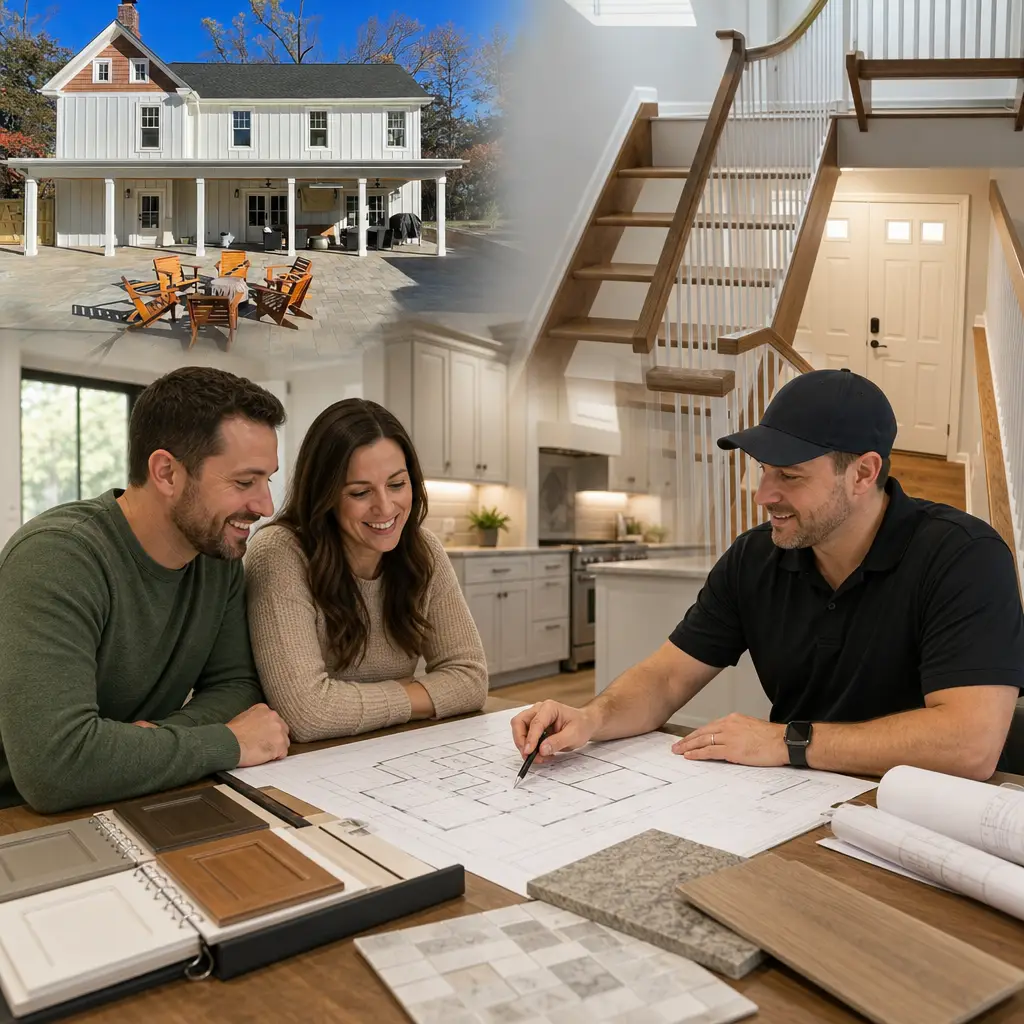
Your next step: When interviewing contractors, ask how many projects they’ve completed in the past two years and what percentage finished on schedule. A strong answer will be honest about timelines and backed by references.
3. Pre-Planning and Material Sourcing to Prevent Delays
One of the biggest timeline killers is waiting for materials. A custom door ordered in January that’s promised by March, then arrives in May. A special finish on cabinetry that has an eight-week lead time. Granite that’s on backorder.
We prevent this by front-loading material decisions and sourcing early.
Before construction begins, we’ve already:
- Selected all major finishes, fixtures, and appliances so orders can be placed immediately
- Confirmed lead times with suppliers and built those into the master schedule
- Sourced from trusted, reliable vendors we’ve worked with repeatedly
- Ordered long-lead items before the project officially starts
This means that when our crews arrive for day one of construction, the materials they need are either already on-site or arriving on a confirmed schedule. We’re not starting framing and hoping the kitchen cabinets show up in time.
For kitchen remodeling, this approach is especially critical because kitchens have so many components. When every cabinet, countertop, appliance, and hardware piece is already sourced and scheduled, the kitchen can stay on track even if other parts of the project face minor setbacks.
Pre-planning also means we catch potential issues early. If a finish you’ve chosen isn’t compatible with your home’s electrical setup, we identify and solve that before construction starts, not in the middle of work.
Your next step: Ask your contractor whether they’ll source materials before or after the construction contract is signed. Earlier is better; it shows they’re prioritizing timeline protection.
4. Clear Communication Checkpoints Throughout Your Project
Radio silence from a contractor is a recipe for anxiety and miscommunication. We structure communication into the project itself.
Here’s how we keep you informed:
- A dedicated project manager who’s your single point of contact
- Weekly written updates showing progress, upcoming phases, and any decisions needed from you
- A project portal where you can see schedules, materials, and work photos
- Pre-planned decision deadlines so you have time to choose finishes without rushing
- A standing weekly call during active construction phases
This isn’t just courtesy; it’s necessary for staying on time and on budget. When you know a decision is due Friday so materials can be ordered Monday, you make the choice promptly. When you see the schedule and understand why next week is drywall but the following week is plumbing, surprises don’t derail expectations.
We also communicate about problems immediately. If an issue arises, you hear about it as soon as we identify it, along with our recommended solution and any impact to timeline or budget. You’re never blindsided by a problem that’s been brewing for weeks.
Your next step: Ask potential contractors how they communicate. Do they assign one contact or do you talk to different people each time? Do they have a system for updates or is it ad hoc?
5. Licensed and Insured Craftsmanship That Requires No Rework
Sloppy work doesn’t just frustrate homeowners, it stretches timelines and adds costs. When drywall is installed incorrectly and has to be re-taped, when electrical work fails inspection and has to be redone, or when plumbing leaks and walls have to be opened up, the schedule derails fast.

Our team avoids these problems by maintaining high standards from the start. We employ skilled tradespeople who are licensed in their specialties and take pride in quality. Our crews also follow a systematic inspection process at each phase:
- Final checks before subs leave for the day
- Formal inspections before moving to the next phase
- Code compliance verification before requesting permits
- Quality walk-throughs with homeowners to catch any issues early
We’re also fully insured and bonded. This protects you if anything goes wrong, but more importantly, it means we carry liability insurance that covers any damage or injury on your property. You’re protected, and we’re motivated to work safely and correctly.
Licensed craftsmanship also means we navigate code requirements correctly the first time. In Fairfax County, plumbing, electrical, and structural work all have specific code requirements that vary by district. Our crews know these requirements and build to them, which means inspections pass on the first or second attempt, not the third or fourth.
Your next step: Verify that any contractor you hire is licensed by Virginia’s Department of Professional and Occupational Regulation. Ask for proof of general liability and workers’ compensation insurance.
6. Fixed-Price Budgets We Stand Behind
“Fixed-price” means something specific: we quote a price, and barring extreme changes to scope that you approve, that’s the price you pay.
This is different from time-and-materials contracts where you pay for every hour and every material and the final bill could be significantly higher than the estimate. It’s also different from contractors who quote low and then hit you with endless change orders.
Our fixed-price approach works because:
- The detailed contract defines the scope clearly, so scope creep is obvious and requires your written approval
- We’ve estimated labor and materials conservatively, not optimistically
- We have the contingency line item for genuine surprises
- We’ve built our schedule conservatively, so we’re not constantly racing and burning labor hours
Fixed-price contracts require more work upfront to estimate correctly, but they protect both you and us. You know your maximum budget. We know our maximum risk. Everyone wins.
That said, we’re also realistic about change requests. If you decide mid-project that you want to add a window, or upgrade the vanity, or extend the addition by two feet, we’ll give you a clear, separate quote for that change. You control whether it happens, and you know exactly what it costs.
Your next step: When you get proposals, ask which are fixed-price and which are time-and-materials. Ask what’s covered by the contingency and what would require a change order.
7. Permit Coordination Handled by Our Team
Permits are a nightmare for homeowners who try to manage them solo. Fairfax County has specific requirements for different types of work, inspections happen at critical phases, and missed deadlines can halt a project cold.
We handle permit coordination as part of our service. This includes:
- Preparing complete permit applications with detailed drawings and specifications
- Submitting applications to the county and following up on review timelines
- Coordinating with county inspectors to schedule inspections at the right phases
- Making minor modifications to designs if the county requests them
- Ensuring all inspections pass before proceeding to the next phase
Permit delays are one of the largest variables in remodeling timelines. By actively managing the permit process rather than passively waiting, we reduce delays significantly. We also know the county reviewers and inspectors, which helps us anticipate questions and smooth the process.
When you hire us, you’re not getting a contractor who files paperwork and hopes for the best. You’re getting a team that understands Fairfax County’s specific permitting requirements and has relationships with the people who review and inspect the work.

Your next step: Ask your contractor if they handle permits or if you do. If you do, ask what happens if there’s a delay; who absorbs that cost?
8. Realistic Scheduling Based on Fairfax County Project Realities
Generic timelines don’t work for remodeling. A kitchen addition in Fairfax County has different realities than one in rural West Virginia. Winter affects timeline. Permit review takes time. Material sourcing takes time.
We schedule projects realistically by building in these known factors:
Permit review: Fairfax County typically takes 2-3 weeks for standard remodeling permits. We account for this in the schedule and start the permit process early, often even during the design phase.
Seasonal weather: Winter framing and exterior work is slower and riskier. We schedule accordingly. Summer permits move slightly faster but material sourcing can be slower during peak season.
Subcontractor availability: Quality subs in the Fairfax area book out weeks in advance. We lock in schedules early and don’t overpromise availability.
Inspection timing: County inspections aren’t instantaneous. We request them when work is ready and often wait 3-5 days for an available slot. We build this into the timeline.
Material lead times: We confirm every lead time and add a buffer. A 6-week cabinet order becomes an 8-week timeline item to account for shipping delays or minor adjustments.
When we quote 16 weeks for a room addition, we’re not being conservative to low-ball you. We’re being realistic about what 16 weeks includes: design approval, permitting, material sourcing, framing, inspections, mechanical systems, finishing, and final inspection.
Your next step: When a contractor gives you a timeline, ask them to walk you through it. What’s in each month? When are inspections? When are long-lead materials due? A detailed timeline shows real thinking, not wishful thinking.
For further reading: Room Additions Fairfax VA.
Contact us Today For a Free Estimate !
Frequently Asked Questions (FAQ)
How do we keep remodeling projects on time and on budget?
We combine detailed upfront contracts with experienced design-build project management to ensure both timelines and costs stay predictable. Our team handles permit coordination, material sourcing, and construction scheduling upfront so surprises don’t derail your project. We also build realistic timelines based on Fairfax County project realities rather than overpromising, and our fixed-price agreements mean you know exactly what you’ll pay from day one.
What happens if unexpected issues come up during construction?
We conduct thorough pre-planning and material sourcing before breaking ground, which catches most potential problems before they become costly delays. When unforeseen conditions do arise, our design-build team addresses them quickly through our established problem-solving process rather than stopping work. We keep you informed at every communication checkpoint so you’re never caught off guard by changes or additional costs.
Why should we choose a design-build contractor instead of hiring separate designers and builders?
Our design-build approach brings architecture, permitting, material selection, and construction under one experienced team, eliminating the miscommunication and delays that often happen when homeowners juggle multiple contractors. This streamlined process gives you clear accountability, faster decision-making, and professional project management from your initial vision through final walkthrough. You’ll work with the same team throughout, not hand-offs between different companies.