Table of Contents
- Why Your Kitchen and Bath Deserve a Modern Upgrade
- The Design-Build Advantage for Kitchen and Bath Projects
- Current High-End Kitchen Design Trends We’re Seeing in Northern Virginia
- Luxury Bathroom Features That Add Real Home Value
- Smart Storage and Functionality Solutions for Modern Kitchens
- Premium Materials and Finishes That Stand the Test of Time
- How We Integrate Timeless Style with Today’s Trending Elements
- The Investment: Understanding Costs and ROI for Quality Remodels
- Our Process: From Vision to Installation
- Why Professional Project Management Makes the Difference
- Transform Your Kitchen and Bath Today
Why Your Kitchen and Bath Deserve a Modern Upgrade
Your kitchen and bathroom are the two rooms in your home that see the most daily use and generate the highest return on investment when renovated thoughtfully. A family of four spends roughly 2,000 hours per year in the kitchen alone, while bathrooms set the tone for how you start and end each day. When these spaces are outdated, inefficient, or just plain uninspiring, the impact ripples through your entire home experience.
Northern Virginia’s real estate market has evolved significantly, and buyer expectations have shifted with it. Modern kitchens and bathrooms are no longer luxury additions; they’re essential amenities that today’s homeowners and future buyers expect. An outdated layout, worn finishes, or poor functionality doesn’t just frustrate you now, it signals deferred maintenance later.
Beyond resale value, upgrading these spaces improves daily comfort and function. Better lighting, ergonomic layouts, quality appliances, and strategic storage transform how efficiently you move through your home. A well-designed bathroom becomes a personal retreat rather than a utilitarian space. A modern kitchen becomes the gathering hub of your household instead of a cramped, frustrating workspace.
We’ve seen homeowners in Fairfax County, Arlington, and across Northern Virginia discover that quality kitchen and bath upgrades deliver measurable returns in both lifestyle and property value, typically recouping 60 to 80 percent of project costs at resale.
What to do next: Assess which spaces in your home cause the most daily frustration. Is it limited counter space? Outdated fixtures? Poor lighting? These pain points are your roadmap for where upgrades will deliver the most immediate benefit.
The Design-Build Advantage for Kitchen and Bath Projects
Kitchen and bathroom remodeling sits at the intersection of design vision and construction reality. Many homeowners work with separate architects and contractors, which creates communication gaps, cost overruns, and timeline delays. We approach it differently.
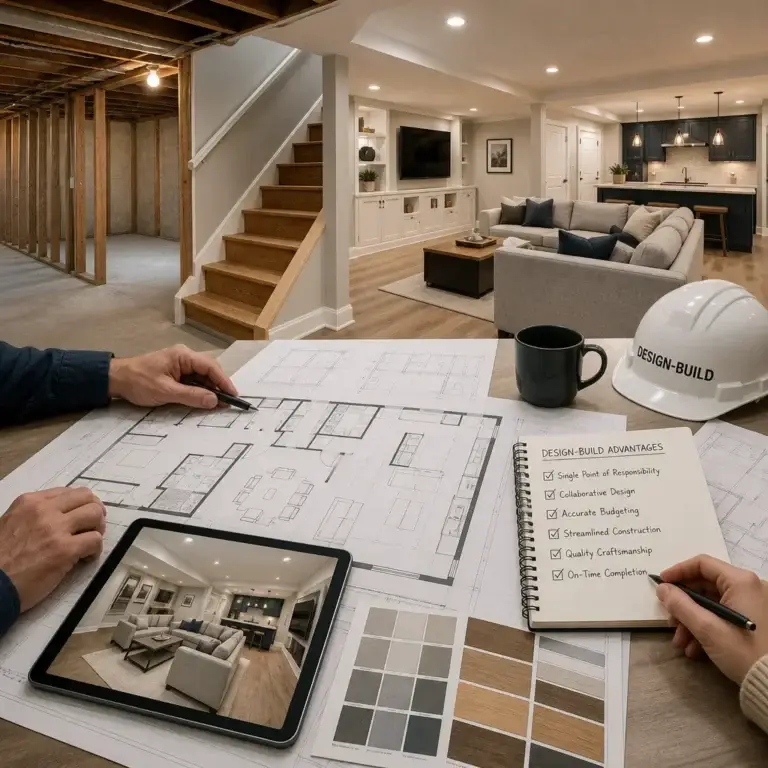
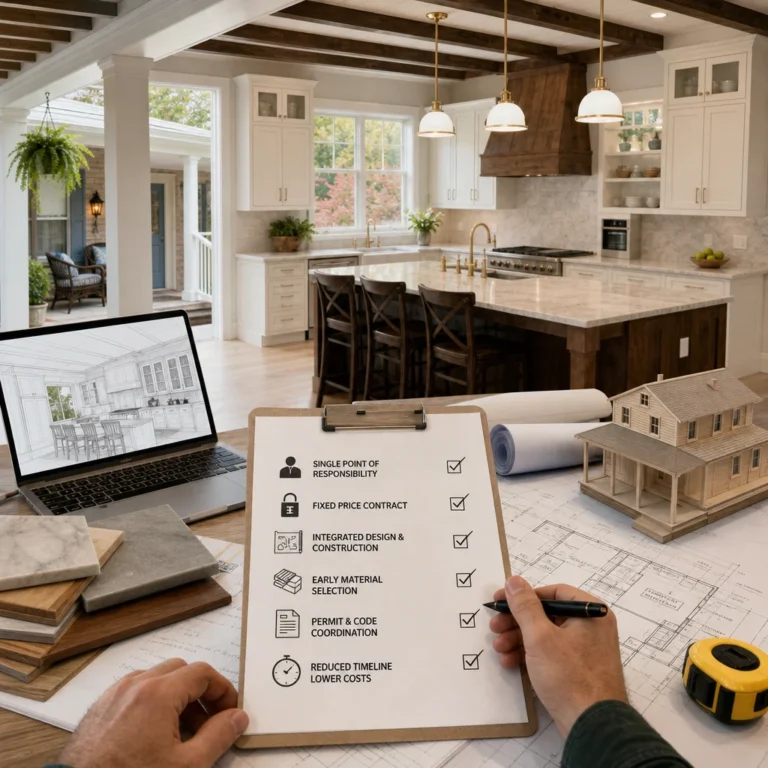
Our design-build model brings architectural design, material selection, permitting, and construction under one experienced team. This means your designer understands construction constraints from day one. Your builder informs design decisions early so you avoid costly changes mid-project. Your project manager coordinates every phase without finger-pointing between firms.
The practical benefit is straightforward: fewer surprises, clearer budgets, and faster timelines. When your designer and builder communicate as one team, decisions about material selections, plumbing routing, electrical layout, and structural needs are made collaboratively rather than discovered later when they’re expensive to change.
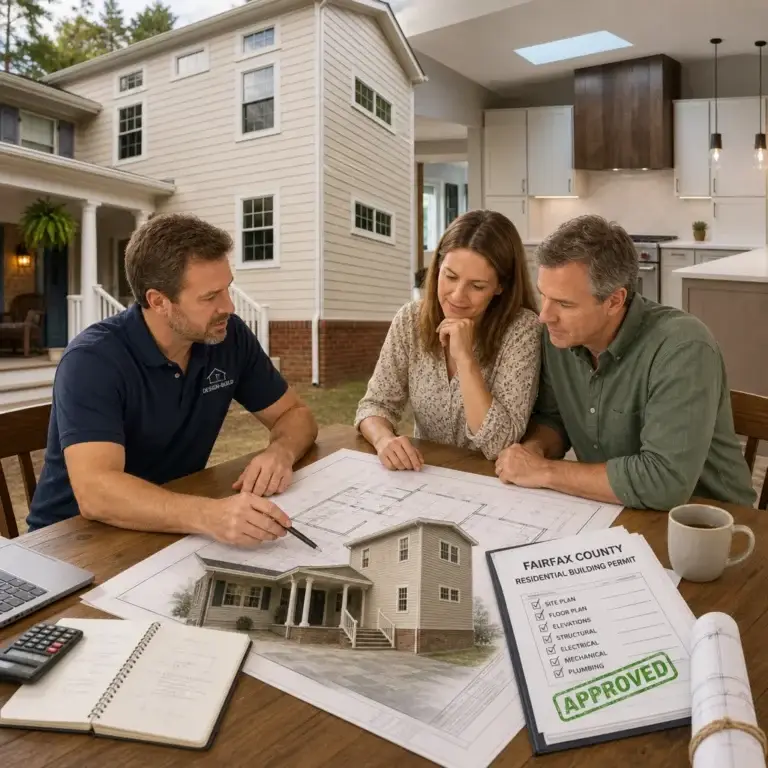
We also take on the complexity of permitting, which is often the most tedious part of any renovation in Northern Virginia. Building codes, HOA requirements, and county inspections are handled by our team so you’re not managing multiple vendors and paperwork.
Homeowners typically tell us that the single biggest relief is having one point of contact throughout the project. Instead of calling an architect about a contractor’s concern and a contractor about an architect’s timeline, you work directly with us at every stage.
What to do next: When you’re ready to explore your kitchen or bath remodeling, ask any potential contractor whether they offer true design-build services or if they’re coordinating between separate vendors. The difference in communication and cost control is significant.
Current High-End Kitchen Design Trends We’re Seeing in Northern Virginia
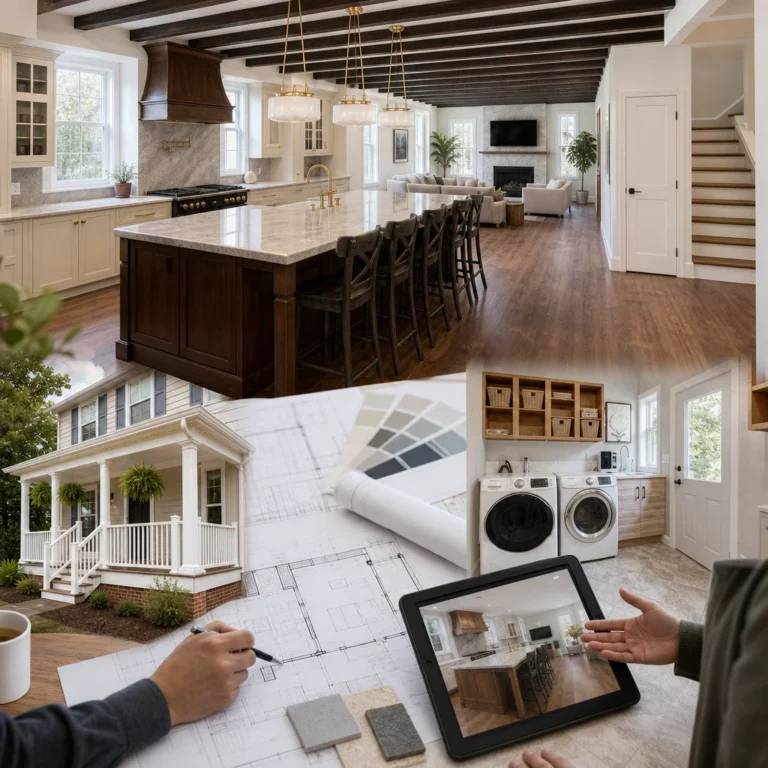
The kitchens we’re designing in 2026 reflect what Northern Virginia homeowners actually want to live with daily, not just what looks good in photos. Trends here lean toward timeless sophistication rather than bold experimentation.
Open shelving paired with closed storage remains popular, but we’re seeing homeowners get more strategic about it. Rather than open shelves wall-to-wall, we’re designing hybrid approaches: open shelving above the counter for frequently used items and everyday dishware, with lower cabinetry that closes to contain clutter and reduce visual noise. This gives you the airy, connected feeling of open shelves without the perpetual styling burden.
Island functionality has evolved significantly. Five years ago, larger islands were the goal. Today, we’re designing islands that serve specific purposes: prep stations with dedicated cutting boards and storage, beverage stations with wine coolers and glassware, or baking centers with lower counters and ingredient storage. These focused zones make the kitchen more efficient and more enjoyable to use.
Cabinetry finishes are shifting toward warmer, grounded tones. Crisp white kitchens are still elegant, but we’re seeing strong demand for soft greens, warm grays, and natural wood tones that feel less sterile and more livable. These colors pair beautifully with stainless steel or warm brass hardware, creating visual depth instead of a monochromatic look.
Waterfall edges on islands and breakfast bars have become nearly standard in contemporary kitchen design. Where the countertop material continues down the side of the island, it creates a more finished, connected appearance than a traditional dropped edge.
Integrated appliances are increasingly popular, especially in open-plan kitchens where a full-height refrigerator with cabinet panels looks cleaner than a stainless steel box. Range hoods are moving to larger, statement-making designs or being concealed into soffit areas for a seamless appearance.
Lighting has become a design element rather than just functional infrastructure. Pendant lights over islands, under-cabinet LED strips, and designer fixtures create layers of light that serve both ambient and task purposes. We’re designing lighting that adjusts from bright task lighting during cooking to softer ambiance during entertaining.
What to do next: Spend time in your current kitchen and photograph the moments when you feel most frustrated or when you’re happiest there. These observations become the foundation for designing a kitchen that works for your actual life, not an idealized version of it.
Luxury Bathroom Features That Add Real Home Value
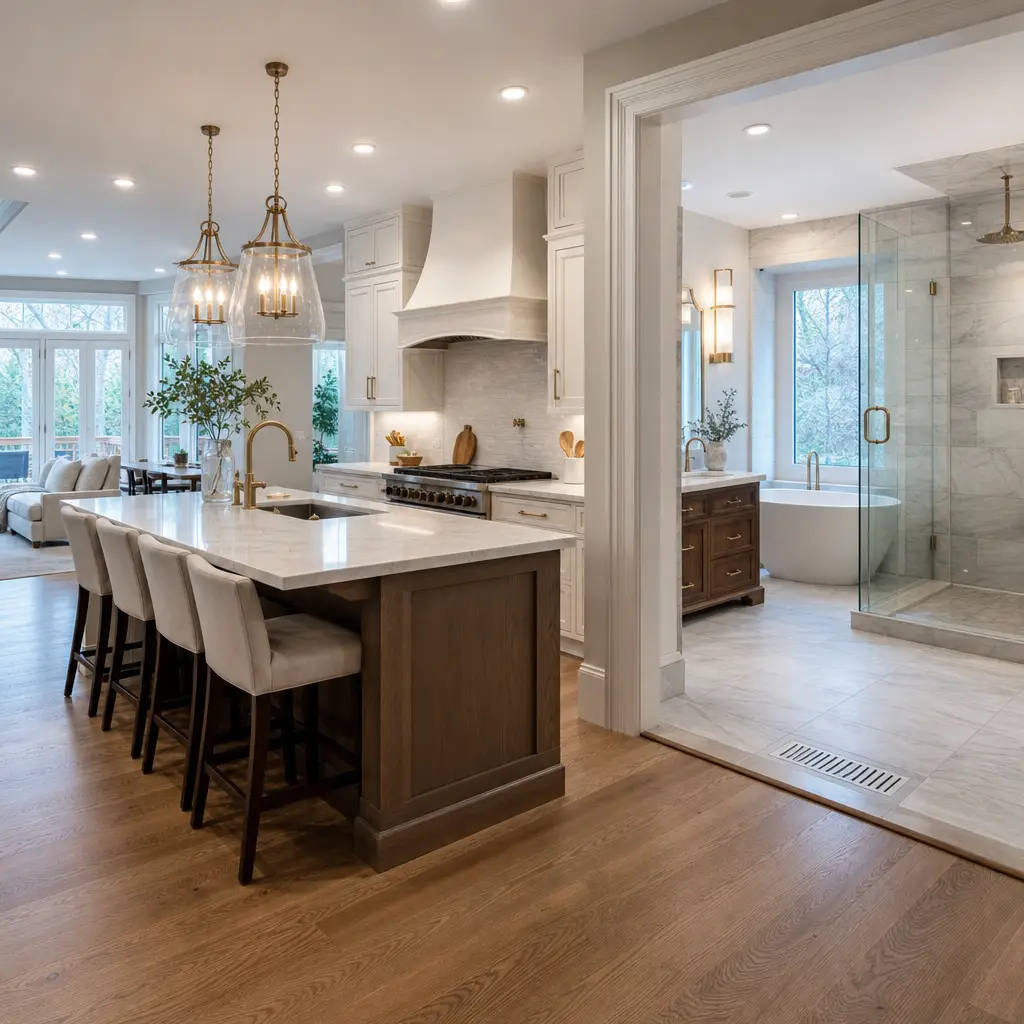
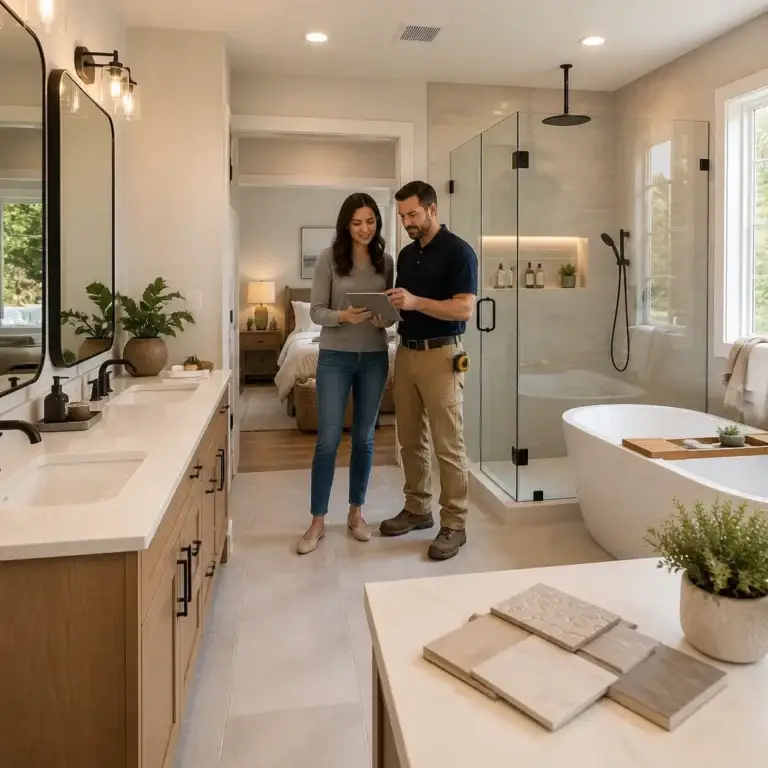
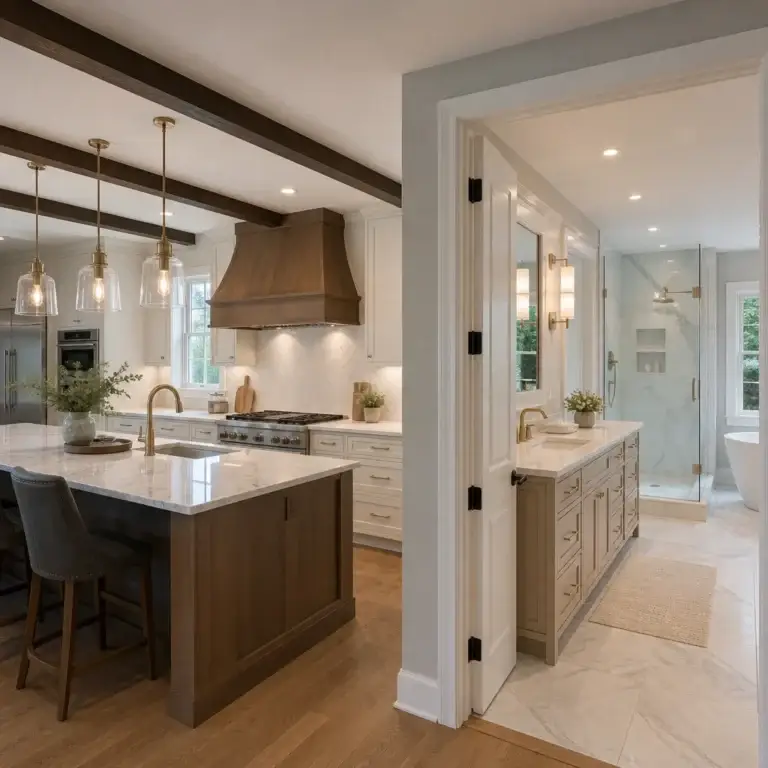
Bathrooms have moved far beyond basic fixtures and tile. Today’s high-end bathroom renovations create spa-like retreats that align with how homeowners want to spend their personal time.
Heated floors are no longer a luxury; they’re becoming expected in primary bathrooms throughout Northern Virginia. The comfort of stepping onto a warm floor in winter, combined with the practical benefit of reducing moisture accumulation, makes heated floors worth the investment. Similarly, towel warmers have shifted from being decorative to feeling essential.
Frameless glass shower enclosures dominate over framed or semi-frameless styles. They create visual openness and make cleaning simpler. We’re also seeing larger walk-in showers with multiple shower heads or rainfall showerheads that can be adjusted based on preference. Separate soaking tubs remain desirable in primary bathrooms, creating a spa experience at home.
Vanity design has become more varied and intentional. Rather than a standard double sink, we’re designing primary bathrooms with his-and-hers vanities at different heights or styles, allowing each person to customize their space. Vessel sinks and undermount options provide different aesthetic choices. Floating vanities continue to appeal because they make smaller bathrooms feel larger and simplify floor cleaning.
Lighting around mirrors has become critical. Vanity lighting that flatters rather than harshly illuminates makes the space feel luxurious and functional. Dimmable systems allow you to adjust brightness for morning routines versus evening wind-down.
Ventilation has become a design consideration, not an afterthought. Larger, more powerful exhaust systems prevent moisture damage and mold while remaining quieter than older models. Smart ventilation that senses humidity levels and runs automatically is becoming standard.
Storage is often the overlooked luxury feature in bathrooms. Thoughtful organization of medications, linens, toiletries, and grooming tools can be integrated through double-height cabinets, pull-out shelving, or dedicated storage towers. A well-organized bathroom feels immediately more relaxing.
Heated bidets and smart toilets with integrated bidet functions are gaining traction among homeowners who prioritize comfort and sustainability. These features were once novelty items; they’re now viewed as quality-of-life upgrades.
What to do next: List the features you use in luxury hotels or spas that make you feel restored. Which of these can realistically be incorporated into your primary bathroom? Start with the top three and design around them.
Smart Storage and Functionality Solutions for Modern Kitchens
Storage is perhaps the most underestimated element of kitchen design, and it’s where a truly functional kitchen separates itself from a beautiful but frustrating one. We design kitchen storage around how you actually cook and live, not how kitchen showrooms suggest you should.
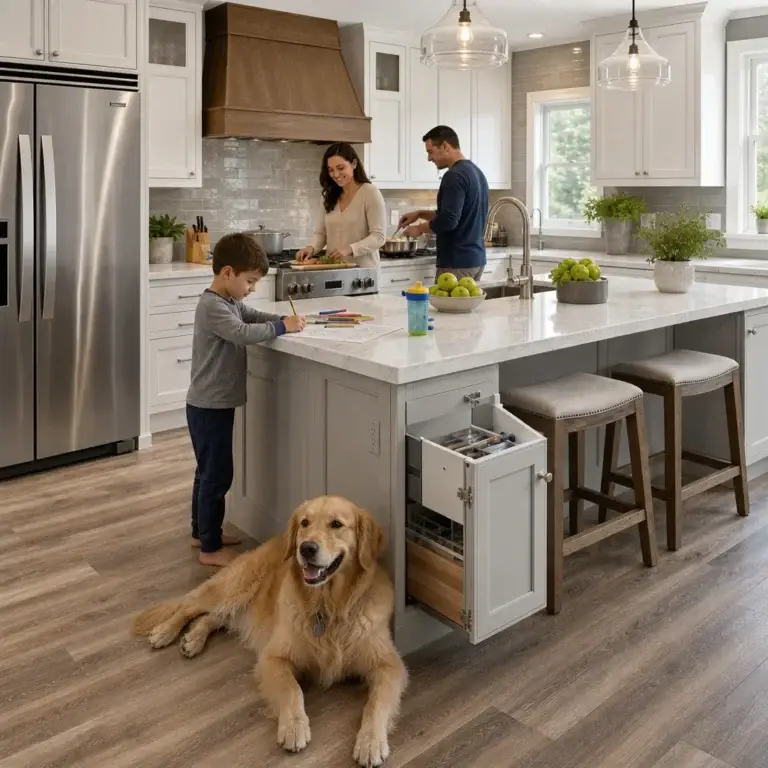
Corner cabinets are notorious for wasted space. Modern pull-out solutions, like rotating carousel shelves or sliding mechanisms, make corner storage genuinely accessible instead of a dark void where things disappear. We often recommend designing two smaller cabinets flanking a corner rather than one large cabinet with impossible-to-reach interior.
Drawer organizers and dividers have become standard, not optional. A kitchen drawer without organization quickly becomes a jumbled mess. We specify pull-out dividers that keep utensils, kitchen gadgets, and linens separated and visible. Cutlery trays, spice organizers, and pot lid racks are integrated during design, not purchased separately afterward.
Pantry design has evolved dramatically. Rather than a generic closet, we’re creating pantry spaces with pull-out shelves, vertical dividers for baking sheets and cutting boards, and dedicated zones for dry goods, beverages, and small appliances. Pantries with interior lighting and clear glass fronts help you see what you have without opening every bin.
Vertical storage is underutilized in many kitchens. Tall cabinets that extend to the ceiling capture otherwise wasted space. Wine coolers, beverage centers, and pantry storage stacked vertically keep frequently used items at arm level while maximizing capacity.
Under-sink organization prevents that awkward tangle of cleaning supplies and plumbing. We design pull-out shelving and organizing trays that make access simple and keep things visible. If you have a garbage disposal or water filtration system, we work around these with intentional spacing rather than forcing them into an already-crowded space.
Appliance garages, enclosed shelving that houses small appliances and hides them from view, are gaining popularity as kitchens become more integrated into living spaces. A coffee maker, mixer, or instant pot can live out of sight but remain easily accessible.
Specialized storage for specific items matters more than generic cabinet space. Design a baking station with a lower counter, flour and sugar storage, and sheet pan racks. Create a beverage zone with glass and bottle storage. These focused areas make cooking more efficient and more enjoyable.
What to do next: Walk through your current kitchen and note which items you use daily versus rarely. Storage design should prioritize what you actually use. Move infrequently used items to less accessible spaces and keep your daily tools at eye and hand level.
Premium Materials and Finishes That Stand the Test of Time
Kitchen and bathroom materials take constant abuse from moisture, temperature changes, spills, and daily use. Premium materials aren’t always about luxury appearance; they’re often about durability and longevity. We specify materials that look beautiful and actually perform in a real household.
Countertop materials have expanded well beyond laminate and granite. Quartz engineered stone offers the appearance of natural stone with superior durability, stain resistance, and easier maintenance. Engineered quartz doesn’t require sealing and resists scratches and heat better than granite. Solid surface materials like Corian or Caesarstone offer seamless fabrication and integrated sinks.
Natural stone, including marble and limestone, brings unmatched elegance but requires honest conversations about maintenance. Marble is porous and stains easily; it’s beautiful but demands commitment to care. We help homeowners choose based on realistic use patterns rather than aspirational expectations.
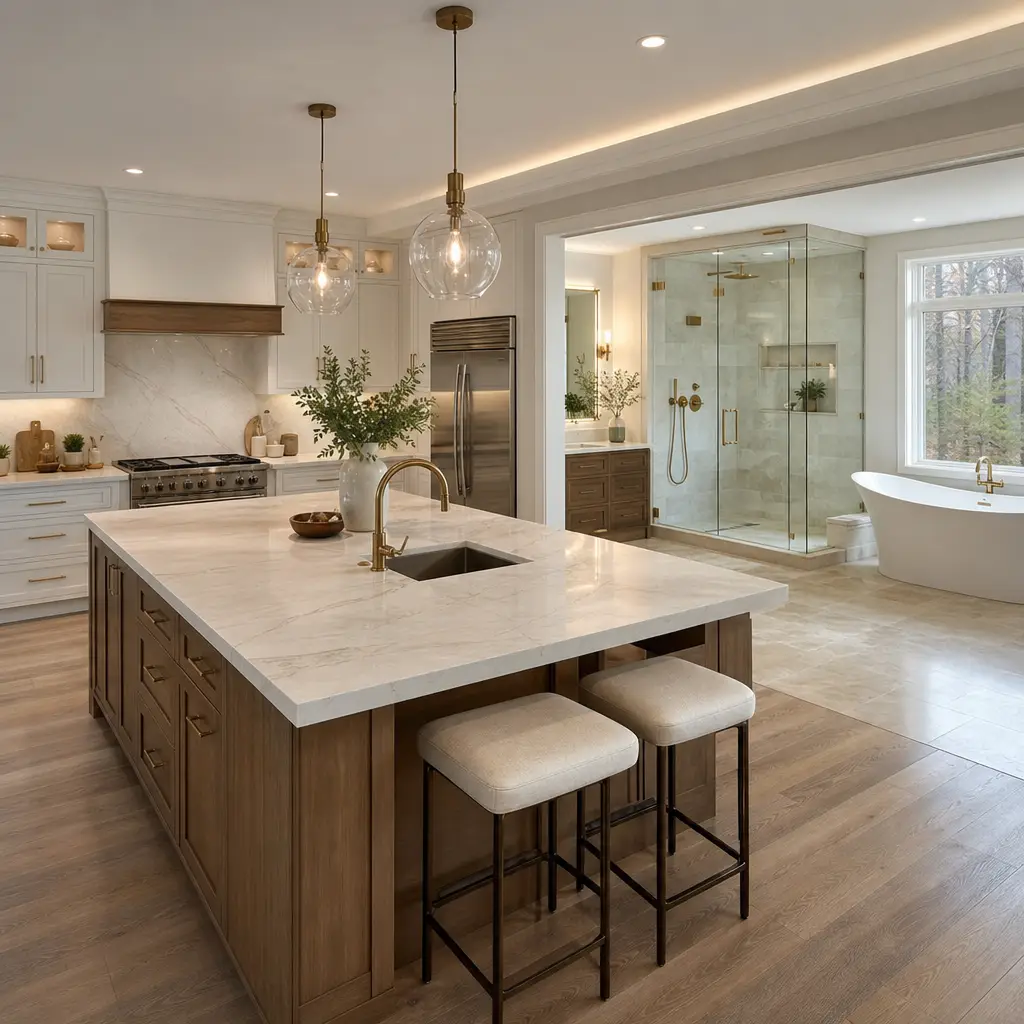
Butcher block and wood counters remain desirable for their warmth and character. Modern food-safe treatments mean they perform better than traditionally finished wood, though they still require more maintenance than engineered surfaces. We specify them where the aesthetic payoff justifies the care required.
Kitchen backsplashes have moved beyond standard subway tile. Hexagonal tiles, large-format ceramic or porcelain, natural stone, and even metal offer visual interest while remaining timeless. We design backsplashes that complement cabinetry and countertops without trending so specifically that they feel dated in five years.
Flooring in kitchens and bathrooms demands slip resistance, durability, and moisture tolerance. Porcelain tile offers these qualities plus endless design options. Large-format tiles create a more modern appearance and reduce grout lines, which simplifies cleaning. Natural stone adds warmth but requires sealing and careful maintenance.
Cabinet materials deserve consideration beyond just doors. Plywood or solid wood construction inside cabinets ensures they’ll withstand daily use without delaminating. Soft-close hinges and drawer glides are no longer premium upgrades; they’re standard expectations in quality kitchens.
Hardware finishes include brushed nickel, polished chrome, oil-rubbed bronze, and warm brass. We coordinate hardware with fixtures and lighting to create visual consistency. Quality hardware from trusted manufacturers outlasts trendy pieces and maintains function after years of use.
What to do next: Touch and examine samples of materials you’re considering in different lighting conditions. What looks perfect in a showroom might feel different in your actual kitchen. Request samples to take home and live with them for a few days.
How We Integrate Timeless Style with Today’s Trending Elements
The challenge in designing high-end kitchens and bathrooms is balancing what you love today with what you’ll still appreciate a decade from now. Our approach blends timeless design fundamentals with selective trending elements.
Timeless kitchens are built on strong fundamentals: good layout, quality materials, classic cabinetry proportions, and functional design. These elements don’t require updating. A well-designed kitchen with clean lines, neutral cabinetry, and quality finishes feels current in 2026 and will feel equally appropriate in 2035.
Within that foundation, we incorporate current trends strategically. A warm green or soft blue accent wall, brass hardware instead of chrome, or a statement lighting fixture adds contemporary personality without committing your entire kitchen to what might become dated. These flexible elements can be updated relatively easily if preferences shift.
Color choices matter significantly. We typically recommend neutral base cabinetry that will age gracefully, then introduce color through island cabinetry, painted accent walls, or tile selections. This approach lets you enjoy current color trends without making the entire project feel dated when preferences evolve.
Material selection reflects this balance too. We specify classic materials like marble, wood, and ceramic tile in contemporary colors and formats. A hexagonal marble tile feels current but will look timeless, whereas a novelty material or finish might feel trendy and regrettable in a few years.
Functionality trends inform decisions but don’t overshadow practicality. Open shelving is attractive but closed storage ensures your kitchen doesn’t become cluttered as life happens. We design flexible spaces that accommodate both current preferences and future adaptations.
Lighting design bridges timeless and trendy beautifully. A quality fixture with classic proportions in a warm brass finish works across decades, while LED technology represents a current upgrade that improves efficiency and performance.
What to do next: Identify three to five design elements you genuinely love and envision using for at least ten years. Build your design around those anchors, then add flexible accents that reflect current style without defining the entire project.
The Investment: Understanding Costs and ROI for Quality Remodels
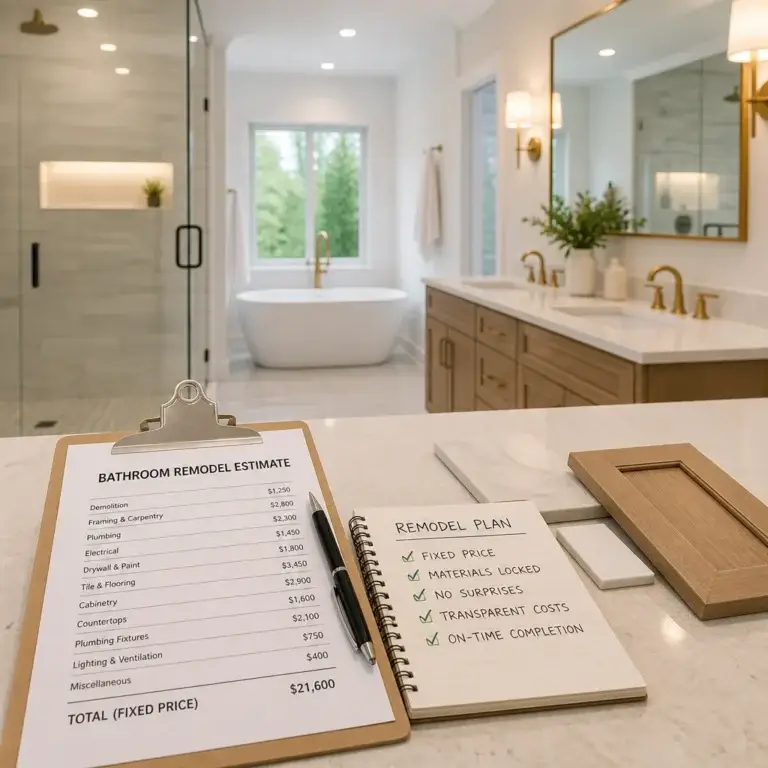
Quality kitchen and bathroom remodels represent significant investment, and understanding realistic costs and return on investment helps you make confident decisions. National averages show kitchen remodels ranging from $75,000 to $150,000-plus for comprehensive projects, with bathroom remodels ranging from $15,000 to $50,000-plus depending on scope.
In Northern Virginia’s Fairfax County market, costs typically run toward the higher end of national ranges due to local labor rates and material availability. A high-end kitchen remodel with custom cabinetry, quality countertops, new appliances, and professional design-build management typically falls between $100,000 and $200,000. Primary bathroom remodels typically range from $25,000 to $60,000.
What drives these ranges? Scope directly affects cost. A kitchen that includes new layout, plumbing relocation, electrical upgrades, structural changes, and premium finishes costs substantially more than reconfiguring an existing footprint with new cabinetry and surface finishes. Similarly, a bathroom that adds square footage through wall relocation or plumbing rerouting costs more than updating finishes in the existing space.
Return on investment varies based on project scope and market conditions. According to real estate data, homeowners typically recoup 50 to 80 percent of kitchen remodel costs at resale, with higher returns in strong markets and for projects under $200,000. Bathroom remodels return 60 to 80 percent of costs. However, these are resale metrics; the true value is in the daily quality-of-life improvement and the years you’ll enjoy the space before selling.
We always recommend viewing kitchen and bath remodels as dual investments: immediate quality of life and long-term property value. If you plan to stay in your home for five-plus years, the comfort and functionality improvements justify the investment independently of resale value. If you’re planning to move sooner, we help you choose selections that appeal to buyers without over-specifying.
Financing options include savings, home equity lines of credit, or construction loans. We work with reputable lenders throughout Northern Virginia and can discuss financing as part of your project planning. Understanding your budget allows us to prioritize spending on elements that matter most to you.
What to do next: Establish a realistic budget range before design work begins. This focuses your designer on achievable solutions rather than designing a dream kitchen you’ll have to downscale. Be transparent about budget; good design-build teams optimize within constraints rather than pushing toward ever-higher spending.
Our Process: From Vision to Installation
Our design-build process removes uncertainty and keeps you engaged at every stage without overwhelming you with decisions. We’ve refined this process across dozens of kitchen and bathroom projects throughout Northern Virginia.
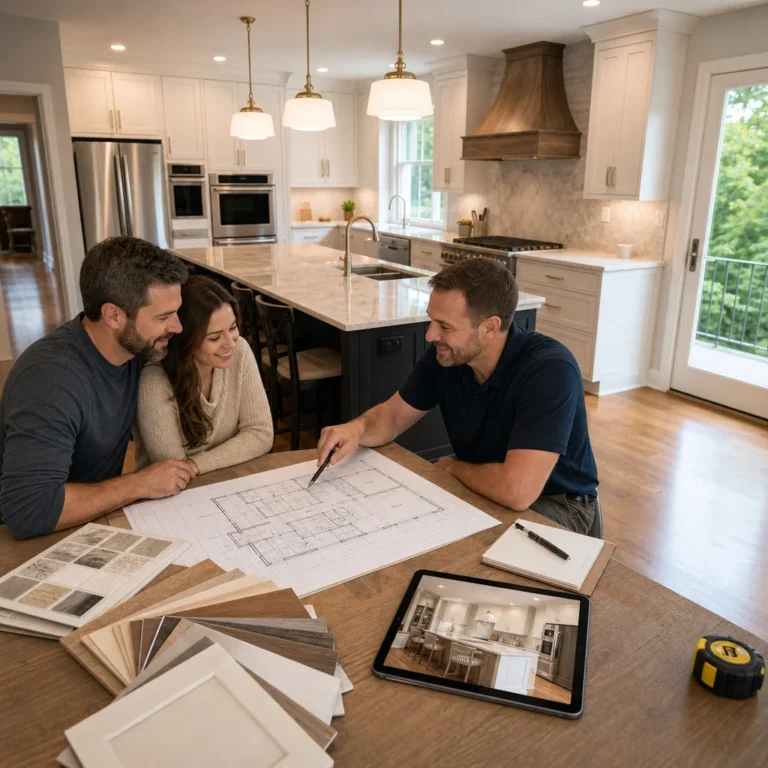
Discovery and Planning: We start by understanding your lifestyle, priorities, and vision. What do you cook? How do you entertain? What frustrates you about your current space? We spend time listening and asking questions before discussing design. This phase includes site assessment, measurements, and preliminary budget discussion. We’re transparent about what’s realistic for your investment and timeline.
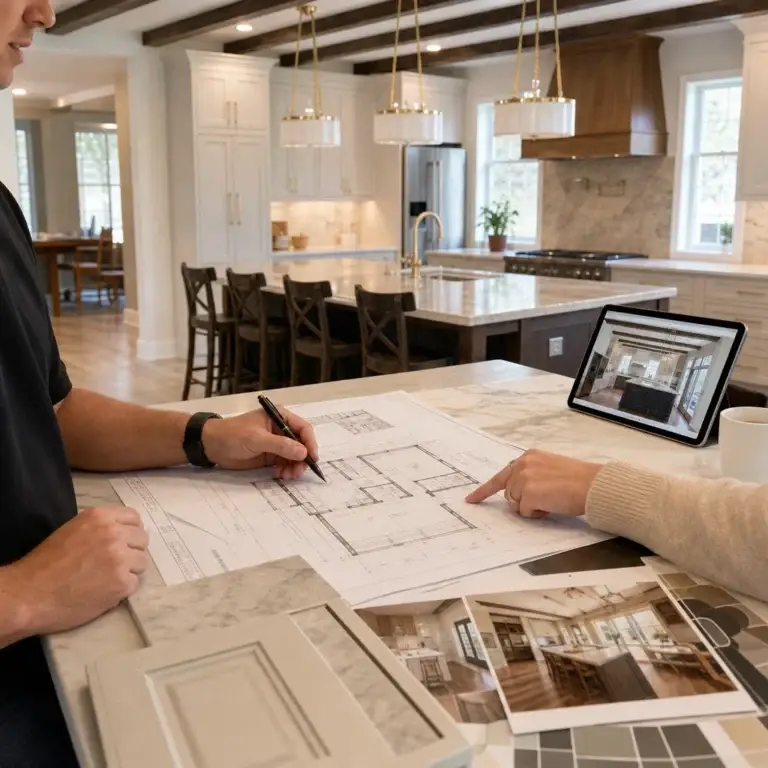
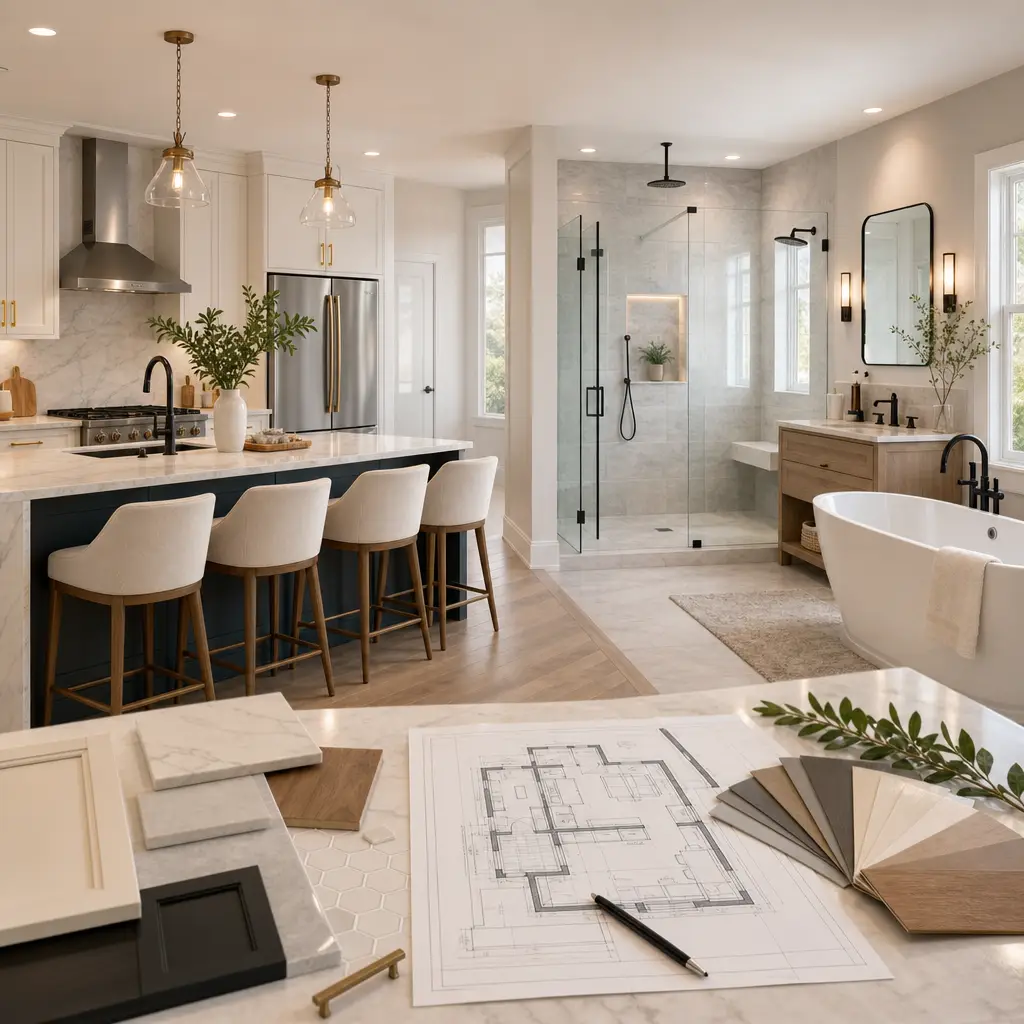
Design Development: Our designer creates detailed drawings, 3D renderings, and material selections based on your input. We present options rather than single solutions, giving you agency in the design direction. As your design-builder, our designer understands construction reality, so recommendations account for buildability and cost efficiency. Multiple rounds of refinement ensure the final design aligns with your vision.
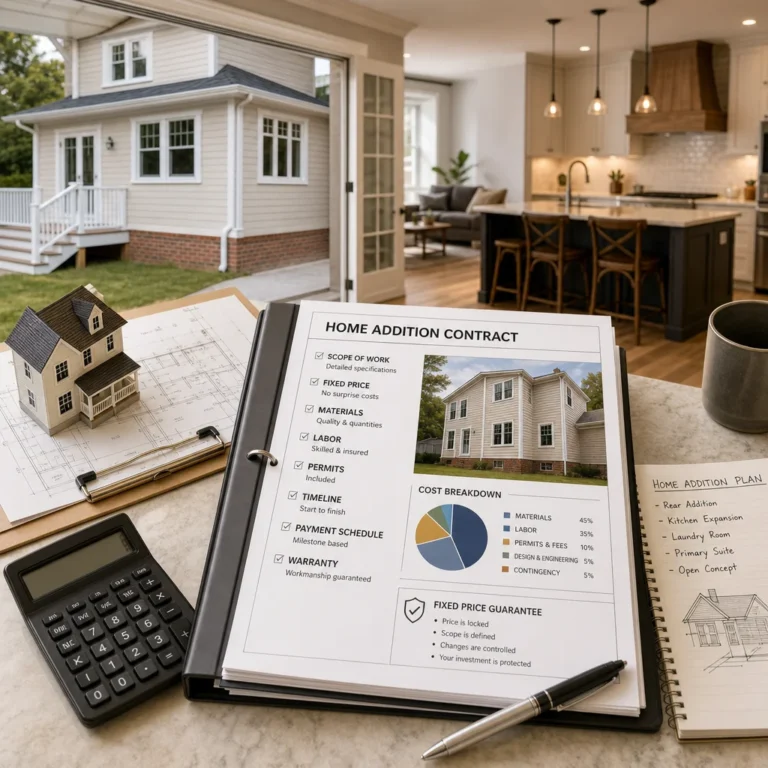
Detailed Specifications and Permitting: Once design is approved, we create detailed specifications for every material, appliance, and fixture. We handle all permitting paperwork with local Northern Virginia authorities, a process that typically takes 2 to 4 weeks depending on project scope. You’re kept informed of timeline and any required inspections.
Material Ordering and Scheduling: We source materials once design is finalized, coordinating delivery to align with construction sequencing. Lead times for custom cabinetry, countertops, and special-order fixtures are factored into the overall timeline. We provide you with a detailed construction schedule showing what work happens in which weeks.
Construction and Project Management: Our team manages day-to-day construction, coordinating multiple trades, conducting inspections at key phases, and communicating progress to you regularly. We maintain a clean, organized jobsite and minimize disruption to your daily life. Weekly check-ins keep you informed and address any questions or concerns immediately.
Final Inspection and Punch-Out: Before we consider the project complete, we conduct a final walkthrough with you, addressing any minor adjustments or refinements. Once you’re satisfied, final inspections with the county are scheduled. We provide you with all warranties, appliance documentation, and maintenance guidance.
What to do next: When you’re ready to explore a kitchen or bathroom remodeling project, schedule a consultation with our team. We’ll discuss your vision, assess your space, provide preliminary thoughts on approach and timeline, and give you a realistic sense of investment and value.
Why Professional Project Management Makes the Difference
Professional project management is the invisible force that transforms design vision into completed reality on time and on budget. Many homeowners underestimate how critical this is until they’ve experienced poor project management firsthand.
Our project managers coordinate multiple trades with different schedules, availability, and dependencies. Framing must be completed before electrical rough-in. Electrical rough-in must be completed before drywall. Drywall must be finished before painting. Flooring installs in a specific sequence. This complex choreography requires someone managing every piece, ensuring dependencies are met and timeline stays on track.
Communication prevents costly mistakes. If a plumber discovers a structural issue during rough-in, your project manager immediately communicates with the design team and adjusts the plan rather than waiting and discovering it during installation when fixing it becomes exponentially more expensive.
Quality oversight means inspections happen at every critical phase, not just at the end. We catch installation issues, material defects, and workmanship concerns before moving forward. This prevents the scenario where an inspector finds problems that require costly rework.
Budget management extends beyond initial estimates. Change orders are managed transparently. If additional work becomes necessary, you approve it in writing with clear pricing before it proceeds. We prevent scope creep and surprise costs by maintaining detailed specifications and communicating proactively.
Contingency planning accounts for the unexpected. Material delays, supply chain disruptions, or unforeseen conditions happen in renovations. Professional project management has backup plans and alternatives to keep work moving.
Our role as your single point of contact means you’re never caught between a contractor and designer pointing fingers at each other. Issues are solved collaboratively within our team, and you’re informed of solutions rather than problems.
What to do next: When evaluating contractors, ask specifically about their project management approach. How do they handle changes? How often do they communicate with homeowners? Who is your day-to-day point of contact? These answers reveal whether professional management is a priority.
Transform Your Kitchen and Bath Today
Your kitchen and bathroom set the daily tone for how you experience your home. Upgrading these spaces isn’t just about resale value or following design trends; it’s about creating environments where you genuinely want to spend time, where functionality matches your lifestyle, and where materials and finishes reflect quality craftsmanship.
At Elite Contractors Services, we bring together design expertise, construction knowledge, and transparent project management to transform your kitchen and bath vision into reality. Our design-build approach eliminates coordination headaches, keeps budgets clear, and delivers quality results throughout Northern Virginia’s Fairfax County communities and beyond.
The high-end kitchen and bathroom remodeling we’re creating in 2026 balance timeless design fundamentals with contemporary comfort and style. Whether you’re imagining a spa-like primary bath, a functional and beautiful kitchen, or both, we help you invest thoughtfully in spaces that genuinely improve your daily life.
Ready to explore what’s possible for your home? Contact our team to schedule a consultation. We’ll discuss your vision, assess your space, and provide clear guidance on approach, timeline, and investment. Let’s create kitchen and bath spaces you’ll genuinely love for decades to come.