Clear decisions come from clear communication, not from trying to remember every conversation. Communicating effectively with your contractor starts with agreeing on the project scope, schedule, budget, and quality expectations, then deciding how to share updates and who can approve changes. Keep key decisions in writing so everyone can refer to the same information. Remember, communicating effectively with your contractor ensures everyone is on the same page. When communicating effectively with your contractor, it is crucial to establish a detailed plan for how decisions will be made and documented.
It’s understandable to want a smooth project and worry that a missed detail could lead to confusion, delays, or work that doesn’t meet your expectations. A straightforward communication plan makes it easier to raise concerns early, get answers, and keep decisions moving.
When communicating effectively with your contractor, consider scheduling regular meetings to discuss any updates or issues that arise during the project. This proactive approach helps you stay informed and engaged. Regularly communicating effectively with your contractor can help avoid misunderstandings and ensure that everyone stays aligned with the project goals.
This guide explains how to set expectations, use clear and professional language, choose primary and backup contact methods, and define decision-making roles. You’ll also learn how to document changes and resolve misunderstandings early, so conversations stay focused and the working relationship remains collaborative.
This guide emphasizes the importance of communicating effectively with your contractor in every phase of a project, from planning through execution.
Key Takeaways
- Set out your priorities for budget, schedule, design, and quality early so decisions have a clear reference point.
- Raise concerns as soon as they appear, and clarify the next step before a small misunderstanding affects the work.
- Use plain, specific language and ask for important instructions to be repeated back to confirm shared understanding.
- Agree on primary and backup contact methods, including which channels are suitable for urgent updates and formal decisions.
- Define who can give instructions, approve changes, and sign off on completed work to avoid conflicting directions.
1. What are the Keys to Better Construction Communication?
Establishing ground rules for communicating effectively with your contractor at the outset can help streamline the decision-making process.
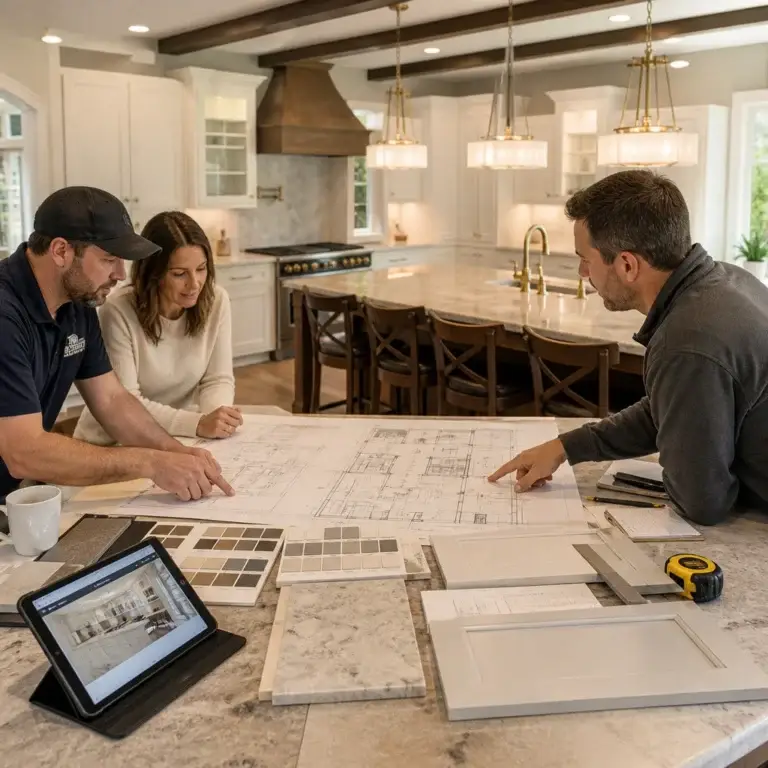
Before work begins, discuss the scope, budget, schedule, design priorities, and quality expectations. Identify what matters most, such as keeping a kitchen usable for as long as possible or protecting a particular finish. Clear priorities help the contractor explain trade-offs and organize the work around your goals. Share inspiration images when a design idea is easier to show than describe.
Make the plan practical by agreeing how and how often you’ll discuss progress. Regular check-ins give both sides a chance to review completed work, upcoming tasks, and decisions that could affect the schedule. Choose a channel for routine updates and a separate way to reach each other about urgent issues. A reliable protocol makes communicating effectively with your contractor easier throughout the project, ultimately fostering a collaborative environment.
To maximize effectiveness, ensure that all discussions about the project include reminders about the importance of communicating effectively with your contractor at every stage.
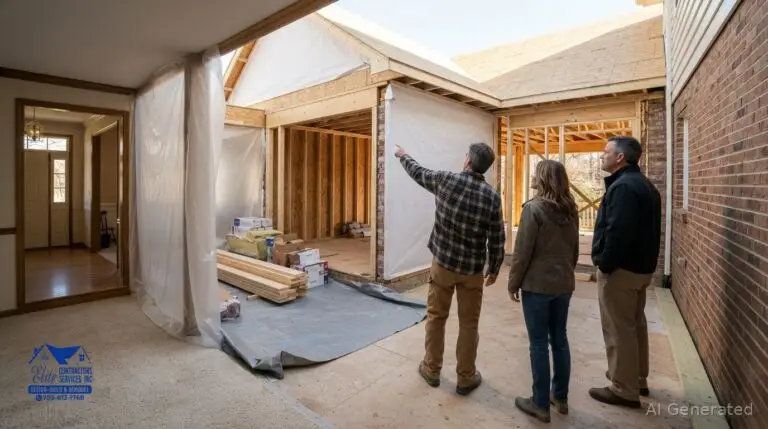
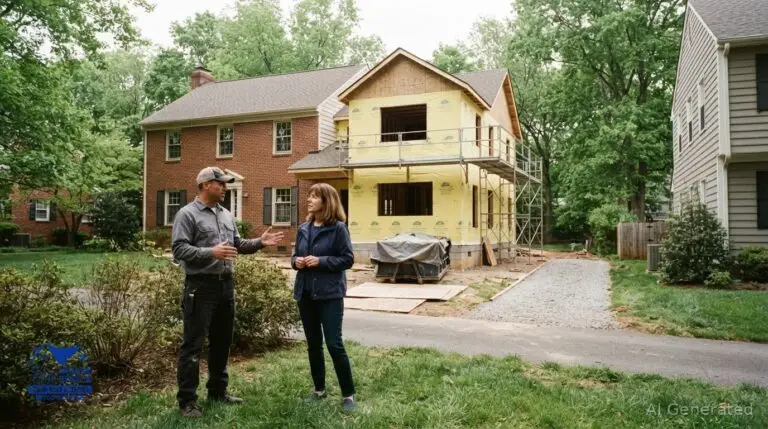
For a Fairfax remodeling project, put priorities and communication expectations into the same early conversations. A Fairfax remodeling project can involve design choices, household routines, and work sequencing, so state which outcomes matter most. Ask how planned work may affect access to rooms, daily routines, or use of the home, then agree how schedule changes will be shared.
- Which decisions do you need from me, and by when?
- What work is planned next, and which areas will it affect?
- How will you share schedule updates or flag a decision that could affect progress?
Keep a clear record of delays, costs, and change orders. If the schedule shifts, ask what caused the delay, which tasks are affected, and how the revised sequence changes the plan. For a proposed change, request a written description of the work and its cost and schedule impacts before approving it. Keep the decision with the related project records instead of relying on a brief conversation or text alone.
Use each project update to confirm what’s complete, what comes next, and whether you need to make a decision. Ask about open issues, materials or selections awaiting approval, and changes that could affect the agreed priorities. Then summarize each decision, who is responsible for the next action, and when it’s due. A brief recap helps prevent different interpretations after the meeting.
Choose a reporting schedule that fits the work. Regular check-ins can support progress reviews, while written summaries preserve decisions between meetings. The Office of Inspector General, Board of Governors of the Federal Reserve System describes a contract requiring monthly progress reports and biweekly meeting minutes to monitor performance and communicate project status. The practical takeaway is that effective communication is key; agreeing on a consistent rhythm for communicating effectively with your contractor is essential for project success.
Good coordination also connects the work schedule to household needs. Discuss when work areas will be used, how changes to planned tasks will be communicated, and which upcoming choices need your attention. Clear answers help you plan around the work and help the contractor keep decisions moving.
2. Resolving misunderstandings early
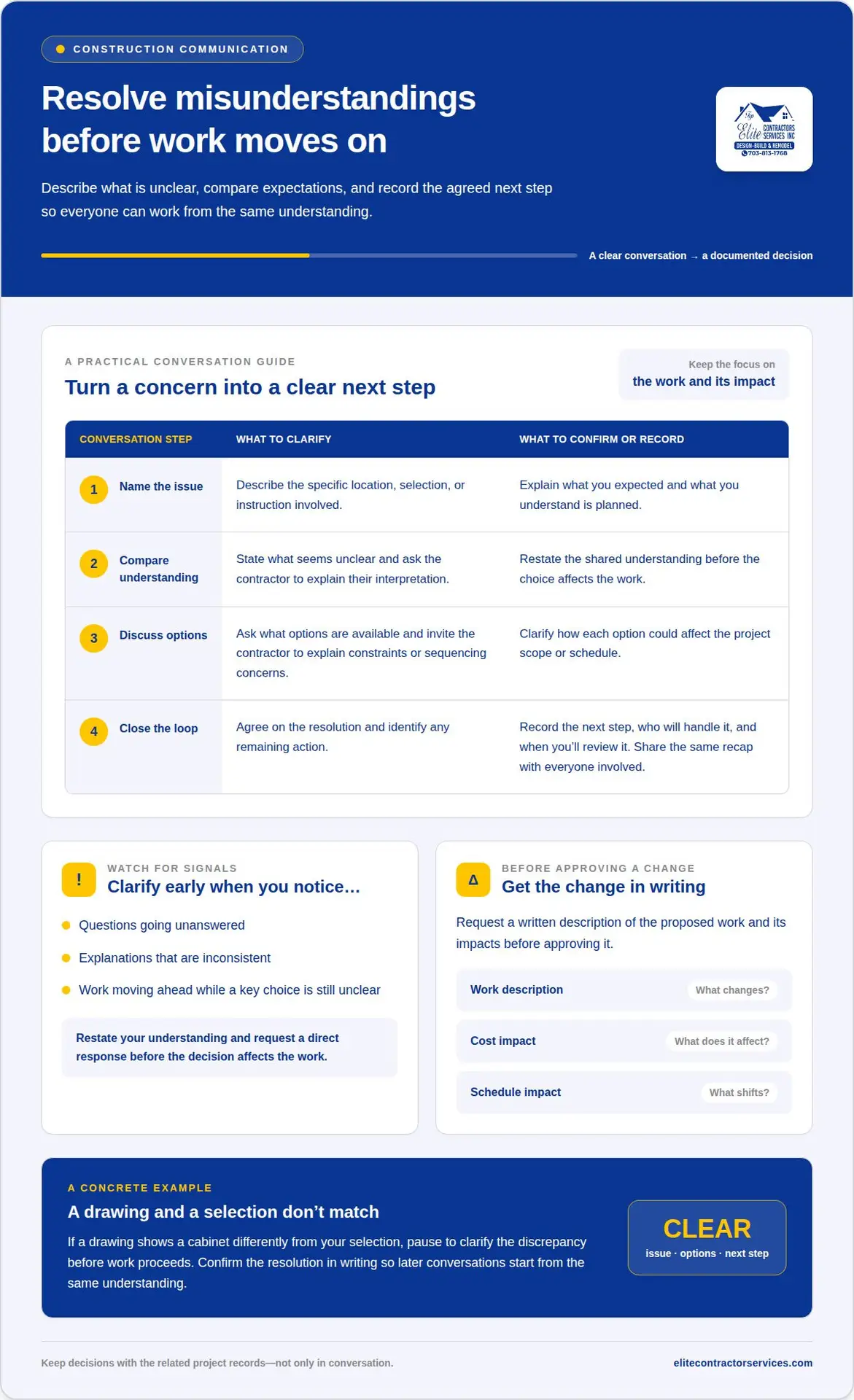
Address a confusing instruction, unexpected condition, or differing expectation as soon as it comes up. Explain what you understood, point to what seems unclear, and ask for the contractor’s interpretation. For example, if a drawing shows a cabinet differently from your selection, pause to clarify before work proceeds. A timely conversation can keep a small discrepancy from affecting later decisions.
Clarifying expectations and feedback is critical when communicating effectively with your contractor. Always revisit prior conversations to ensure consistency.
Discuss your budget early, including the priorities you want to protect and the elements you could adjust. Ask the contractor to explain how the proposed scope fits those priorities and which choices may affect the estimate. If your preferred finish changes the project scope, consider alternatives together before agreeing to the change. Clear financial expectations keep discussions practical and reduce conflicting assumptions.
Transparency is key in communicating effectively with your contractor, especially regarding budget and design changes.
Agree on how to handle concerns before work begins. Decide who should receive an issue, how it will be recorded, and how you’ll determine the next step. The U.S. Government Publishing Office notes that a lack of early communication during design can lead to project delays, scope increases, and contract modifications that might have been avoided. Communicating effectively with your contractor also means having a clear escalation path for disputes.
Warning signs of poor communication include unanswered questions, inconsistent explanations, or work moving ahead while a key choice remains unclear. If an update leaves you uncertain about what was agreed, restate your understanding and request a direct response before the decision affects the work.
Use a simple process when a disagreement or misunderstanding arises:
- Describe the specific issue and the location, selection, or instruction involved.
- Explain the difference between what you expected and what you understand is planned.
- Ask what options are available and how each could affect the scope or schedule.
- Record the agreed next step, who will handle it, and when you’ll review it.
Keep the discussion focused on the work and its consequences. Instead of saying, “This isn’t what I wanted,” explain which feature differs from the agreed design and what outcome you expected. Invite the contractor to explain any constraints or sequencing concerns. Then confirm the resolution in writing so future conversations start from the same understanding.
For changes that affect the scope, request a clear description before approving the work. It should identify what will change and explain any cost or schedule impact. If the proposed adjustment raises questions, discuss them before authorizing it. A written record distinguishes a confirmed change from an idea that still needs discussion.
Close the loop after resolving an issue. Restate the decision, note any remaining action, and make sure everyone involved receives the same update. If the resolution changes a selection or work plan, refer to the revised information in later conversations. This habit helps prevent an old misunderstanding from resurfacing as work progresses.
3. Using clear, professional language and avoiding jargon
Use specific words for the feature, location, and result you mean. “Move the outlet beside the left cabinet” gives a clearer direction than “put it over there.” If a plan, photo, or product selection shows the intended detail, refer to it directly. Specific references make each aspect easier to discuss and reduce the chance that people interpret the same phrase differently.
During a bid discussion, ask for the proposed work to be described in plain language. Clarify what each task includes, which selections or details remain undecided, and what assumptions shape the estimate. For example, “Does this include removing the existing backsplash?” is more useful than relying on a general phrase such as “kitchen update.” Clear descriptions help you understand what you’re comparing and which decisions may need follow-up.
Use the contract as a shared reference. When discussing a requirement, identify the exact section, drawing, selection, or written description. If the contract says “paint walls,” clarify which rooms and finish you mean rather than assuming everyone interprets the phrase identically. Tie questions to the relevant document so the conversation stays focused on the agreed scope.
Document agreements, changes, and decisions in writing, noting the date and the specific work or selection involved. Include what was decided, who will take the next step, and any stated cost or schedule effect. A short written recap after a call helps distinguish an approved change from an option still under discussion.
In an urgent situation, call or text to get attention quickly, then follow up in writing with the issue, location, and requested next step. For example, identify the room and describe the immediate concern instead of sending “Please call me.” Keep the follow-up factual and concise, especially if the issue affects work planned that day.
Professional language is direct without assigning blame. Describe what you see, explain how it differs from the plan, and ask for clarification. Instead of “You installed it wrong,” say, “The fixture is centered over the sink in the drawing, but it appears offset. Can we review the placement before continuing?” This approach leaves room to understand the cause and agree on a clear action.
After an explanation, confirm your understanding by restating the instruction in your own words. The contractor can correct a misunderstanding before it becomes an instruction to the crew. Apply the same approach to technical terms: ask what a term means for this project and how it affects the visible result, sequence, or selection. Avoid abbreviations unless both parties understand them.
- Identify the room, item, or document involved.
- State the intended result using observable details.
- Ask what remains unclear before work proceeds.
- Record the decision and share it with everyone who needs it.
These habits keep bid, contract, and urgent-update discussions precise. A clear message names the detail, explains the expected outcome, and leaves a useful record of what happens next.
4. Choosing preferred and backup communication methods
Choose communication channels based on the message, not just personal habit. A project platform can keep official documents, drawings, schedules, and approved revisions together. Email works well for formal notices and decision summaries. Texts and calls suit urgent coordination, but shouldn’t carry instructions that need a lasting record.
Agree on the preferred channel before work starts, then define what belongs there. For example, use a shared project platform for the current drawings and schedule, email for a written approval summary, and a phone call for an immediate site issue. This division reduces the risk of an important message getting buried in unrelated conversation.
One app can support daily reporting, task management, and real-time communication if it works for everyone involved. Choose a tool the project participants can access and use consistently. Avoid splitting key information across several apps without a clear reason. If a selection changes, update the designated record and tell the relevant people where to find the current version.
In addition, part of communicating effectively with your contractor is establishing a feedback loop so that any misunderstandings can be addressed promptly.
A backup method matters when the preferred channel isn’t available. Decide whom to call if a project platform is inaccessible, or where to send an urgent message if a contact can’t be reached. Set a simple escalation path: try the agreed urgent channel, then use the backup contact. For a non-urgent question, return to the usual channel so the answer is easy to find.
Set expectations for responses and follow-up without assuming every message needs an immediate reply. Mark urgent requests clearly and state the decision or action needed. For routine matters, provide enough context for the contractor to respond usefully. “Please confirm the tile selection shown in the attached image” is clearer than “Thoughts?”
Connect spoken exchanges to the written record. If a call resolves a question about a drawing or schedule, send a concise recap through the agreed channel. Include the decision, who owns any follow-up, and the relevant document or location. This is especially useful when several people need the same update or the conversation happens while work is underway.
- Use the project platform for controlled documents, drawings, schedules, and formal project records.
- Use email for notices and written summaries of decisions.
- Use calls or texts for urgent, same-day coordination, then record any lasting instruction.
- Identify a backup contact or channel for outages and unanswered urgent messages.
Finally, share the communication protocol with everyone involved in the project. If a household member sends a design request through one channel and the project lead receives it elsewhere, the team may act on different information. A consistent method helps updates reach the right person and gives decisions a clear home.
5. Defining communication roles and decision-making authority
Decisions move more smoothly when everyone knows who speaks for the household and who can approve project changes. Choose one homeowner as the main contact, even if other family members contribute ideas. On the contractor’s side, identify the person responsible for coordinating responses and directing questions to the right team member. This gives each request a clear path.
Clearly defined roles in communicating effectively with your contractor help prevent confusion during decision-making.
By defining roles clearly, you will enhance your ability to communicate effectively with your contractor and avoid confusion during the project.
Next, distinguish input from approval. A household member may suggest a different lighting style, while the designated decision-maker confirms the final selection. Tell the contractor who can approve selections, authorize scope changes, provide instructions, and sign off on completed work. If someone else can decide while you’re away, define that authority clearly and explain its limits.
Use specific examples to assign responsibilities before work begins. For a kitchen project, one person might approve cabinet hardware while the named household contact communicates the choice to the contractor. If a proposed change affects the scope, the contractor should direct it to the person authorized to approve it. This prevents casual comments from being mistaken for final instructions.
- Name the primary homeowner contact and the contractor’s project contact.
- Identify who may give routine instructions and answer day-to-day questions.
- Specify who can approve selections, scope changes, and schedule adjustments.
- Decide who will review completed work and communicate any follow-up items.
Keep authority consistent across conversations and records. If a family member shares a preference during a site visit, clarify whether it’s a suggestion or an approved decision. The designated contact can then send confirmed direction through the agreed written channel. If a decision needs input from several people, set a clear process for gathering their views before the authorized person responds.
Contractor teams also need defined responsibilities. A project lead can be the main contact, while a specialist answers questions about a particular part of the work. Ask that technical recommendations and requests requiring homeowner approval reach the appropriate decision-maker. This helps distinguish an update from a request for authorization.
Review assigned roles if the project changes or a contact becomes unavailable. Send an updated note naming the replacement and the decisions that person can make. Keep existing approvals together with later decisions so the team can follow current direction instead of relying on conflicting recollections.
For a remodeling project, define these roles before the first major selection or change request. Plan your remodeling project with clear decision roles and make each person’s authority easy to follow.
Elite Contractor Services
Every successful project hinges on efficiently communicating effectively with your contractor to ensure that all aspects are managed correctly.
Ultimately, the goal of communicating effectively with your contractor is to facilitate a smooth workflow and successful project completion.
Elite Contractor Services helps homeowners bring clarity to complex remodeling decisions through Design-Build Services, Whole House Remodeling, Home Additions, and Kitchen Remodeling. These projects involve connected choices about scope, design, schedule, and household routines. A collaborative conversation about priorities and decision-making roles helps establish shared expectations before work moves forward, ultimately enhancing the ability to communicate effectively with your contractor.
If you’re planning a home project and want to organize its decisions and communication, contact Elite Contractor Services. Share what you’re considering and which priorities matter most to start a conversation about the right next steps for your project.
Make Clear Communication Part of the Project
Establishing regular check-ins is a vital aspect of communicating effectively with your contractor, ensuring that everyone remains aligned on the project’s goals.
Regularly addressing questions and concerns is a fundamental part of communicating effectively with your contractor to ensure the project’s success.
A useful communication plan isn’t something to set aside once work begins. Treat it as a shared reference that can adapt as decisions take shape, new questions arise, or priorities shift. When communicating effectively with your contractor, focus on a productive partnership: share relevant information, listen to explanations, and make room for thoughtful decisions.
You don’t need every detail figured out before starting a conversation. Bring your goals, concerns, and the choices you’re still considering. A direct discussion can help turn an early idea into a clearer path forward and create a stronger foundation for the work ahead.
Open discussions are a key strategy in communicating effectively with your contractor, pivotal in shaping the project’s evolution.
For support with a home remodeling project, contact Elite Contractor Services to start a conversation about your plans. With clear communication and a collaborative approach, you can move forward with confidence.
Frequently Asked Questions
What are the Keys to Better Construction Communication?
Good construction communication turns preferences into outcomes that can be recognized and discussed. Describe what “finished” should look like in practical terms, such as matching a sample or maintaining clear access through a room. Separate essential results from details you’re open to refining. This gives discussions a useful reference when the contractor presents options, explains constraints, or recommends a different approach.
How do you communicate effectively with a contractor?
Make each conversation easy to answer by sharing the context, the decision you need, and any relevant reference. For example, explain which room a photo shows and what detail you want reviewed. Listen to the contractor’s reasoning, especially when a suggestion affects how the work will be completed. Before ending the discussion, state what you understand will happen next and invite corrections.
In summary, the cornerstone of successful project management lies in communicating effectively with your contractor, ensuring everything is aligned and understood.
How often should homeowners check in with a contractor?
Agree on a regular check-in rhythm, then adjust it to the project’s activity. A steady phase may need fewer detailed discussions than a period with several pending selections or a transition between work areas. Ask for updates before a decision deadline or a change in planned work, rather than waiting for a concern to build. The right cadence keeps communication useful without turning every task into a meeting.
What communication methods work best with contractors: text, email, or calls?
The best method depends on the message. Text can coordinate a brief logistical detail, email can preserve a considered decision or summary, and a call can make a complex discussion easier. For example, use a call to clarify an unexpected issue, then capture the agreed outcome in writing. Keep photos, plans, and related messages together so everyone involved can find the same reference.
Regular communication is vital; by communicating effectively with your contractor, you can preempt issues and keep the project on track.
How do you handle misunderstandings or disagreements with a contractor?
Describe the specific point of disagreement and ask the contractor to explain their understanding before deciding how to proceed. If a finish looks different from the sample, discuss the sample, the installed work, and available options together. Separate a difference in preference from a difference about the agreed work. If the conversation stalls, return to the project contact and the documented decision process.
What contract terms define communication, updates, and approvals for a home project?
Look for written terms that identify project contacts, approved communication channels, update expectations, and how decisions will be recorded. The agreement can also clarify who may authorize a change and how its scope and impacts are documented. Review these provisions alongside the project description and schedule so the communication process connects to the work itself. Keep later written approvals with the relevant project records.
Remember, regular updates are crucial for communicating effectively with your contractor and ensuring that everyone is informed of any changes.
Establishing clear communication protocols will greatly enhance the process of communicating effectively with your contractor.
How can you communicate effectively with a contractor when you are not on site?
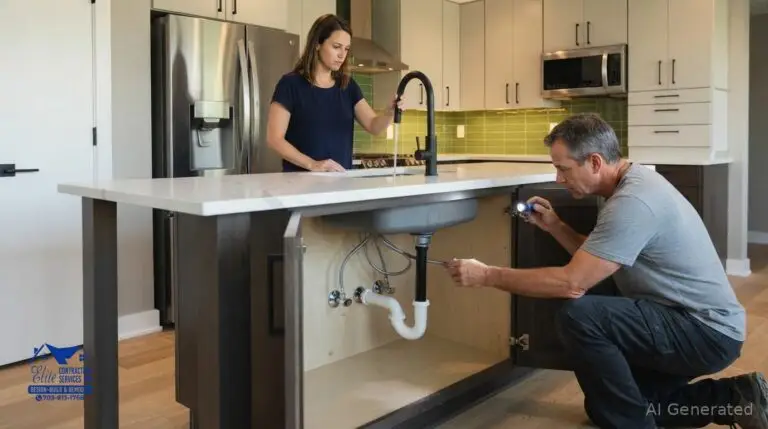
Use a shared project channel to review updates and ask questions without relying on being present in the home. If a photo is sent, request enough context to identify the room, feature, and related question. Compare visual updates with the relevant plan or selection, and discuss anything unclear before treating it as a decision. Keep a record of responses and the next agreed action.
Finally, maintain a comprehensive record of all communications as a reference for communicating effectively with your contractor throughout the project.
Ultimately, maintaining a focus on communicating effectively with your contractor will lead to the successful completion of your project.