Table of Contents
- Why Your Home Addition Timeline Matters: Planning for Success
- The Design-Build Advantage: How We Streamline Your Project Timeline
- Pre-Construction Phase: Permits, Plans, and Preparation in Northern Virginia
- Design Development and Material Selection: Setting Your Foundation
- Permitting and Approval Process: What to Expect in Fairfax County
- Construction Phase: Breaking Down Your Addition Timeline by Stage
- How We Keep Your Project On Time and On Budget
- Common Timeline Delays and How We Prevent Them
- Weather and Seasonal Factors Affecting Northern Virginia Construction
- Communication and Transparency Throughout Your Project
- Real Project Examples: Timeline Expectations for Different Addition Types
- Your Next Step: Getting Your Home Addition Timeline
- Frequently Asked Questions (FAQ)
Why Your Home Addition Timeline Matters: Planning for Success
When you’re planning a home addition, one of your first questions is usually simple: “How long will this take?” The answer depends on several interconnected factors, from permit timelines to material availability to weather patterns specific to Northern Virginia. Understanding what to expect helps you plan family schedules, manage budget expectations, and maintain realistic project goals.
We’ve guided hundreds of Northern Virginia homeowners through the design-build process, and we’ve learned that transparency about timeline is just as important as transparency about cost. This guide breaks down each phase of a home addition project, explains what drives timelines in our region, and shows you how our approach keeps projects moving forward efficiently.
Your home addition timeline isn’t just about getting the work done. It directly affects your family’s life during construction, your project budget, and your ability to use and enjoy your new space on schedule.
A realistic timeline helps you prepare mentally and logistically. If you’re adding a kitchen, you need to plan where your family will eat during construction. If you’re building a multi-bedroom addition for aging parents, you need to know when they can move in. If you’re remodeling your primary bathroom, you need alternative facilities arranged. Getting the timeline right upfront prevents surprises and stress later.
Timelines also impact costs. Delays extend your contractor’s overhead, potentially increase material prices, and can push your project into expensive seasonal labor rates. Conversely, unrealistic timelines set you up for disappointment. A contractor who promises a six-month addition in four months often delivers rushed work or cuts corners to meet an impossible deadline.
Our design-build approach is built around creating honest, achievable timelines. We factor in real-world Northern Virginia permit timelines, seasonal weather, material lead times, and the complexity of your specific project. This upfront clarity allows you to plan with confidence.
The Design-Build Advantage: How We Streamline Your Project Timeline
Traditional remodeling separates design, permitting, and construction into different phases with different vendors. The architect finishes, then the permit coordinator takes over, then the contractor starts building. This approach adds weeks or months of handoff time between phases.
Our design-build model integrates these steps from day one. Your architect, designer, permit coordinator, and construction team work together from the initial concept meeting through final walkthrough. That integration cuts out waiting periods and prevents costly redesigns or permit surprises.
Here’s what that means practically: When our designers are developing your addition layout, they’re already thinking about permit requirements and construction sequencing. If a design element complicates framing or electrical work, we identify it during design, not mid-construction. If a material choice affects your timeline, we know it before we order. This coordination typically saves 4-8 weeks compared to traditional separate-vendor approaches.
You also get one point of contact managing the entire schedule, rather than coordinating between multiple vendors with conflicting schedules. We track dependencies, manage supply chains, and adjust staffing to keep momentum going. That single accountability makes a measurable difference in keeping projects on track.
Pre-Construction Phase: Permits, Plans, and Preparation in Northern Virginia
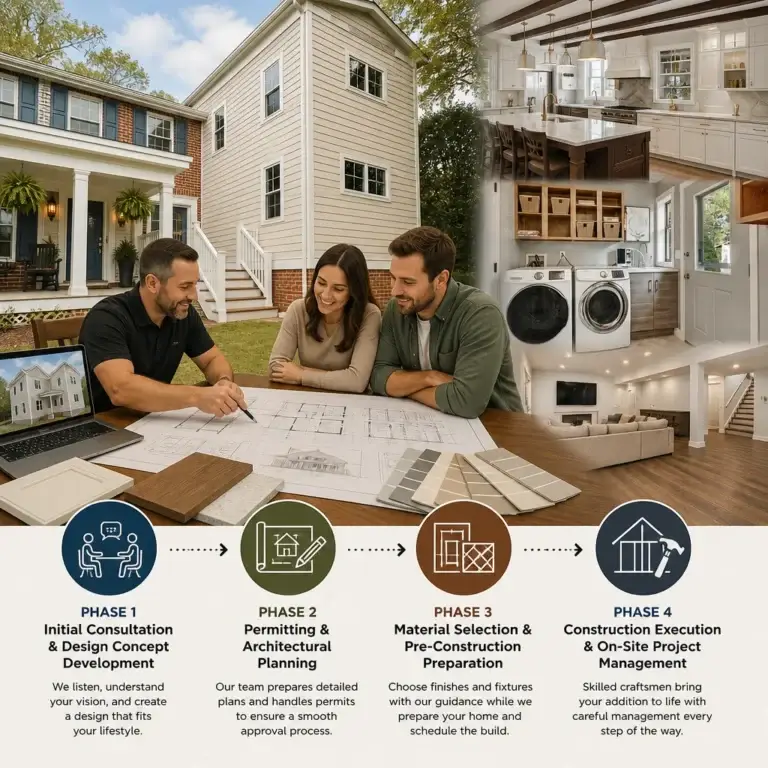
The pre-construction phase typically runs 6-10 weeks in our region. This phase includes your initial consultation, concept development, formal design, permit preparation, and final contractor scheduling.
Your first two weeks usually involve site visits, budget discussions, and preliminary concept sketches. We meet with you at your home, assess existing conditions, discuss your vision, and explore feasibility. We’ll look at your property’s setbacks, easements, and utilities. We’ll photograph existing conditions and take measurements. This groundwork prevents surprises later.
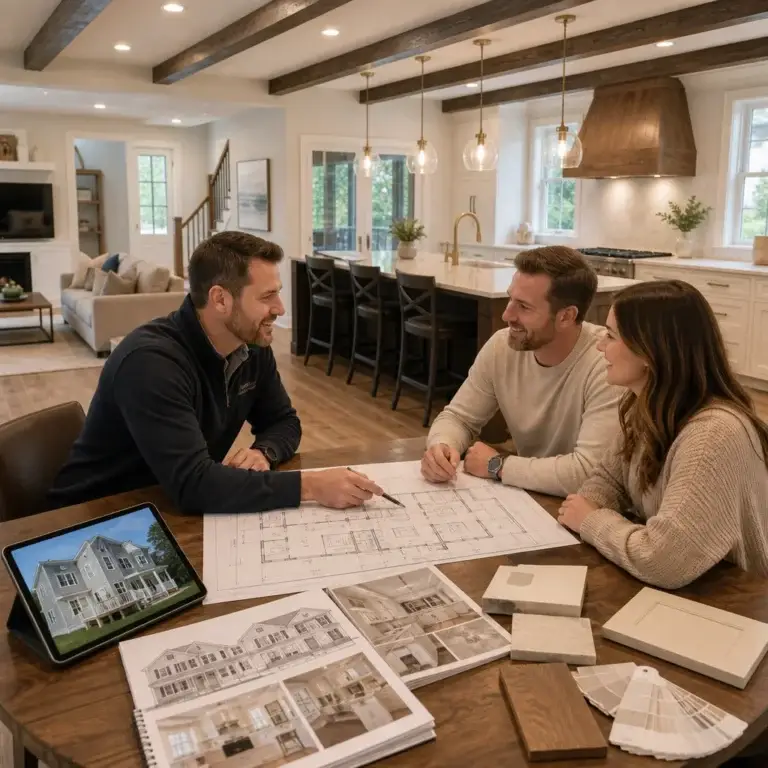
Weeks three through six focus on design development. Our team creates detailed architectural drawings, floor plans, elevation drawings, and specification sheets. We refine materials, finishes, and systems. We begin preliminary permit documentation. During this phase, you review designs with us, provide feedback, and refine the vision until it’s exactly what you want.
Weeks seven through ten involve permit preparation and submission. We compile all documentation required by your local jurisdiction, engage with building officials if pre-submission meetings are needed, and submit your permit application. In Fairfax County and surrounding municipalities, initial permit reviews typically take 2-4 weeks.
Throughout pre-construction, we also coordinate utility locates, conduct soil testing if needed, and prepare the construction site logistics plan. Site prep matters more than people realize. Knowing where underground utilities run prevents dangerous delays. Planning parking and material staging prevents neighborhood conflicts.
Start your project timeline planning by scheduling a detailed site consultation. Bring your ideas, budget range, and timeline preferences. The clarity you establish here directly affects the accuracy of every estimate that follows.
Design Development and Material Selection: Setting Your Foundation
Design development is where your vision becomes a buildable blueprint. This phase overlaps slightly with pre-construction and typically takes 4-6 weeks, though it can move faster or slower depending on design complexity and your decision-making pace.
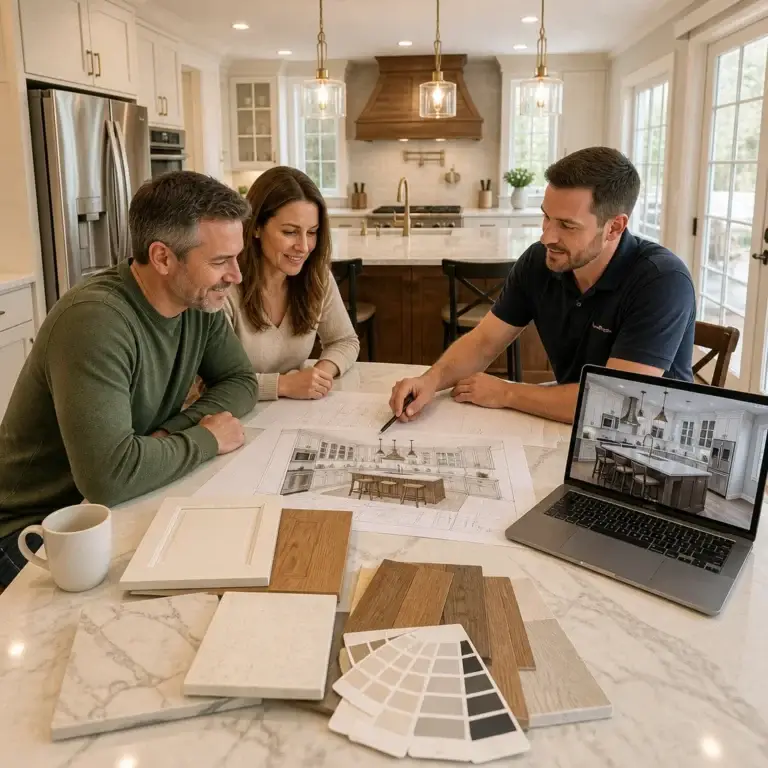
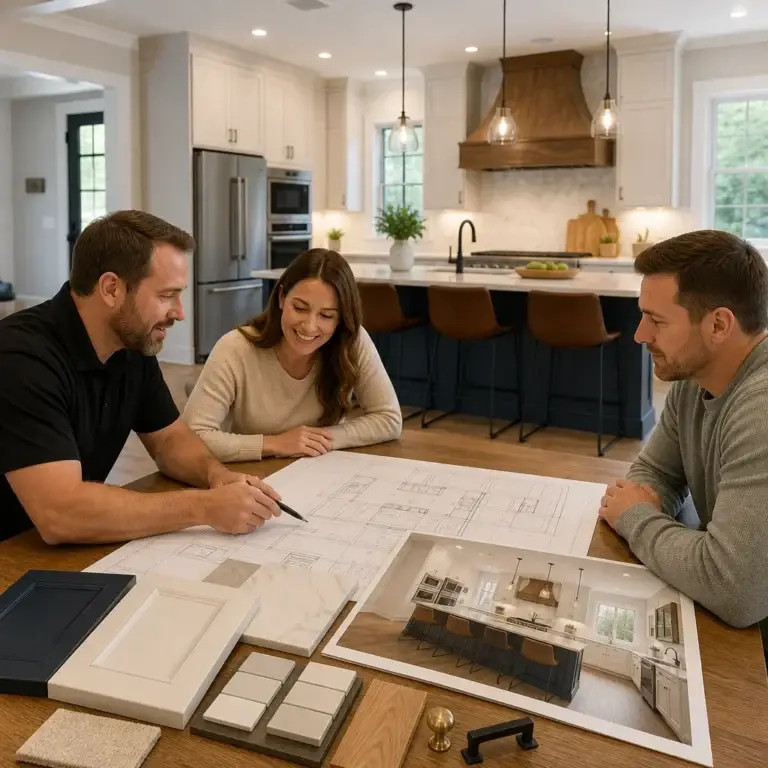
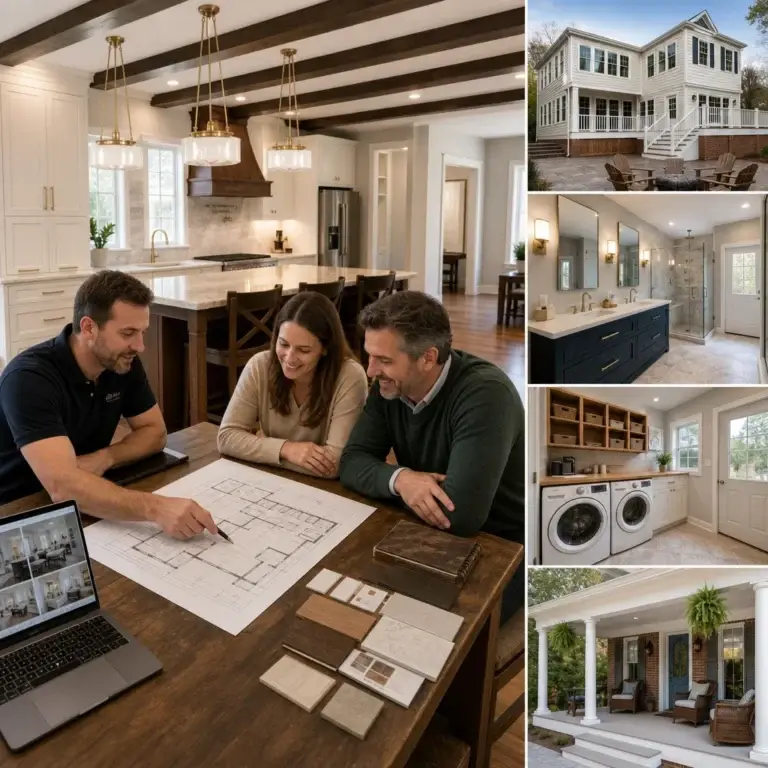
During design development, we create 3D renderings or detailed drawings so you can visualize the finished space. We discuss structural considerations. We finalize material selections for exterior siding, roofing, windows, doors, and interior finishes. We specify HVAC, electrical, and plumbing systems. We determine whether your addition will match your home’s architectural style or introduce complementary modern elements.
Material selection directly impacts your timeline, so we discuss lead times upfront. Some materials ship in weeks; others require 8-12 weeks. High-end custom cabinetry, specialty windows, and imported tile can add significant lead time. We help you understand these trade-offs. Sometimes choosing a readily available option moves your project forward by months. Sometimes waiting for the perfect material is worth the delay.
One common timeline challenge: indecision during design development. A homeowner spends weeks choosing between two cabinet styles, then changes their mind after seeing them installed somewhere else. To prevent this, we walk you through material samples in person, show you comparable projects, and encourage decisions within a defined timeframe. Once you approve designs and materials, we lock them in and move forward.
Our design-build team also investigates existing conditions during this phase. If your addition ties into your existing home’s structure, we may need to do exploratory work to understand what’s hidden behind walls, under floors, or above ceilings. Discovering surprises during design development costs far less than discovering them during construction.
Assign a primary decision-maker early and establish a timeline for approvals. If three family members need to weigh in on every decision, design development stalls. If one person has authority to approve, things move faster without sacrificing quality input.
Permitting and Approval Process: What to Expect in Fairfax County
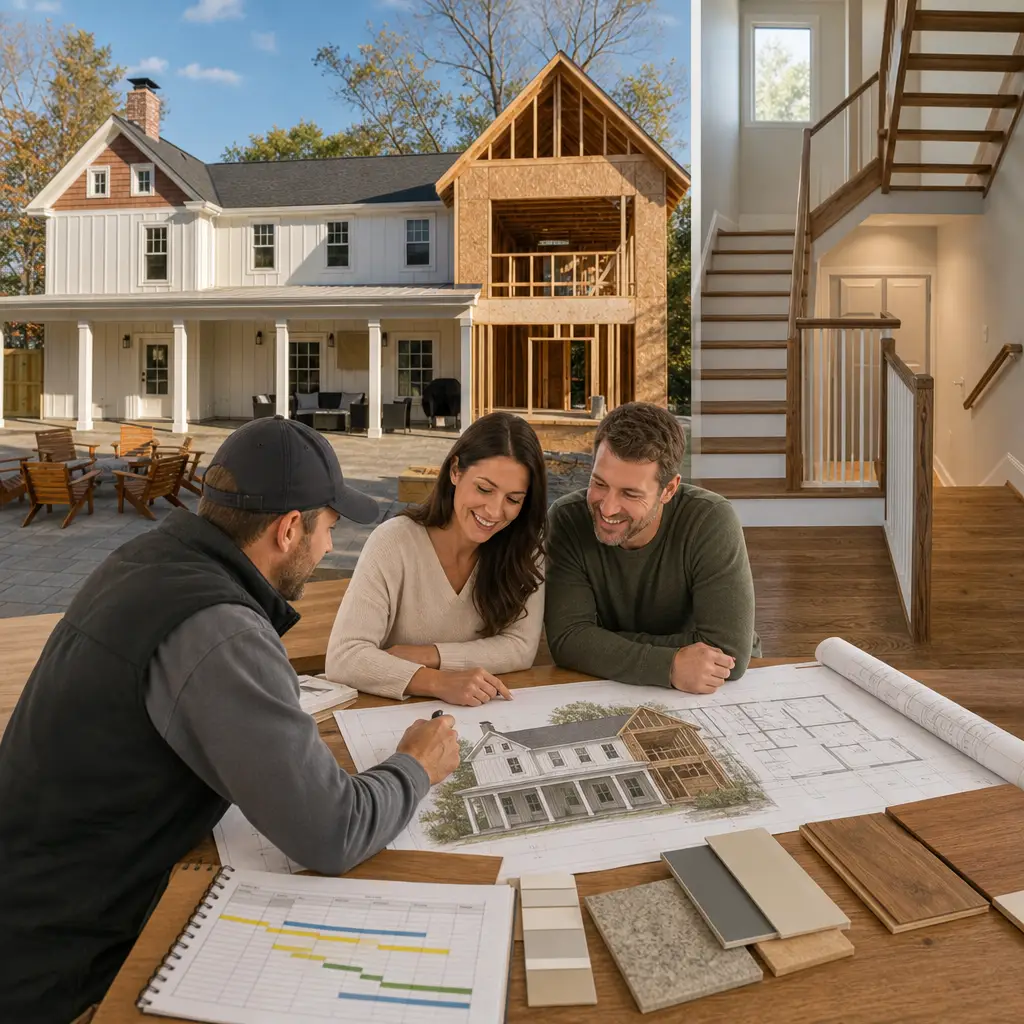
Permitting is often the most misunderstood phase of a home addition timeline. Many homeowners think permits are quick, but in Fairfax County and Northern Virginia municipalities, permitting typically takes 4-8 weeks from submission to approval.
Here’s why: Building permits aren’t rubber stamps. A permit reviewer examines your architectural plans, structural drawings, electrical plans, plumbing plans, and mechanical plans to ensure they meet building code. For a home addition, they’ll verify that your foundation is adequate, your structure meets wind and snow load requirements, your electrical capacity is sufficient, your plumbing is properly sized, and your HVAC system meets ventilation codes.
Fairfax County’s Department of Public Works and Environmental Services typically takes 2-3 weeks for an initial review. If everything passes, you get a permit. If the reviewer has questions or identifies code issues, they issue corrections. You make corrections and resubmit, which starts another 1-2 week review cycle. A typical correction cycle adds 2-4 weeks.
The timeline depends on how thorough your permit documents are. Incomplete or unclear submissions get rejected outright, adding significant delay. This is one area where our design-build approach adds real value. Because our team includes people who understand permit requirements, we submit complete, code-compliant documentation the first time. That reduces correction cycles and accelerates approval.
Some projects require additional reviews. If your addition affects stormwater drainage, the county’s stormwater management reviewer gets involved. If you’re near a stream or wetland, environmental review is required. If your addition is in a historic district, architectural review may be required. In Annandale and other communities, these reviews can add 2-4 additional weeks.
Plan for permitting to take 6-8 weeks minimum. Build in extra time for potential corrections. Once your permit is issued, you’re clear to begin construction, but you still can’t start until all permits are in hand and your construction timeline allows.
Don’t skip the permitting phase or try to build without permits. Unpermitted work can create liability issues, prevent future home sales, and result in code violations that require expensive remediation.
Construction Phase: Breaking Down Your Addition Timeline by Stage
Construction is where your addition actually gets built, and it’s usually the longest phase. For most residential additions in Northern Virginia, construction runs 12-18 weeks, though smaller additions can finish in 8-10 weeks and large whole-house additions can take 6 months or longer.
Understanding the construction timeline helps you plan your household around the work. Here’s a typical breakdown:
Weeks 1-2: Site Mobilization and Foundation Work
We set up the construction site with temporary utilities, material staging, and work areas. We mark out the addition’s footprint and begin excavation. If your addition requires a new foundation, foundation prep and forming begins. If you’re building on an existing structure, we prepare the connection points. Weather and soil conditions significantly affect this phase.
Weeks 3-4: Foundation and Concrete Work
We pour concrete for the new foundation or slab. Concrete cures for several days before we can build on it. We install footer drains if needed. We begin framing preparation, organizing materials, and setting up crew assignments.
Weeks 5-7: Rough Framing
Framing is the visible skeleton of your addition. Carpenters build walls, install floor systems, frame the roof, and create the structural integrity of the space. This phase is usually the fastest visually because the space takes shape daily. Bad weather, material delays, or complex structural details can slow framing.
Weeks 8-9: Roofing and Exterior Closure
Once framing is complete, roofing goes on to weatherproof the space. We install exterior sheathing, house wrap, and temporary weather protection. This closure is critical because it lets interior work proceed regardless of weather.
Weeks 10-12: Mechanical, Electrical, and Plumbing (MEP) Rough-In
While framers wrap up, electricians, plumbers, and HVAC technicians rough-in their systems. This means running wires, pipes, and ducts through walls and ceilings before drywall goes up. Inspections are required at this stage. MEP coordination is crucial because mistakes here require expensive rework.
Weeks 13-14: Drywall, Insulation, and Interior Finishes
Drywall goes up, creating finished-looking walls. Insulation is installed and inspected. Tape and mud drywall seams. Prime and paint. Install interior trim, baseboards, and door frames.
Weeks 15-16: Finish Carpentry and Fixture Installation
Cabinet installation, flooring, countertops, and finish hardware go in. Fixtures like sinks, lights, and appliances are installed. Final electrical, plumbing, and HVAC connections are made.
Week 17-18: Final Inspections and Punch List
Building inspectors verify code compliance. We conduct a final walkthrough with you, documenting any touch-ups or adjustments needed. The punch list typically takes 1-2 weeks to complete.
This timeline assumes no major delays and typical weather. A kitchen addition follows this schedule closely. A whole-house addition with complex structural work or custom features takes longer. A basement finishing project has a different sequence because the foundation already exists.
How We Keep Your Project On Time and On Budget
Keeping projects on schedule requires constant attention, proactive planning, and experienced coordination. Here’s how we do it:
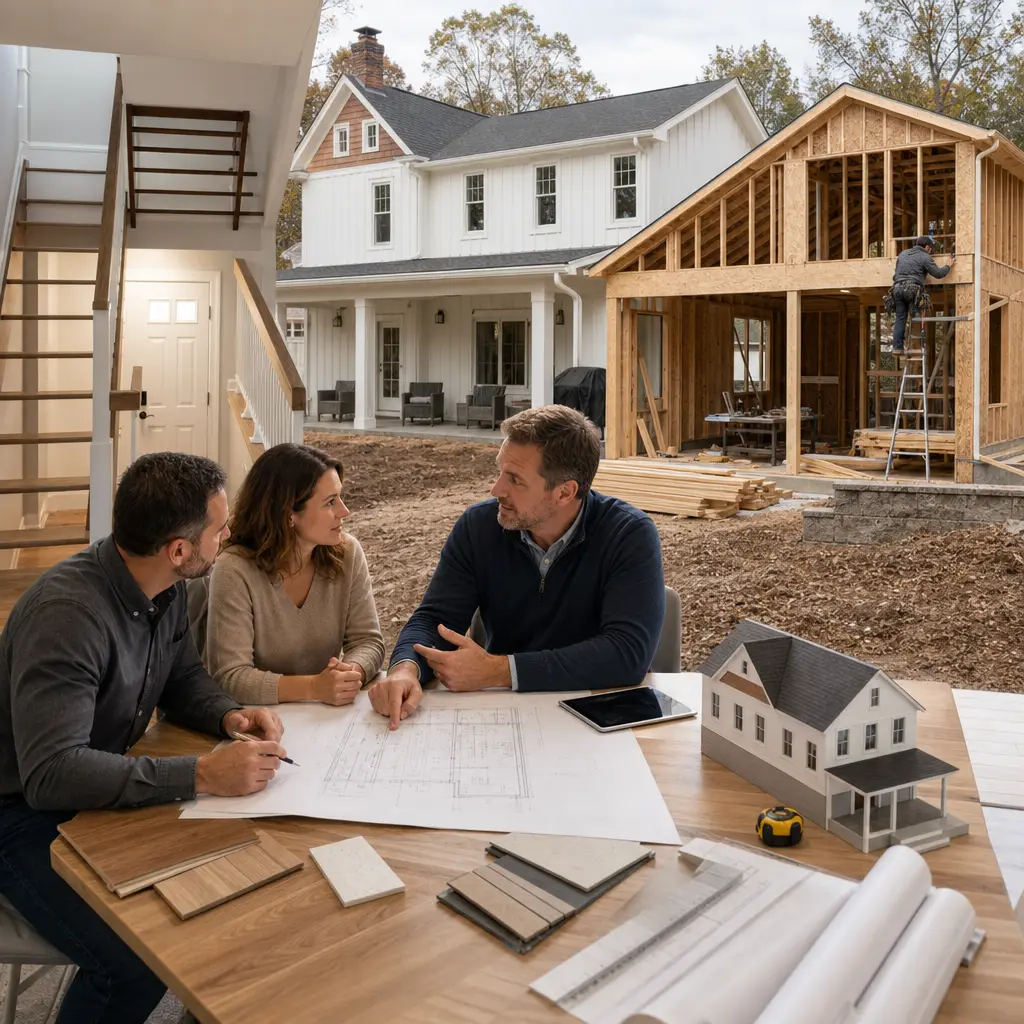
Detailed Project Scheduling – We create a detailed construction schedule mapping every phase, identifying dependencies, and assigning realistic durations. We track progress weekly against this schedule. If something is falling behind, we identify it immediately and adjust.
Material Procurement Planning – We order long-lead-time materials during the design phase, before permits are even submitted. Windows, doors, appliances, and custom cabinetry get ordered early so they arrive when we need them, not weeks after we’re ready for them.
Crew Coordination – We employ or contract with reliable crews we’ve worked with for years. We schedule multiple crews to work in sequence without idle time. A framing crew finishes, MEP crews start immediately, then drywall crew starts. No standing around waiting.
Contingency Planning – We build realistic float into the schedule for weather, inspections, and minor unforeseen conditions. We don’t schedule to the exact limit; we schedule to what’s achievable.
Problem-Solving Velocity – When issues arise, we solve them fast. A material doesn’t arrive as expected? We source an alternative immediately. A structural issue comes up during framing? We engage our engineer that day for a solution. We don’t stall; we adapt.
Transparent Communication – We update you weekly on progress. You see what’s been completed, what’s happening this week, and what’s next. If anything is off schedule, we explain why and what we’re doing about it.
The result is that our projects typically stay on schedule. We don’t promise impossible timelines, and we deliver the realistic ones we commit to. That reliability is why Northern Virginia homeowners return to us for multiple projects and recommend us to neighbors.
Common Timeline Delays and How We Prevent Them
Despite best efforts, some delays are common in residential construction. Understanding these helps you appreciate why we plan as we do:
Permit Corrections – Building officials request clarifications or identify code issues. We minimize this by submitting complete, code-compliant drawings upfront. Our permit experience helps us anticipate questions and address them proactively.
Material Delays – Suppliers ship late, items are backordered, or damaged materials require replacement. We order early for long-lead items and maintain relationships with multiple suppliers so we can pivot quickly if one source fails.
Weather Delays – Rain halts concrete work, snow shuts down roofing, extreme heat makes certain work unsafe. We plan our schedule around typical Northern Virginia weather patterns and build contingency time for unusual weather. Some seasons are wetter or snowier than others.
Utility Locates – Before digging, we call for utility locates. Sometimes locates are delayed or inaccurate. We allow extra time and follow up with utilities directly when critical.
Hidden Conditions – Exploratory work sometimes reveals structural rot, asbestos, or plumbing that’s in worse condition than expected. We minimize surprises with careful existing condition assessment and allow budget contingency for unknowns.
Inspection Failures – Occasionally a trade’s work doesn’t pass inspection on first review. An electrician’s wiring is too small, a plumber’s slope is wrong, framing doesn’t meet structural code. We work with experienced trades to minimize failures, and when they occur, we resolve them quickly.
Permit Hold-Ups – Sometimes permit offices are overwhelmed or inspectors are booked out. This is outside our control but predictable in our region. We allow adequate time and maintain good relationships with inspectors to get timely reviews.
The key insight: many timeline delays are preventable with careful planning, others are manageable with contingency, and some are genuinely unpredictable. A contractor who promises zero delays is either inexperienced or dishonest. One who plans realistically and communicates transparently is trustworthy.
Weather and Seasonal Factors Affecting Northern Virginia Construction
Northern Virginia’s climate significantly impacts construction timelines. Understanding seasonal factors helps you plan your project start date strategically.
Spring (March-May) – Spring is prime construction season in our region. Days get longer, temperatures moderate, and rain is manageable. Most projects move efficiently in spring. The downside: many contractors schedule projects in spring, so crews can be harder to book.
Summer (June-August) – Summer offers long daylight hours for outdoor work, but heat slows work pace and extreme heat can halt work. High humidity challenges concrete curing and paint drying. Some HVAC and roofing work becomes difficult in 95-degree heat. Summer storms can cause delays.
Fall (September-November) – Fall is excellent for construction. Temperatures moderate, humidity drops, and rain is less frequent than spring. September and October are ideal months. Late November usually marks the end of efficient exterior work before winter.
Winter (December-February) – Winter in Northern Virginia isn’t like Minnesota winter, but it still impacts projects. Below-freezing temperatures prevent concrete work. Snow and ice close sites. Frost affects foundations. However, interior work proceeds normally through winter. Many contractors actually have better crew availability in winter because summer projects are finishing.
We typically schedule exterior work for spring through fall and reserve winter for interior finishing. A home addition starting in March would have weather-friendly months for foundation, framing, and roofing. Starting in August means you’re framing through fall and closing the structure before winter, then finishing interiors through winter into spring.
If you have timing flexibility, we recommend starting projects in April-May or September-October. You’ll get efficient construction without competing for crews. If your timeline is fixed, we’ll schedule appropriately and build weather contingency into the plan.
One final note on climate: Northern Virginia gets significant rain year-round. Wet conditions slow work and affect crew safety. We plan for this and schedule work to minimize weather risk.
Communication and Transparency Throughout Your Project
Nothing ruins a project experience faster than poor communication. You hear nothing for weeks, then discover unexpected costs or delays. That’s not how we work.
From day one, we establish clear communication channels. You get a project manager’s contact information. You know how often to expect updates. We explain what happens next and roughly when.
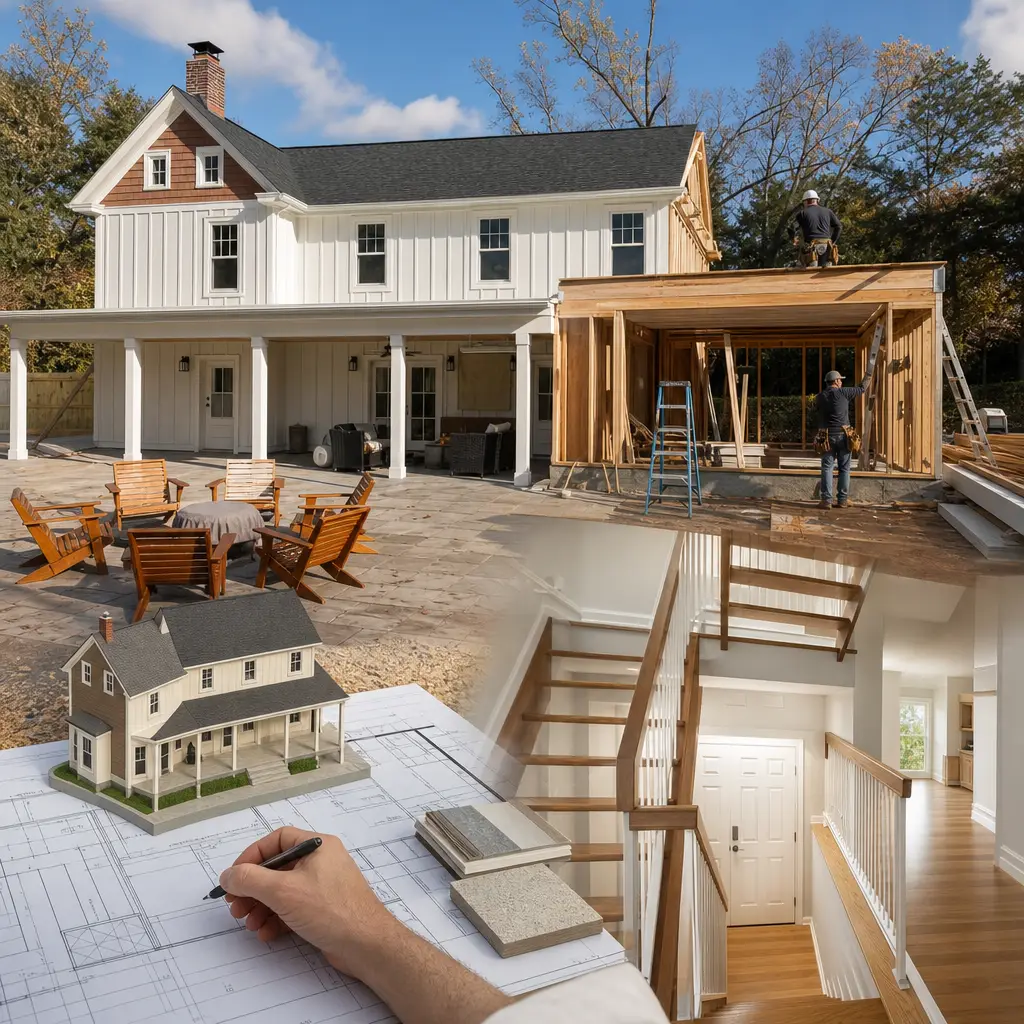
Weekly Progress Updates – Every Friday, you receive an update showing what was completed this week, what’s scheduled for next week, and any changes or concerns. These are usually brief emails or text messages unless something needs discussion.
Two-Week Look-Ahead – At our weekly job meeting on Monday morning, we review the next two weeks in detail. We identify potential conflicts, ensure material availability, confirm crew schedules, and plan for inspections. If something’s at risk, we address it proactively.
Monthly Owner Meetings – Once a month, we meet with you at the site. We walk through the addition, discuss progress, address questions, and refine any decisions that still need attention. These meetings keep you connected to the project and ensure you understand the work happening in your home.
Transparent Change Management – If we encounter something unexpected or you want to change something, we document it clearly. Change order forms specify exactly what’s changing, why, what it costs, and how long it takes. No surprises.
Immediate Problem Resolution – If something goes wrong, we tell you about it honestly and immediately. We explain what happened, what the options are, and what we recommend. We don’t hide problems hoping to fix them before you notice.
Accessible Project Manager – Your project manager is available for questions. You’re not calling a general contractor who’s off managing three other projects. You talk to the person managing yours.
This level of communication is standard for us because we understand that your home is your sanctuary. Having workers in it is disruptive. The least we can do is keep you informed about what’s happening and why.
Real Project Examples: Timeline Expectations for Different Addition Types
Timeline expectations vary significantly by project scope. Here’s what typical projects look like:
Kitchen Remodel (No Structural Addition) – A kitchen remodel that doesn’t add square footage typically takes 8-12 weeks total. Design takes 3-4 weeks, permitting 3-4 weeks, construction 6-8 weeks. If you’re simply reconfiguring the existing space with new cabinets and appliances, you might finish in 10 weeks. If you’re relocating plumbing or electrical significantly, or removing walls, add 2-3 weeks.
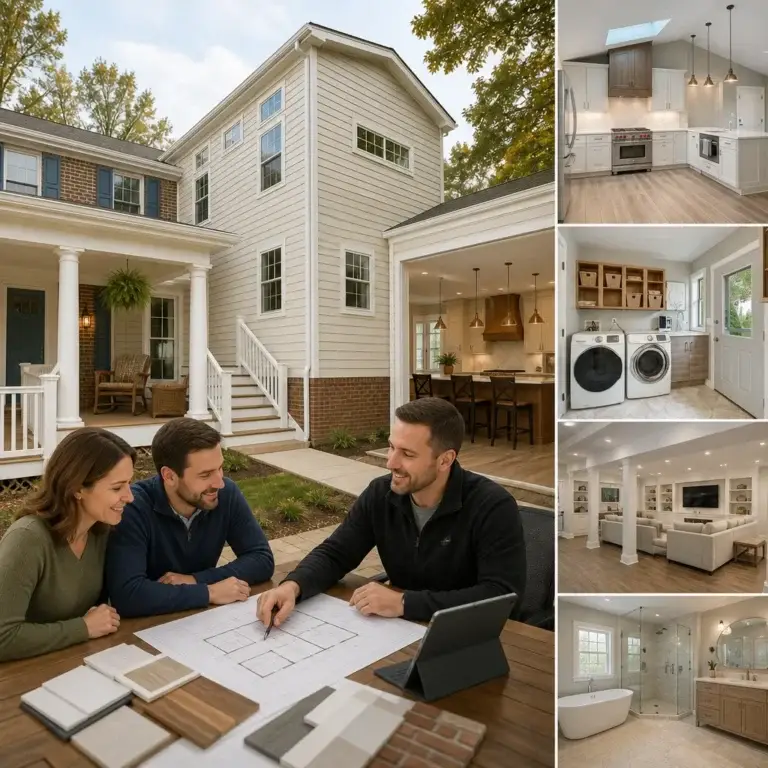
Small Room Addition (150-200 square feet) – A modest bedroom or office addition usually takes 14-16 weeks total. Design 4-5 weeks, permitting 5-6 weeks, construction 8-10 weeks. These are straightforward projects: build a foundation, frame a simple rectangular addition, close it in, finish it out. Few complications.
Master Suite Addition (300-400 square feet) – A master bedroom with ensuite bathroom and potentially a walk-in closet takes 16-20 weeks. Design 5-6 weeks, permitting 6-8 weeks, construction 10-12 weeks. More complexity in plumbing, structural connections, and finish details slows things slightly.
Whole-House Addition or Substantial Renovation (500+ square feet) – A large addition or whole-house renovation can take 20-28 weeks or more. Design 6-8 weeks, permitting 8-10 weeks (more complex reviews), construction 14-18 weeks. Complex structural work, multiple rooms, and extensive MEP coordination take time.
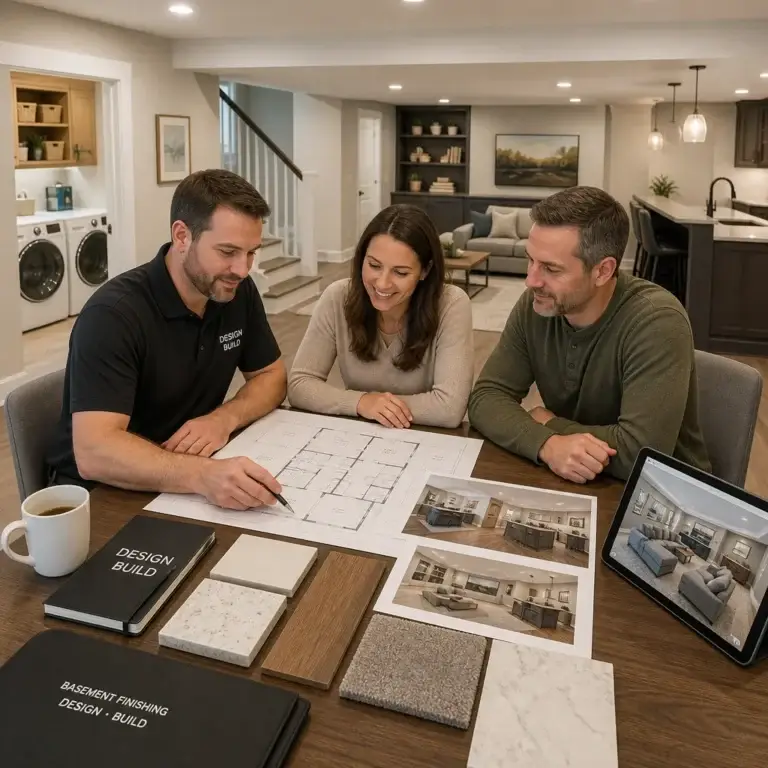
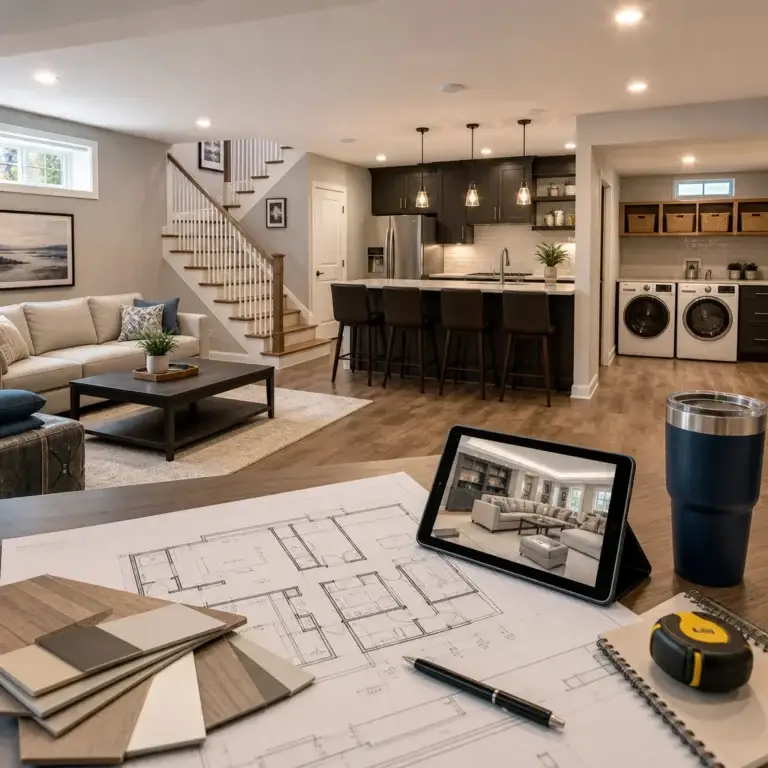
Basement Finishing (varies) – A basement finishing project typically takes 10-14 weeks for the full space. Design 3-4 weeks, permitting 2-3 weeks (less complex), construction 6-8 weeks. No foundation work needed, which saves significant time.
These timelines assume typical conditions and no major unforeseen issues. A project with accessible site conditions, standard materials, quick permitting, and favorable weather might finish on the faster end. A project with complex site access, custom materials, permit corrections, or winter construction might take longer.
We provide detailed timelines specific to your project during the initial consultation. We don’t give estimates; we give realistic schedules based on your specific scope, site conditions, and local regulatory environment.
Your Next Step: Getting Your Home Addition Timeline
You’re ready to move forward when you have a clear vision of what you want to build, a realistic sense of your budget, and flexibility on timing. The best first step is a consultation where we can assess your home, listen to your vision, and outline a realistic plan and timeline specific to your situation.
Contact us to schedule your initial site consultation. Bring any inspiration photos, sketch your ideas, and be prepared to discuss your budget range and any timing preferences. We’ll tour your property, take measurements, identify opportunities and constraints, and give you a preliminary timeline estimate.
Home Addition Northern VA and Room Additions Fairfax VA are our specialties, and we’ve built dozens of projects in every neighborhood we serve. We understand Northern Virginia’s unique permitting environment, seasonal weather patterns, and homeowner expectations.
Our design-build approach means your timeline, your design, and your costs stay coordinated from start to finish. You won’t be surprised by delays or discover structural problems mid-construction because we’ve thought through every phase carefully upfront.
Start the conversation today. Share your vision with a team that will transform it into reality on a timeline you can count on.
Contact us Today For a Free Estimate !
Frequently Asked Questions (FAQ)
How long does a home addition typically take from start to finish?
Our design-build approach allows us to compress timelines compared to traditional methods, but most additions in Northern Virginia take between 4 to 8 months from initial design through final completion. The exact duration depends on the scope of work, permit approval timelines in your specific jurisdiction, and whether we encounter any unforeseen structural issues during construction. We provide detailed project schedules upfront so you know exactly what to expect at each phase.
What makes your design-build process faster than traditional construction methods?
Because we manage design, permitting, and construction under one team, we eliminate delays that typically occur when homeowners coordinate separate architects, contractors, and material suppliers. Our unified approach means we’re solving problems collaboratively from day one, making design decisions with construction feasibility in mind, and keeping material selections moving without bottlenecks. This integrated workflow is why we consistently deliver projects on time and on budget for Fairfax County homeowners.
What happens if permits take longer than expected in my area?
Permit timelines vary significantly across Northern Virginia municipalities, and we factor realistic approval windows into every project schedule we present to you. We maintain strong relationships with local building departments and handle all permit coordination ourselves, which helps us navigate the process efficiently. If delays do occur, we communicate them transparently and adjust your construction timeline accordingly, but our experience has shown that proper upfront planning prevents most permit-related setbacks.