Table of Contents
- 1. Understanding Your HOA Review Process and Timeline
- 2. Preparing Complete Documentation Before Submitting Permits
- 3. Working With Architects to Ensure Code Compliance
- 4. Navigating Fairfax County Permit Requirements
- 5. Managing HOA Approval for Design-Build Projects
- 6. Coordinating Inspections and Approval Checkpoints
- 7. Avoiding Common Permit and HOA Delays
- Frequently Asked Questions (FAQ)
1. Understanding Your HOA Review Process and Timeline
Remodeling your Annandale home is an exciting investment, but navigating permit requirements and HOA approval can feel like a second full-time job. Between understanding HOA review timelines, gathering the right documentation, coordinating with architects, and managing multiple approval checkpoints, homeowners often find themselves overwhelmed before construction even begins.
The good news: with the right guidance and a team that specializes in permit and HOA coordination, this process becomes manageable and predictable. We’ve guided hundreds of Northern Virginia homeowners through complex remodeling projects, and we’ve learned exactly what separates smooth approvals from months of frustrating delays.
Whether you’re planning a kitchen remodel, home addition, or basement renovation, these seven strategies will help you understand what to expect and how to work effectively with both your HOA and local permitting authorities.
Every HOA operates differently, and that’s the first thing homeowners need to accept. Some boards review applications in 15 days; others take 45. Some require detailed architectural renderings; others focus primarily on exterior impact.
Start by requesting your HOA’s Architectural Review Guidelines and recent approval decisions. These documents reveal the board’s priorities and past precedents. Call your property management company directly and ask three specific questions: How long is the typical review period? What materials do they require? Are there any project types they’ve recently denied or flagged?
Document everything in writing. Email summaries after phone calls so you have a timestamped record. Many homeowners miss approval deadlines simply because verbal information didn’t stick or conflicted with written rules.
Your HOA likely has a submission deadline, often the 15th of the month for next month’s meeting. Missing that deadline costs you 30 days automatically. Mark this date in your calendar and plan to submit at least five business days early. This buffer accounts for incomplete submissions that require revision.
Actionable takeaway: Request your HOA’s submission checklist and review timeline in writing within the next week. If they don’t have a written checklist, ask which projects from the past year were approved fastest and model your submission on those examples.
2. Preparing Complete Documentation Before Submitting Permits
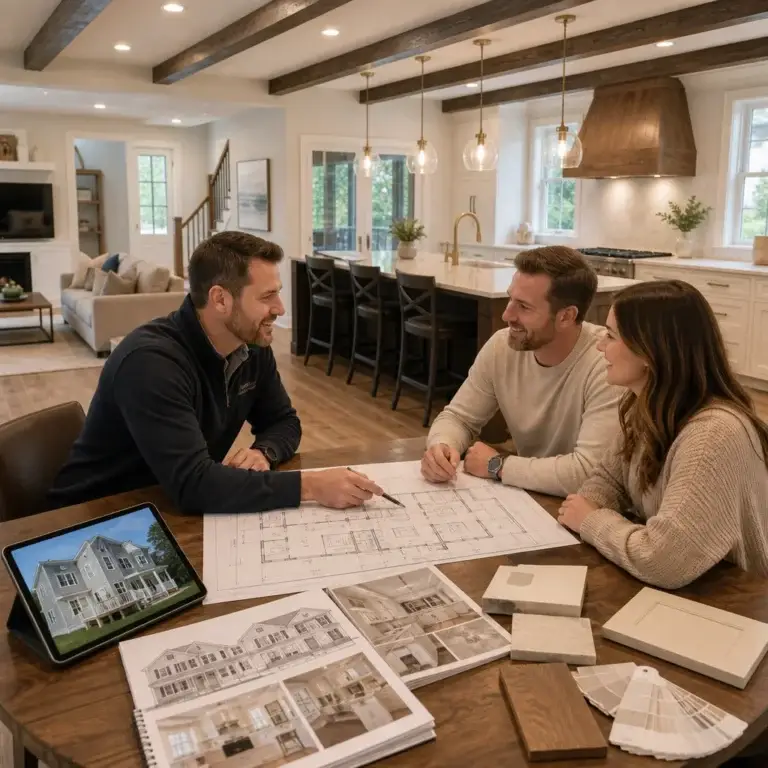
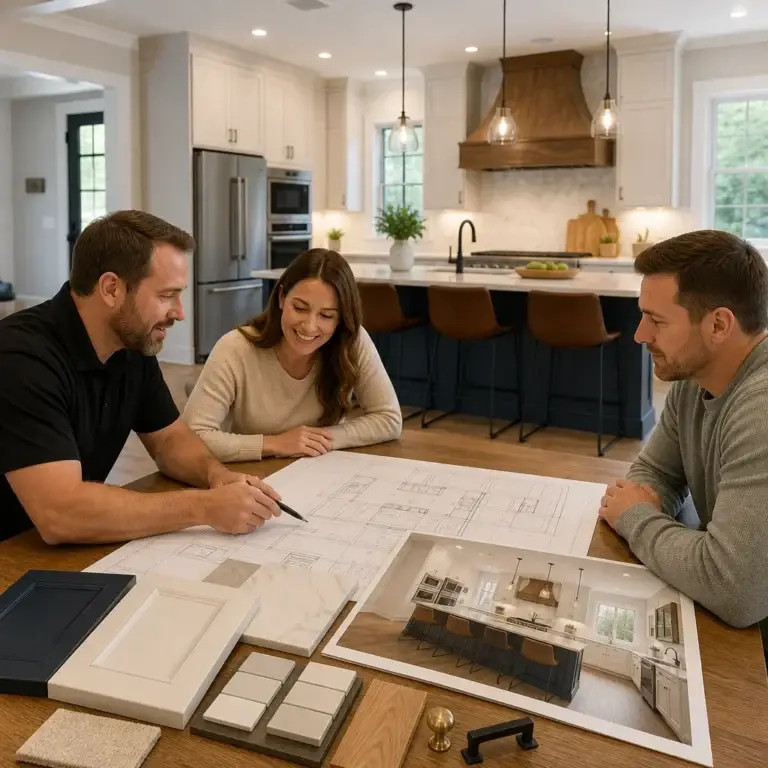
Incomplete applications are the silent killer of timely approvals. We’ve seen homeowners resubmit applications three or four times because they forgot a floor plan, missed setback measurements, or provided a rendering that didn’t match the architectural plans.
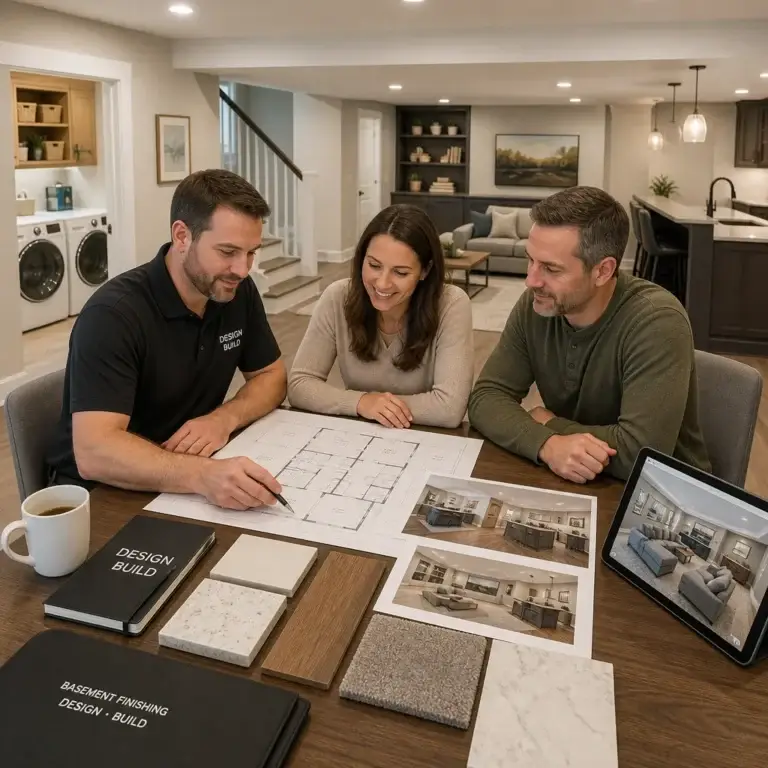
Your HOA and Fairfax County building officials need to visualize your project with precision. This means gathering:
- Detailed site plans showing property boundaries, existing structures, and proposed additions with exact dimensions
- Architectural floor plans and elevations (front, rear, side views) drawn to scale
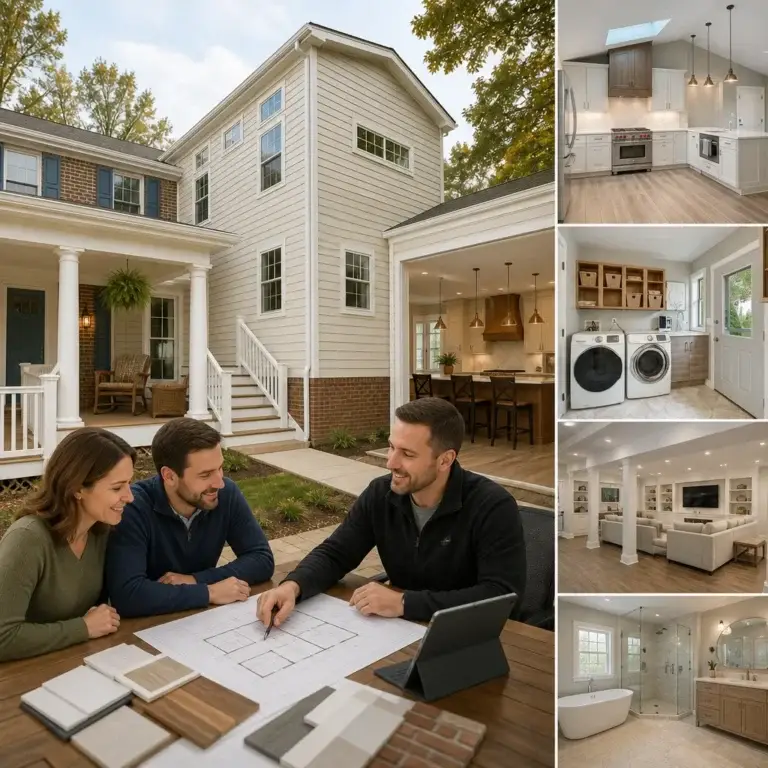
- Exterior renderings showing materials, colors, and how the project integrates with neighboring homes
- Setback calculations proving compliance with local zoning codes
- Grading and drainage plans (required for significant ground-level work)
- Material samples or specifications for visible exterior elements (roofing, siding, windows, doors)
We recommend creating a master checklist early in the design phase. Share it with your architect and contractor so everyone understands what’s needed before the first submission deadline. Missing one item can delay approval by a month or more.
For kitchen and bathroom remodels that don’t affect the home’s exterior, documentation requirements are lighter, but they’re not zero. Your HOA still needs to know that work complies with electrical and plumbing codes, especially if you’re changing window locations or wall configurations.
Actionable takeaway: This week, download your HOA’s application form and create a checklist of every required item. Then contact your architect or designer and confirm they can deliver each element before your target submission date.

3. Working With Architects to Ensure Code Compliance
Your architect isn’t just making your space beautiful; they’re solving compliance puzzles that keep your project moving through permitting.
In Northern Virginia, the building code is the Virginia Construction Code (based on the International Building Code). It covers everything from ceiling height and egress windows in bedrooms to setback distances and lot coverage percentages. If your architect designs a room addition without confirming it complies with these rules, county inspectors will flag it, and you’ll be back to square one with revisions.
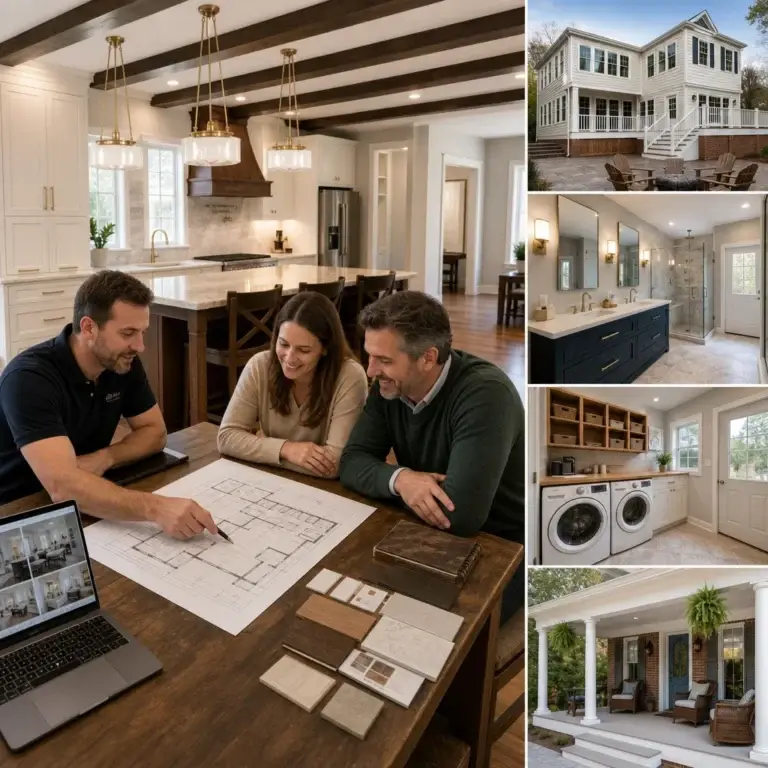
A design-build approach, like what we offer at Elite Contractors Services, brings the architect and contractor together from day one. That collaboration means code compliance is built into the design rather than discovered later. Your architect designs with knowledge of exactly what the county requires and what your contractor can execute efficiently.
Ask your architect early: Which code sections apply to my project? What’s our compliance strategy? How will we document compliance for the inspector? If they can’t answer these questions clearly, that’s a red flag.
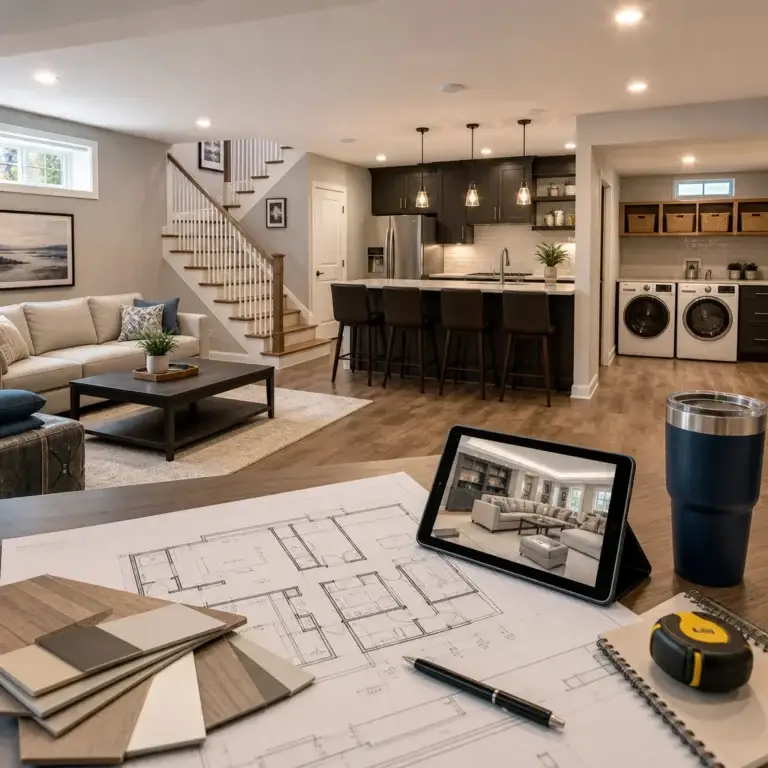
Pay special attention to egress requirements (emergency exit pathways in bedrooms), ceiling heights in finished basements, and deck railing codes. These trip up many homeowners because they sound like minor details but can derail approvals if overlooked.
Actionable takeaway: Before paying for architectural drawings, sit down with your architect and discuss the Virginia Construction Code sections that apply to your specific project. Request a one-page summary of how the design will meet each requirement.
4. Navigating Fairfax County Permit Requirements
Fairfax County has one of the more organized permit systems in Northern Virginia, but it’s still bureaucratic and detail-oriented. Understanding their specific requirements upfront saves weeks of back-and-forth.
Start at the Fairfax County Department of Planning and Zoning website. Pull up your property’s zoning classification and any overlays (floodplain, historic district, steep slopes). These dictate what’s allowed and what requires variances or special approvals.
Most residential remodeling projects fall into two categories:
Administrative Permits (faster, typically 2-3 weeks): Room additions, deck additions, and interior renovations that don’t change the home’s footprint or violate setback requirements usually qualify. These are reviewed by staff and approved administratively if they meet code.
Standard Permits (slower, 4-8 weeks): Major additions, basement finishing with new egress windows, or any work affecting structural, electrical, or plumbing systems typically require a full plan review and may need additional signatures.
Fairfax County also requires proof of HOA approval before they’ll issue a permit for projects in deed-restricted communities. So your HOA approval must come first. This is non-negotiable and explains why HOA timeline management is critical.
Pay the permit fees upfront. Fairfax County won’t begin reviewing your application until payment clears, and this step alone can add a week if overlooked.
Actionable takeaway: This week, visit the Fairfax County zoning site, find your property’s zoning classification, and note any overlays. Then call the county’s plan review intake desk and ask whether your project type qualifies for administrative or standard permitting.
5. Managing HOA Approval for Design-Build Projects
Design-build projects present a unique advantage in HOA approvals: we manage communication between the designer, the reviewing board, and county staff. This single point of responsibility prevents the miscommunication that often derails approvals.

Once your design is complete and architectural drawings are ready, we submit to your HOA with a cover letter that explains the project in plain language. We highlight how the design enhances the community (improved appearance, quality materials, architectural consistency) and address any common concerns (privacy, drainage, construction impact) preemptively.
If your HOA has design guidelines requiring certain material colors or architectural styles, our designs conform from the start. We’ve reviewed hundreds of HOA guidelines, and we know which design choices sail through and which trigger additional scrutiny.
When the HOA requests revisions, we manage the back-and-forth. Instead of you coordinating between the board and the architect, we handle all communication, digest feedback, and make decisions. This keeps the process moving and prevents misunderstandings.
We also prepare contingency plans. If your HOA denies exterior colors but approves the overall design, we pivot quickly with material alternatives that meet their requirements without redesigning the entire project. This responsiveness prevents the “back to the drawing board” scenario that adds months to timelines.
Actionable takeaway: When you receive HOA feedback on your design, don’t respond immediately. Pause for two days, then craft a response that acknowledges each concern and proposes specific solutions rather than general promises.
6. Coordinating Inspections and Approval Checkpoints
Once permits are issued, the real gauntlet begins: inspections. Fairfax County requires inspections at multiple stages, and if you miss the inspector or work progresses past an inspection point without being signed off, the project halts until a re-inspection can be scheduled.
Common inspection checkpoints include:
- Foundation inspection (before concrete is poured or after excavation)
- Framing inspection (before drywall, electrical, or plumbing is covered)
- Mechanical/Electrical/Plumbing rough-in inspection (before walls are closed)
- Final inspection (after all work is complete and systems are operational)
We schedule inspections at least five business days in advance. County inspectors have packed schedules, and short notice often results in rescheduled appointments that cost you weeks.
We also manage the pre-inspection walkthrough. Before the inspector arrives, we verify that the work actually meets code and that nothing has been accidentally overlooked. A failed inspection means re-work and rescheduling, which is far more expensive than catching issues before the inspector sees them.
Homeowners can attend inspections, but many prefer not to. We handle communication with inspectors and document all findings in writing. This prevents misunderstandings about what was approved versus what requires correction.
Actionable takeaway: Once your permit is issued, ask your contractor to provide a written schedule of required inspections and the lead time needed to request each one. Mark these dates in your calendar and flag the contractor if schedules slip.
7. Avoiding Common Permit and HOA Delays
Most delays fall into predictable categories. Avoid these, and you’re 90 percent of the way to an on-time approval and construction process.
Incomplete or vague applications: This is the number-one delay factor. Submit everything the first time, drawn to scale, with clear dimensions. If your HOA asks a clarifying question, answer it specifically and in writing. “We’ll discuss this during construction” is not an acceptable answer to an HOA approval question.
Miscommunication about design changes: Your HOA approved Design A. If you decide mid-project to switch to Design B, you typically need re-approval. Changes that seem minor to you (different paint color, relocated window) may require formal HOA sign-off. Confirm with your property management company before making changes.
Missing deadlines: Mark every submission deadline in your calendar. County intake windows, HOA meeting dates, inspection request deadlines. One missed deadline cascades into additional weeks.

Assuming verbal approval is sufficient: Get everything in writing. A verbal “yes” from a board member doesn’t count. You need signed approval documents. Many delays result from homeowners proceeding on verbal reassurance only to discover they needed written approval.
Working with contractors who don’t understand local requirements: Some contractors operate across multiple states and aren’t deeply familiar with Fairfax County or HOA-specific nuances. They miss details that experienced local firms catch automatically. This unfamiliarity translates into rejected plans, re-submissions, and delays.
A design-build contractor like our team at Elite Contractors Services brings permit expertise as part of our standard process. We’ve coordinated thousands of permits and HOA approvals in Northern Virginia. We know exactly what Fairfax County requires, which HOA boards are detail-oriented versus expedited, and how to structure projects to move through approval efficiently.
We also carry the responsibility for timelines and accuracy. If a permit rejection occurs because of incomplete documentation from our side, we absorb the cost and delay. This aligns our interests with yours completely.
Actionable takeaway: Before finalizing your contractor or design team, ask them directly: How many HOA approvals have you managed in your specific HOA? Can you show examples of approved projects in Fairfax County? How do you manage permit rejections?
—
Permit and HOA management isn’t glamorous, but it’s absolutely critical to a successful remodeling project. Homeowners who invest time upfront in understanding these processes and working with experienced teams report significantly lower stress and faster timelines.
The strategy is straightforward: gather complete information early, prepare comprehensive documentation, work with architects and contractors who understand local code, submit professionally and on time, and manage every approval point actively rather than passively.
At Elite Contractors Services, we take this process seriously because your timeline is our timeline. Whether you’re planning a room addition, a basement finishing project, a kitchen remodel, or a full home renovation, we handle permit and HOA coordination as an integrated part of the design-build process.
We work throughout Northern Virginia including Alexandria, Arlington, Falls Church, Great Falls, McLean, Reston, Springfield, Tysons, Vienna, and the surrounding Fairfax County communities. Our design-build approach means you’re working with one experienced team that owns both the design and the execution, eliminating the handoff confusion that delays so many projects.
Ready to start your remodeling project with a team that manages permits and HOA requirements as core expertise? Contact Elite Contractors Services today for a consultation. Let’s discuss your vision and how we can bring it to reality on time and on budget, while navigating all the approvals smoothly along the way.
Contact us Today For a Free Estimate !
Frequently Asked Questions (FAQ)
How do we handle permit coordination and HOA approvals for your project?
We manage the entire permit and HOA approval process as part of our design-build approach, so you don’t have to navigate it alone. Our team prepares all required documentation, submits applications to Fairfax County and your HOA, tracks timelines, and coordinates with inspectors throughout your project. We’ve successfully guided hundreds of homeowners through Annandale and Northern Virginia’s specific requirements, which means we know exactly what each jurisdiction needs to approve your work quickly.
What’s the typical timeline for getting HOA approval in Fairfax County communities?
Most HOA reviews in our service areas take 2 to 4 weeks once we submit complete documentation, though some communities have longer processes. We’ll give you a realistic timeline upfront based on your specific HOA’s requirements and current workload. The best way to avoid delays is submitting thorough architectural plans and design details the first time, which is why we invest in detailed drawings before any application goes out.
What common mistakes do homeowners make that delay permits and approvals?
The biggest mistake we see is underestimating documentation requirements or submitting incomplete applications, which pushes timelines back by weeks. Some homeowners also assume their HOA and county requirements are the same, when they actually vary significantly across Fairfax County communities. We handle these details so you can focus on your vision while we manage the compliance and coordination work.