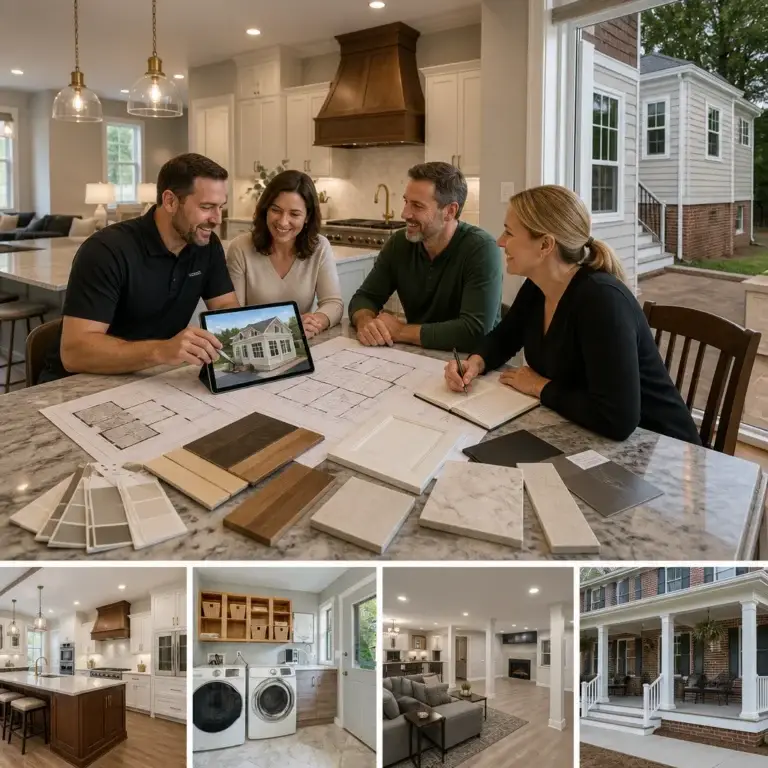
Table of Contents
- Why Full Home Renovations Demand Expert Project Management
- The Hidden Costs of Poor Planning and Coordination
- How Design-Build Approach Simplifies Renovation Complexity
- Our Streamlined Process: From Design Through Completion
- Clear Communication and Transparent Contracts Keep Projects on Track
- Managing Timeline and Budget Without Cutting Corners
- Coordinating Permits, Materials, and Craftspeople as One Team
- The Value of Professional Project Management in Your Home
- Why Northern Virginia Homeowners Trust Our Full Renovation Services
- Getting Started With Your Renovation Project
- Frequently Asked Questions (FAQ)
Why Full Home Renovations Demand Expert Project Management
A full home renovation is one of the most significant investments a homeowner can make. Whether you’re modernizing an outdated kitchen, adding square footage for a growing family, or transforming your entire living space, the complexity of coordinating design, permits, materials, craftspeople, and timelines can quickly overwhelm even the most organized homeowner. That’s where expert project management becomes essential.
At Elite Contractors Services, we’ve guided hundreds of Northern Virginia homeowners through full-scale renovations. We understand that the difference between a successful project and a stressful one often comes down to planning, coordination, and clear communication from day one. In this guide, we’ll walk you through what effective renovation project management looks like and why it matters for your home.
A kitchen remodel might seem straightforward until you discover that installing new cabinetry requires removing a load-bearing wall. A basement finishing project seems like a straightforward build until electrical rough-in reveals unexpected plumbing. These surprises multiply across multiple rooms and systems in a full home renovation.
Unlike small projects, full renovations touch nearly every system in your home: structural, electrical, plumbing, HVAC, and finishes. Each decision cascades into the next phase. A delay in obtaining structural permits delays framing, which delays electrical work, which delays drywall, which delays finishing. Without a single point of oversight, these dependencies create confusion, rework, and cost overruns.
Expert project management ensures that:
- All trades arrive in the correct sequence
- Material orders align with the construction schedule
- Design decisions are made before work begins, not during construction
- Permit requirements are anticipated and addressed upfront
- Quality standards remain consistent across all phases
- Changes are documented and priced before implementation
When you have one experienced team managing every moving part, you eliminate the friction that typically derails renovations. We’ve seen projects run six months over schedule simply because no single person was coordinating between the designer, electrician, plumber, and general contractor. That doesn’t happen when we’re guiding the project from concept through final walkthrough.
The Hidden Costs of Poor Planning and Coordination
Many homeowners enter renovations with only a rough budget estimate. They assume costs are straightforward: materials plus labor equals total price. The reality is far more nuanced, and poor planning creates unexpected expenses that can push budgets from $150,000 to $200,000 or beyond.
Here’s where hidden costs typically emerge:
Change orders during construction. A contractor uncovers rotting wood behind a wall and presents a $12,000 change order. You face three choices: pay immediately, stop work to redesign, or let quality suffer. With upfront planning and site assessment, we identify structural issues before construction begins, so they’re priced into the original contract rather than discovered mid-project.
Material delays and substitutions. A cabinet order is delayed three months. Rather than wait, a contractor installs lower-quality alternatives, which you’ve now paid for and must live with. Coordinated material ordering tied to your actual construction schedule prevents this entirely.
Rework due to miscommunication. The electrician installs outlets at heights that don’t match the designer’s cabinetry layout. Everything must be torn out and redone. A single point of coordination catches these conflicts before any work begins.
Extended timelines and crew scheduling conflicts. Without master scheduling, subcontractors schedule work based on their other jobs. Your electrician books two weeks out, the plumber three weeks out, and they overlap, forcing one to leave and return later. This extends your project by months and increases labor costs significantly.
Permit delays and corrections. A permit is submitted without all required documentation. Inspectors identify deficiencies weeks later. The whole project pauses. Coordinated permit management prevents these delays.
Unmanaged scope changes. Mid-project, you decide to upgrade flooring throughout the home. Without a change order process, costs accumulate unchecked. By project completion, you’ve spent an additional $35,000 without fully understanding where it went.
We’ve calculated that homeowners spending $200,000 on renovations can face $30,000 to $50,000 in avoidable costs through poor planning and coordination. That’s 15 to 25 percent of their investment lost to inefficiency and surprises.
How Design-Build Approach Simplifies Renovation Complexity
Most renovation projects involve separate entities: an architect or designer creates plans, a general contractor builds them, a permit expediter navigates approvals, and homeowners manage communication between everyone. Each handoff introduces gaps, misunderstandings, and delays.
Our design-build approach integrates design, permitting, material selection, and construction under one roof. This fundamental shift changes how projects move forward.

When design and build are unified, your designer knows constructability constraints before finalizing plans. Your builder provides material pricing and lead times during the design phase, not after. Permits are structured around what your team will actually build, not hypothetical plans that must later be adjusted. Changes flow through a single change order process rather than scattered across multiple conversations.
Consider a typical kitchen renovation. With traditional separate contracting, the designer creates beautiful cabinetry layouts without fully considering electrical rough-in requirements. The general contractor then discovers that the design requires three additional outlets above the island. The electrician quotes extra work. The designer must revise. Permits are amended. Weeks pass. With design-build, the cabinetry designer and electrician collaborate from day one. The plan that emerges is beautiful and buildable, with all costs transparent upfront.
Design-build also means your project has a single point of accountability. If something goes wrong, you have one team to hold responsible. There’s no pointing fingers between the designer and builder, no gap in responsibility that allows problems to slip through.
Our Streamlined Process: From Design Through Completion
We manage every renovation through a consistent, proven framework. Understanding our process helps you see exactly how we prevent the problems outlined above.
Phase 1: Consultation and Scope Definition. We meet with you to understand your vision, lifestyle, timeline, and budget. We walk your home, take measurements, photograph existing conditions, and identify potential structural or system issues. This phase concludes with a written scope that captures what we’re building and what we’re not. No ambiguity.
Phase 2: Design Development and Planning. Our design team creates detailed plans that reflect your preferences and our building expertise. We coordinate with structural engineers if needed, run electrical and plumbing layouts, and identify all material selections. We simultaneously gather permit requirements, contractor quotes, and material lead times. By the end of this phase, we have a complete picture of scope, schedule, and cost.
Phase 3: Permitting. With complete plans and specifications, we prepare and submit all required permits. We manage the back-and-forth with local authorities, address comments, and obtain approvals. We’re familiar with Fairfax County building codes and Northern Virginia jurisdictional requirements, so permits move efficiently.
Phase 4: Final Pricing and Contract. Based on design, materials, and permits, we provide a fixed-price contract with detailed line items. You can see exactly where your money goes. Change orders are issued and priced before any work occurs, never during construction.
Phase 5: Construction Management and Scheduling. We create a master schedule that coordinates all trades, material deliveries, and inspections. We manage daily construction, quality control, and communication. You receive regular progress updates.
Phase 6: Final Inspection and Walkthrough. We complete the project to specifications, pass all inspections, and conduct a detailed walkthrough with you. We address any punch-list items and ensure you’re fully satisfied before we consider the project complete.
This structured approach creates accountability and transparency at every stage. You’re never surprised by costs or timelines because we’ve managed all variables upfront.
Clear Communication and Transparent Contracts Keep Projects on Track
The single greatest source of friction in home renovations is communication failure. A homeowner believes they approved a certain finish. The contractor believes something different was agreed. Work proceeds in the wrong direction. By the time the miscommunication surfaces, materials have been ordered and work is partially complete.
We prevent this through structured communication and detailed contracts.
Our contracts include full specifications: exact material brands and colors, dimensional drawings showing fixture placement, electrical outlet locations, cabinetry styles and finishes, and flooring selections. We attach samples and photographs. When you sign the contract, you’re signing off on exactly what will be built. There’s no interpretation gap.
We assign you a single point of contact: your project manager. This person manages all communication with trades, schedules all site meetings, and ensures you receive timely updates. You know who to contact with questions. You don’t play phone tag between multiple vendors.
We establish weekly communication cadence. For smaller projects, this might be a weekly email update. For larger renovations, this includes a brief in-person or video meeting where we review progress, discuss upcoming phases, and address questions. You’re never left wondering what’s happening.
Change orders are processed formally. If you want to upgrade materials or add features, we document the requested change, provide pricing, and obtain your written approval before the work begins. Nothing happens without your explicit agreement and understanding of the cost.
Many homeowners tell us they appreciate how straightforward our process is. One family recently completed a $250,000 renovation said the biggest relief was knowing exactly what to expect at each stage. No surprises meant no stress.
Managing Timeline and Budget Without Cutting Corners
A common misconception is that you can have any two of these three: fast, cheap, or quality. In reality, with proper planning, you can achieve all three by eliminating waste, not by cutting corners.
Our approach to timeline and budget management centers on removing inefficiencies:
Upfront material selection and ordering. We don’t wait until framing is complete to order cabinetry or flooring. We order materials during the design phase so they arrive when needed. This prevents your crew from sitting idle waiting for materials. It also prevents the temptation to make substitutions that compromise quality.
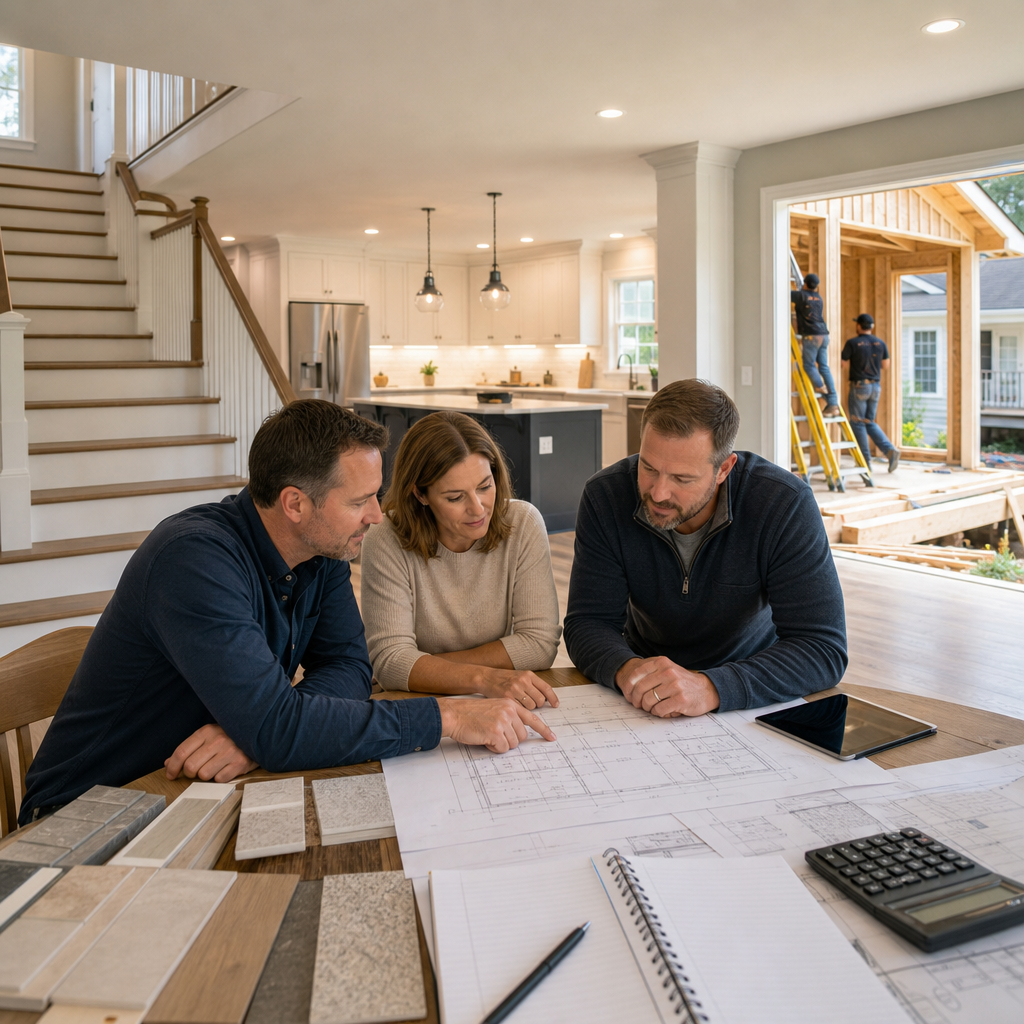
Master scheduling coordinated with permits and inspections. We schedule inspections before they’re needed, not after. We sequence trades to eliminate downtime. A typical sequence might be: rough plumbing and electrical, insulation, drywall, painting, finish carpentry, flooring, final plumbing and electrical trim, cabinetry, and final inspections. Each phase is scheduled so the next trade arrives when the previous one finishes.
Detailed labor cost estimates. We don’t provide vague labor estimates. We break out costs by phase: framing labor, electrical labor, plumbing labor, etc. This transparency helps you understand where your investment goes and makes it easier to spot any cost creep.
Contingency planning for the unexpected. Even with perfect planning, unforeseen issues arise. Structural problems, hidden asbestos, or building code changes might require adjustments. We build a reasonable contingency (typically 5 to 10 percent depending on the project age and scope) into the budget so surprises don’t immediately blow the budget. When contingency isn’t used, you benefit.
Regular budget tracking. We track actual costs against the contract price as work progresses. If we’re trending over budget, we identify the cause and discuss solutions before the overage becomes significant.
For a $250,000 renovation in Northern Virginia, proper management typically keeps projects on schedule and within budget. We’re proud that our average project completion rate is within 5 percent of our original timeline and budget estimate. That consistency comes from treating project management as seriously as we treat craftsmanship.
Coordinating Permits, Materials, and Craftspeople as One Team
The mechanical complexity of coordinating permits, materials, and craftspeople shouldn’t fall on you. Yet when responsibilities are scattered across separate entities, you often end up orchestrating these elements yourself, which is where projects go sideways.
Our in-house coordination eliminates these gaps entirely.
Permits are tied to the construction sequence. We don’t submit plans and hope for approval months later. We anticipate permit timelines and submit applications so approvals align with when construction is scheduled to begin. We know Fairfax County’s review cycles and requirements, so we don’t waste time with incomplete submissions. When an inspection is needed, we schedule it in advance so your project doesn’t pause waiting for an inspector to arrive.
Material orders are synchronized with construction phases. Kitchen cabinetry is scheduled to arrive two days before cabinet installation. Flooring arrives after all wet work is complete. Fixture deliveries are coordinated with rough-in work. This synchronization means materials don’t sit on site for weeks (which creates storage issues and damage risk), and crews don’t wait idle for materials to arrive.
Trades are scheduled to flow seamlessly. Carpenters rough frame, then electrical rough-in begins. Once electrical is complete, plumbing rough-in starts. Insulation follows. This sequence is built into our master schedule months in advance. We confirm with each trade their availability so there are no surprises.
Quality control is embedded at every step. Our project manager or superintendent is on site regularly, inspecting work before the next trade begins. If framing doesn’t meet our standards, we address it before electrical rough-in covers it up. This prevents costly rework later.
We think of ourselves as your general contractor and project advocate. We’re not managing these moving parts in the background while you’re left uncertain. We’re coordinating them strategically so every dollar you invest is used efficiently, and every phase builds toward a finished product that matches your original vision.
The Value of Professional Project Management in Your Home
When homeowners invest $150,000 to $300,000 in a renovation, they’re making one of the biggest financial decisions of their lives. The difference between project success and project failure often comes down to the quality of project management.
Consider what professional project management delivers in tangible terms:
Shortened timelines save money. A six-month project that stretches to nine months increases labor costs, extends your disruption, and may trigger additional expenses (extended equipment rental, extra site overhead). A well-managed project moves efficiently. For every month saved, you save 5 to 10 percent of labor costs.
Fixed pricing and change control protect your budget. A transparent contract with documented change orders means you know exactly what you’re paying for. There’s no scope creep. No surprise invoices. No discovering mid-project that you’ve already spent 20 percent more than planned.
Quality assurance catches problems early. An experienced project manager identifies building code issues, structural problems, or design conflicts before they become expensive rework. This prevents discovering mid-project that something must be torn out and redone.
Stress reduction is genuinely valuable. For many homeowners, the biggest benefit is knowing that someone experienced is managing the chaos. You’re not coordinating between your electrician and plumber. You’re not tracking permit status or negotiating with a stubborn subcontractor. You’re simply informed regularly about progress and can focus on your life rather than your renovation.
Your home is protected throughout the process. We carry proper insurance, maintain clean job sites, and protect existing areas of your home from dust and damage. We take the same care of your home as we take of our own.
The ROI on professional project management is substantial. Most homeowners find that paying for expert coordination costs significantly less than the hidden expenses, delays, and rework that occur when coordination is fragmented or falls on them.
Why Northern Virginia Homeowners Trust Our Full Renovation Services
We’ve built our reputation in Northern Virginia by delivering on our commitments year after year. Homeowners from Alexandria to Vienna, from Annandale to Great Falls, trust us to manage their most significant home investments.
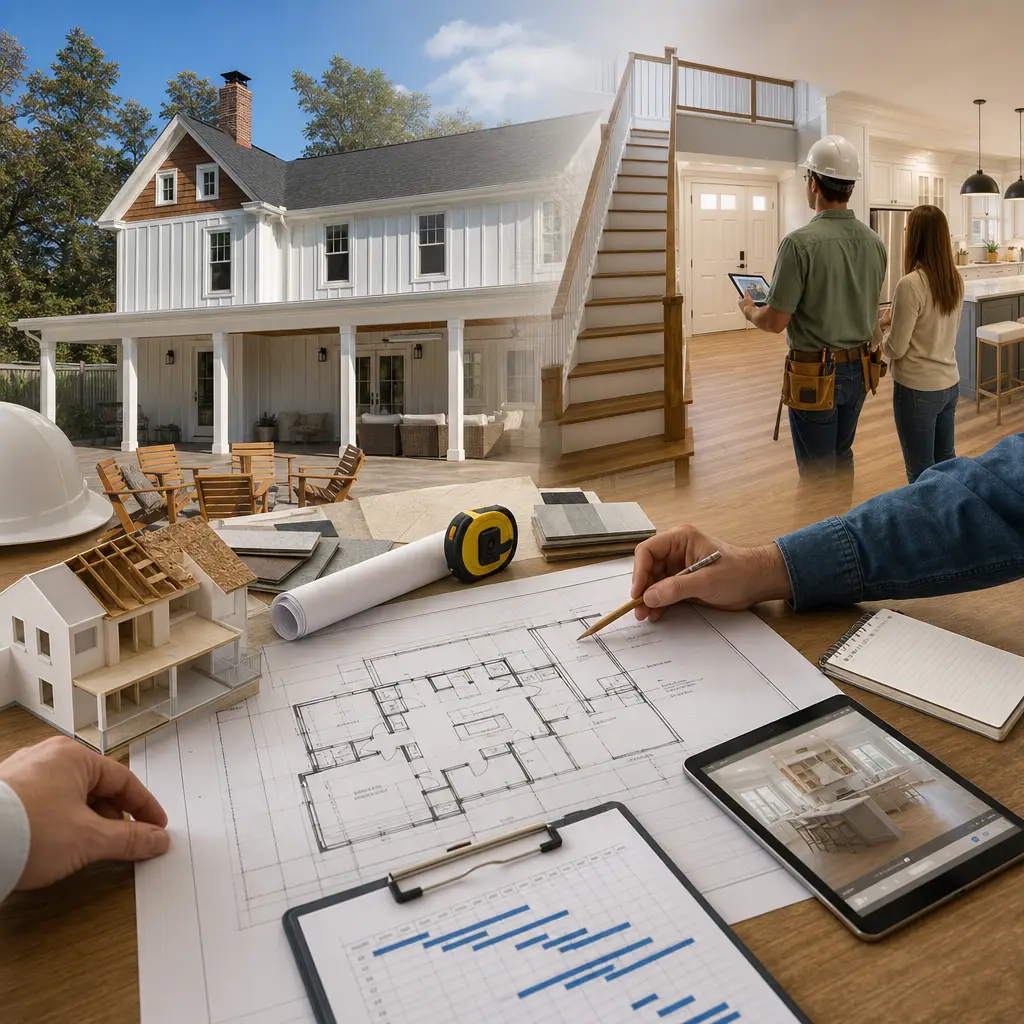
Here’s why Northern Virginia homeowners choose us:
We understand local building codes and jurisdictions. Fairfax County has specific requirements. Falls Church has different standards. We’ve worked across these jurisdictions extensively and know exactly what each municipality requires. This expertise prevents permit delays and corrections.
We have established relationships with reliable trades. We work with the same electricians, plumbers, framers, and finish carpenters across dozens of projects. We know their quality standards, their reliability, and how they work together. This consistency matters enormously for project quality and schedule adherence.
We’re accessible and communicative. You’re not working with a massive corporation where your project is a small task. We maintain reasonable project loads so we can give your renovation genuine attention. You can reach your project manager with questions.
We deliver what we promise. Our reputation is built on projects that finish on time, within budget, and to the quality standards we committed to. When homeowners refer their neighbors to us, it’s because we’ve earned their trust through consistent performance.
We offer whole-house remodeling expertise. Whether you’re updating a kitchen, finishing a basement, adding a room, or transforming your entire home, we have the depth of experience to manage projects of any scope. We’ve completed hundreds of projects across Fairfax County and Northern Virginia.
We’re proud that many of our newest projects come from referrals. A homeowner who’s experienced our process recommends us to their neighbor. That trust in word-of-mouth referrals tells us we’re doing something right.
Getting Started With Your Renovation Project
If you’re considering a full home renovation and want to understand how professional project management can simplify the process, we’re here to help.
Here’s how to take the next step:
Schedule a consultation. Contact us to discuss your renovation vision, timeline, and budget. We’ll walk your home, ask detailed questions, and give you an honest assessment of scope and process.
Request a proposal. After our consultation, we’ll provide a detailed proposal that outlines our scope, schedule, and estimated costs based on our design-build process.
Review our process documentation. We provide our full methodology upfront so you understand exactly how we’ll manage your project from design through completion.
Check references. We’re happy to connect you with recent clients who can speak to their experience working with us.
The goal of this initial conversation is simple: help you understand whether our approach aligns with your needs and expectations. If it does, we’ll move forward together with confidence that your renovation will be managed professionally and delivered to the highest standards.
You don’t have to navigate full home renovation complexity alone. That’s exactly why we exist. Reach out today to learn how we can simplify your renovation process and deliver a finished home that exceeds your expectations.
Contact us Today For a Free Estimate !
Frequently Asked Questions (FAQ)
How do we manage full home renovations to keep them on budget and on schedule?
We combine our design-build approach with detailed upfront contracts and transparent pricing so there are no surprises as your project unfolds. Our team coordinates all aspects of your renovation, including architectural planning, permit applications, material selections, and construction scheduling, under one roof. This integrated process eliminates miscommunication between separate contractors and allows us to anticipate potential delays or cost overruns before they happen, keeping your project moving forward smoothly.
What’s the advantage of choosing a design-build contractor instead of hiring separate architects and builders?
With our design-build model, we handle both the design and construction phases as a cohesive team, which means our architects and builders collaborate from the very beginning to create designs that are practical, beautiful, and buildable within your timeline and budget. You work with one point of contact throughout the entire process rather than managing multiple vendors, which reduces confusion and accelerates decision-making. We also take responsibility for permits, material sourcing, and quality control across every stage, so you get streamlined project management and professional accountability from concept to completion.
How long does a typical full home renovation take, and how do we manage the disruption to your daily life?
Timeline varies based on the scope of your renovation, but we establish a detailed schedule upfront and communicate regularly about progress and any adjustments. We organize our workflow strategically to minimize disruption to your home and family, and our project managers ensure our teams maintain professionalism and cleanliness on site every single day. We’ll discuss your specific needs and concerns during the planning phase so we can create a schedule that works best for your household.