Table of Contents
- The Permit Approval Challenge Northern Virginia Homeowners Face
- Why Traditional Separate Design and Build Delays Your Project
- How Our Design-Build Approach Coordinates Permits from Day One
- Integrated Team Communication Reduces Back-and-Forth Delays
- Our Pre-Planning Process Catches Issues Before Submission
- Working With Local Fairfax County and Northern Virginia Inspectors
- Clear Upfront Contracts Prevent Permit-Related Change Orders
- From Approval to Construction: Our Streamlined Timeline
- Real Project Examples of Faster Permits in Our Service Areas
- Why Homeowners Choose Our Design-Build Model for Peace of Mind
- Frequently Asked Questions (FAQ)
The Permit Approval Challenge Northern Virginia Homeowners Face
Homeowners planning a major renovation or addition in Northern Virginia often underestimate one critical factor: permit approval timelines. What many assume will take a few weeks can stretch into months when the process isn’t managed strategically. That delay doesn’t just push back your move-in date. It extends your construction timeline, increases project costs, and adds stress during a time when you’re eager to see your home improvement come to life.
We’ve worked with hundreds of homeowners throughout Fairfax County, Arlington, Falls Church, and surrounding communities, and we’ve observed a clear pattern. The homes that navigate permits most efficiently share one thing in common: they use a design-build approach that treats permit coordination as an integrated part of the entire project from day one, not an afterthought squeezed between design and construction.
This guide walks you through how that coordination actually works, why it matters, and what it means for your timeline and budget.
Permit approval in Northern Virginia isn’t a simple checkbox process. Fairfax County, Arlington County, Falls Church, and other jurisdictions each maintain their own specific codes, inspection protocols, and submission requirements. A kitchen remodeling project might need one set of approvals, while a home addition or basement finishing requires entirely different structural and electrical documentation.
The typical homeowner doesn’t know these distinctions. They submit plans and wait. Then inspectors flag issues, plans come back for revisions, and the cycle repeats. We’ve seen straightforward projects add six to eight weeks to their timeline simply because the initial submission didn’t account for specific local requirements.
That friction compounds when different professionals are managing different aspects of the work. The architect designs the addition, the builder reviews those plans, the permit coordinator tries to interpret what each team intended, and questions multiply. Each back-and-forth cycle eats away at your timeline.
Another challenge unique to Northern Virginia is the volume. Our region’s growth has created a steady stream of permit applications. Faster processing isn’t guaranteed simply because you submit paperwork promptly. Strategic planning and clear documentation make the difference between months of waiting and faster movement through the system.
What to do next: Before hiring any contractor or designer, ask specifically how they coordinate permits. If the answer is vague or suggests permits are handled separately, that’s a signal the process will likely be fragmented.
Why Traditional Separate Design and Build Delays Your Project
The traditional approach divides your project into distinct phases. An architect designs your space and produces plans. Those plans go to a general contractor for estimate and construction planning. Then a permit coordinator or expediter tries to move the package through local review.
The problem emerges quickly. Architects often design conceptually without considering every construction detail that inspectors will examine. Builders see cost or constructability issues the architect didn’t anticipate. Permit coordinators discover missing documentation. None of these professionals were in the same conversation when critical decisions were made.
Let’s use a concrete example. A homeowner in Great Falls wants a second-story addition. The architect designs a beautiful layout that meets the homeowner’s aesthetic preferences. Six weeks later, the structural engineer calculates the foundation requirements and discovers the existing footer won’t support the load. Now the addition needs a different design, new structural plans, and resubmission. That’s eight to twelve weeks of delay baked into the timeline because the structural reality wasn’t part of the initial design conversation.
This scenario repeats across different disciplines. The electrical plans might not account for panel capacity. The HVAC design might require ductwork that conflicts with structural beams. The drainage plan might not align with county grading requirements. Each discovery triggers revisions, resubmissions, and delays.
When permit approval requires multiple sequential processes—design, then estimation, then permitting—your project sits idle between phases. Months pass without ground being broken, and homeowners grow frustrated watching their investment timeline slip.
What to do next: Ask any potential contractor how their team handles the gap between design completion and permit submission. You want to hear that designers, builders, and permit specialists work concurrently, not sequentially.
How Our Design-Build Approach Coordinates Permits from Day One
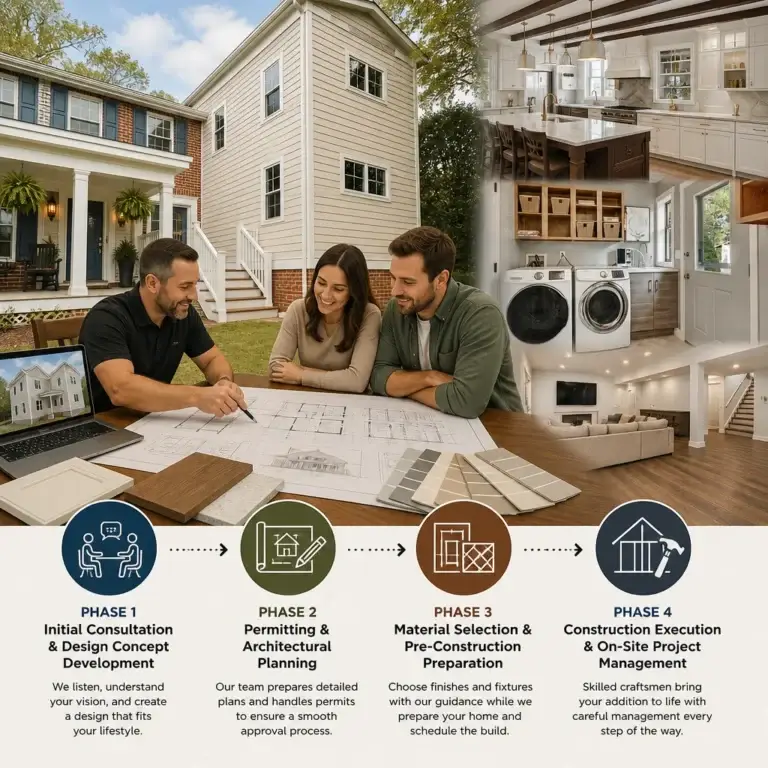
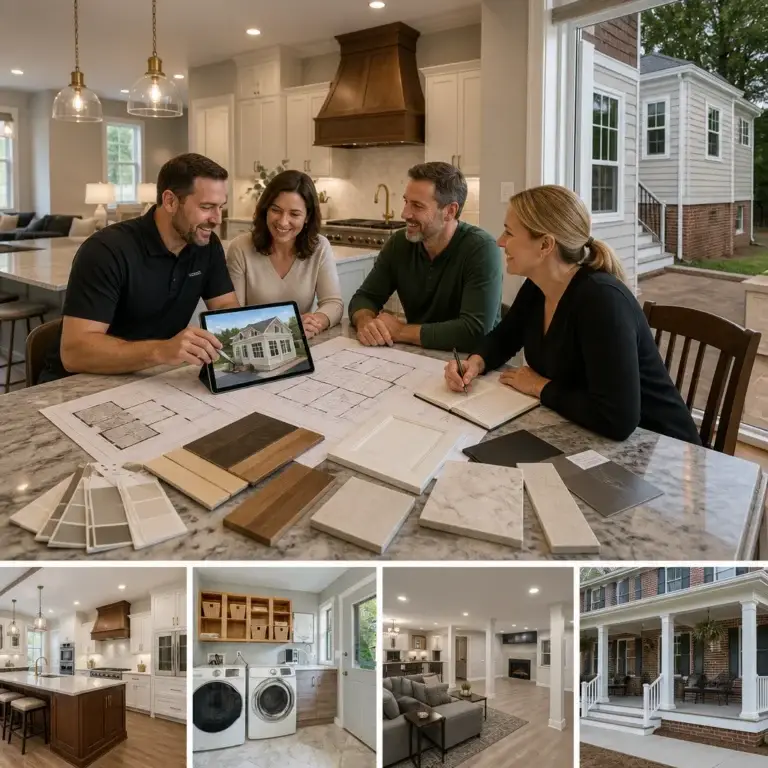
Our design-build model treats your project as one unified effort from the first conversation. Our architects, builders, permit specialists, and structural engineers sit at the same table when your project is being conceived.
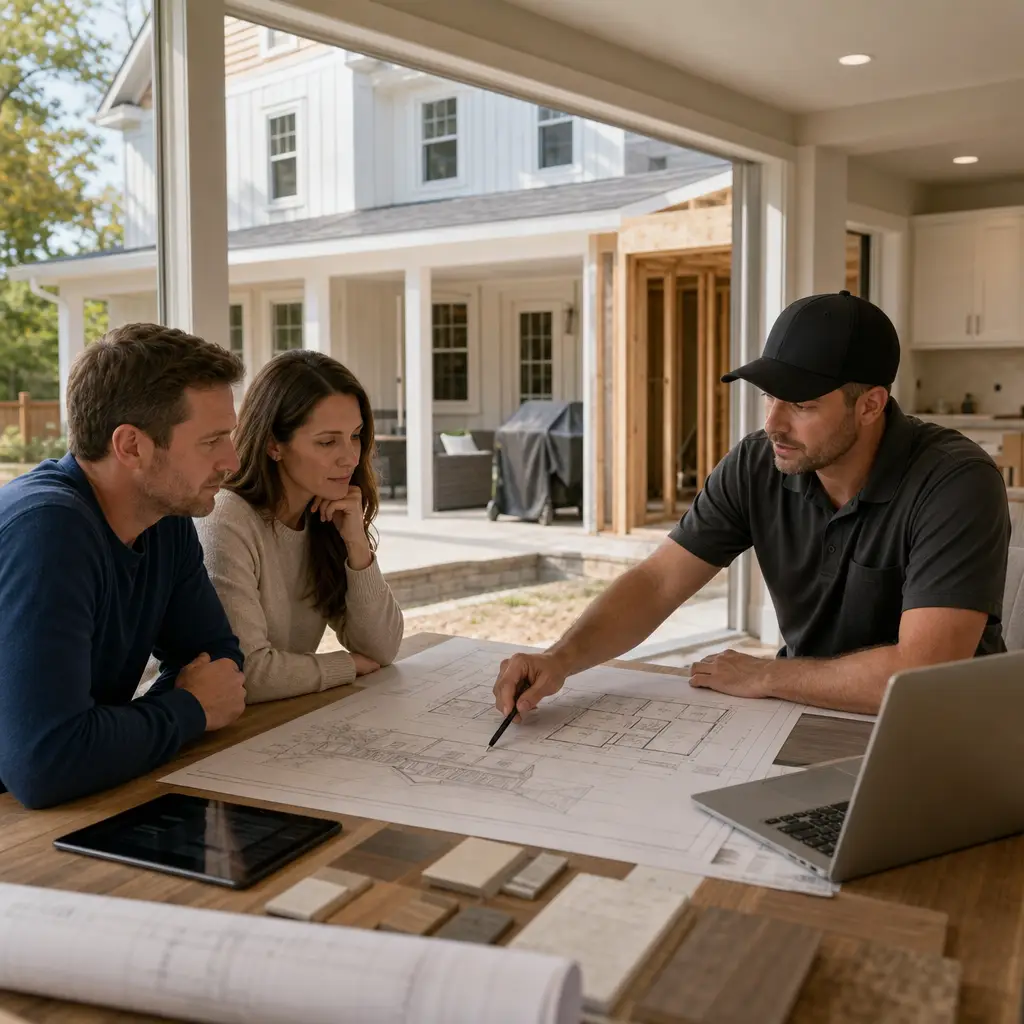
This isn’t just about efficiency. It’s about catching issues when they’re inexpensive and easy to fix. When a structural engineer reviews preliminary concepts before detailed design is complete, potential foundation problems surface early. When our builders review design sketches before they’re finalized, constructability questions get answered immediately. When our permit team knows what’s planned, they can flag local code considerations while there’s still time to adjust the design.
The practical benefit is a coordinated submission package. Your plans don’t get submitted to Fairfax County with gaps or conflicts. Your structural, electrical, plumbing, and architectural drawings speak to each other. Our team has already anticipated what inspectors will ask, because we’ve been thinking like inspectors throughout the process.
This coordination also means permit expediting isn’t external to your project. It’s not a separate service your contractor hired a third party to handle. Our team understands every detail in your plans because our team created them with permit approval in mind.
We also build relationships with local permit reviewers and inspectors across our service areas in Arlington, Alexandria, Burke, Fairfax, McLean, Reston, Springfield, Tysons, Vienna, and beyond. These relationships accelerate clarification questions. When an inspector wants confirmation on a detail, they know they can reach our team directly. That direct communication eliminates bottlenecks.
What to do next: Schedule a consultation and ask the design-build team to walk you through a past project from initial concept through permit approval. You should hear about concurrent planning phases, not sequential ones.
Integrated Team Communication Reduces Back-and-Forth Delays
One of the subtlest but most impactful differences in our approach is how our team communicates internally. We don’t use a relay system where designs pass from one specialist to the next. Instead, we use integrated planning sessions where everyone reviews progress simultaneously and raises concerns in real time.
When our architect presents updated floor plans, the builder can immediately flag constructability questions. The permit specialist can identify code issues before they’re drawn into the final plans. The mechanical engineer can note HVAC routing conflicts. Problems that would normally emerge as surprise change orders during construction or as rejection letters from permit review instead get solved while they’re still pencil marks on a drawing.
This approach means fewer revision cycles. Fewer revisions mean faster permit submission. Faster submission means quicker approval.
There’s also a psychological benefit to homeowners. You see progress happening simultaneously across multiple areas of your project, not waiting for one phase to complete before the next begins. Your additions committee meetings feel more collaborative, and you get asked for decisions when context is freshest, not weeks into a stalled timeline.
We also use digital project management tools that keep all stakeholders informed. You have visibility into where plans stand, what’s been submitted, and what feedback we’re addressing. Transparency reduces anxiety about unseen delays.
What to do next: Ask your contractor if you can observe or participate in their internal coordination meetings during the planning phase. Their willingness to include you and the quality of communication you witness says volumes about their process discipline.
Our Pre-Planning Process Catches Issues Before Submission
Before a single document goes to any permit office, we conduct a comprehensive pre-planning review. This isn’t a quick sketch. It’s a detailed examination of your specific property, local codes, and technical feasibility.
We start with a site survey that captures existing conditions: foundation type, utilities location, easement restrictions, topography, and neighborhood setback requirements. This sounds basic, but many projects stumble here. A homeowner in Oakton wanted a basement expansion, but didn’t know their lot sat in a floodplain overlay district. That discovery changed the entire project scope. We would have identified that before any design work began.
We then review the specific codes for your jurisdiction. Fairfax County has different requirements than Falls Church. Arlington County’s parking and setback rules differ from Burke’s. We know these distinctions, and we design with them in mind from the start.
We also conduct a structural feasibility assessment. If you’re adding a second story, can the existing foundation support it? Does the existing roof structure need reinforcement? These questions get answered before your architect spends time on detailed floor plans, not after.
This pre-planning phase typically takes two to three weeks and costs less than a full architectural design would cost on its own. That investment prevents far costlier delays later. It also gives you confidence that what you’re about to design and build is actually achievable on your specific property.
What to do next: Before you commit to any design, request a pre-planning site assessment. Any contractor who skips this step is cutting corners that will cost you time later.
Working With Local Fairfax County and Northern Virginia Inspectors
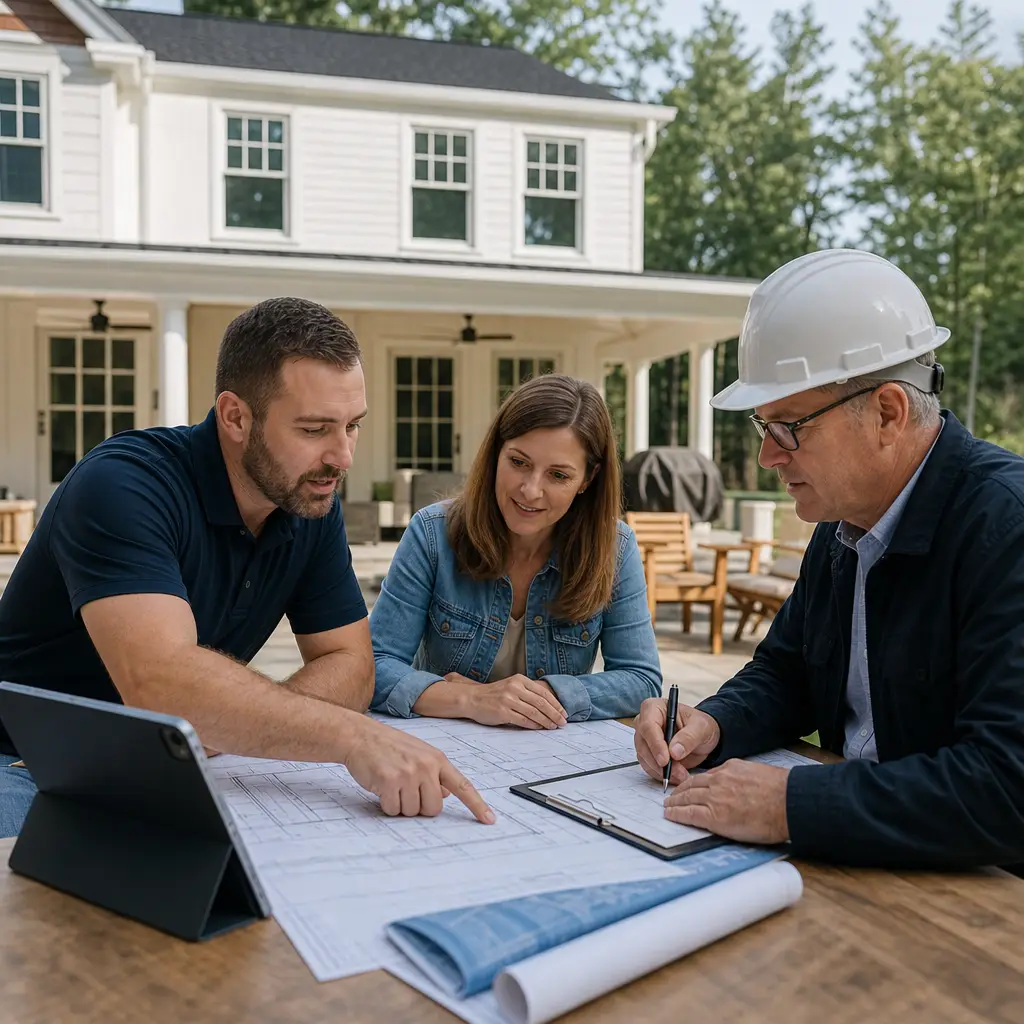
Permit approval ultimately depends on inspectors. They’re the gatekeepers who determine whether your plans meet code and whether your construction complies with those approved plans.
We’ve built working relationships with inspectors across Fairfax County and the broader Northern Virginia region. These relationships don’t mean we get special treatment. They mean we speak the same language and understand each inspector’s specific approach.
We know which inspectors typically request certain documentation, so we include it proactively. We understand the schedule patterns at different offices, so we submit with realistic expectations about processing times. When we have a clarification question about code interpretation, we can reach out to the right person and get a quick answer instead of guessing and potentially submitting noncompliant plans.
We also schedule inspections strategically. Rather than waiting for surprise inspection requests during construction, we coordinate with inspectors in advance to confirm they’ll be available when we need them. In Northern Virginia’s busy building season, that coordination prevents gaps in your project schedule.
If your project requires variance approval or conditional use permits, our familiarity with each jurisdiction’s process accelerates that review too. We’ve navigated these exceptions before and know what documentation strengthens an application.
What to do next: Ask your contractor about their inspection coordination process. You want to hear that inspections are scheduled proactively and that your builder has a direct relationship with local inspection offices, not a hands-off approach.
Clear Upfront Contracts Prevent Permit-Related Change Orders
One reason permit delays are so costly is that they often trigger change orders. An unexpected requirement emerges, the scope changes, and your contract gets modified. That change order process can add days or weeks and increases your total project cost.
We prevent most of these surprises through our detailed upfront contracts. Rather than vague language about “permit compliance,” our contracts specify exactly which permits we’re obtaining, which agency is issuing them, and what the process timeline typically looks like based on our experience in your specific jurisdiction.
We also identify potential code or regulatory issues upfront and discuss solutions before they become problems. If your project might trigger a variance request, we discuss that and include it in your project scope and budget. If utilities need relocation, we identify that early.
Our contracts also clarify what happens if a permit is delayed due to circumstances beyond our control (like a jurisdiction’s processing backlog) versus delays caused by missing information or noncompliant plans (our responsibility). This distinction matters because it determines who manages the cost and timeline impact.
We build reasonable timelines into our contracts that reflect real-world permit processing, not optimistic guesses. When we commit to a completion date, the permit timeline embedded in that schedule is accurate.
What to do next: Request a copy of your contractor’s standard contract before you hire them. Read the section on permits and change orders. Are timelines realistic and specific? Is it clear who manages which phases?
From Approval to Construction: Our Streamlined Timeline
Once permits are approved, the benefits of our design-build coordination continue. Our construction team doesn’t start from scratch interpreting approved plans. They’ve been part of the entire planning process. They understand every detail, every decision, and every design rationale.
That familiarity means construction proceeds with minimal surprises. Issues that might derail other teams get solved quickly because our builders anticipated them. Material orders proceed on schedule because our supply chain is already coordinated with our design. Subcontractors are scheduled in logical sequence because our project management team thought through the construction sequence during planning.
We also monitor permit compliance during construction. Our team doesn’t just build to the approved plans. We proactively ensure our work aligns with how inspectors interpret those plans. If an inspector has a specific preference about how something should be finished, we adjust before final inspection, not after.
Our homeowners typically see construction begin within two weeks of permit approval. That rapid start is only possible because the detailed planning is already complete and the construction sequence is already optimized.
What to do next: Ask your contractor to show you the timeline from permit approval to construction start on a recent project. Anything longer than two to three weeks suggests planning wasn’t concurrent with permit preparation.
Real Project Examples of Faster Permits in Our Service Areas
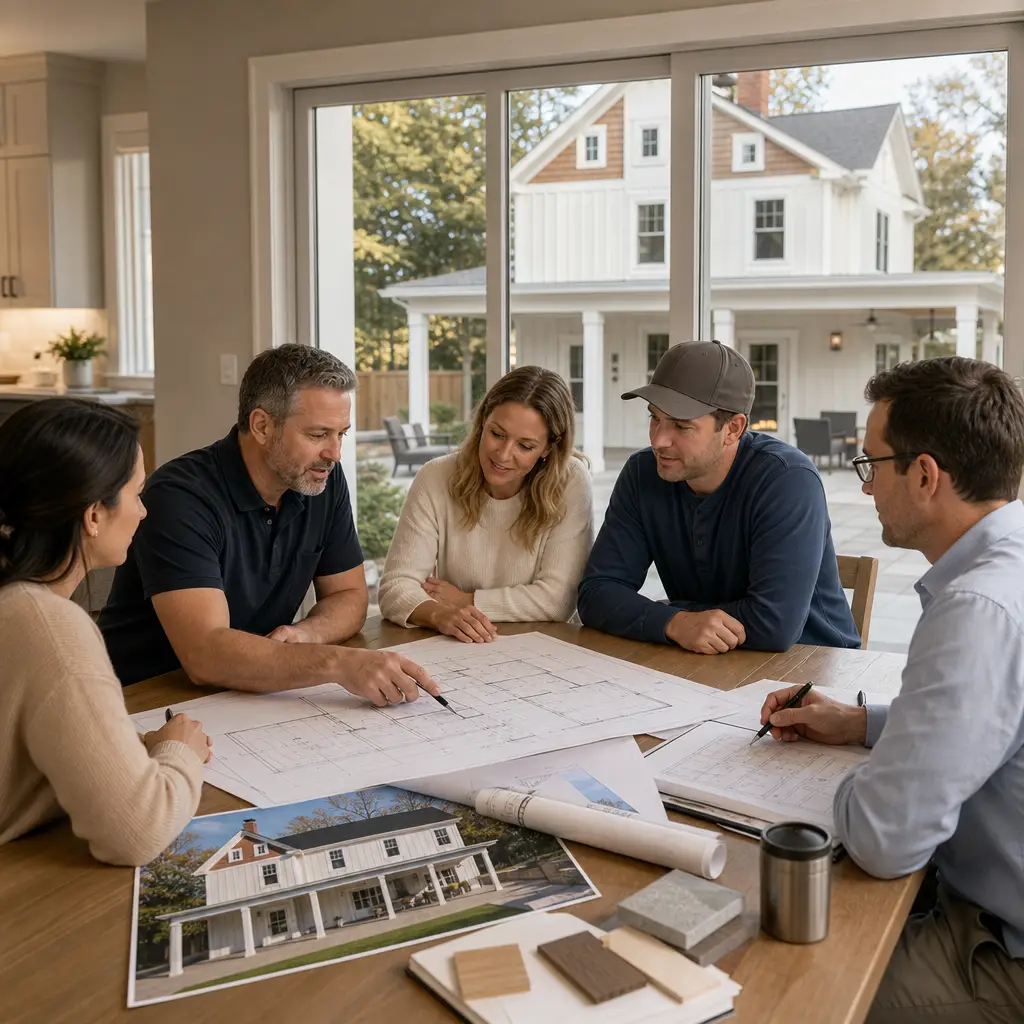
A family in Great Falls wanted a second-story addition for a growing household. Traditional timelines would have suggested six to nine months from first conversation to occupancy. Our design-build approach compressed that to four months. The difference wasn’t magical. It was coordinated planning. Concept to permit submission took six weeks because our architect, builder, and structural engineer worked simultaneously. Permit approval took three weeks because our submission was complete and compliant on the first review. Construction took five weeks because the sequence was optimized and materials were pre-ordered.
Another project in Arlington involved a kitchen and bathrooms renovation that required some structural modifications. The homeowner found previous estimates were eighteen to twenty-four weeks from start to completion. We delivered in fourteen weeks. Again, the difference was concurrent planning. We identified the structural issues during pre-planning, not during construction. Our permit submission included all required documentation, so no revisions were needed. Our construction sequence was optimized, eliminating gaps between phases.
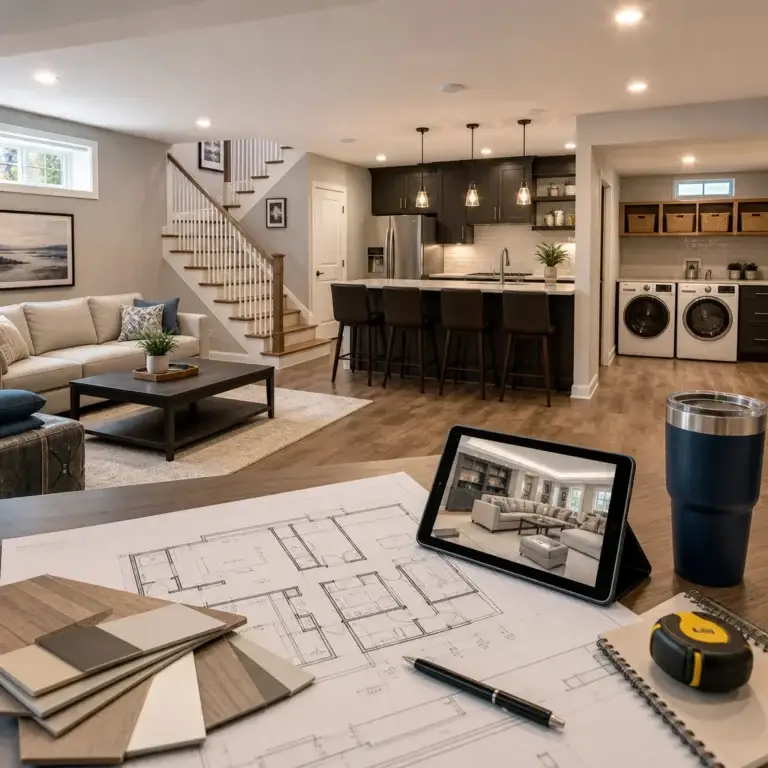
In Fairfax, a basement finishing project added complexity because of drainage considerations. Code required specific grading and waterproofing details that the homeowner’s previous contractor hadn’t addressed. Our pre-planning review caught those requirements before design work began. We incorporated them into our initial permit submission, which accelerated approval and prevented the costly redesign the homeowner was dreading.
Across our service areas in Alexandria, Burke, Falls Church, McLean, Reston, Springfield, Tysons, Vienna, Merrifield, and beyond, the pattern is consistent. Projects managed with integrated design-build coordination move through permits faster and reach completion sooner.
What to do next: Ask for references from homeowners in your specific neighborhood. Ask them specifically about permit timelines and whether they experienced unexpected delays.
Why Homeowners Choose Our Design-Build Model for Peace of Mind
Beyond speed, homeowners choose our design-build approach for something deeper: confidence. A major home renovation is one of the largest investments a family makes. The uncertainty of a fragmented process, where different professionals aren’t aligned, creates stress.
When you work with us, you have one team responsible for the entire journey from concept through occupancy. That single point of accountability means clear communication, coordinated decisions, and ownership of outcomes. If a permit gets delayed, our team manages the impact. If a construction challenge emerges, our team solves it because they’ve been anticipating it from the start.
We also stand behind our timelines and budgets. Our contracts are detailed and realistic. We don’t underestimate complexity to win your business and then hit you with change orders. We’ve built in the contingencies that real-world projects require.
For families planning kitchen remodeling, additions, basement finishing, or whole-house renovations, that peace of mind is invaluable. You’re not coordinating multiple contractors or managing communication gaps. You’re partnering with one experienced team that has done this hundreds of times and knows how to deliver on their promises.
When you work with us for a Kitchen Remodeling Fairfax VA project or any major renovation, you’re benefiting from those same coordination principles and that same commitment to transparent, streamlined processes.
What to do next: Schedule a consultation with our team. We’ll walk through your project scope, conduct a pre-planning assessment, and show you exactly how our design-build approach will accelerate your timeline and protect your budget. That conversation is free, and it will clarify whether our approach is right for your home.
Contact us Today For a Free Estimate !
Frequently Asked Questions (FAQ)
How much faster do permits typically move with your design-build approach compared to traditional separate design and construction phases?
We coordinate architectural design, permit documentation, and construction planning simultaneously from day one, which eliminates the typical delays that occur when homeowners hire a designer first, then shop for a builder afterward. Our integrated team submits complete, thorough permit packages that local Fairfax County and Northern Virginia inspectors understand immediately, reducing back-and-forth requests for clarification or missing details. Most of our homeowners see permits approved 2-4 weeks faster than traditional sequential approaches because we’ve already resolved conflicts between design intent and local code requirements before submission.
What happens if Fairfax County or local inspectors request changes to our plans during the permitting process?
Because our architects and builders work as one team, we can respond to inspector feedback quickly without the communication delays that plague traditional projects. We maintain ongoing relationships with local inspectors throughout our service areas, which helps us anticipate their concerns and address them proactively in our initial submissions. If revisions are needed, we implement them internally and resubmit promptly, rather than passing messages back and forth between separate design and construction firms.
Does your upfront contract protect us from permit-related cost overruns or delays?
Yes. Our detailed upfront contracts clearly identify scope, timeline, material selections, and permit responsibilities so there are no hidden surprises if inspection findings or minor code updates emerge. We absorb permit coordination costs within our quoted price, and we stand behind on-time delivery because we’ve built realistic timelines based on actual permit cycles in your specific area. This transparency gives you budget certainty and peace of mind from the moment we sign our agreement.