Table of Contents
- Why Homeowners Choose Full Home Renovations in Fairfax
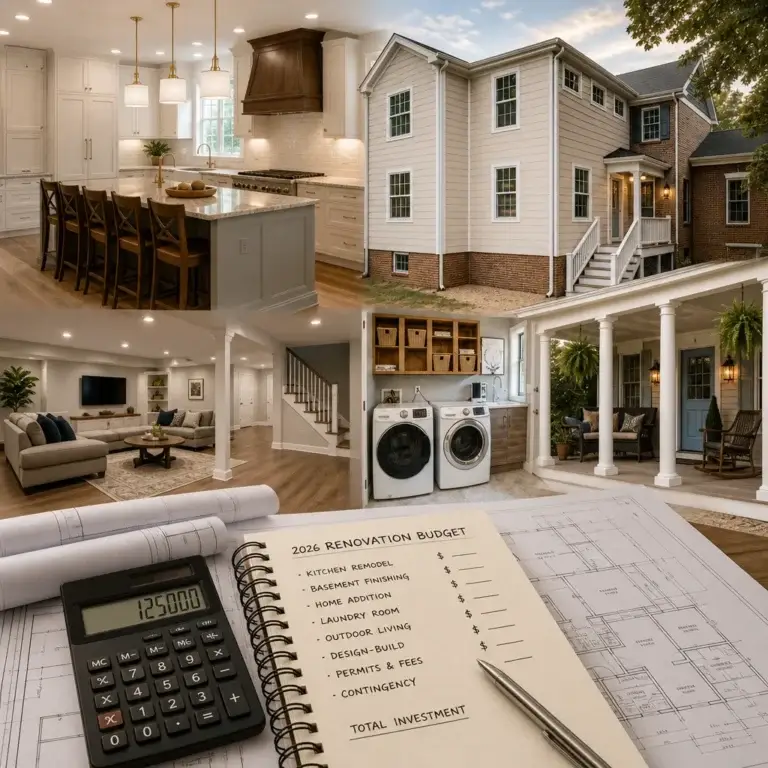
- Understanding Full Home Renovation Costs: Key Cost Drivers
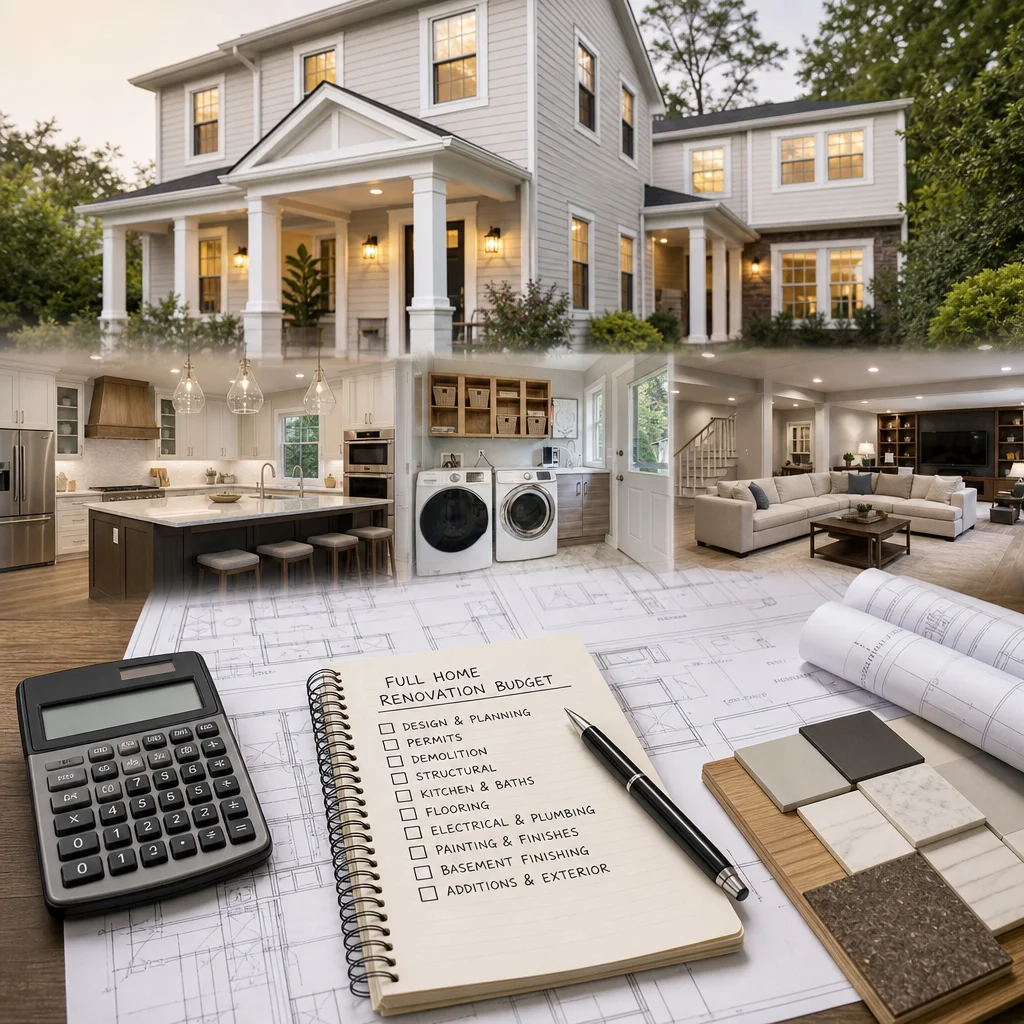
- Breaking Down Renovation Expenses by Project Phase
- Design-Build Approach: How We Control Costs and Timeline
- Kitchen and Bath Remodeling Within Your Whole-Home Budget
- Basement Finishing and Home Additions as Part of Your Renovation
- How Our Upfront Pricing Protects Your Investment
- Financing Options and Budget Planning for Major Renovations
- Common Renovation Mistakes That Inflate Your Final Cost
- Our Process for Delivering On-Time, On-Budget Results
- Why Northern Virginia Homeowners Trust Elite Contractors Services
- Frequently Asked Questions (FAQ)
Why Homeowners Choose Full Home Renovations in Fairfax
A full home renovation is one of the most significant investments a homeowner can make. In Fairfax County and throughout Northern Virginia, whole house renovation costs can vary dramatically depending on scope, materials, and project complexity. We’ve helped hundreds of homeowners navigate this decision, and we’ve learned that understanding the real cost drivers upfront makes the entire process less stressful and more rewarding.
Whether you’re modernizing an older home, expanding for a growing family, or creating multigenerational living space, knowing what to expect financially is essential. This guide walks you through realistic budget expectations and how to protect your investment from start to finish.
Fairfax County homeowners choose comprehensive renovations for several compelling reasons. Some are raising families and need more functional living space without leaving their communities. Others have inherited dated layouts, inefficient floor plans, or energy-wasting systems that drain both comfort and utility budgets. A few are simply ready to modernize kitchens, bathrooms, and mechanical systems all at once rather than tackling projects piecemeal over years.
The Fairfax real estate market makes this particularly smart. Homes here appreciate steadily, and a thoughtfully executed whole-house renovation often recouples a significant percentage of investment while making your home more enjoyable day-to-day. Rather than moving and starting fresh elsewhere, many of our clients invest in expanding and improving exactly where they want to live.
Full renovations also solve coordination headaches. Instead of hiring separate contractors for electrical, plumbing, flooring, and design over months, you get one experienced team managing all phases together, which typically saves time and reduces surprises.
Understanding Full Home Renovation Costs: Key Cost Drivers
Full home renovation costs in Fairfax typically range from $150 to $300+ per square foot, depending on scope and finishes. A 2,000-square-foot whole-house renovation might cost anywhere from $300,000 to $600,000 or more. The widest variation comes from these cost drivers:
Scope and size determine your baseline. Are you renovating 1,000 square feet or the entire 4,000-square-foot home? Are you adding square footage with an addition or ADU? Every expansion multiplies material and labor hours.
Materials and finishes swing costs dramatically. Mid-range kitchen cabinetry, countertops, and appliances differ vastly from high-end custom options. Flooring choices, tile selections, paint, and hardware all compound quickly.
Structural and mechanical work hidden behind walls costs more than you’d expect. Updating electrical panels, replacing HVAC systems, rerouting plumbing, or addressing foundation issues adds $20,000 to $100,000+ depending on what you discover once walls come down.
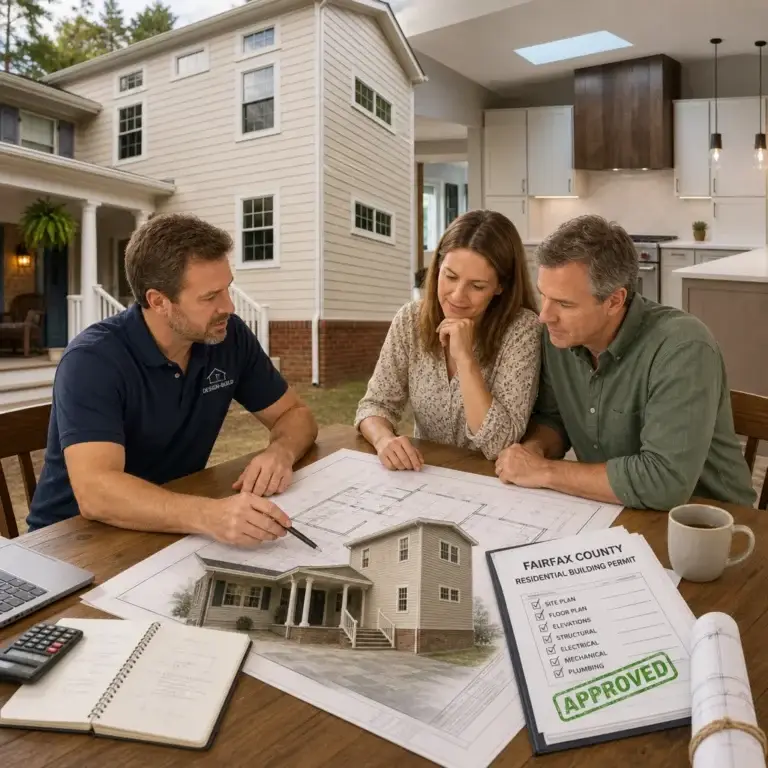
Permit and compliance costs in Fairfax County are legitimate line items. Building permits, engineering reports, inspections, and any upgrades required to meet current code standards are non-negotiable and necessary.
Timeline flexibility affects labor costs. If you want work compressed into six months rather than a year, crews work faster and may charge premium rates.
Understanding these drivers helps you allocate budget intelligently rather than spreading money too thin across every category.
Breaking Down Renovation Expenses by Project Phase
A full home renovation unfolds in distinct phases, each with predictable cost patterns.
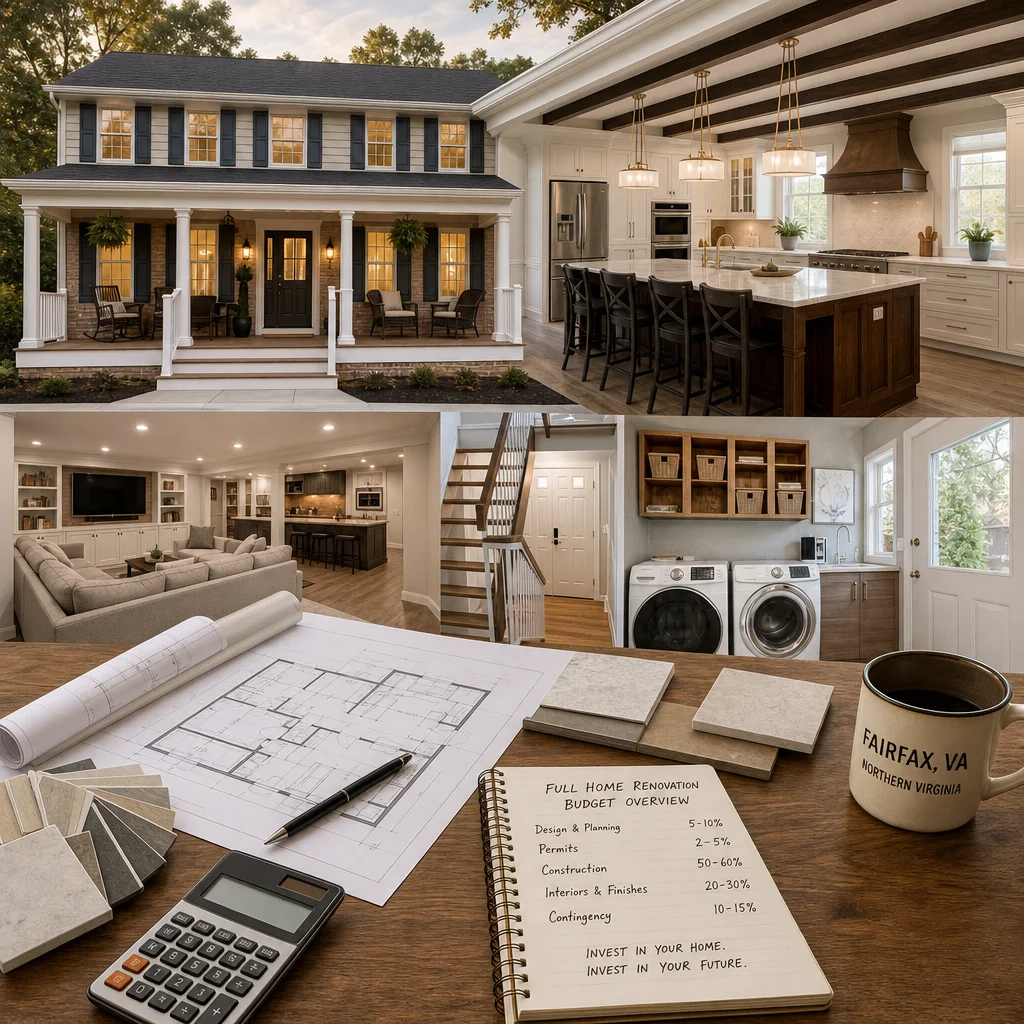
Design and planning (5-10% of total budget) covers architectural drawings, 3D renderings, permit applications, and material selections. This phase feels invisible but anchors everything that follows. Skipping it often leads to expensive mid-project changes.
Demolition and site prep (3-5%) removes old finishes, fixtures, and sometimes structural elements. Hauling debris, protecting existing areas, and prepping surfaces for new work requires coordination but is relatively straightforward.
Structural and mechanical work (20-35%) includes framing additions, HVAC replacement, electrical panel upgrades, plumbing reroutes, and foundation work if needed. This is often where surprises emerge and contingencies are tapped.
Finishes and installation (40-50%) covers cabinetry, countertops, flooring, tile, lighting, fixtures, and painting. This phase is highly visible and where premium material choices impact your final bill most visibly.
Final details and closeout (5-10%) includes final inspections, cleanup, punch-list items, and landscaping restoration. Rushing this phase is tempting but careful attention here protects your investment quality.
Each phase has natural checkpoints where you can assess progress, verify costs, and make informed decisions about what comes next.
Design-Build Approach: How We Control Costs and Timeline
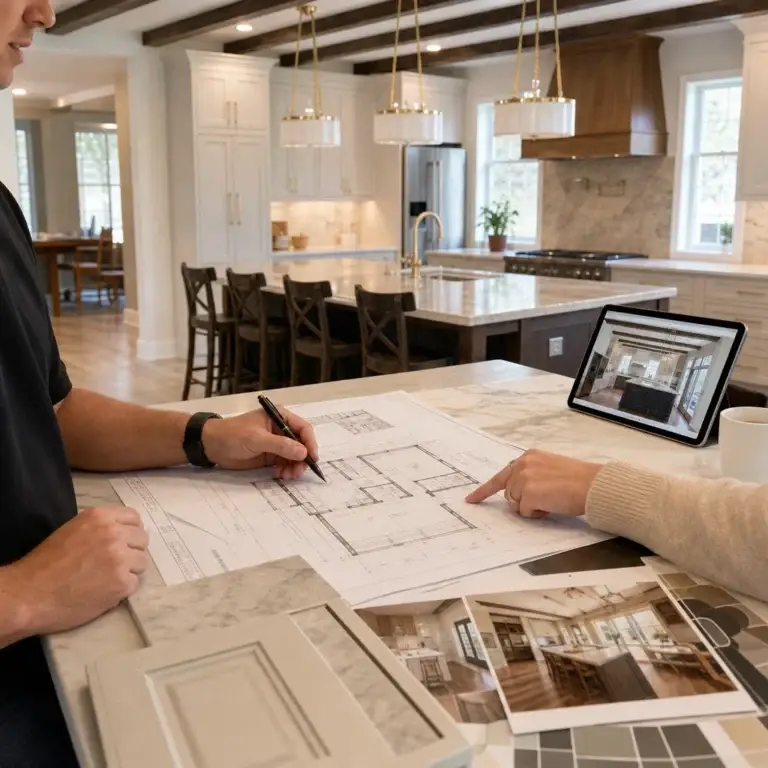
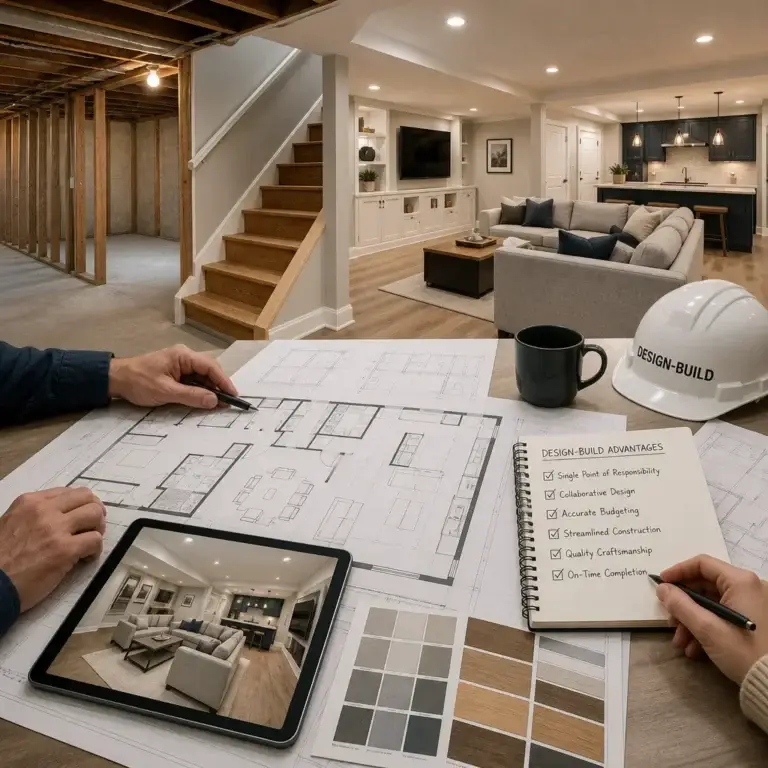
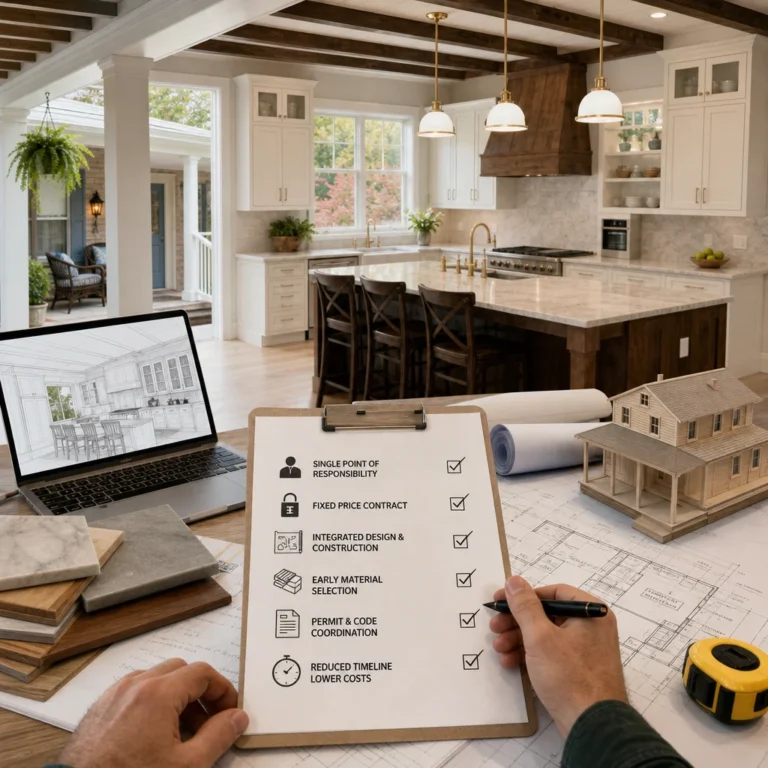
We use a design-build model because it aligns everyone’s incentives around your budget and timeline. Rather than separate design and construction teams working independently, we manage design, permits, purchasing, and construction as one coordinated effort.
This approach catches budget issues early. Our designers know real material costs and labor realities, so designs stay within budget from day one rather than requiring expensive redesigns midway. When our architects and project managers plan together, they avoid specifying finishes we know are hard to source or suggesting layouts that require costly structural work.
We also negotiate material pricing upfront. Buying for multiple projects gives us supplier relationships and volume discounts we pass directly to clients. Scheduling our subcontractors efficiently means crews aren’t idle waiting for previous trades to finish, which reduces labor overhead.
The result is clearer budgets, fewer surprises, and timelines we actually hit. You get one point of contact managing the entire process rather than coordinating between separate firms.
Kitchen and Bath Remodeling Within Your Whole-Home Budget
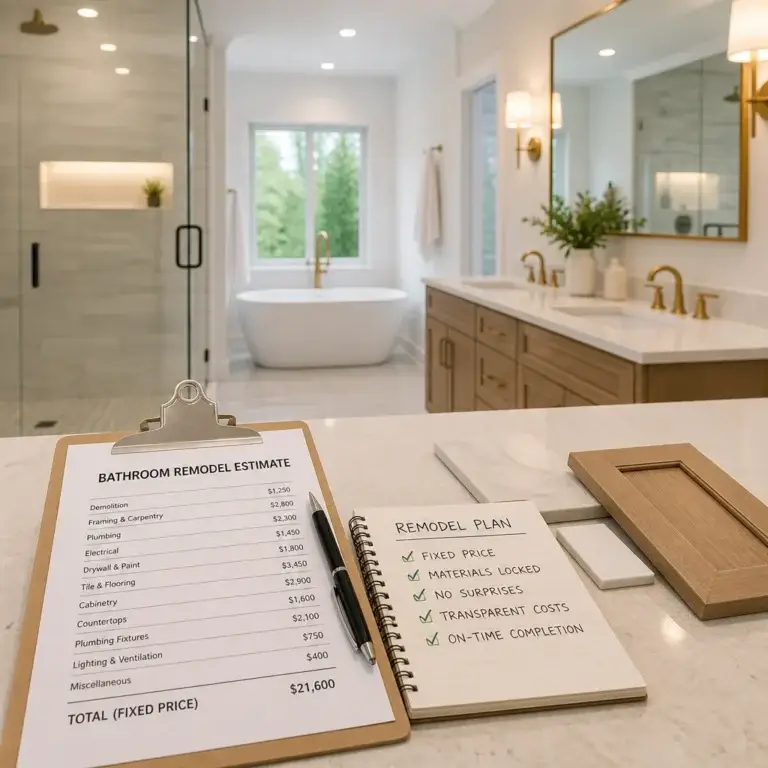
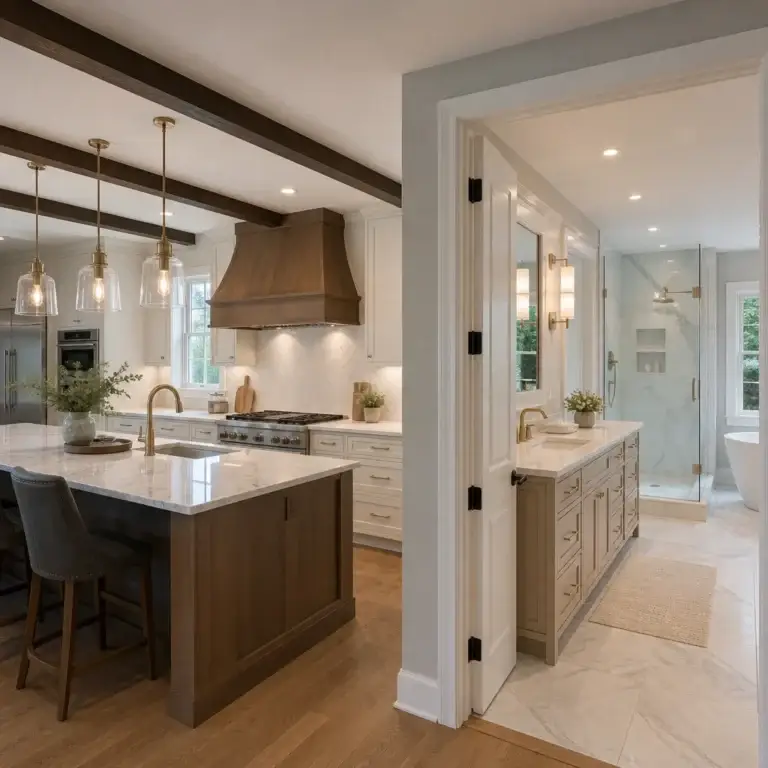
Most full home renovations include kitchen and bathroom updates because these rooms drive both functionality and resale value. A kitchen can run $75,000 to $150,000+, and a master bath $30,000 to $80,000, depending on size and finishes.
Within a whole-house budget, we help you prioritize. Perhaps your master bath gets premium finishes while secondary bathrooms use quality but simpler selections. Your kitchen might feature custom cabinetry and stone counters while other spaces use more modest materials. This strategic allocation maximizes impact where it matters most to your daily life.
We’ve found that clients rarely regret investing more in the kitchen, as you use it multiple times daily and it’s often the home’s centerpiece. Bathrooms matter too, but secondary spaces like powder rooms can stay simpler without compromising the overall renovation quality.
Basement Finishing and Home Additions as Part of Your Renovation
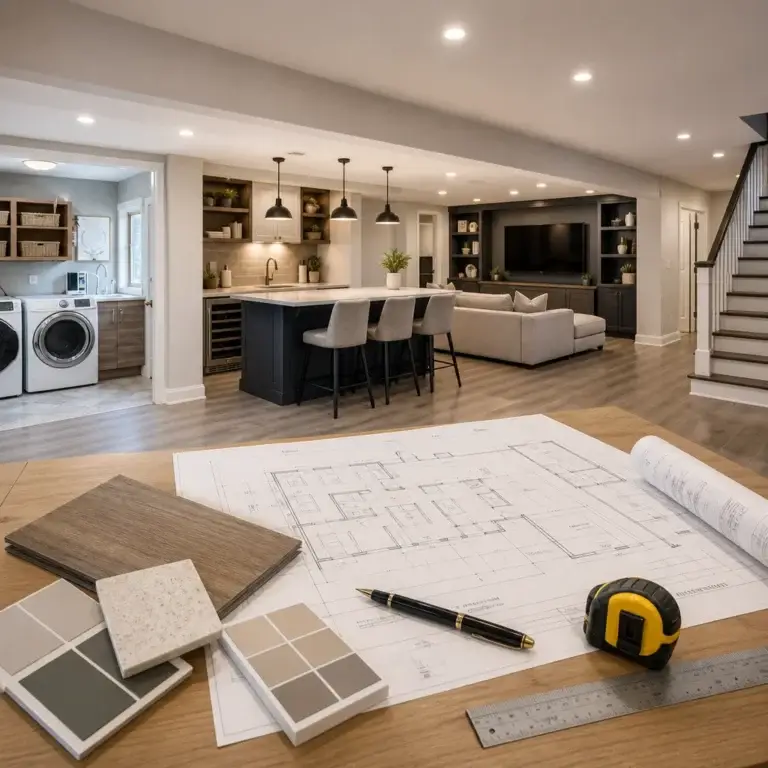
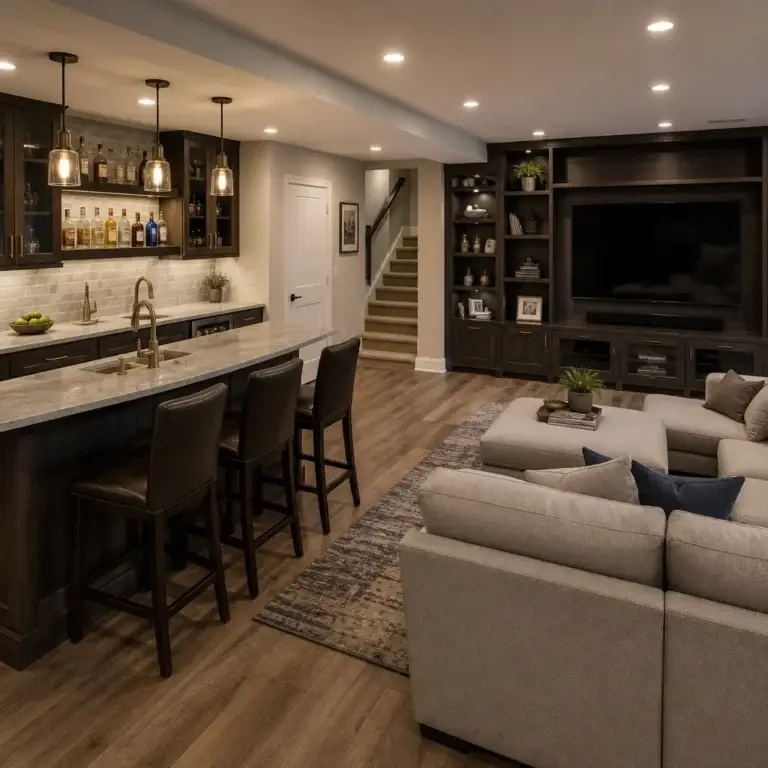
Basements and additions are often combined with whole-house renovations to maximize the project and investment. A finished basement typically costs $35 to $75 per square foot, adding substantial square footage relatively affordably. A home addition runs higher, around $200 to $350 per square foot, but is the only way to truly expand if you’ve outgrown your current footprint.
We frequently combine these. Perhaps you’re adding a second-story bedroom wing while finishing the basement for a playroom and guest suite. This coordinated approach means one contractor managing utilities, drainage, egress, and code compliance across the entire project rather than layering contractors over time.
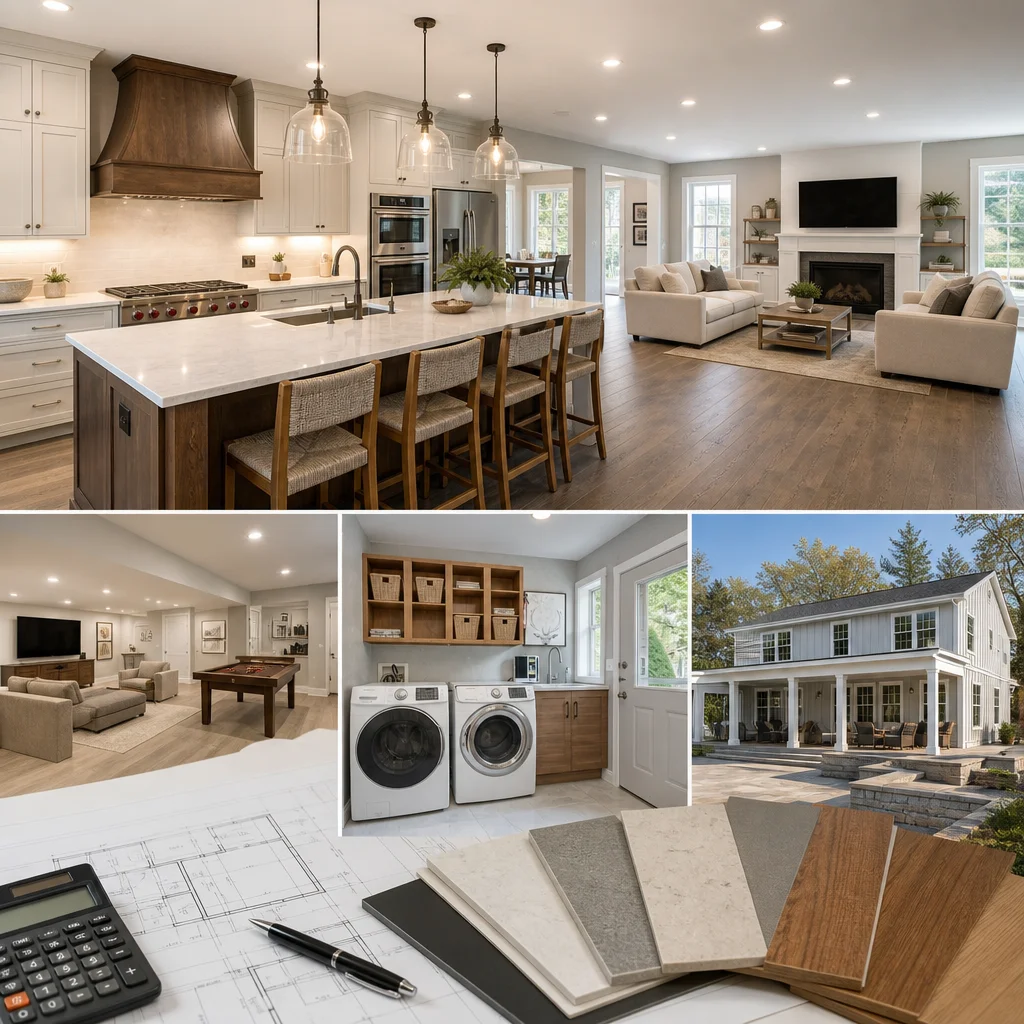
Whether you’re adding an accessory dwelling unit (ADU) for aging parents, expanding your master suite, or creating multi-generational living space, integrating it into your renovation plan simplifies logistics and often reduces overall per-square-foot costs.
How Our Upfront Pricing Protects Your Investment
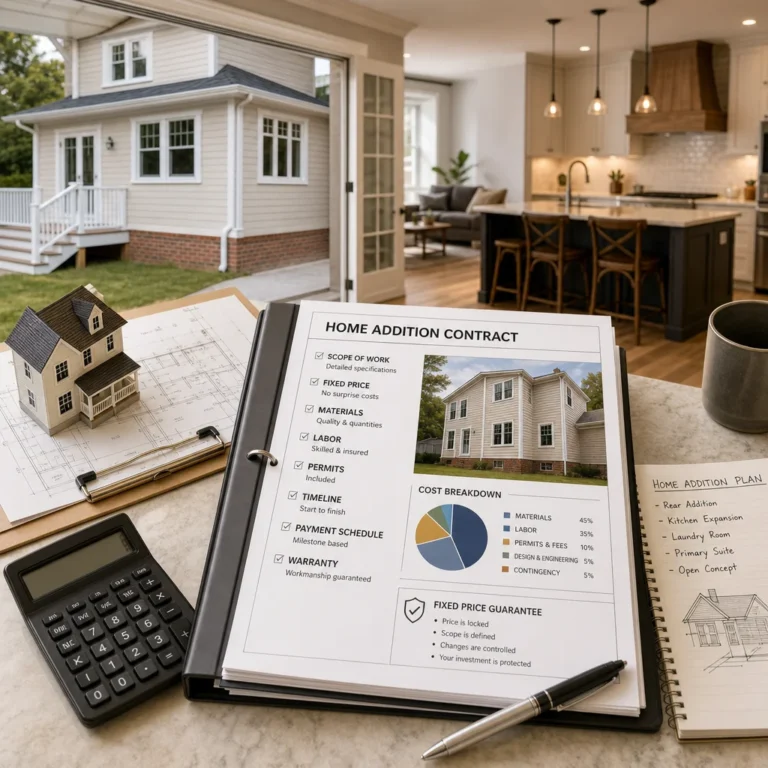
We provide detailed, itemized contracts that break down every cost category before work begins. This upfront transparency means no guessing about where your money goes or surprise invoices after completion.
Our contracts include fixed prices for defined scopes and a clearly defined contingency line (typically 10-15% of the project cost) for discoveries made during demolition or unforeseen structural issues. This means you know your maximum exposure. If we don’t need the full contingency, it stays in your pocket.
We also document every material specification, finish selection, and appliance choice in writing. Nothing is vague. You know exactly what you’re getting, and change orders are rare because decisions are made upfront with full transparency on cost impact.
This approach takes more effort on our front end, but it prevents the misunderstandings and frustration that plague rushed or poorly documented projects.
Financing Options and Budget Planning for Major Renovations
Most homeowners finance full renovations through home equity lines of credit (HELOCs), home equity loans, cash-out refinances, or personal savings combined with financing. Each option has different terms, rates, and tax implications.
A HELOC offers flexibility, drawing funds as the project progresses. A fixed home equity loan provides predictable monthly payments. A cash-out refinance might work if you can refinance at favorable rates while accessing equity.
We recommend consulting a financial advisor before choosing, but generally speaking, financing tied to home equity often offers better rates than personal loans because your home secures the debt. If your renovation will meaningfully increase home value, the long-term math often supports borrowing at reasonable rates.
Budget planning means understanding your total investment and expected timeline. If a project runs 12 months, you’ll draw and carry costs over that year. Building a realistic schedule helps you plan financing to match when payments are due.
Common Renovation Mistakes That Inflate Your Final Cost
We’ve seen patterns in how budgets balloon, and most are preventable.
Underestimating scope is common. Homeowners budget for new finishes but underestimate the structural, mechanical, and code-compliance work lurking behind walls. Once demolition begins and issues surface, budgets get stressed. Building a realistic contingency upfront prevents panic.
Endless design changes during construction are expensive. Every time you change your mind about materials, layouts, or finishes mid-project, subcontractors adjust schedules, suppliers need new orders, and labor costs rise. Lock in designs before construction starts.
Choosing contractors primarily on price rather than credentials often backfires. A contractor $20,000 cheaper might cut corners, miss deadlines, or require rework. Our pricing reflects experience, reliability, and quality. It’s worth the investment.
Poor project management and unclear communication create costly delays. Without one point of contact managing the project, miscommunications between trades lead to rework, wasted materials, and extended timelines. Our design-build model eliminates this.
Delaying decisions during construction halts work waiting for your choices. If you haven’t selected tile, trim, or hardware before installation begins, crews sit idle. Decide everything upfront.
Our Process for Delivering On-Time, On-Budget Results
Our full-home renovation management approach starts with a thorough discovery conversation. We tour your home, discuss your goals, understand your timeline and budget constraints, and identify any red flags that might affect costs.
We then deliver a detailed proposal with itemized costs, a project timeline with realistic milestones, and a design concept addressing your needs. This sets expectations clearly before you commit.
Once you approve, our design-build process moves methodically through design refinement, permit coordination, material ordering, and construction. We update you weekly on progress, costs, and any issues requiring decisions.
Our project managers are present regularly, not occasionally. They coordinate trades, catch problems early, and ensure quality standards stay high. We build in checkpoints where you approve work before moving forward.
This disciplined approach is why our projects consistently finish on time and within budget, which is unusual in an industry where delays and overruns are common.
Why Northern Virginia Homeowners Trust Elite Contractors Services
We’ve served Northern Virginia for years, completing hundreds of full home renovations, kitchen remodels, basement finishes, and home additions across Fairfax County and surrounding communities. Our clients stay because we deliver on promises.
We’re licensed, insured, and transparent. We provide upfront contracts with detailed pricing. We manage every phase from initial design through final inspection. We communicate clearly and resolve issues promptly rather than hoping they disappear.
Most importantly, we understand that your home is where your life happens. A renovation is temporary disruption in service of long-term comfort and value. We treat your home and family with the respect they deserve, protect your belongings during construction, and minimize disruption to your daily routine.
If you’re ready to discuss your full home renovation budget and explore what’s possible, we’d welcome the conversation. Contact us for a free consultation where we’ll walk through your goals, assess your home, and provide realistic guidance on costs and timeline. We serve homeowners throughout Annandale, Fairfax, Arlington, Alexandria, Burke, Falls Church, McLean, Reston, Vienna, Springfield, and surrounding Northern Virginia communities.
Contact us Today For a Free Estimate !
Frequently Asked Questions (FAQ)
How does our design-build approach help us control costs and timeline for full home renovations?
Our design-build process integrates architecture, permits, material selection, and construction under one team, which eliminates costly delays between separate contractors and reduces miscommunication. We coordinate every phase upfront, so you receive a detailed contract with transparent pricing before we break ground. This streamlined method allows us to manage resources efficiently, source materials strategically, and keep your project moving forward without expensive change orders or timeline extensions.
What should we budget for a whole-house renovation in Northern Virginia?
Full home renovation costs vary based on square footage, scope of work, and finishes you select, but we help you establish realistic budgets by breaking down expenses by phase: structural work, systems (electrical and plumbing), kitchen and bath upgrades, flooring, and finishing touches. During our initial consultation, we listen to your priorities and design goals, then provide you with detailed estimates so you understand where every dollar goes. We work with homeowners across all budget ranges and can prioritize which areas deliver the greatest value and comfort for your family.
How does our upfront pricing protect your investment in a major renovation?
We develop comprehensive contracts that outline all costs, materials, timelines, and scope before construction begins, so you won’t face surprise expenses or unexpected bill increases. Our detailed estimates account for the full project, and we stand behind our pricing through professional project management and quality craftsmanship. If challenges arise during construction, we communicate with you immediately and discuss solutions rather than simply adding costs to your final bill.