Table of Contents
- 1. Professional Acoustic Design and Sound Isolation
- 2. Premium Home Theater Technology Integration
- 3. Custom Lighting Systems for Optimal Viewing
- 4. Luxury Seating and Entertainment Furniture
- 5. Climate Control and HVAC Optimization
- 6. High-End Flooring and Wall Finishes
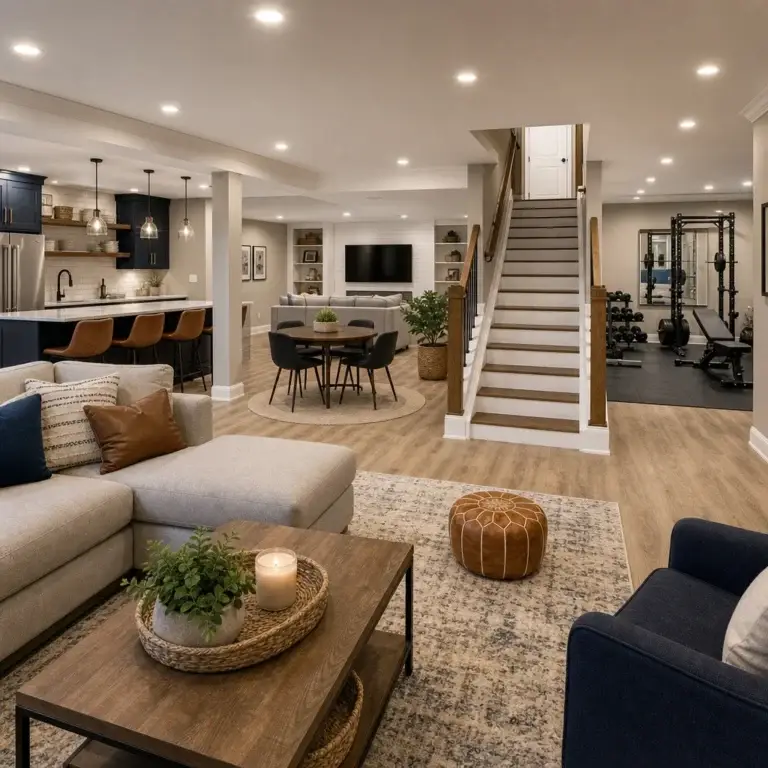
- 7. Multi-Functional Living Space Design
- Frequently Asked Questions (FAQ)
1. Professional Acoustic Design and Sound Isolation
Sound quality makes or breaks a media room. Without proper acoustic treatment, you’ll hear unwanted noise from upstairs footsteps, street traffic, or even HVAC systems. Worse, you’ll experience poor audio clarity, echo, and muddiness that ruins dialogue in films and music enjoyment.
Professional acoustic design starts before you hang speakers. We work with specialized materials and strategic placement to absorb, diffuse, and control sound within your media space. This means installing acoustic panels on walls and ceilings, using mass-loaded vinyl barriers behind drywall, and choosing dense insulation in wall cavities. The goal is to prevent sound from bouncing around the room while keeping outside noise from disrupting your experience.
Key acoustic elements we typically recommend:
- Mineral wool or fiberglass insulation in exterior walls and ceiling cavities
- Acoustic foam panels strategically placed behind the screen and on side walls
- Resilient channels or sound-dampening clips on framing to isolate drywall from studs
- Weatherstripping on doors and sealed penetrations around electrical outlets
- Carpeting or acoustic flooring to reduce reflections on hard surfaces
Sound isolation also protects your family. If you’re watching action movies or enjoying loud music, proper isolation ensures you won’t disturb others in your home. That’s the mark of a truly professional installation.
What to do next: Before finalizing your basement design, request an acoustic assessment from your contractor. Ask about specific absorption coefficients and how the room layout will manage bass response in particular.
2. Premium Home Theater Technology Integration
Technology evolves quickly, but the fundamentals of a luxury home theater remain timeless: crystal-clear image quality, rich surround sound, and seamless control. We integrate top-tier AV components that work together flawlessly rather than treating audio and video as separate concerns.
A professional media suite typically includes a high-quality projector or large-format display, quality speaker system (front left, center, right, surround, and subwoofer channels), and integrated control system. The projector choice matters tremendously. Entry-level projectors produce acceptable images, but premium models deliver superior contrast ratios, deeper blacks, and color accuracy that transforms your viewing experience. Pair this with a motorized projection screen in a quality fabric, and you’re creating true cinematic conditions.
For speakers, we recommend professional-grade systems engineered for home theater rather than hi-fi audio speakers. These are voiced specifically for dialogue clarity and spatial accuracy. A properly calibrated surround sound setup places you in the middle of the action rather than just pointing speakers at you. The subwoofer handles bass frequencies that create impact and immersion.
Control integration ties everything together. Smart automation systems let you dim lights, raise the projection screen, adjust volume, and switch inputs with a single button or voice command. No fumbling with multiple remotes. No confusion about settings.
What to do next: Ask your contractor about pre-wiring options during construction. Roughing in conduit and cable runs before walls close up costs a fraction of retrofitting later and keeps your space clean and future-proof.
3. Custom Lighting Systems for Optimal Viewing
Lighting design in a media room serves two distinct purposes: eliminating light pollution during viewing and creating ambient atmosphere when the room isn’t in use. Standard ceiling lights won’t cut it.
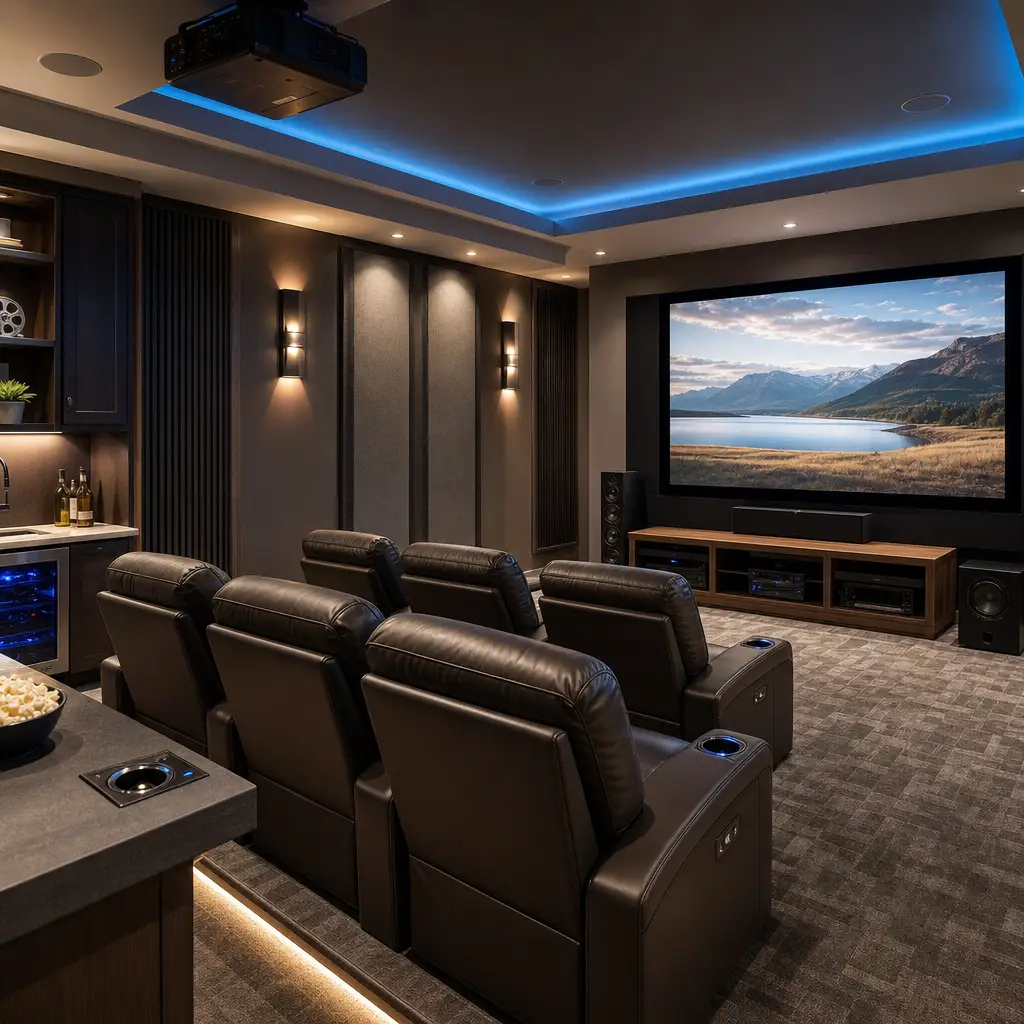
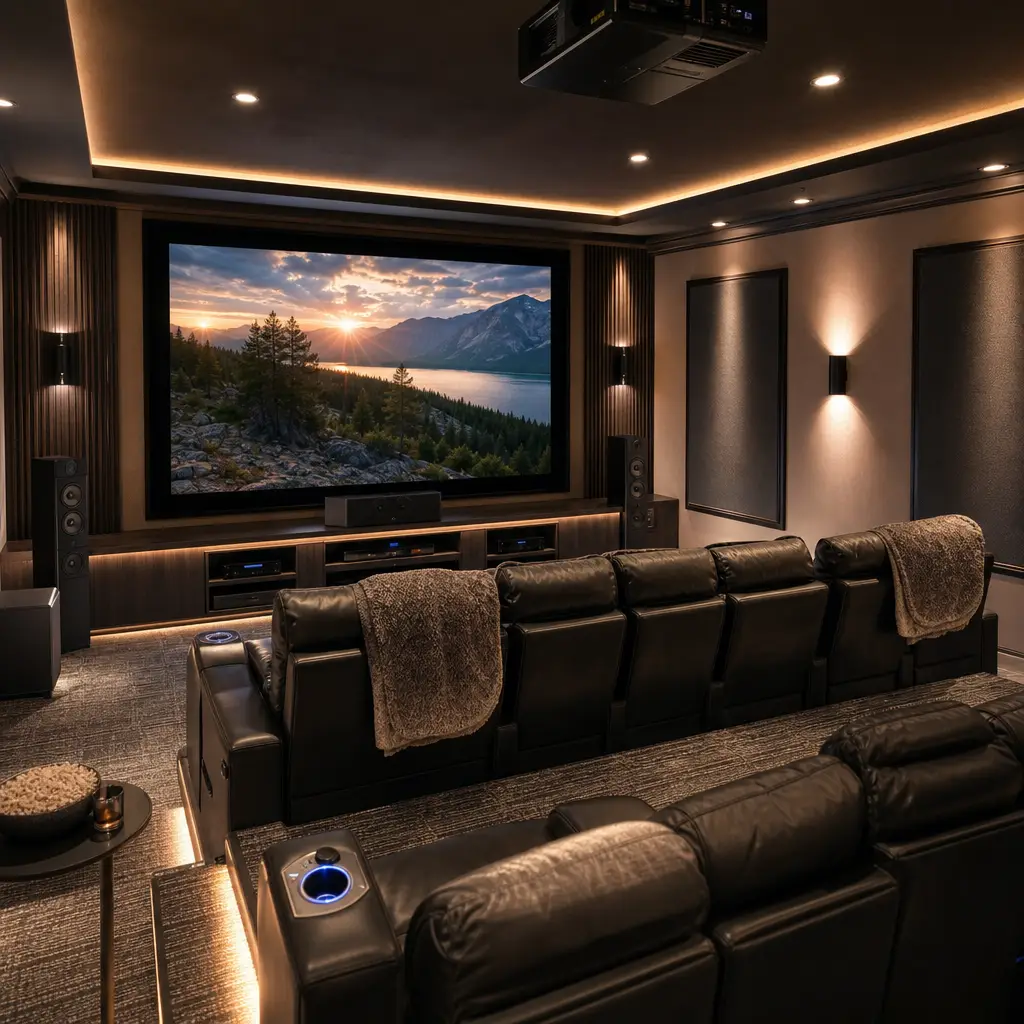
We design layered lighting systems that give you complete control. This typically includes dimmer-controlled overhead lighting for general illumination, adjustable wall sconces for ambient mood, and specialty lighting (like LED strips behind the screen or along baseboards) for accent and wayfinding. During a movie, these lights should fade to almost nothing without creating harsh blackout conditions that feel institutional.
Recessed lighting with deep trims minimizes light spill on screen surfaces. Accent lighting on architectural features adds visual interest and luxury feel. Consider practical elements too: small reading lights near seating for navigation, and perhaps subtle step lighting if your media room has multiple levels.
The real luxury touch is control. A programmable lighting system remembers your preferences and adjusts automatically based on the activity. Movie mode darkens the room. Gaming mode provides different brightness. Casual viewing sets a comfortable ambient level. This seamless orchestration elevates the entire experience and makes your media suite feel intentionally designed rather than improvised.
What to do next: During design planning, walk through your intended seating area at different times of day to understand how natural light affects the space. This informs how much artificial lighting control you’ll actually need.
4. Luxury Seating and Entertainment Furniture
You’ll spend more time in your media room seating than anywhere else in the space. Comfort and quality matter profoundly, yet this is an area where homeowners often compromise.
Professional media suite seating goes far beyond standard recliners. We recommend stadium-style configurations that position viewers at optimal angles and distances from the screen. This means slightly elevated rows and varied seat heights so sightlines never cross. Each viewer gets an unobstructed, ergonomically correct viewing angle.
Luxury seating options include power recliners with built-in massage, heated seats, and integrated cup holders. These aren’t indulgences. They’re practical features that keep you comfortable during three-hour films. Quality materials matter too. Genuine leather or high-performance fabrics resist staining and age beautifully. Poorly made seating degrades quickly and begins feeling cheap within months.
Beyond seating, thoughtful furniture planning creates a complete entertainment environment. A concession counter adds playful luxury and functionality. Wall-mounted shelving displays collectibles. A side table holds refreshments. Professional storage keeps equipment, cables, and media organized and out of sight.
The layout itself is a design decision. Theater-style straight rows work for dedicated viewing. Sectional arrangements feel more social and flexible. Angular or circular configurations encourage conversation when the screen is off.
What to do next: Before purchasing seating, spend 30 minutes sitting in showroom models at different angles and distances. Notice what feels genuinely comfortable versus what you think should be comfortable.
5. Climate Control and HVAC Optimization
A basement media room with poor climate control becomes unwelcoming. Cold, damp, or stuffy air detracts from enjoyment and can damage equipment over time.
Proper climate conditioning means more than a single return air vent. We size HVAC distribution specifically for your media suite, ensuring consistent temperature and humidity throughout the space. This often requires dedicated supply and return ducts routed through basement ceilings or walls. Zoning allows the media room to maintain comfortable conditions independent of the rest of your basement.
Humidity control is particularly important in basements. Excess moisture warps wood, damages drywall, and creates musty odors. A properly functioning dehumidification system maintains 30-50% relative humidity year-round. Some luxury installations include standalone units or integrated dehumidification within the main HVAC system.
Ventilation prevents staleness and removes odors from food and people. This doesn’t mean drafty, noisy airflow. Quality ductwork and low-velocity vents deliver fresh air quietly. Acoustic duct lining reduces HVAC noise so you hear your entertainment clearly.
Temperature zoning also extends equipment life. Projectors, amplifiers, and receivers generate heat. Proper ventilation and temperature control prevent equipment thermal shutdown during extended use.
What to do next: Ask your contractor about ductwork layout during initial design. Routing ducts efficiently during framing costs far less than retrofitting through finished spaces later.
6. High-End Flooring and Wall Finishes
Surface materials create visual character and affect both acoustics and durability. This is where quality selections transform your basement from functional to luxurious.
For flooring, we typically recommend luxury vinyl plank or high-quality engineered hardwood in media suites. Both are durable, comfortable underfoot, and complement premium design. Many homeowners add area rugs to define seating zones and enhance acoustics. Carpet is excellent for sound absorption but requires consistent maintenance in basement environments.
Wall finishes deserve equal attention. Painted drywall is the foundation, but we often add architectural interest through accent walls. Consider feature walls behind the seating area or behind the screen. Shiplap, paneling, or fabric-wrapped panels add texture and premium finish. Some clients choose soundproofing wall panels in interesting colors or patterns that double as acoustic treatment and design elements.
Trim details matter. Quality baseboards, crown molding, and panel molding elevate the entire space. These finishing touches communicate intentional design and craft rather than quick construction.
Lighting integration into wall design creates sophistication. Recessed shelving with integrated LED backlighting, floating shelves, and wall sconces positioned to accent architectural features all contribute. The wall becomes part of your technology and design rather than just background.
What to do next: Request samples of wall and floor finishes in your actual basement lighting. Artificial showroom lighting won’t match your final space, so seeing materials under your specific conditions prevents surprises.
7. Multi-Functional Living Space Design
The most sophisticated basement media suites serve multiple purposes. A truly luxury space adapts to different activities without compromising any single use.
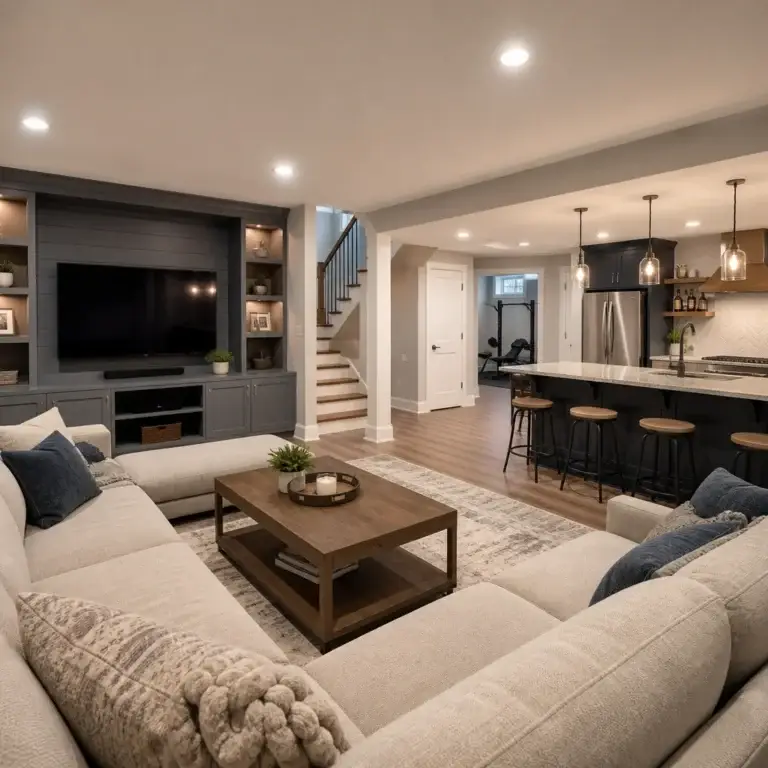
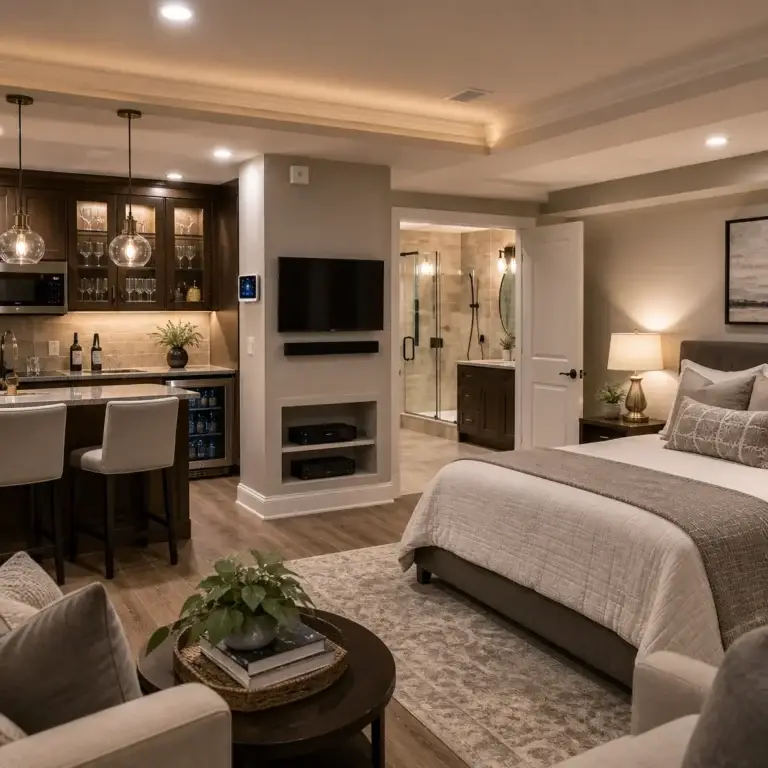
Flexible design means your media room doubles as a gathering space for entertaining. When the screen is dark, good lighting, comfortable furniture arrangement, and refined finishes create an upscale lounge or bar area. Gaming-focused homeowners might integrate a small beverage station or game console shelving. Families want flexibility to watch films, play games, and simply gather.
Some clients incorporate adjacent spaces into the overall design. A small kitchenette or wet bar enhances the entertainment functionality. A powder room provides necessary convenience. Flexible glass or pocket doors separate the media suite from a fitness area or playroom, allowing varied uses of basement space while maintaining acoustic separation.
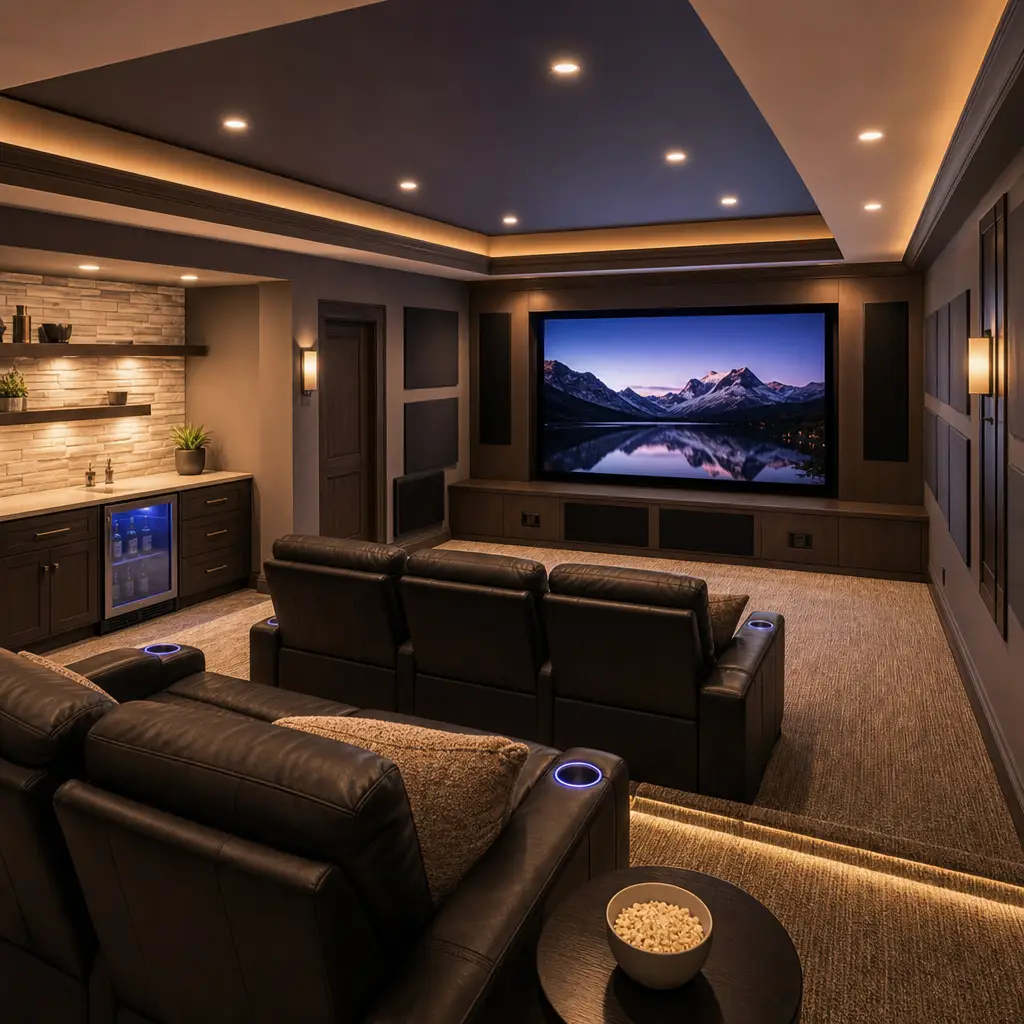
Lighting flexibility is essential for multi-functional design. A movie mode goes nearly black. A gathering mode sets warm, dimmed ambient light. A cleaning or maintenance mode brings everything bright. This flexibility makes the space usable for different activities and moods rather than turning it into a media-only room.
Storage integration keeps the space organized and visually clean regardless of activity. Built-in cabinetry hides media equipment, gaming consoles, board games, and entertainment supplies. A well-designed storage system prevents your luxury space from feeling cluttered.
What to do next: Make a list of how your family actually uses basement space. Movie nights count, but so do gatherings, kids’ play, exercise, or hobbies. Design flexibility that supports your real life.
Building a truly exceptional basement media suite requires expertise across acoustic design, technology integration, electrical work, HVAC coordination, and finish carpentry. These disciplines must work together seamlessly. A beautiful room with poor sound is disappointing. Flawless audio in a drafty, uncomfortable space doesn’t deliver the luxury experience you deserve.
We bring all these specialties under one design-build team. We manage architectural planning, technology selection, material coordination, permits, and construction. You work with a single point of contact who understands how acoustic walls affect HVAC routing, how lighting integration requires electrical planning, and how seating placement influences screen positioning and room dimensions.
Our approach eliminates the coordination headaches of hiring separate AV companies, contractors, and electricians. You get a cohesive design where every element supports the others, finished on schedule and within budget. We’ve completed luxury media suites throughout Fairfax, Arlington, McLean, and across Northern Virginia. Every project reflects our commitment to quality craftsmanship, transparent communication, and delivering exactly what we promise.
If you’re ready to transform your basement into the luxury entertainment space your home deserves, we’d welcome the opportunity to discuss your vision. Contact us today for an initial consultation, and let’s create something extraordinary together.
For further reading: Basement finishing guide.
Contact us Today For a Free Estimate !
Frequently Asked Questions (FAQ)
How do we handle acoustics and soundproofing in basement media rooms?
We integrate professional acoustic design from the ground up, using specialized insulation, resilient channels, and sound-dampening materials to isolate your media suite from the rest of your home. Our approach prevents sound from traveling between floors and ensures your entertainment doesn’t disturb other areas, while also creating a controlled acoustic environment that enhances your viewing and listening experience.
What’s included in our basement finishing process for luxury media spaces?
Our design-build team manages everything from initial architectural planning through final construction, including permit coordination, material selection, HVAC optimization, custom lighting design, and home theater installation. We provide detailed upfront contracts with transparent pricing, so you know exactly what to expect before we begin, and we handle all the coordination so you don’t have to juggle multiple contractors.
Can we create multi-functional basement spaces that work beyond media rooms?
Absolutely. We design basement finishing projects that blend entertainment with additional living functions, such as wet bars, wine storage, lounge seating areas, or guest quarters. Our custom approach ensures your luxury basement adapts to how your family actually uses the space, not just as a theater room but as a complete recreational retreat.