Table of Contents
- Why Home Addition Contracts Matter for Northern Virginia Homeowners
- The Hidden Risks of Verbal Agreements and Informal Arrangements
- What Our Design-Build Contracts Include From Day One
- Detailed Pricing and Upfront Cost Transparency in Our Agreements
- Permit Coordination and Compliance Built Into Contract Protection
- Timeline Guarantees and On-Time Delivery Commitments
- Change Order Management and Scope Control
- Material Selections and Quality Specifications in Writing
- Our Warranty and Completion Standards
- How Elite Contractors Delivers Peace of Mind Through Contractual Excellence
- Getting Started With Your Home Addition Contract Today
- Frequently Asked Questions (FAQ)
Why Home Addition Contracts Matter for Northern Virginia Homeowners
A solid contract is the foundation of a successful home addition. When you’re investing tens of thousands of dollars into expanding your Northern Virginia home, a detailed written agreement protects both you and your contractor, clarifies expectations, and prevents costly misunderstandings down the road. We’ve seen homeowners jump into projects with handshake deals, only to face disputes over scope, costs, and timelines. The right contract keeps everyone accountable and gives you confidence from signing day through final walkthrough.
Home additions are complex undertakings. You’re coordinating architects, engineers, permit officials, suppliers, and construction crews across months of work. Without a comprehensive contract, confusion spreads quickly: what seemed like $200,000 ballpark quoted becomes a $250,000 surprise; the timeline slips six months without clear accountability; material choices get mixed up mid-project.
Northern Virginia’s building codes, Fairfax County regulations, and local permit requirements add another layer of complexity. A robust contract spells out who handles permits, what inspections are required, and how compliance costs are managed. This clarity is especially critical in our region, where zoning rules and HOA restrictions vary significantly between neighborhoods.
The right contract also protects your home’s value and quality. When specifications are written down—exact materials, finishes, workmanship standards—the final result matches what you envisioned, not what gets interpreted on the fly. You avoid disputes about whether a bathroom should have porcelain or ceramic tile, or whether electrical work meets code.
What to do next: Before any contractor breaks ground, insist on a written contract that covers scope, timeline, costs, permits, and quality standards. This single document becomes your reference point if questions arise.
The Hidden Risks of Verbal Agreements and Informal Arrangements
Verbal agreements sound convenient until they fall apart. One party remembers a different price, timeline, or set of included items. When disputes arise, there’s no paper trail to settle the question. We regularly hear from Northern Virginia homeowners who started projects with a verbal quote, only to face unexpected charges or work that didn’t match expectations.
Informal arrangements also leave ambiguity around responsibility. If a permit delays the project, who eats the cost and delay? If the homeowner wants to upgrade flooring mid-project, how does that change the timeline and price? Without a written change order process, these decisions become contentious.
Unlicensed contractors or informal crews sometimes avoid written contracts deliberately, because contracts establish accountability and legal responsibility. Licensed, professional contractors welcome written agreements because they clarify mutual obligations and reduce conflict.
Beyond disputes, informal arrangements may not meet Virginia’s legal requirements. Virginia law requires residential construction contracts to include specific disclosures and terms, especially for projects above certain thresholds. A verbal agreement might leave you unprotected if something goes wrong.
What to do next: Refuse to proceed with any contractor who resists a detailed written contract. A professional team stands behind their work in writing.
What Our Design-Build Contracts Include From Day One
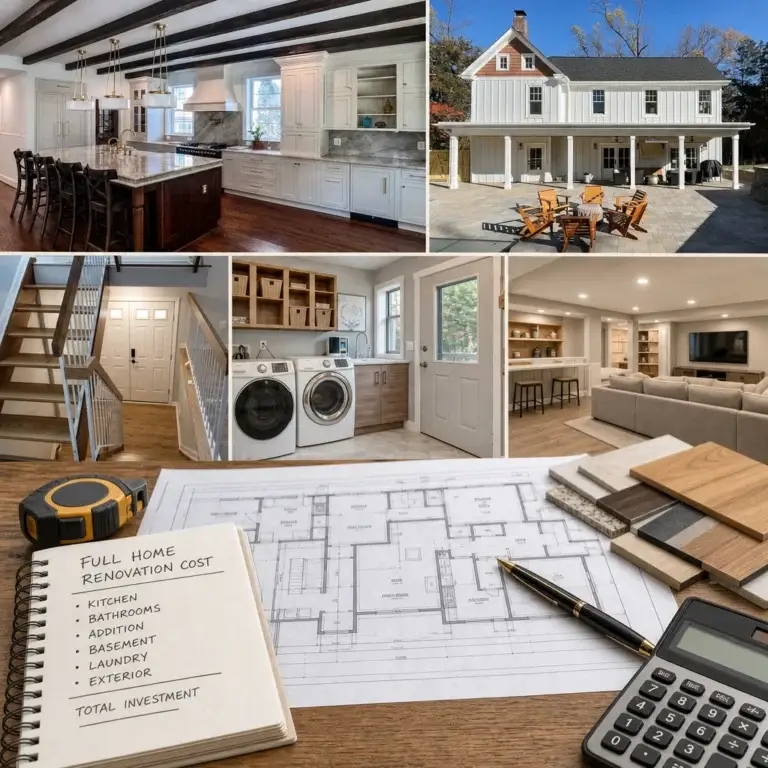
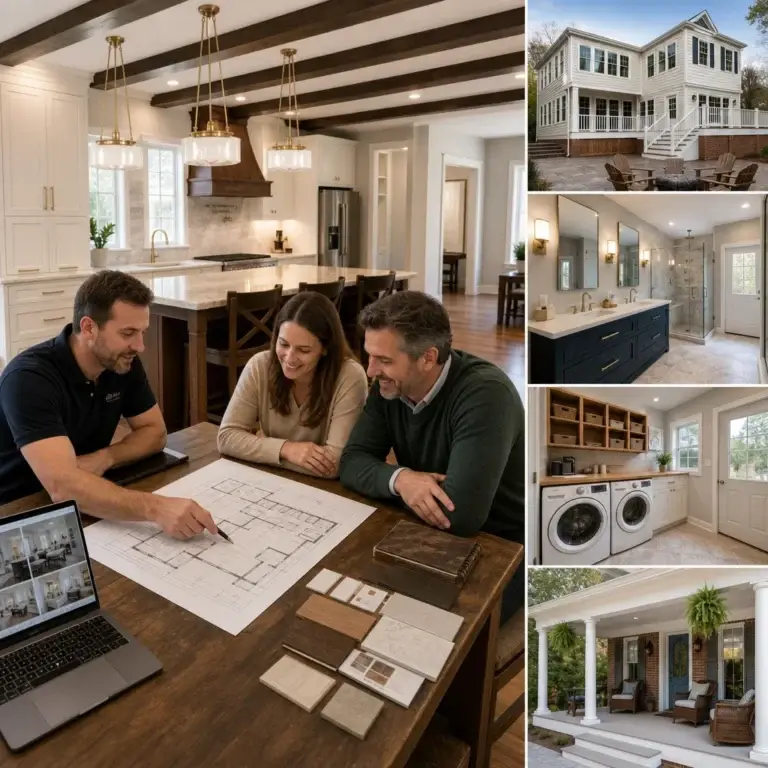
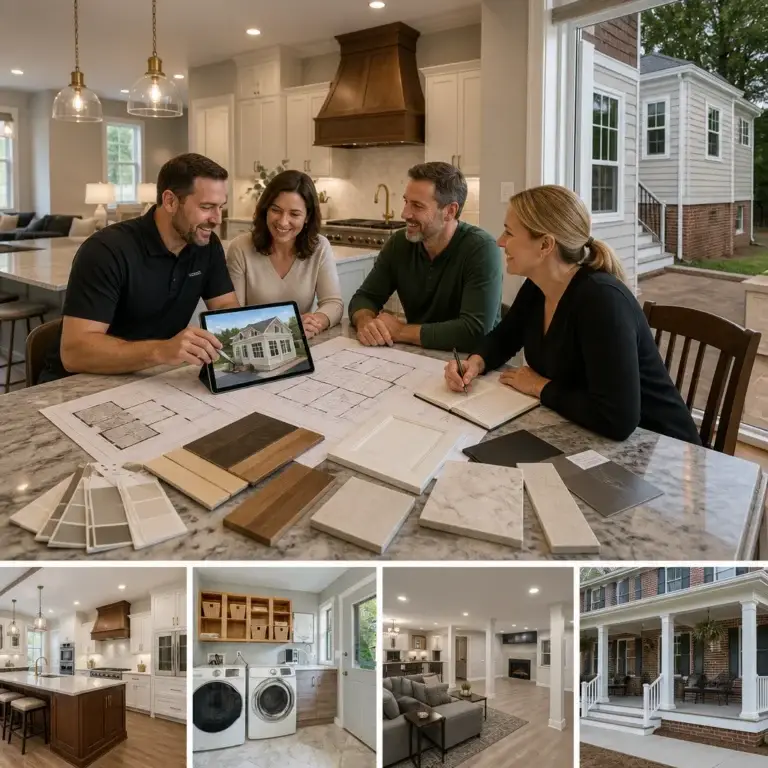
Our contracts are comprehensive documents built on years of Northern Virginia project experience. They’re not one-size-fits-all boilerplate; we customize each agreement to match your specific project scope, whether it’s a kitchen remodel, home addition, basement finishing, or whole-house renovation.
Here’s what we include:
- Detailed scope of work: Exact description of what we’ll build, renovate, or finish, including room dimensions, structural work, and systems upgrades.
- Materials and finishes schedule: Specific brands, models, colors, and grades for everything from framing lumber to cabinet hardware, flooring to countertops.
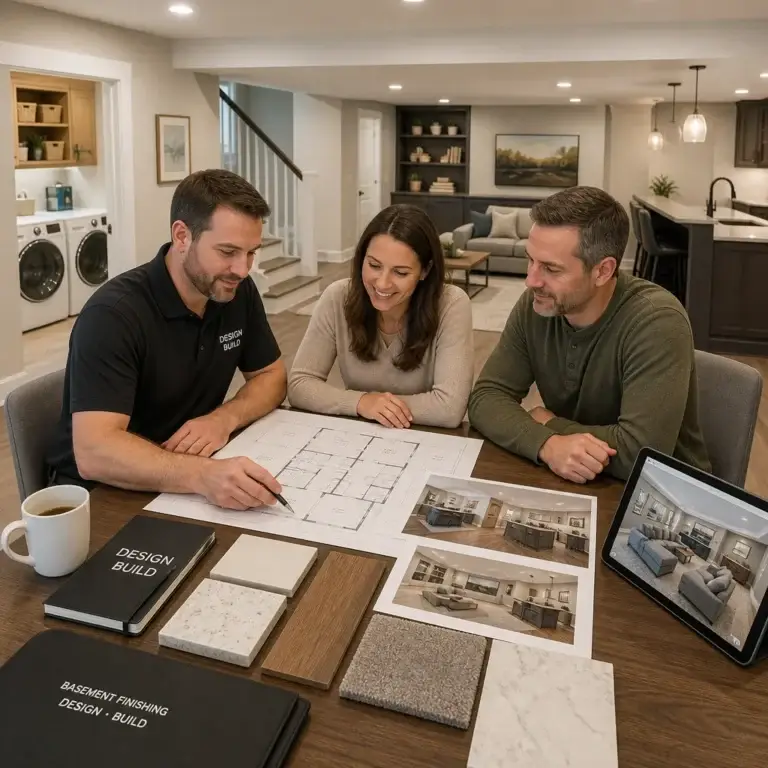
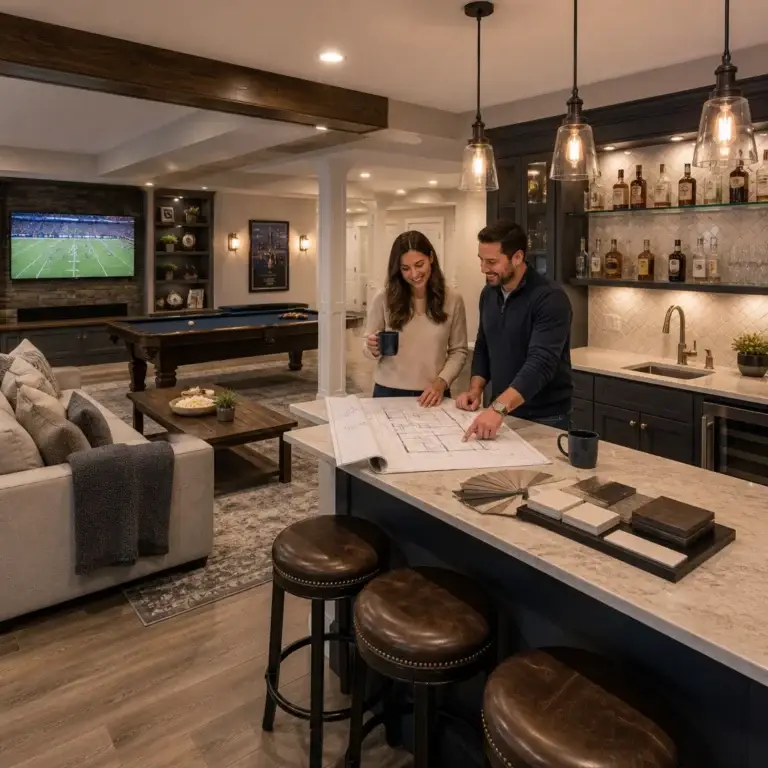
- Design drawings and plans: Reference plans that anchor the scope and help everyone visualize the completed project.
- Payment schedule: Clear milestones tied to project phases, so you pay in proportion to work completed.
- Timeline and key dates: Projected start, major milestones, and expected completion, with clarity on what could affect these dates.
- Permit and compliance provisions: Who handles permits, inspections, and regulatory approvals, and how costs are managed.
- Warranty and post-completion terms: What we guarantee after completion and for how long.
- Change order procedures: The exact process for handling scope changes and how they affect price and timeline.
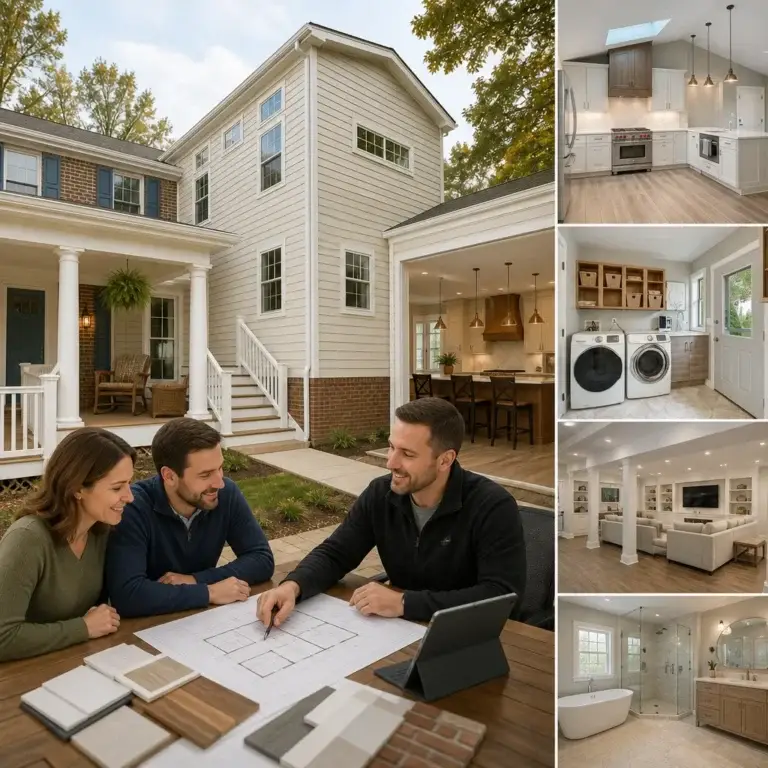
Our design-build approach means architectural planning, permitting, material selection, and construction leadership all flow from one team. Your contract reflects that integrated process, eliminating the coordination gaps that happen when homeowners juggle separate architects, general contractors, and subs.
What to do next: Request a sample contract from any contractor to review before committing. Look for specificity around materials, timeline, and payment terms.

Detailed Pricing and Upfront Cost Transparency in Our Agreements
Homeowners fear hidden costs. A quote that seems reasonable balloons into budget shock when the project is underway. We prevent this by locking in detailed pricing upfront and explaining how costs are structured.
Our contracts separate costs into clear categories:
- Base construction and labor costs for structural work, framing, electrical, plumbing, and mechanical systems.
- Material and finish costs for cabinets, countertops, flooring, paint, fixtures, and hardware.
- Permit, inspection, and compliance fees based on Fairfax County and local requirements.
- Contingency allowance (typically 10-15%) for unforeseen conditions like hidden structural damage or code compliance surprises.
We explain exactly what’s included and what’s not. For example, a kitchen remodel contract might include new cabinetry, countertops, and appliance installation but clarify whether paint, hardware upgrades, or electrical panel work are separate line items. This prevents “I thought that was covered” arguments later.
If you choose premium materials or upgrades mid-project, a change order documents the new cost and adjusts the contract price. You see the impact before we proceed.
We also explain allowances clearly. If we allocate $8,000 for flooring but you want marble instead of porcelain, the change order shows the $3,500 upgrade cost. You control spending and never face surprise invoices.
What to do next: Ask your contractor to break costs into itemized categories and explain the contingency percentage. Request clarity on what happens if actual costs (like permit fees) differ from estimates.
Permit Coordination and Compliance Built Into Contract Protection
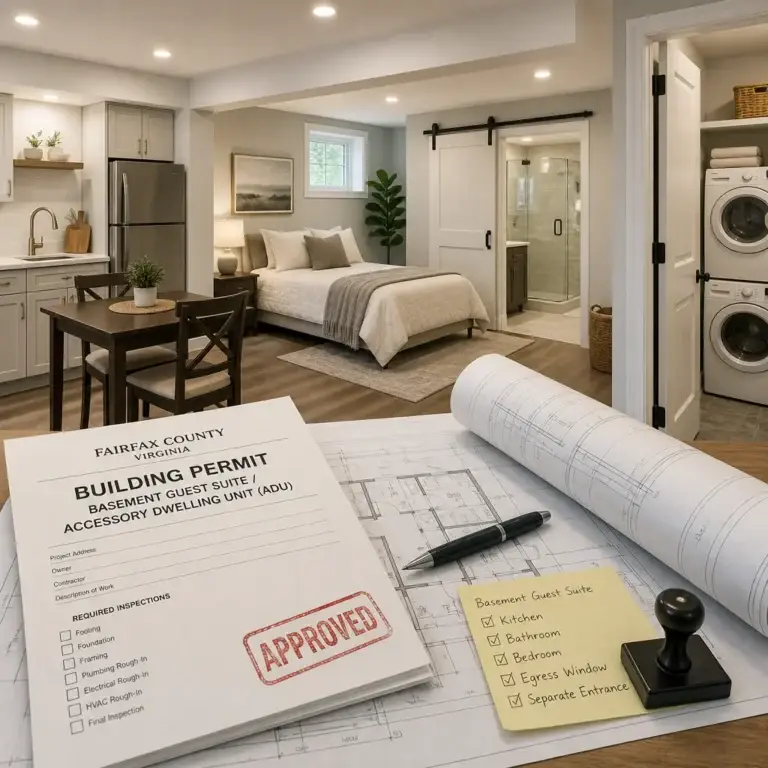
Northern Virginia’s building codes and Fairfax County permitting requirements are rigorous, and permits are mandatory for home additions. Our contracts spell out exactly who manages this critical responsibility: us.
We handle:
- Permit application preparation: Gathering plans, documentation, and applications.
- Submission and follow-up: Filing with Fairfax County or your local building department and responding to official requests.
- Inspections coordination: Scheduling required inspections (foundation, framing, electrical, plumbing, final) and ensuring work is ready.
- Code compliance verification: Confirming that materials and methods meet current Virginia Building Code standards.
- Approval and final sign-off: Obtaining the Certificate of Occupancy or Completion as required.
Our contract includes permit costs and inspection fees, so you’re not surprised by official charges. It also clarifies that we’re responsible for keeping the project on track with code, and that our warranty covers code compliance.
For specific guidance on what permits apply to your project, we reference our Fairfax County permits guide during contract discussions, so you understand what’s required before we start.
What to do next: Confirm with your contractor that permit management is their responsibility, not yours, and that permit costs are included in the contract price or clearly itemized.
Timeline Guarantees and On-Time Delivery Commitments
Delays frustrate homeowners and can cascade into financial stress (temporary housing, storage, stress on family life). Our contracts commit to a timeline with realism about what factors we control and which we don’t.
We specify:
- Projected start date and key milestone dates (permits approved, framing complete, systems rough-in, final inspections passed).
- Estimated completion date with a clear understanding of whether it’s fixed or contingent on permit approval and inspection schedules.
- Factors that could affect timeline, such as building department delays, weather, or discovery of hidden structural issues.
- Communication protocol: How we’ll notify you of delays and what compensation or adjustments might apply.
Weather delays, permit hold-ups, and inspector requests are beyond our control, so the contract acknowledges these realities. However, we commit to working efficiently and not delaying projects due to crew scheduling, material sourcing, or poor planning on our part.
For deeper insight into how permitting and scheduling work together in our region, our Fairfax home addition timeline guide breaks down the typical phases and what to expect.

What to do next: Ask your contractor for a detailed timeline with milestone dates, not just a vague “4 to 6 months” estimate. Understand which delays are their responsibility versus external factors.
Change Order Management and Scope Control
Scope creep happens. Mid-project, you decide you want a larger window, better insulation, or upgraded finishes. Without a clear change order process, these conversations become disputes over cost and timeline impact.
Our contract includes a formal change order procedure:
- Request: You ask about an addition or modification.
- Estimate: We review the change, calculate material and labor costs, and assess timeline impact.
- Written change order: We prepare a document showing the change description, cost, and adjusted completion date.
- Your approval: You review, agree to the cost and timeline shift, and sign.
- Execution: We proceed with the change and track it against the updated contract.
This process protects both sides. You get transparency about cost impact before committing. We avoid scope surprises that could make the project unprofitable or delay completion unfairly.
The contract also defines what’s “scope” versus what’s “out of scope.” If your contract covers a kitchen renovation but not flooring installation in adjacent areas, that clarity prevents confusion. If you want to add a second bathroom to a home addition project, the change order process handles it cleanly.
What to do next: Before signing, confirm that your contract includes a change order process and that both you and the contractor agree to follow it.
Material Selections and Quality Specifications in Writing
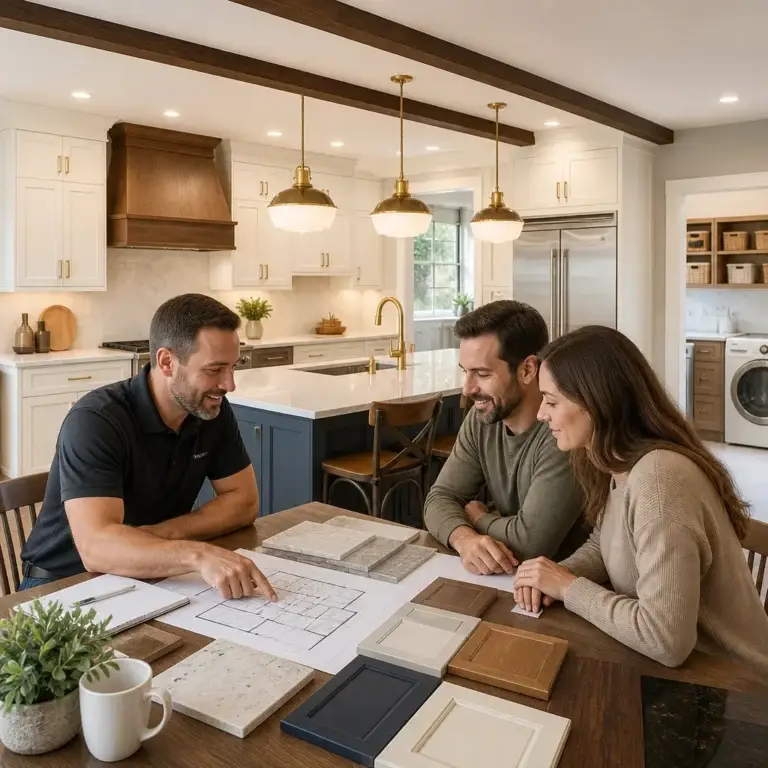
Material choices define the look, feel, and durability of your renovation. Our contracts document exactly what goes into your home so there’s zero ambiguity.
We create a materials schedule that specifies:
- Product names and model numbers for cabinets, countertops, fixtures, appliances, and flooring.
- Colors, finishes, and sizes to eliminate confusion (kitchen cabinet color “maple” versus “natural maple” versus “honey maple”).
- Grade and quality standards (solid wood versus veneer, ceramic versus porcelain tile, etc.).
- Source and availability: Which items are ordered, which are site-selected during construction, and timelines for selection.
Some homeowners select all finishes before work starts. Others prefer to see the framed space and select finishes mid-project. Either way, the contract documents the process and any allowances reserved for selections.
Quality specifications protect your investment. We specify things like electrical outlet placement, insulation R-values, HVAC efficiency ratings, and cabinet construction methods, so the finished home meets professional standards, not contractor shortcuts.
What to do next: Walk through the materials schedule with your contractor and confirm that every major item is listed. Request product samples or catalogs for anything you’re unsure about.
Our Warranty and Completion Standards
After we finish, our contract guarantees specify what we stand behind and for how long. This gives you peace of mind and a clear path if issues arise.
Our standard warranty covers:
- Labor and workmanship: We repair or correct any work that doesn’t meet agreed standards within the first year after completion.
- Building code compliance: All work meets current code; if an inspector requires correction, we handle it.
- Material defects: If a product fails due to a manufacturing defect (not misuse), we work with the manufacturer or replace it.
- Structural integrity: Foundation work, framing, and load-bearing elements are guaranteed against failure from poor workmanship.
We also define “completion.” The contract lists items that must be finished before we declare the project done: all trim installed, paint complete, flooring finished, appliances operational, inspections passed. This prevents disputes about whether a project is truly finished.
Post-completion, we conduct a final walkthrough with you to identify any punch-list items (minor touches) that need attention before we fully close out the project.

What to do next: Review the warranty section of any contract carefully. Ask how long warranties last and how to request warranty service if needed.
How Elite Contractors Delivers Peace of Mind Through Contractual Excellence
Our reputation in Northern Virginia is built on delivering projects on time, on budget, and with quality craftsmanship. That reputation is backed by contracts that put your interests front and center.
Our design-build model simplifies this. Because we manage design, permits, materials, and construction from one team, our contract reflects a seamless process. You’re not juggling separate architects, general contractors, and subcontractors with conflicting priorities. One agreement covers the full scope, and one team is accountable for the result.
We invest time upfront to understand your vision, needs, and budget. That detailed conversation informs a contract that’s custom-fitted to your project, not generic boilerplate. When your contract matches your actual project and values, disputes are rare.
We also maintain transparent communication throughout the project. Weekly updates, prompt responses to your questions, and proactive notice of any issues keep you informed and confident. The contract supports this transparency by establishing clear expectations and communication channels.
What to do next: When evaluating contractors, ask about their design-build process and how contracts reflect that integrated approach.
Getting Started With Your Home Addition Contract Today
If you’re planning a home addition, kitchen remodel, basement finishing, ADU construction, or whole-house renovation in Northern Virginia, we’re ready to start the conversation with a detailed consultation.
Here’s how we move forward:
- Initial meeting: We discuss your vision, timeline, and budget. We walk through your home and understand the scope.
- Design and planning: Our team creates initial designs and plans that form the backbone of your contract.
- Detailed contract preparation: We prepare a comprehensive agreement with all the elements covered in this guide.
- Review and questions: You review the contract, ask questions, and we clarify any points until you’re confident.
- Signature and execution: Once you sign, we handle permits, schedule the work, and start delivery.
Whether you’re in Annandale, Fairfax, Arlington, Alexandria, or elsewhere in Northern Virginia, we’re here to guide you through a professional, stress-free project experience. A solid contract is the first step.
Contact us today to schedule a consultation and see how our design-build approach and detailed contractual process protect your investment and deliver the home you’ve envisioned.
Contact us Today For a Free Estimate !
Frequently Asked Questions (FAQ)
What protections does our design-build contract provide for Northern Virginia homeowners?
Our comprehensive contracts spell out every detail upfront, including pricing, materials, timelines, and permit responsibilities so there are no surprises down the line. We include warranty coverage, detailed scope definitions, and clear change order procedures that protect both us and you throughout the project. By combining design, permitting, and construction under one agreement, we eliminate the confusion and risk that comes with juggling multiple vendors and informal arrangements.
How do we handle price increases and changes during a home addition project?
We provide detailed, itemized pricing before we break ground, and any changes to the original scope require a formal change order that we review together and approve in writing. This means you see exactly what the cost impact is before we proceed with any modifications to materials, design, or timeline. Our goal is to keep your project on budget while maintaining the quality standards you expect from us.
What happens if our team doesn’t meet the timeline we commit to in the contract?
We build realistic schedules based on permit timelines, material lead times, and weather conditions specific to the Northern Virginia area, and we stand behind the completion dates we promise in our agreement. If we fall behind due to circumstances within our control, we work directly with you to make adjustments and get your project back on track. Our reputation depends on delivering on time, and our contracts reflect that commitment.