What if the most expensive mistake in your luxury home remodel isn’t the material costs, but the single letter printed on your builder’s license? In a market where housing supply remains tight and construction standards are more stringent than ever, knowing how to choose a general contractor in Virginia is the only way to protect your investment. It’s understandable to feel overwhelmed by the technicalities of the DPOR verification process or the fear of project delays that could disrupt your life for months. You deserve a partner who values your time and peace of mind as much as the final aesthetic result.
This guide empowers you to master the complex Virginia licensing system and vetting process so you can find a trustworthy partner for your high-end remodel. We’ll clarify the critical differences between Class A, B, and C licenses; explain how the 2026 wage liability laws affect your project; and provide a methodical checklist to ensure your home is in expert hands. By the end of this article, you’ll have a clear path from your initial vision to a beautifully finished space without the typical industry stress.
Key Takeaways
- Learn to decode DPOR licensing tiers to ensure your builder is legally qualified for your project’s specific budget and scope.
- Discover the essential steps for how to choose a general contractor in Virginia by verifying insurance and bonding directly through authorized agents.
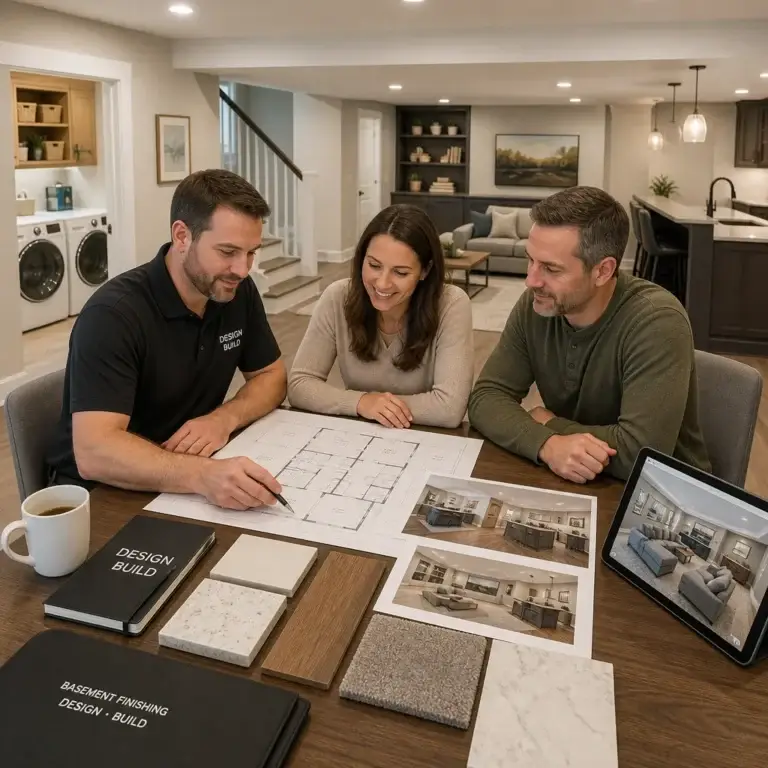
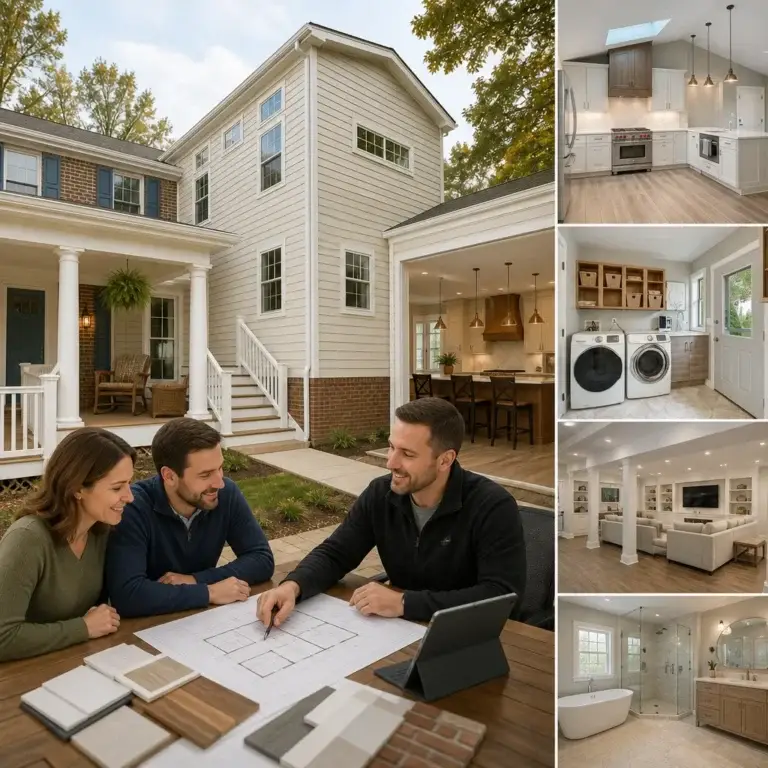
- Understand how the Design-Build model provides a single point of accountability to eliminate the stress of managing separate designers and builders.
- Master the interview process with specific questions that reveal a contractor’s communication style and commitment to your project schedule.
- Gain the confidence to navigate the 2026 Virginia building landscape with a clear checklist for vetting craftsmanship and professional reliability.
Understanding Virginia Contractor Licenses: Class A, B, and C
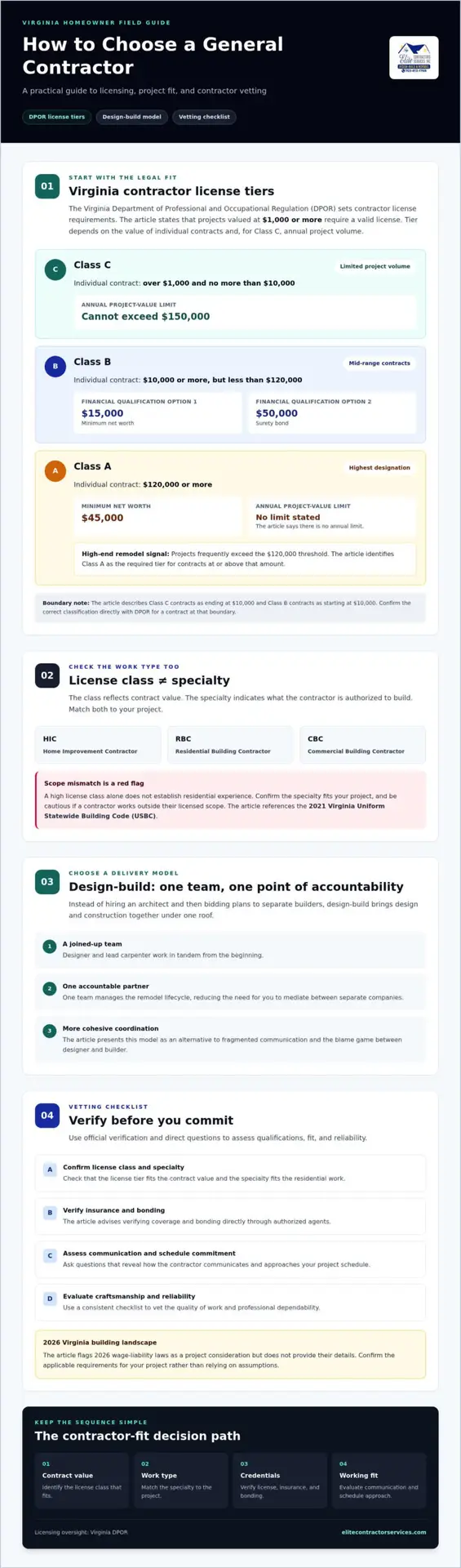
The Virginia Department of Professional and Occupational Regulation (DPOR) acts as the primary oversight body for construction professionals across the Commonwealth. Understanding these regulations is a fundamental step in learning how to choose a general contractor in Virginia. Any project valued at $1,000 or more necessitates a valid license. DPOR categorizes these licenses into three tiers based on the monetary value of individual contracts and the company’s total annual project volume. These tiers aren’t just administrative labels; they represent the legal boundaries within which a General Contractor must operate to protect your home and your investment.
- Class C: This license is for single contracts over $1,000 but no more than $10,000. The total annual value of all their projects cannot exceed $150,000.
- Class B: These contractors handle single contracts of $10,000 or more but less than $120,000. They must demonstrate a minimum net worth of $15,000 or obtain a $50,000 surety bond.
- Class A: This is the highest designation, required for single contracts of $120,000 or more. There’s no limit on the annual value of projects they can undertake.
Why Class A is the Standard for High-End Remodeling
For a comprehensive kitchen remodeling project or a large-scale renovation, costs frequently surpass the $120,000 threshold. Choosing a Class A contractor isn’t just about the budget. It’s about the financial stability and rigorous vetting required to maintain that designation. To hold a Class A license, a firm must demonstrate a minimum net worth of $45,000. This financial health indicates they have the administrative infrastructure to manage complex, high-stakes transformations without the risk of financial mismanagement mid-project. Hiring a Class B contractor for a project that clearly requires a Class A license puts your entire remodel at risk of being shut down by local authorities.
Verifying Specialty Designations (HIC and CBC)
A license class tells you the budget limit, but the “specialty” tells you what they’re actually allowed to build. Most residential projects require the Home Improvement Contractor (HIC) or Residential Building Contractor (RBC) designation. While a Commercial Building Contractor (CBC) may have a high license class, they might lack the specific experience needed for a home addition in a residential neighborhood. Always confirm that their specialty matches your project type. If you see a contractor working outside their licensed scope, it’s a major red flag regarding their professional integrity and compliance with the 2021 Virginia Uniform Statewide Building Code (USBC).
The Design-Build Advantage for Northern Virginia Homeowners
Most luxury renovations start with a fragmented approach. Homeowners often hire an architect to draw plans and then bid those plans out to various builders. This traditional method frequently results in a “blame game” where the architect blames the builder for high costs, and the builder blames the architect for impractical designs. When you’re researching how to choose a general contractor in Virginia, it’s vital to consider the project delivery model as much as the builder’s reputation. The Design-Build model offers a sophisticated alternative by consolidating design and construction under one roof.
This integrated approach provides a single point of accountability. Instead of acting as a mediator between two different companies, you partner with one team that manages the entire lifecycle of your remodel. While the Virginia Board for Contractors ensures your builder meets the state’s legal and financial minimums, the Design-Build model ensures your project remains a cohesive, stress-free experience. This collaborative relationship is the direct antidote to the logistical disruptions that often plague high-end home improvements.
Streamlining Communication from Concept to Completion
Communication is the foundation of a successful home addition. In a Design-Build partnership, your designer and lead carpenter work in tandem from day one. This synergy is particularly beneficial when dealing with the strict permitting requirements in Fairfax and Arlington counties. A unified team understands how to navigate local zoning laws and building codes without the back-and-forth delays typical of siloed firms. You can learn more about why this model is becoming the preferred choice for sophisticated homeowners in our guide on The Design-Build Advantage. If you’re beginning your search, consulting with an experienced Fairfax VA remodeling contractor can provide clarity on your specific local requirements.
Financial Predictability in Large-Scale Projects
One of the greatest fears in remodeling is the runaway budget. Design-Build firms mitigate this risk by providing transparent pricing during the initial design phase. Because the builder is involved in the design, they can provide real-time cost estimates for every aesthetic choice you make. This meticulous organizational oversight drastically reduces change orders once construction begins. You’ll enter the build phase with a firm project schedule and a clear understanding of your financial commitment. This predictability offers the mental tranquility you need when investing in a high-tier kitchen remodeling project or a whole-house transformation.
Vetting Insurance, Bonding, and Local Compliance in VA
Checking a license is only the first step in protecting your home. To truly master how to choose a general contractor in Virginia, you must evaluate the insurance and bonding that shield your assets from unforeseen liabilities. While the state mandates licensing, it does not actually require contractors to carry general liability insurance. This makes it your responsibility to ensure your builder is fully covered. A professional firm will always provide proof of coverage without hesitation, reflecting a culture of administrative clarity and organizational oversight.
General liability insurance protects your property from damage caused during construction, such as a ruptured pipe or structural mishap. Workers’ compensation, however, is even more critical. In Virginia, any business with three or more employees, including subcontractors, must carry this coverage. If an uninsured worker is injured on your property, you could be held legally and financially responsible for their medical bills. To verify these protections, request a Certificate of Insurance (COI) directly from the contractor’s insurance agent. Receiving the document from the carrier ensures the policy is active and has not been altered.
- General Liability: Look for policies with at least $1 million per occurrence.
- Workers’ Compensation: Essential for protecting you from personal injury lawsuits.
- Contractor Recovery Fund: This state-managed fund provides a safety net if you win a court judgment against a licensed contractor who cannot pay.
- Local Bonding: Jurisdictions like Alexandria and Fairfax often require additional local bonds to ensure compliance with municipal codes.
Protecting Your Property and Assets
High-end remodeling involves significant financial stakes. If a builder lacks proper coverage, a single accident could jeopardize your equity. Elite Contractor Services prioritizes meticulous documentation to eliminate this anxiety. We provide comprehensive insurance verification as part of our standard onboarding process, ensuring your project begins with a foundation of trust. This professional rigor is the direct antidote to the “contractor ghosting” and financial mismanagement that often plague the industry. You deserve the mental tranquility that comes from knowing every worker on your site is fully insured and accounted for.
Northern Virginia Permit Expertise
Building codes vary significantly between Great Falls, McLean, and Vienna. A contractor might be licensed by the state, but if they lack local experience, your project could face weeks of delays due to permit rejections. Navigating the specific requirements of the 2021 Virginia Uniform Statewide Building Code (USBC) requires a partner who works in these municipalities daily. As an experienced Fairfax VA remodeling contractor, we understand the nuances of local zoning and structural inspections. This expertise ensures your project moves smoothly through the administrative phase, preventing the logistical disruptions that often derail luxury renovations.
The Interview: Questions to Ask a General Contractor
Once you’ve verified licenses and insurance, the interview phase is where you assess a builder’s professional character. Many homeowners follow the outdated advice of simply collecting three bids. However, the lowest price often masks a lack of organizational oversight or poor communication. When evaluating how to choose a general contractor in Virginia, pay close attention to how a builder responds to your concerns. A seasoned expert acts as a consultant, projecting a tone of calm competence rather than rushing you toward a signature. You’re looking for a partner who understands the emotional stakes of a luxury remodel and is equipped to provide a smooth, predictable experience.
Don’t settle for a vague completion date. Instead, ask to see a detailed project schedule. A professional firm uses formal documentation to track milestones, from initial demolition to the final inspection of the 2021 Virginia Uniform Statewide Building Code (USBC) requirements. This transparency is the direct antidote to project delays. Additionally, ask how they manage site cleanliness in occupied homes. Meticulous contractors use HEPA filtration and daily debris removal to minimize logistical disruptions to your lifestyle. If a contractor provides vague answers or seems dismissive of your daily comfort, it’s a clear red flag.
Portfolio and Reference Verification
A builder’s portfolio should showcase actual completed projects, not generic stock photography. Look for consistency in craftsmanship across different styles. When you speak with references, ask specifically about the contractor’s ability to stay within temporal constraints. If you’re planning a Whole House Remodeling project, request contacts for similar large-scale transformations. Ask these former clients if the builder maintained their composure when unexpected structural issues arose. A reliable partner remains a steady hand throughout the entire journey.
Administrative and Legal Document Review
A comprehensive contract is the foundation of mental tranquility. It should include a detailed “Scope of Work” that leaves no room for financial mismanagement. This document must clearly define every material, fixture, and labor cost associated with the project. Ensure the agreement includes specific deadlines and a clear process for handling change orders. This level of administrative clarity protects both your assets and your vision. If you’re ready to experience this level of professional rigor, schedule a consultation with Elite Contractor Services to discuss your upcoming project. Our methodical workflow ensures your home is in expert hands from the first meeting to the final walkthrough.
Elite Contractor Services: Your Design-Build Partner in Northern VA
Selecting a partner for your home’s transformation is a significant decision that impacts your property’s value and your family’s daily life. As you finalize your research on how to choose a general contractor in Virginia, remember that technical expertise must be matched by professional reliability. At Elite Contractor Services, we serve the Northern Virginia community from McLean to Alexandria with a commitment to delivering excellence on every project. We understand that a large-scale remodel is an investment in your lifestyle, and we manage every detail to ensure results are delivered on time and within your specific financial constraints.
Our team views every project as a collaborative journey. We act as consultants who guide you through the complexities of design, permitting, and construction with calm competence. We know that living through a renovation can be stressful, so we’ve developed protocols to minimize disruption for your family. From daily site cleaning to strict organizational oversight, we prioritize your comfort while your vision comes to life. This empathetic approach is the direct antidote to the logistical chaos often associated with major home improvements.
Specialized Expertise in High-End Remodeling
We focus on complex projects that require meticulous planning and superior craftsmanship. Whether you’re interested in Kitchen Design & Remodeling or expansive Home Additions, our workflow is designed to alleviate homeowner anxiety. We use formal documentation and transparent pricing to ensure there are no surprises during the build phase. Our design-build approach provides a premium, all-in-one solution that integrates every phase of your project to eliminate the stress of managing multiple vendors. This methodical system ensures that the high standards we set during the design phase are perfectly executed during construction.
Ready to Transform Your Home?
Your home deserves the attention of a seasoned expert who understands the unique building landscape of Northern Virginia. We’re proud to serve neighbors in Tysons, Falls Church, and the surrounding areas with a focus on quality and integrity. If you’re ready to move beyond the uncertainty of traditional contracting, we invite you to schedule a consultation to discuss your vision. We’ll provide the administrative clarity and expert guidance needed to make your remodel a success. Partnering with us means choosing mental tranquility and a predictable, high-quality experience for your most valuable asset.
Your Path to a Seamless Home Transformation
Mastering how to choose a general contractor in Virginia means looking beyond the surface of a portfolio to find a partner who understands the legal and logistical landscape of the Commonwealth. You now recognize that a Class A license is the non-negotiable standard for high-end investments and that the integrated Design-Build model is the most effective way to eliminate friction between design and construction. By verifying insurance directly with agents and following a methodical interview process, you’ve taken the essential steps to protect your property and your peace of mind.
You don’t have to navigate this complex journey alone. Elite Contractor Services is a Class A licensed and insured firm specializing in high-end Northern VA remodels. Our refined Design-Build process is specifically engineered for minimal disruption, providing you with the mental tranquility you deserve during a whole-house transformation. Schedule Your Design-Build Consultation with Elite Contractor Services today to begin a collaborative partnership built on trust and administrative clarity. We’re ready to turn your vision into a predictable, high-quality reality that enhances your lifestyle for years to come.
Frequently Asked Questions
Do I really need a Class A contractor for my Virginia home remodel?
You must hire a Class A contractor for any project where the total contract value exceeds $120,000. For high-end kitchen remodels or large home additions, costs typically surpass this threshold. Choosing a Class A builder ensures your partner has the proven financial standing and rigorous experience required by the state for high-stakes transformations.
How do I check if a contractor has a valid license in Virginia?
Visit the official DPOR website and use their License Lookup tool to verify a builder’s credentials. You can search by the company name or their specific license number to confirm they’re active and in good standing. This step is a fundamental part of learning how to choose a general contractor in Virginia because it confirms their legal authority to work on your property.
What is the difference between a general contractor and a design-build firm?
A design-build firm manages both the architectural design and the actual construction under a single contract. In contrast, a traditional general contractor builds from plans you’ve already obtained from an outside architect. The design-build model provides a single point of accountability, which helps eliminate the “blame game” and reduces homeowner stress during complex projects.
What insurance should a general contractor in Northern Virginia have?
Your contractor should carry both General Liability insurance and Workers’ Compensation coverage. While the state doesn’t mandate liability insurance for licensing, a professional firm will maintain a policy of at least $1 million to protect your assets. Always request a Certificate of Insurance directly from their agent to ensure the policy is active and covers all subcontractors on your site.
Can I act as my own general contractor in Virginia?
Virginia law allows you to obtain permits as an “owner-builder” for work on your own primary residence. While this is legal, it shifts all financial and legal liability to you. You’ll be personally responsible for code compliance, site safety, and managing all trades, which can be overwhelming for most homeowners without professional construction experience.
What are the red flags when hiring a contractor in Fairfax County?
Red flags include demanding a large cash deposit upfront, refusing to provide a written contract, or suggesting you work without permits. Be cautious of builders who lack a Class A license for major renovations or those who cannot provide local references in areas like McLean or Great Falls. A lack of administrative clarity is often a precursor to project delays or poor craftsmanship.
How much should I pay a contractor upfront in Virginia?
A standard down payment typically ranges between 10% and 33% of the total project cost. Avoid any builder who demands more than half of the budget before work begins or materials are delivered to your home. A professional firm uses a structured payment schedule tied to specific project milestones to maintain financial transparency and build trust throughout the process.
What happens if my contractor doesn’t get the required permits?
If work proceeds without permits, you face significant risks including stop-work order from local authorities or fines. You might even be required to tear down completed work to allow for late inspections. Ensuring your builder follows the 2021 Virginia Uniform Statewide Building Code is essential for your long term property value and safety. Understanding these requirements is a key part of how to choose a general contractor in Virginia who respects local laws.