What if you could double your living space and add luxury functionality without the stress of a remodeling nightmare? You’ve probably spent nights worrying about whether your current foundation can support another level or if strict local zoning laws will halt your progress. It’s natural to feel overwhelmed by the second story addition cost Virginia projects require, especially when you want a high-end result that looks original to the house rather than a clunky afterthought.
We understand that peace of mind is just as important as the final floor plan. This guide provides a clear, fixed-price roadmap to help you plan a 2026 expansion with total confidence. You’ll learn about the structural engineering requirements for Northern Virginia homes built in the 1980s and 1990s, the impact of local height restrictions, and how choosing the right design-build partner ensures your project stays on time and on budget.
Key Takeaways
- Understand why building up is the premier solution for expanding your home’s footprint in space-limited areas like Arlington and Alexandria.
- Get an accurate breakdown of the second story addition cost Virginia residents face, categorized by mid-range, high-end, and luxury custom investment tiers.
- Uncover the hidden structural and aesthetic factors, such as foundation reinforcement and exterior matching, that impact your total project budget.
- Learn how to navigate specific zoning and permit requirements in Fairfax and Arlington to ensure a seamless approval process for your vertical expansion.
- Discover how a unified design-build approach provides a stress-free experience by keeping your vision and budget perfectly aligned from the start.
What Is a Second Story Addition and Why Build Up in Northern VA?
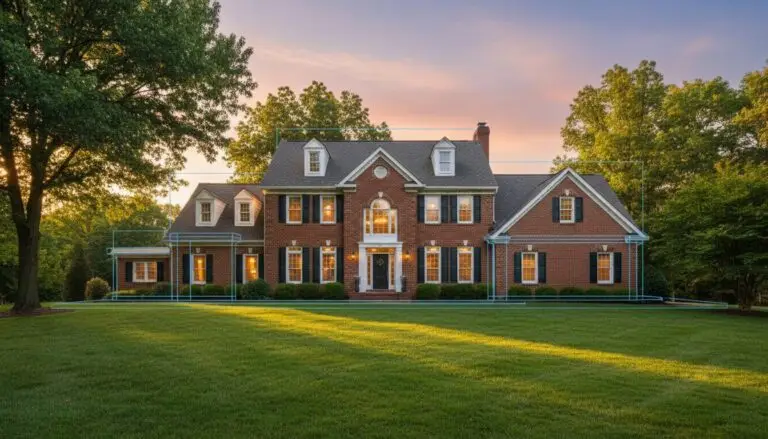
A second-story addition is a vertical expansion that adds a full or partial new level to an existing home. In Northern Virginia, this often involves transforming a traditional rambler or ranch-style house into a spacious multi-level residence. If you are researching what is a second story addition in technical terms, it is the process of reinforcing a ground-floor structure to support the weight of an entirely new floor above it.
In land-constrained areas like Arlington or Alexandria, homeowners frequently face the “Build Up vs. Build Out” dilemma. Building out requires a large enough lot to accommodate a wider footprint while still adhering to local zoning setbacks. Many Northern Virginia lots don’t have the luxury of extra space. Building up allows you to double your square footage without sacrificing a single inch of your backyard. This vertical approach is a primary factor in calculating the second story addition cost Virginia homeowners plan for in 2026, as it maximizes the utility of a limited land parcel.
The return on investment for these projects remains strong in high-value markets like McLean and Great Falls. In these neighborhoods, the price of land often exceeds the value of the original structure. By adding a second level, you align your home’s size and luxury features with the surrounding property values. It’s a strategic way to gain the space of a new mansion without the expense of purchasing a new lot in a competitive market.
Full vs. Partial Second Story Expansions
A full-footprint addition involves adding a new level across the entire existing house. This “pop-top” method is often the most efficient way to gain three or four bedrooms and multiple bathrooms at once. The initial engineering requirements for a full lift are extensive. Professionals must verify that the current foundation and wall studs can handle the increased load. We focus on ensuring the structural integrity is flawless before any lumber arrives on-site.
Partial additions are more surgical. You might choose to add a suite over a garage or a new wing over the kitchen. While the footprint is smaller, partial additions often require more complex architectural blending to ensure the new roofline looks original to the home. These projects are ideal for homeowners who only need a specific dedicated space, such as a primary suite or a home office, rather than a total home transformation.
The Value of Verticality in the 2026 Virginia Market
In the 2026 real estate climate, land costs in Northern Virginia have made vertical building the most financially logical choice for growing families. You don’t have to leave your current school district or say goodbye to neighbors you’ve known for years. Keeping your original location while upgrading your home’s capacity provides a massive lifestyle benefit that moving simply can’t match.
Property taxes will likely adjust based on the increased assessed value, but the long-term resale value typically offsets this change. A five-bedroom home in a prime Northern Virginia zip code is a highly liquid asset. When you evaluate the second story addition cost Virginia contractors provide, consider it an investment in both your current quality of life and your future equity. We act as your partner to ensure the project stays on track and delivers the high-end results your neighborhood demands.
Primary Factors Driving Second Story Addition Cost in Virginia
Calculating the second story addition cost Virginia homeowners should expect involves more than just estimating price per square foot. In the Northern Virginia corridor, where architectural styles range from 1920s colonials to modern custom builds, the final price tag is often dictated by what lies behind your drywall. Your home is a complex ecosystem, and adding a level requires a holistic approach to ensure the new structure remains safe and functional for decades.
Structural Integrity and Foundation Reinforcement
Your foundation is the silent hero of your home. Before any lumber arrives, a structural engineer must evaluate if your existing footings can support the 30 to 40 pounds per square foot of a new level. Many older homes in Alexandria or Arlington were built with foundations intended only for a single story. If the soil or concrete falls short, we perform structural surgery. This often involves underpinning, where we pour new concrete beneath existing footings, or installing steel I-beams to transfer the load. These hidden reinforcements are vital for preventing future settling or wall cracks.
Staircase Integration and Main Floor Disruption
Finding the perfect spot for a new staircase is one of the biggest design puzzles in a vertical expansion. A standard staircase consumes about 80 to 100 square feet of space. This footprint often triggers a partial remodel of your first floor as we reconfigure rooms to maintain a logical flow. You aren’t just building up; you’re opening up the floor below. This process involves rerouting existing plumbing stacks and electrical lines that currently run through the ceiling where the new stairs will go. Working with an experienced design-build partner ensures these disruptions are managed efficiently to minimize your daily stress.
Mechanical, Electrical, and Plumbing (MEP) Upgrades
Your current systems likely aren’t ready for a 50% increase in living space. A new second story almost always requires a dedicated HVAC zone or a significantly larger unit to maintain comfort in Virginia’s humid summers. Electrical panels must also be scrutinized. To comply with 2026 Virginia building codes, many older homes require a heavy-up to 200 or 400-amp service. A licensed professional must perform a precise load calculation to ensure the existing plumbing stacks can handle the increased drainage requirements of the new upper level.
Exterior Matching and Luxury Finishes
Northern Virginia is known for its high-end aesthetic standards. In historic neighborhoods, matching 80-year-old brick or specific siding profiles is significantly more expensive than using standard modern materials. Homeowners in the Fairfax and Loudoun areas typically opt for luxury finishes like hardwood flooring and custom cabinetry to maintain the home’s resale value. When you consider the second story addition cost Virginia projects entail, remember that high-quality exterior matching ensures your addition looks like an original part of the home rather than an afterthought.
Investment Scenarios: Understanding the Cost Ranges
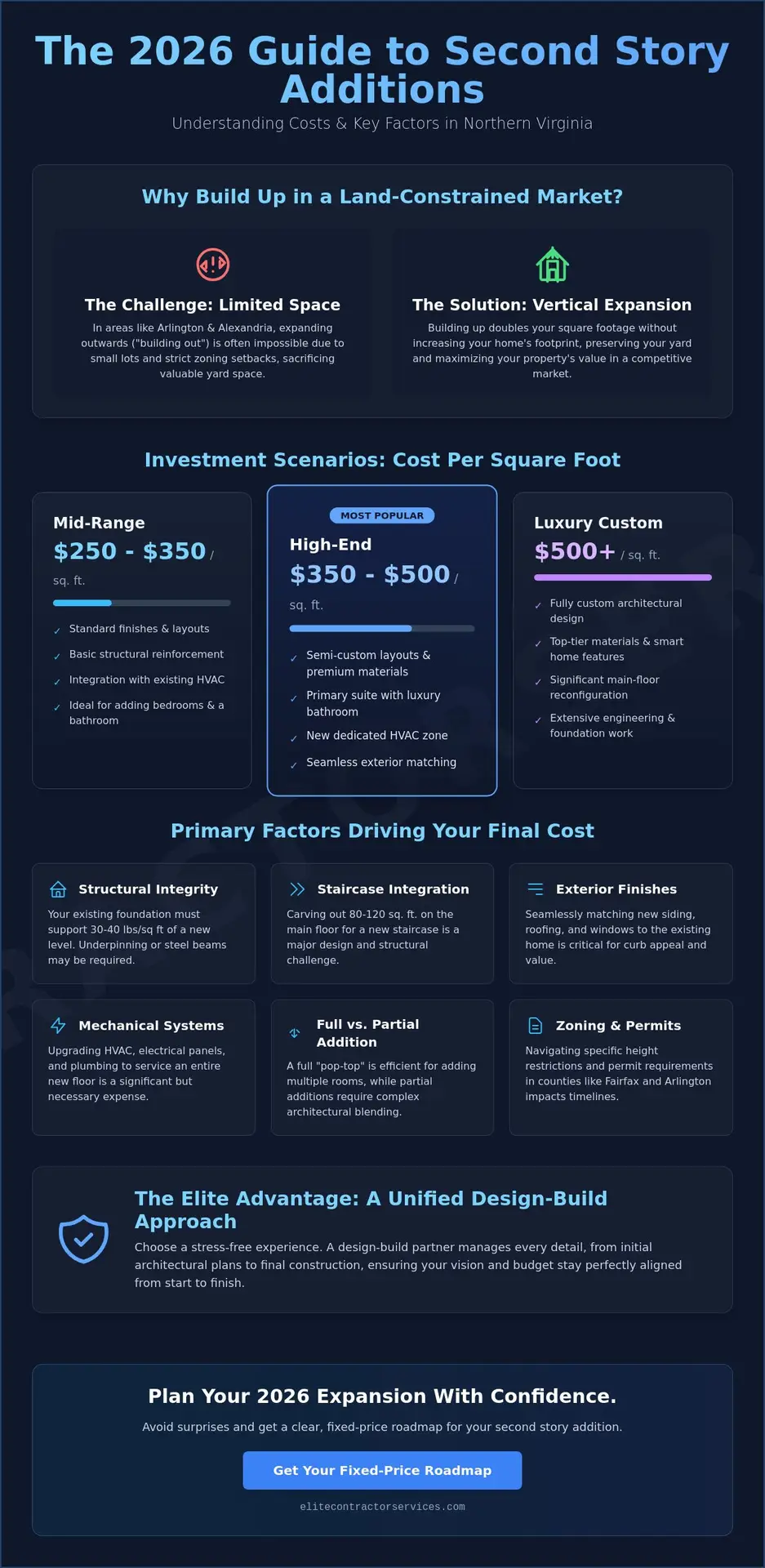
You won’t find accuracy in national “cost vs. value” reports when planning a project in Northern Virginia. Local labor rates and permit fees in Fairfax County or Arlington often sit 20% to 35% higher than the national mean. Your second story addition cost Virginia depends heavily on three specific investment tiers:
- Mid-Range: These projects usually involve adding two basic bedrooms and a shared hallway bath using standard materials and fixtures.
- High-End: This tier introduces a primary suite with a large walk-in closet, premium bathroom tile, and upgraded lighting.
- Luxury Custom: These are complete architectural transformations. They include structural re-engineering, custom millwork, and high-performance HVAC systems designed for the new footprint.
Choosing a design-build partner provides cost certainty early in the journey. Instead of getting a low-ball estimate from a builder and a separate bill from an architect, a unified team calculates structural requirements and material costs simultaneously. This prevents the remodeling nightmares of mid-project budget spikes. It’s the most reliable way to ensure the final contract reflects the actual scope of work.
The Master Suite Oasis vs. Multi-Bedroom Additions
Adding “dry rooms” like bedrooms or home offices is relatively straightforward. However, a master suite increases the price per square foot due to plumbing density. A luxury bathroom requires dedicated hot water lines, complex drainage, and professional waterproofing. High-end features like steam showers or heated floors require specialized electrical work. According to 2025 industry data, a primary suite addition can cost 40% more than a standard three-bedroom expansion because of these intensive “wet room” requirements. Custom walk-in closets with integrated cabinetry also add to the specialized labor costs in this category.
Exterior Blending and Architectural Harmony
A second story shouldn’t look like an afterthought. Achieving a flawless look requires architectural harmony. If your home features historic brick or custom-milled cedar siding, sourcing matching materials adds to the timeline and budget. Most homeowners choose to replace the entire roof rather than patching the old one. This ensures visual consistency and prevents leaks at the transition points between the old and new structures. Matching window profiles across the entire facade is another critical step to maintain curb appeal and protect your home’s resale value. Using second story addition cost Virginia as a benchmark, remember that exterior finishes often account for 15% to 25% of the total investment.
Navigating Local Northern Virginia Zoning and Permits
“Will the county even let me build this?” This is the most common concern we hear from homeowners in Northern Virginia. Zoning laws in our region are notoriously strict and vary significantly between jurisdictions. Whether you live in Fairfax County, Arlington, or the City of Alexandria, local codes dictate exactly how high and how wide your home can grow. Understanding these regulations is a critical step because they directly influence the total second story addition cost Virginia residents must plan for during the design phase.
Height Restrictions and Setbacks in Arlington and Fairfax
Arlington and Fairfax counties use a specific “average grade” calculation to determine your home’s maximum allowable height. This isn’t a simple measurement from the sidewalk. It’s a formula based on the elevation of the ground at various points around your foundation. If your lot has a steep slope, your vertical limit might be lower than you expect. Setback requirements often create a “wedding cake” effect. This happens when the second story must be smaller than the first floor to stay within the legal building envelope. Additionally, Arlington County’s tree canopy requirements can be a major hurdle. You may be required to preserve or plant trees to cover at least 20% of your lot area before receiving a final certificate of occupancy.
The Permitting Timeline and Site Inspections
Patience is a requirement for any major vertical expansion. In 2026, the typical timeline for permit approval in Northern Virginia ranges from 90 to 180 days. This duration fluctuates based on the current backlog at the Fairfax County Land Development Services or the Arlington Department of Community Planning. Once construction starts, your project must pass a rigid sequence of inspections. These include checks for the foundation, structural framing, electrical and plumbing rough-ins, and a final safety inspection. A clear, detailed contract with a licensed builder ensures that every structural element meets the 2021 International Residential Code (IRC) standards currently enforced across the state. These regulatory steps are necessary to protect your investment and ensure the second story addition cost Virginia homeowners pay results in a safe, legal structure.
Choosing a design-build partner turns this bureaucratic maze into a stress-free process. We handle the zoning appeals, the site plan submissions, and the direct communication with county officials. This partnership ensures your vision stays on track while we manage the paperwork and technical requirements on your behalf. We focus on the logistics so you can focus on your future home.
Ready to see if your property is eligible for a vertical expansion? Schedule a professional site evaluation with our expert team today.
The Elite Advantage: Why Design-Build Is the Logical Choice
Adding a level to your home is a major investment. The traditional “bid-build” method often turns into a financial trap. You hire an architect, pay for blueprints, and then discover the construction costs are twice your budget. This is the “remodeling nightmare” we help you skip. Our design-build model puts the architect and builder on the same team from day one. It’s the most logical way to control your second story addition cost Virginia while ensuring the finished product matches your vision.
By integrating every phase of the project, we eliminate the friction between creative ideas and structural reality. You don’t have to act as the middleman between a designer and a contractor. We take full responsibility for the project’s success. This streamlined approach saves time, reduces stress, and keeps your project moving forward without the typical delays found in fragmented construction models.
Eliminating the Gap Between Design and Budget
Traditional “bid-build” projects often face 25% to 40% budget discrepancies because the designer isn’t tracking the current market price of steel, lumber, or specialized labor. We use real-time estimating throughout the design phase. This means as we plan your new master suite or home office, we’re checking the actual cost of every beam and window. This collaborative spirit is why Elite is recognized among the top design-build firms near me. We ensure your dream doesn’t outpace your bank account. If a specific structural choice pushes your second story addition cost Virginia too high, we adjust the design immediately rather than waiting for a shocking bid months later.
Managing the Stress of a Vertical Build
A vertical build is naturally invasive. We understand the anxiety that comes with having your roof removed and your home exposed to the elements. Our signature process includes daily site cleanups and rigorous weatherproofing to keep your existing living space secure and dry. We prioritize a clean worksite to minimize the impact on your daily routine. Many of our clients are able to remain in their homes during parts of the construction because of our meticulous project management.
The ultimate peace of mind comes from our fixed-price contract. This document is your shield against the “hidden costs” that plague the industry. We’ve built our reputation on being a dependable partner who delivers on time and on budget. We don’t believe in surprise fees or vague estimates. You’ll know the final number before we ever swing a hammer. Contact us today to schedule a consultation and let’s discuss how to bring your Northern Virginia home vision to life with professional precision.
Take the Next Step Toward Your Dream Home
Expanding vertically is a smart way to double your living space while preserving your outdoor landscape. Navigating the second story addition cost Virginia homeowners expect in 2026 requires a deep understanding of local building codes and structural requirements. Our team serves as your dedicated partner, managing everything from initial architectural concepts to the final walkthrough. As specialists in Northern Virginia high-end remodeling, we focus on delivering a stress-free experience that avoids the typical pitfalls of major construction projects. We are fully licensed and insured in Virginia. Our award-winning design-build process has earned recognition on platforms like Houzz and Angie’s List. This integrated approach ensures your vision is executed with flawless precision and meticulous attention to detail. You don’t have to settle for a home that no longer fits your lifestyle. We handle the complexities of zoning and engineering while you focus on the stunning results. We look forward to helping you transform your current house into a masterpiece of functionality and style.
Schedule Your Free Design-Build Consultation Today
Frequently Asked Questions
Is a second-story addition cheaper than building out into the yard?
Building up is typically 15 percent to 20 percent more expensive than building out per square foot because it requires structural reinforcement of the first floor and a complete roof replacement. While a lateral addition only requires a new foundation, a vertical expansion involves complex engineering to ensure the existing walls can support the new weight. It’s the best choice for small Northern Virginia lots where yard space is limited.
How long does a second-story addition typically take in Northern Virginia?
You should expect the entire process to take 6 to 9 months from the initial design phase to the final inspection. The construction phase usually lasts 4 to 6 months, while the permitting process in jurisdictions like Fairfax County can take 4 to 8 weeks. We manage every detail of this timeline to ensure your project stays on track and meets our high standards for efficiency.
Do I have to move out of my house during a second-story addition?
Yes, you’ll need to vacate the home for 3 to 5 months during the primary construction phase. Since we must remove the existing roof, your home’s interior is exposed to the elements and becomes a major construction site. Moving out ensures your family’s safety and allows our team to work faster, providing you with a stress-free experience and a higher quality result.
Will my existing foundation support a second floor?
A structural engineer must evaluate your home’s footings to determine if they can handle the increased vertical load. Approximately 30 percent of older homes in the region require foundation reinforcement, such as adding helical piers or thickening existing footings. We prioritize this assessment early in the design-build process to prevent any “remodeling nightmares” or unexpected structural failures down the road.
What is the most expensive part of a second-story addition?
Structural framing and the new roof system represent the largest portion of your second story addition cost Virginia. These components are vital for the integrity of your dream home and require precision engineering. Other high-cost factors include the installation of a new HVAC system to service the additional square footage and the staircase required to connect the two levels seamlessly.
Are there specific height limits for homes in Arlington or Fairfax County?
Arlington County typically limits residential building height to 35 feet, while Fairfax County regulations often allow up to 35 or 40 feet depending on your specific zoning district. Our team reviews the most current 2026 zoning ordinances for your specific address during the planning stage. This ensures your new addition complies with all local height and setback requirements before we ever break ground.
How does a second-story addition affect my property taxes in Virginia?
Your property taxes will increase because the local assessor will update your home’s fair market value based on the added square footage and improved features. In Virginia, tax rates are applied per $100 of the assessed value. While your annual tax bill will be higher, the long-term equity gained from a high-end addition often far outweighs the incremental increase in your yearly tax obligation.