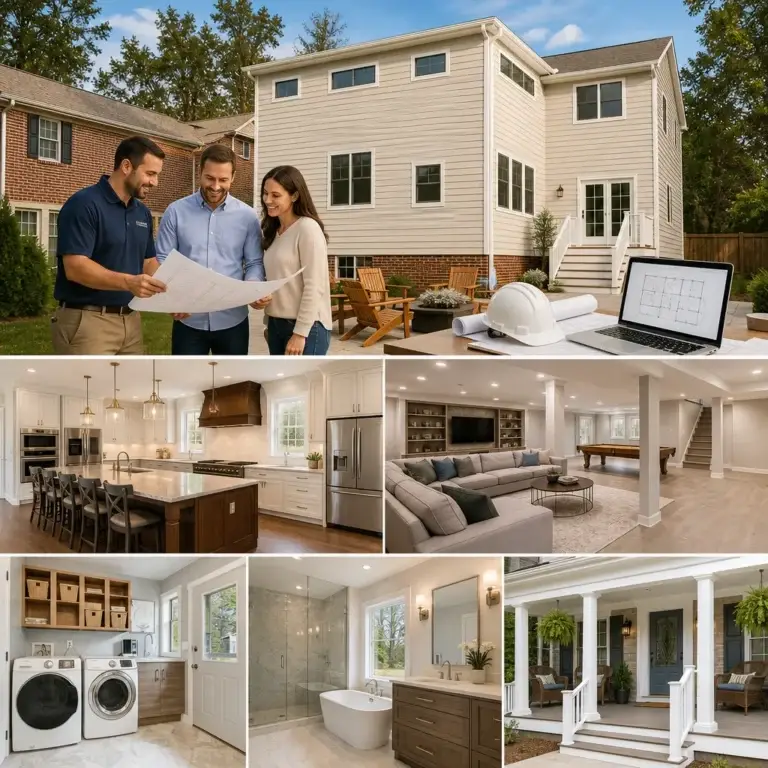
Last Tuesday, a homeowner in Alexandria realized their dream of a chef-inspired kitchen was exactly three feet short of reality. It’s a common story across Northern Virginia, where the historic charm of our neighborhoods often clashes with the needs of a modern family. You likely feel that same tension every time you squeeze into a cramped bathroom or realize your floor plan hasn’t been updated since 1985. Deciding between a bump out addition vs full addition is the first step toward solving these space issues, but the fear of a "remodeling nightmare" or getting lost in Arlington’s complex setback laws often keeps these projects on the shelf.
You deserve a partner who understands that a successful project isn’t just about hammers and nails; it’s about protecting your investment and your peace of mind. In this guide, you’ll discover the critical differences in cost, square footage, and local NoVA zoning requirements. We’ll provide the clarity you need to choose the perfect expansion for your home, ensuring you increase your property value while enjoying a stress-free process from start to finish.
Key Takeaways
- Understand the fundamental differences between a bump out addition vs full addition to determine which “micro-addition” or major expansion best suits your home’s architectural footprint.
- Evaluate the investment required for each project type, comparing the shorter timelines of a bump-out against the long-term value and ROI of a comprehensive full addition.
- Navigate the complex zoning laws and setback requirements specific to Alexandria and Fairfax County to ensure your expansion meets local permitting standards flawlessly.
- Discover how a strategic “micro-addition” can transform a cramped kitchen into a high-end culinary space with room for a luxury island and improved flow.
- Learn how the design-build model provides a stress-free path to architectural continuity, ensuring your new space looks original to your Northern Virginia home.
Table of Contents
Defining the Scope: Bump-Out vs. Full Addition in Northern Virginia Homes
Homeowners in Northern Virginia often face a common dilemma: they love their neighborhood but have outgrown their square footage. Deciding between a bump out addition vs full addition is the first step toward reclaiming your home’s functionality. While both projects fall under the broad category of home improvement, they serve different needs and involve distinct engineering requirements. We see ourselves as your partner in this process, ensuring your vision aligns with the structural realities of your property and local zoning laws.
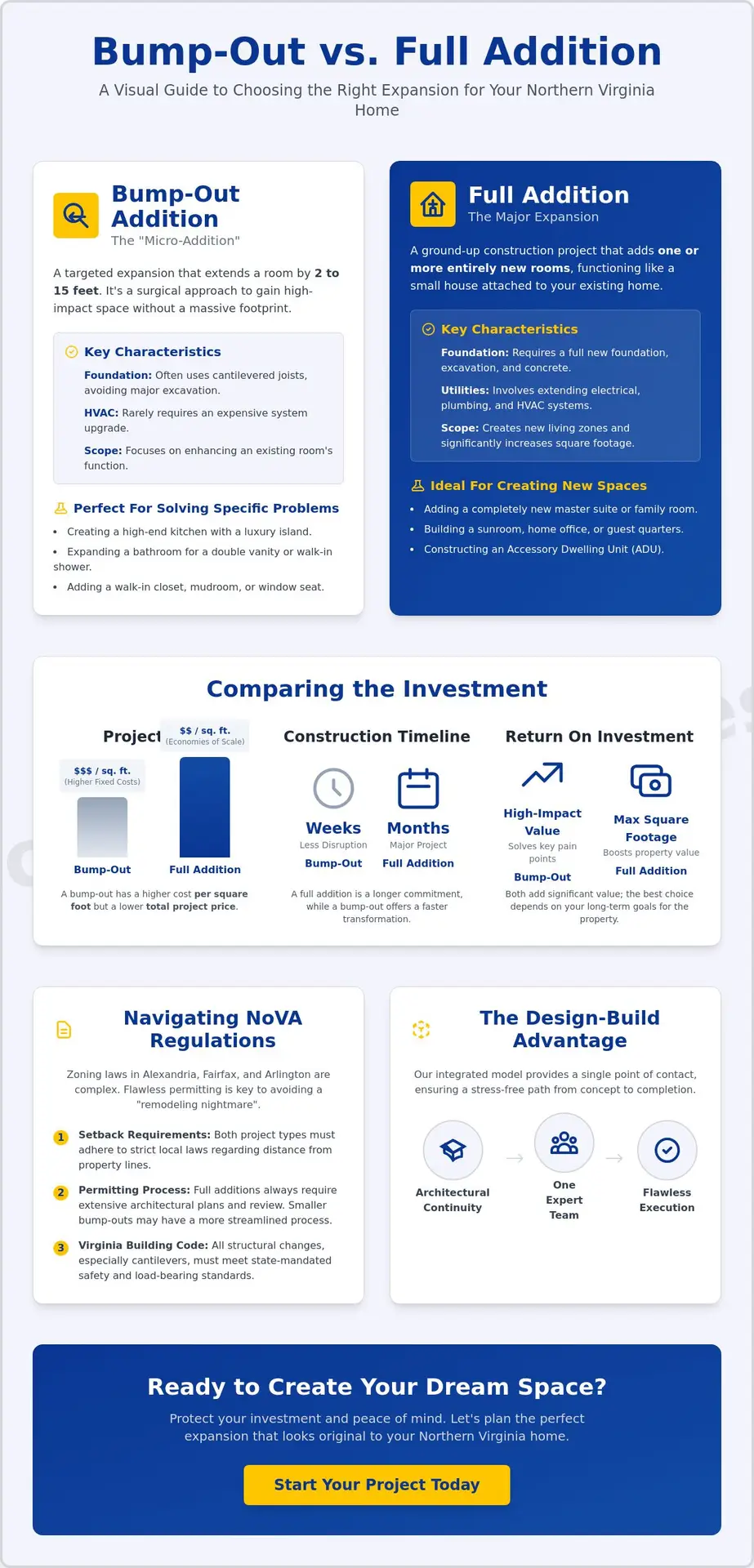
In high-density areas like Arlington or Alexandria, where lot lines are tight, the "micro-addition" has become a preferred solution for those who want to avoid a "remodeling nightmare." A bump-out typically extends a room by just 2 to 15 feet. It sounds small, but adding 3 feet to a cramped galley kitchen can create space for a professional-grade island and a breakfast bar. This surgical approach to remodeling allows you to gain high-impact space without the massive footprint of a traditional build.
Structural differences define these two paths. A full addition requires a new foundation, often involving excavation and concrete pouring. Conversely, many smaller bump-outs use cantilevered floor joists. This means the new floor hangs off the existing structure, supported by the strength of the home’s original frame rather than a new ground-level foundation. This reduces the need for heavy machinery on your lawn and speeds up the construction timeline.
Executing these complex structural renovations requires a deep understanding of load-bearing mechanics, a specialty found in custom home construction experts like PRO Construction.
What is a House Bump-Out?
A house bump-out is a targeted expansion designed to solve a specific layout problem. These projects usually range from 2 to 15 feet in depth. Because they don’t add enough volume to drastically change the home’s climate, they rarely require an upgraded HVAC system. This keeps the project focused and minimizes disruption. Common applications for this bump out addition vs full addition choice include:
-
Expanding a master bathroom to include a double vanity and walk-in shower.
-
Creating a walk-in closet in a historic Alexandria townhouse.
-
Adding a window seat or a small mudroom to a foyer.
The Full Room Addition Approach
A full room addition is a ground-up construction project. It’s essentially building a small house attached to your existing home. This route requires a full foundation, new roofing, and the extension of electrical and plumbing lines. It’s the right choice for homeowners needing a completely new master suite, a sunroom, or an Accessory Dwelling Unit (ADU). While the scope is larger, it offers the highest return on square footage for families who need entirely new living zones rather than just extra breathing room.
Comparing the Investment: Cost, Timeline, and ROI Factors
Deciding between a bump out addition vs full addition often depends on the balance between your immediate budget and your long term goals for the property. While a full addition creates entirely new rooms, a bump out focuses on expanding existing spaces like a cramped kitchen or a small master bathroom. Both paths require a clear understanding of the financial and logistical commitment involved before breaking ground.
Cost Comparison: Budgeting for Your Expansion
A bump out often carries a higher cost per square foot than a full addition. This happens because the fixed expenses, such as structural engineering and specialized labor, are spread over a smaller area. However, the total project price is usually lower because you aren’t pouring a massive new foundation. For many Northern Virginia homeowners, a cantilevered bump out avoids the expense of excavation entirely. In luxury markets like McLean and Great Falls, the investment shifts toward high end finishes and custom cabinetry that match the home’s existing elegance.
Hidden costs can arise if your expansion requires moving a main electrical panel or a HVAC trunk line. It’s vital to follow Virginia’s building code for additions to ensure all structural changes meet safety standards. These regulations dictate how much weight a cantilever can support, which directly impacts your engineering fees and material choices.
Construction Timeline and Lifestyle Disruption
Timeline expectations vary significantly between these two paths. A bump out might take 4 to 8 weeks to reach the finishing stage. Because the footprint is small, we often keep your kitchen functional for a larger portion of the project. A full addition is a different beast. From site preparation and foundation pouring to the final inspection, these projects typically span 3 to 6 months. This longer duration means more time living in a construction zone and potentially more disruption to your daily routine.
Elite Contractor Services prioritizes a clean worksite to minimize the remodeling nightmares people often fear. We act as your project partner, ensuring the schedule stays on track so you can enjoy your new space sooner. If you’re weighing a bump out addition vs full addition, consider how long you can tolerate a crew in your home. For a detailed look at how we manage these projects, you can schedule a free estimate with our team today.
In the competitive Northern Virginia real estate market, resale value is a major factor. A full addition that adds a bedroom and a bathroom can increase home value by 10% to 20% based on recent regional market trends. A bump out provides a different kind of value by fixing a flaw in the home’s layout, such as a tiny kitchen that would otherwise deter buyers. Both options offer strong returns, but the best choice depends on whether your home lacks total square footage or just better functionality.
Navigating Northern Virginia Zoning and Setbacks
Your property line is the ultimate decider in the debate of a bump out addition vs full addition. In Northern Virginia, local ordinances act as invisible walls that dictate exactly how far your home can expand. While you might envision a sprawling 20-foot family room extension, the zoning office in your specific municipality may only permit 5 or 10 feet of growth before you hit a "setback" limit. Adhering to these local codes ensures you maximize the return on investment for home additions by avoiding legal hurdles or fines during a future resale.
Permitting requirements vary significantly across the region. In Alexandria, for instance, projects often face rigorous aesthetic reviews, especially if the property sits within a historic district like Old Town. The Board of Architectural Review (BAR) must approve everything from window materials to roof pitches. Conversely, Fairfax County focuses heavily on technical compliance with the 2026 building codes, which emphasize energy efficiency and structural load-bearing capacities for multi-story additions. A design-build partner manages this entire "red tape" ecosystem, securing stamps from civil engineers and city planners so you don’t have to spend your afternoons at the county courthouse.
Understanding Setback Requirements
Setbacks are the mandatory distances between your home and your property lines. In Arlington, where 5,000-square-foot lots are common, these restrictions are particularly tight. If your lot is only 50 feet wide and requires 10-foot side setbacks, your "buildable envelope" is quite narrow. This often makes a massive full addition impossible, leaving a cantilevered bump out as the only legal way to add square footage. You can apply for a variance to bypass these rules, but boards rarely grant them for personal convenience; you typically must prove that the lot’s unique topography creates an "undue hardship."
Local Permit Processes in NoVA
The 2026 Fairfax County building codes have introduced stricter requirements for moisture barriers and insulation in new crawlspaces and foundations. Navigating these updates requires specialized expertise found in design-build firms near me. Professional project management is essential because a single missing document can delay a project by 4 to 8 weeks. Your contractor should handle:
-
Plat Surveys: Confirming exact property boundaries before digging.
-
Historic Reviews: Ensuring materials match Old Town or local historic standards.
-
Utility Easements: Checking for underground power or water lines that block expansion.
Choosing between a bump out addition vs full addition often comes down to what the map allows. By working within these constraints from day one, you ensure your project stays on schedule and remains fully compliant with Virginia law.
Practical Applications: When a Bump-Out Solves the Problem
In Northern Virginia neighborhoods like Arlington and Reston, lot sizes often limit how far you can expand your footprint. A bump-out serves as a surgical solution rather than a total overhaul. While the debate of a bump out addition vs full addition usually focuses on cost, the real value lies in solving specific layout bottlenecks. We’ve seen homeowners gain massive functionality by adding as little as 35 square feet to a strategic area of the home.
These micro-expansions are particularly effective for older homes built in the 1970s or 1980s. These properties often have "good bones" but lack the open-concept flow modern families crave. By extending a wall by just 3 to 4 feet, you can transform a cramped room into a high-utility space without the massive overhead of a multi-story project.
The Kitchen Bump-Out
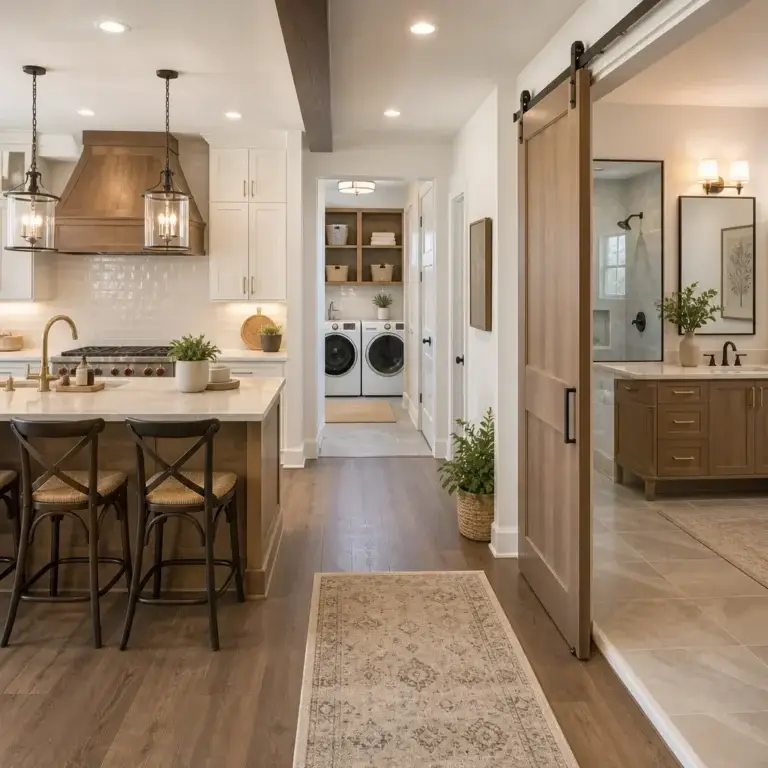
Kitchens are the most common candidates for this type of work. Adding 3 extra feet of depth along one exterior wall can provide enough clearance for a professional-grade range and a walk-in pantry. It’s often the difference between a cramped galley and a kitchen that accommodates a luxury quartz island. We focus on integrating existing cabinetry with the new space so the transition is seamless; you don’t want the addition to look like an afterthought.
The kitchen’s Golden Triangle efficiency improves significantly when a bump-out creates the necessary clearance for a central island without obstructing the path between the sink, refrigerator, and stove.
The Bathroom and Laundry Room Expansion
Small bathrooms are a staple of Northern Virginia real estate. A bump-out allows you to trade a standard tub-shower combo for a freestanding soaking tub and a separate glass-enclosed shower. It also provides the width needed for a double vanity, which is a top priority for 82% of couples during a remodel. Beyond the master suite, these additions can solve logistical headaches in the mudroom or laundry area.
We often use these expansions to repurpose dead space for high-end basement finishing access, such as widening a staircase or adding a dedicated laundry chute. These small additions provide the highest daily lifestyle ROI because they remove friction from your morning routine. When weighing a bump out addition vs full addition, consider that the smaller option keeps your backyard intact while still delivering that "spa-like" retreat feel in the primary bath.
Master Bedroom Nooks
A 4-foot extension in a master bedroom creates a dedicated zone for a home office or a sun-drenched seating area. In a 2023 Fairfax project, this simple change allowed a homeowner to move their desk out of the sleeping area, effectively creating a "room within a room." It’s a cost-effective way to add square footage where you spend the most time.
Ready to see how a few extra feet can change your home’s entire dynamic? Schedule your design consultation with Elite Contractor Services today.
The Design-Build Advantage: Flawless Execution
Deciding between a bump out addition vs full addition is a major milestone for any homeowner. However, the success of your project depends entirely on how those plans are executed. At Elite Contractor Services, we utilize a design-build model because it offers a single point of accountability. This approach eliminates the common friction between architects and builders, ensuring that the vision you approve during the design phase is exactly what our craftsmen deliver. By integrating every phase of the project, we prevent the "remodeling nightmares" that often occur when communication breaks down between separate entities.
Our process is built on calm competence and meticulous planning. We provide a detailed scope of work and a clear contract before any hammers swing. This transparency is how we guarantee that projects stay on time and on budget. You don’t have to worry about surprise costs or mid-project delays. We handle the complex permitting requirements of Northern Virginia jurisdictions, from Fairfax County to Arlington, so you can focus on the excitement of your home’s transformation.
Architectural Integration and Style
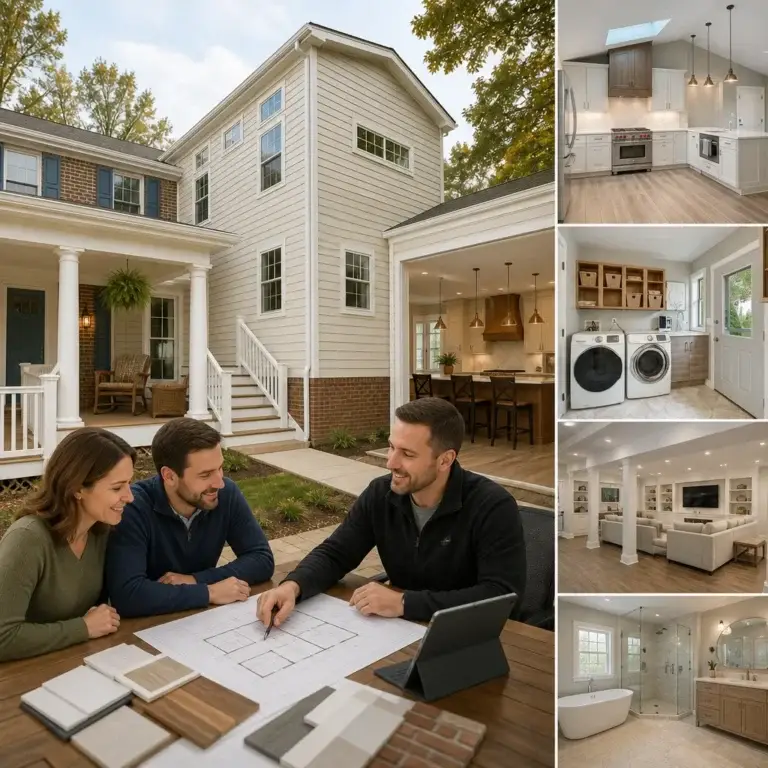
In Northern Virginia, many homes possess a specific historic character or architectural style that defines the neighborhood. Whether you live in a 1940s colonial or a modern craftsman, our goal is to make the new space look original to the structure. We don’t just match siding; we source specific brickwork and roofline materials to ensure 100% architectural continuity. Inside your home, we focus on an invisible transition. We align floor levels perfectly and replicate existing trim profiles, ensuring the flow between the old and new sections is seamless. Our high-end finishes and attention to detail maintain the "Elite" standard that our clients expect.
Your Next Steps: Planning Your Home Transformation
The journey to a more spacious, elegant home begins with a professional site evaluation. Our expert team visits your property to assess the structural feasibility of your ideas and review local zoning laws. During your initial design consultation, we’ll listen to your needs and help you weigh the benefits of a bump out addition vs full addition based on your specific goals. We pride ourselves on being a partner in your project, providing the reassurance and expertise you need to move forward with confidence. Start your transformation today by contacting us for a consultation. We’re ready to help you create the dream home you’ve always envisioned.
-
Site Evaluation: We analyze your property’s footprint and structural integrity.
-
Design Consultation: We translate your vision into functional, beautiful floor plans.
-
Seamless Project Management: You get a dedicated point of contact from start to finish.
-
Quality Assurance: Every detail is inspected to ensure it meets our rigorous standards.
By adhering to the quality benchmarks set by industry leaders like Exterior Specialist LLC, we ensure that your home improvement project is both beautiful and structurally sound.
Transform Your Northern Virginia Vision Into Reality
Deciding between a bump out addition vs full addition depends on your specific goals for space and square footage. A bump out offers a targeted solution to expand a kitchen or bathroom by just a few feet without the complexity of a full foundation overhaul. If you need entirely new rooms to accommodate a growing family, a full addition provides the significant space required to boost your home’s long-term market value. Navigating the strict zoning laws and historical setbacks in Alexandria and Arlington requires a partner who understands the local landscape inside and out.
Elite Contractor Services brings a specialized focus to Alexandria and Arlington historic homes, ensuring every detail respects the original architecture while adding modern functionality. We are A+ Rated by local NoVA homeowners because we prioritize clear communication and a stress-free process. You can count on our guaranteed on-time and on-budget delivery to eliminate the typical remodeling nightmares. Your dream home is within reach when you have the right experts by your side.
Schedule your free home addition consultation with Northern Virginia’s elite design-build team today!
We’re ready to help you build a home you’ll love for years to come.
Frequently Asked Questions
Do I need a foundation for a bump-out addition?
Most bump-out additions require a foundation to ensure structural integrity and compliance with Northern Virginia building codes. While a small 2-foot extension can sometimes be cantilevered off the existing floor joists, anything larger typically needs a concrete footer or a crawlspace. Our team evaluates your home’s structure to determine the safest path for your bump out addition vs full addition project, ensuring the new space won’t settle or pull away from the main house over time.
How much does a 2-foot bump-out cost in Northern Virginia?
Pricing for a 2-foot bump-out depends on the room’s utility and the materials required for the exterior. The 2023 Remodeling Cost vs. Value report for the Washington, D.C. area shows that even small additions involve significant fixed costs for roofing, siding, and structural headers. We provide a detailed scope of work and a clear contract during our consultation process. This ensures you receive a precise quote that reflects your specific vision without the stress of hidden fees.
Will a bump-out addition increase my property taxes in Fairfax County?
Your property taxes will likely increase because any addition that adds square footage or improves your home’s value triggers a reassessment. The Fairfax County Department of Tax Administration uses a fair market value approach to determine your home’s worth. Once the final inspection is complete and the permit is closed, the county typically updates your assessment during the next annual cycle. This reflects the added elegance and functionality of your upgraded living space.
Can I stay in my home during a full room addition?
You can stay in your home during most full room additions because we utilize strict dust containment and separate entrances to protect your living area. We prioritize a stress-free process by maintaining clean worksites and managing noise levels during standard business hours. While 90 percent of our clients remain on-site, it’s helpful to plan for temporary disruptions when we tie the new structure into your existing roof or electrical system.
Does a bump-out require a separate HVAC system?
A bump-out rarely requires a separate HVAC system since the added space usually totals less than 50 square feet. We perform a load calculation to see if your current system can handle the extra volume. If your existing furnace or AC is already at 100 percent capacity, we might recommend a ductless mini-split or upgrading your ductwork. This ensures the new area stays comfortable while maintaining the seamless flow of your home’s climate control.
How do I know if my property has enough space for a setback-compliant addition?
You can check your property’s building capacity by reviewing the house plat or survey for established setback lines. In many Northern Virginia neighborhoods, zoning laws require 7 to 10 feet of clearance from side lot lines and 25 feet from the rear. We analyze these documents during our initial site visit to confirm your project is legal and compliant. This professional oversight prevents "remodeling nightmares" involving zoning violations or required teardowns after construction begins.
Which addition type offers a better Return on Investment (ROI)?
A bump-out addition often offers a higher ROI because it provides the specific functionality you need at a lower total price point. According to the 2023 Cost vs. Value report, minor kitchen and bathroom expansions in the Mid-Atlantic region recoup a higher percentage of costs than massive, multi-story additions. When weighing a bump out addition vs full addition, consider if you need a whole new room or just enough space to make your current kitchen feel elite.
How long does it take to get permits for an addition in Arlington, VA?
Residential building permits in Arlington County currently take between 4 and 8 weeks for the initial review. This timeline depends on the complexity of your engineering plans and the current volume at the Department of Community Planning, Housing and Development. As your partner, we handle the entire submission process and follow up with county officials regularly. We aim to secure all approvals quickly so your project stays on time and on budget.