Table of Contents
- Why Homeowners Delay Home Addition Projects Due to Budget Uncertainty
- Understanding the True Cost of Quality Home Additions
- Design-Build Approach: How We Streamline Costs and Timelines
- Breaking Down Home Addition Expenses: Labor, Materials, and Permits
- Setting a Realistic Budget for Your Northern Virginia Addition
- Common Budget Mistakes We Help Homeowners Avoid
- How Upfront Pricing Protects Your Investment
- Financing Options That Work for Home Addition Projects
- ROI and Long-Term Value of Adding Square Footage
- From Concept to Final Quote: Our Transparent Budgeting Process
- Why Choosing the Right Contractor Protects Your Budget
- Frequently Asked Questions (FAQ)
Why Homeowners Delay Home Addition Projects Due to Budget Uncertainty
A home addition can transform your living situation. Whether you need space for a growing family, a home office, or multigenerational living, the right addition solves real problems. But before you envision that new room or expanded kitchen, the question of cost holds many homeowners back.
We understand the hesitation. Home additions involve significant investment, multiple moving parts, and plenty of unknowns. The good news is that budgeting doesn’t have to feel overwhelming. With the right information and partner, you can move forward with confidence and clarity.
Fear of the unknown stops more addition projects than any other factor. Most homeowners we meet have never built an addition before, so they lack a framework for understanding what things should cost.
This uncertainty creates real obstacles:
- You worry about being quoted inflated prices or blindsided by hidden costs
- You’re unsure whether you’re getting fair value for the investment
- You hesitate to contact contractors because you don’t know what to expect in the conversation
- You see varying price points online and can’t determine which are realistic for your situation
- You lack confidence in making decisions about material and design trade-offs
We’ve worked with hundreds of homeowners across Fairfax County and Northern Virginia who felt this exact tension. Many delayed projects for 2-3 years while wrestling with budget questions, only to discover that the cost clarity they needed was achievable from the start.
The reality is simpler than it feels. A solid budget conversation with the right contractor removes most of this uncertainty. When you understand your true costs upfront and the factors that influence them, you can make intentional decisions rather than anxious ones.
Understanding the True Cost of Quality Home Additions
A quality home addition costs more than a cheap one. That’s obvious, but what does it actually mean?
Quality encompasses several interconnected elements:
Structural integrity and code compliance Your addition must meet current building codes, which protect your family and your home’s resale value. Quality contractors invest in proper engineering, inspections, and permits. Cutting corners here creates liability and future problems.
Materials that last The insulation, roofing, windows, flooring, and finishes you choose directly affect comfort, energy efficiency, and maintenance costs for decades. Premium materials cost more upfront but often outlast cheaper alternatives by years and require fewer repairs.
Experienced labor A skilled framing crew finishes the structural work faster and with fewer mistakes than an inexperienced team. Experienced trades people solve problems proactively rather than creating costly surprises during drywall or mechanical phases.
Design that fits your home An addition that matches your home’s architecture, style, and flow feels intentional and integrated. Poor design creates a space that feels disconnected, which affects how you live in and ultimately enjoy your home.
Proper project management Coordinating permits, inspections, material deliveries, and trade sequencing smoothly prevents delays and waste. Disorganized management creates expensive downtime and miscommunication.
When you budget for a quality addition, you’re investing in all of these elements. The alternative, chasing the lowest price, typically means compromising on one or more of them, which creates problems that cost more to fix later.
Design-Build Approach: How We Streamline Costs and Timelines
Our design-build model brings architects, designers, and construction teams together under one roof from the beginning. This single-source responsibility fundamentally changes how budgets work.
Traditional remodeling separates design and construction. An architect designs something beautiful but potentially expensive to build. A contractor then bids on that design without input into what trades are willing to commit to, creating conflict and change orders. You end up managing two separate relationships and absorbing the miscommunication costs.
Our approach eliminates that friction. Our team designs additions with construction reality in mind. When we’re discussing sightlines for a new master suite, we’re simultaneously thinking about how the HVAC ductwork will fit. When we select materials, we understand their installation requirements and timeline impact. When we develop the structural plan, we’ve already solved logistical questions about phasing and site access.
This coordination typically saves 15-25% compared to traditional bid-build models, not through corner-cutting but through eliminating waste, change orders, and schedule delays. You also get one clear point of contact and one contract, which simplifies decision-making and accountability.
The practical benefit: You approve a design and receive a fixed price that rarely changes. You have fewer surprises and faster project delivery.
Breaking Down Home Addition Expenses: Labor, Materials, and Permits
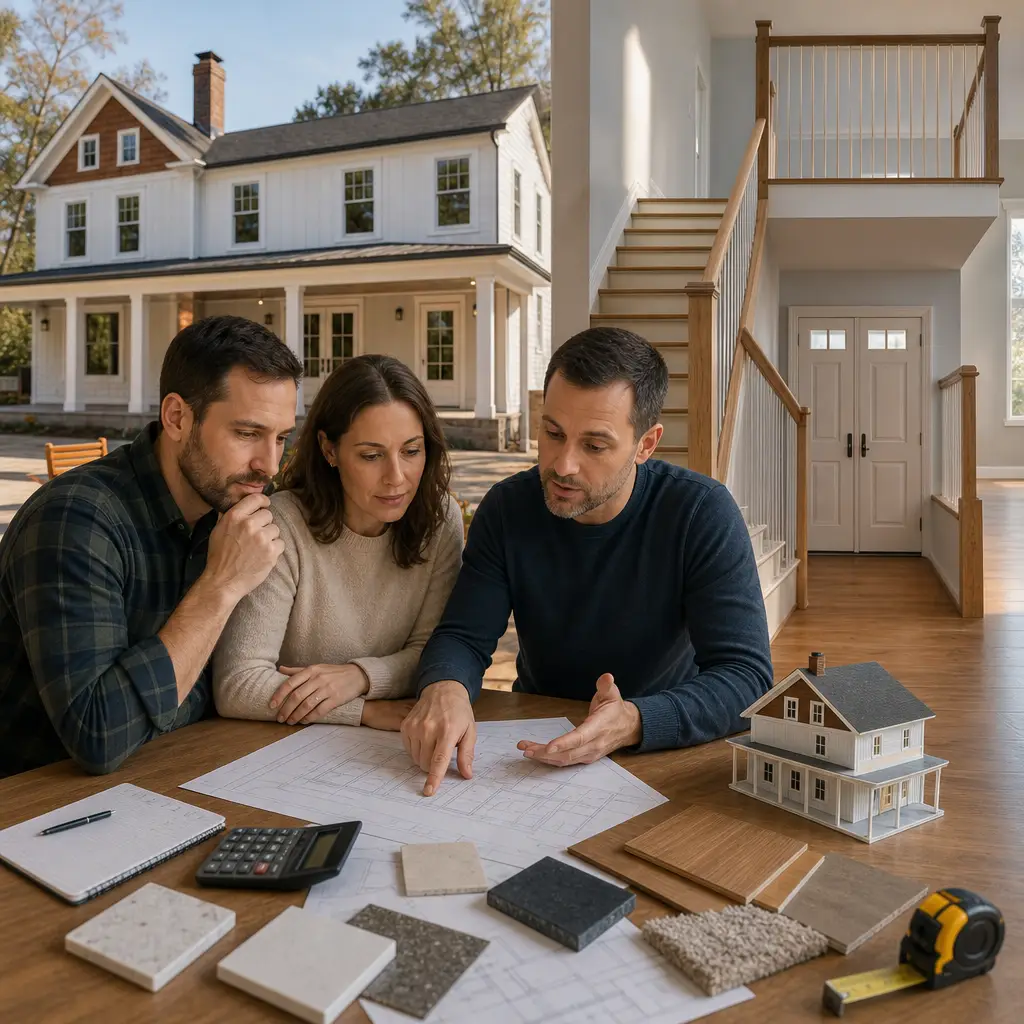
Understanding where your addition budget actually goes helps you make smarter decisions.
Labor typically represents 35-50% of addition costs. This includes framing, electrical, plumbing, HVAC, drywall finishing, flooring installation, and trim work. Labor costs reflect both hourly rates and how efficiently the trades can work. Well-organized projects with clear sequencing reduce labor costs by minimizing downtime and rework.
Materials account for 35-50% of costs, varying significantly based on your choices. A basic addition uses standard lumber, standard drywall, and basic finishes. A premium addition might include engineered lumber, high-performance insulation, custom millwork, and designer fixtures. The same 500-square-foot room can cost $25,000 or $75,000 based primarily on material selections.
Permits and professional services run 8-15% of total costs. This covers building permits, engineering, design documentation, and inspections. These aren’t optional if you want a safe, code-compliant space that protects your investment and resale value.
Site work and utilities typically consume 5-10%. This covers foundation preparation, utility extensions, grading, and landscaping restoration. Site challenges like difficult soil conditions, mature trees, or limited access increase these costs.
A useful rule of thumb: quality additions in Northern Virginia range from $150-300+ per square foot depending on your choices. A 400-square-foot addition runs $60,000-120,000 in finished cost. A 600-square-foot addition runs $90,000-180,000. These ranges reflect the wide spectrum of material choices available.
Your budget decisions shift these numbers. Choosing a powder room over an ensuite bathroom, standard windows over high-performance glass, or simple finishes over custom features meaningfully impacts your total cost.
Setting a Realistic Budget for Your Northern Virginia Addition
Start by defining what you need rather than what you think you should spend.
Ask yourself these questions:
- What problem does this addition solve? (More bedrooms, better kitchen flow, office space, guest suite?)
- How large does the space actually need to be to serve that purpose?
- When do you need it completed? (Timeline affects cost through scheduling and labor availability)
- What finish level matches your home and your vision? (Modest, comfortable, or premium?)
- How long do you plan to stay in the home? (Longer timelines justify higher-quality decisions)
Your answers shape a realistic budget. If you need a guest suite for occasional family visits, a 200-square-foot space with basic finishes may satisfy you. If you’re creating a full kitchen and dining area upgrade, you might need 400-500 square feet with premium finishes to achieve your vision.
A straightforward starting point: define your square footage need and finish level, then use $150-300 per square foot as a realistic range. This gives you a meaningful budget window to work with.
For specific guidance tied to your Northern Virginia home and priorities, we recommend starting with a design consultation. We’ll review your space, understand your goals, and provide a preliminary estimate that feels grounded in reality. This conversation typically clarifies whether your budget and vision align or need adjustment before you commit to anything.
Common Budget Mistakes We Help Homeowners Avoid
We’ve seen budget mistakes that create real stress and unexpected costs. Learning from others’ experience helps you navigate your own project more smoothly.
Underestimating finish costs. Homeowners often focus on construction costs and underestimate how much finishes, fixtures, and customization add up. A basic builder-grade kitchen differs drastically from one with semi-custom cabinetry and quality countertops. The structural work might be $40,000, but finishes could easily be another $30,000. Understand your finish scope early.
Ignoring site and utility challenges. A straightforward addition costs less than one that requires significant foundation work, utility relocations, or challenging site access. Slope, soil type, tree removal, and existing utility locations all affect cost. Assuming easy conditions and discovering problems mid-project creates expensive surprises.
Changing the scope during construction. Once work begins, every design change has ripple effects. Upgrading countertops mid-project might seem minor, but it affects the kitchen layout timing, which affects when electricians can rough in, which delays drywall, which delays flooring. Scope changes extend timelines and create labor inefficiency costs.
Selecting materials based purely on price. The cheapest tile, paint, or fixture isn’t always the best value. Some low-cost materials deteriorate quickly or require frequent maintenance. Others simply don’t perform well in certain applications. A slightly higher-quality selection often proves more economical over time.
Not budgeting for design and permit services. Some homeowners skip professional design to save money, thinking they’ll “figure it out” during construction. This creates expensive mistakes. Building permits cost $1,000-3,000 for a typical addition, which feels like wasted money until you need an inspection to prove the work is safe and code-compliant.
Failing to plan for contingency. Even well-managed projects encounter unexpected costs. Hidden structural issues, soil conditions requiring additional foundation work, or supply chain disruptions happen. A 10-15% contingency buffer prevents these surprises from derailing your budget.
The common theme: clarity and communication prevent most budget surprises. When you understand what drives costs and make intentional choices upfront, you avoid costly mid-project changes and hidden factors.
How Upfront Pricing Protects Your Investment
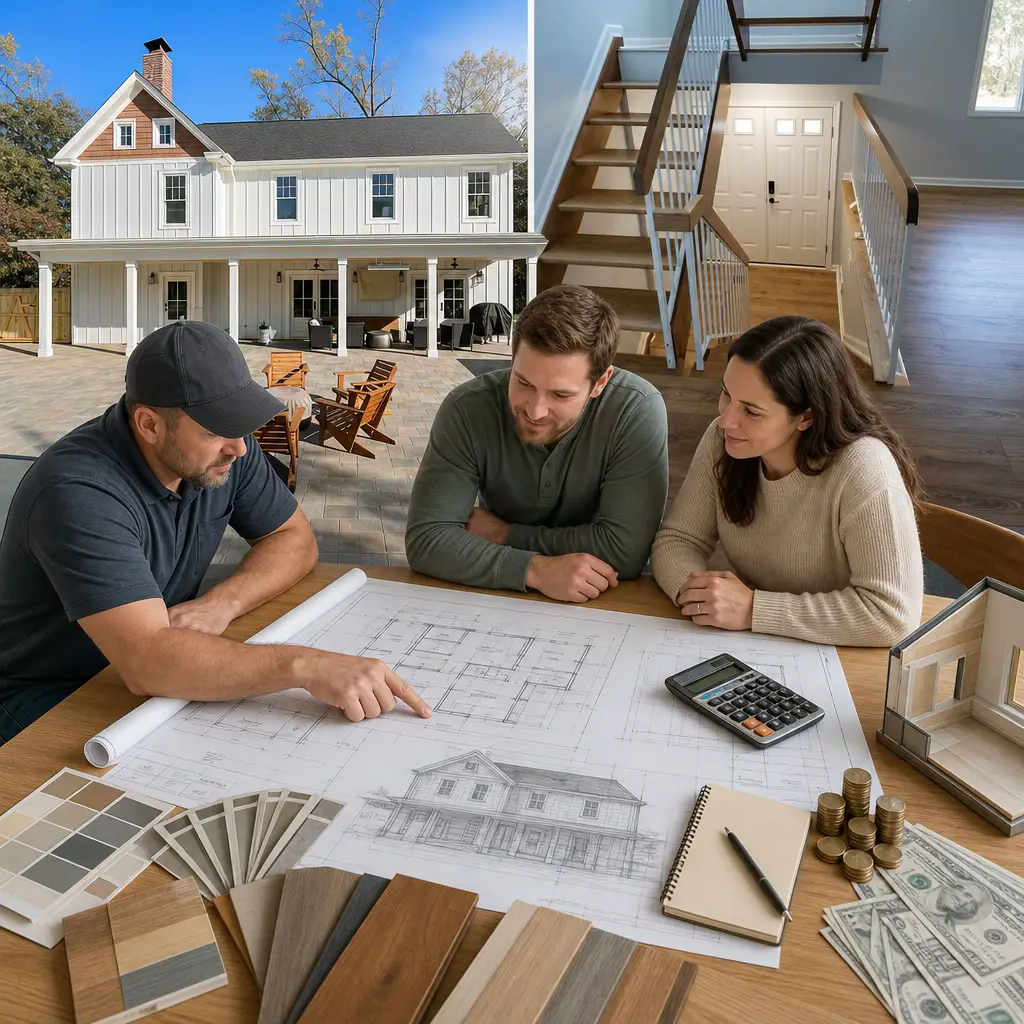
Our design-build approach means you receive a detailed, fixed-price contract before any construction begins. This isn’t vague or conditional. You know exactly what you’re paying and what’s included.
This upfront clarity matters enormously:
- You’re not surprised by invoices mid-project
- You can confidently commit to the project knowing your true cost
- If something unexpected arises, we’ve already discussed how it’s handled
- You can compare our pricing to others with complete information
- You eliminate the anxiety of wondering whether you’re being nickel-and-dimed
Our contracts detail material selections, finish specifications, timeline, and scope clearly enough that there’s no ambiguity about what you’re paying for. If you want to upgrade something after the contract is signed, we discuss the impact on price and timeline before proceeding.
This transparency builds trust and creates a partnership rather than an adversarial relationship. You know we’re invested in delivering what we promised, not in finding reasons to charge more.
What to do next: When you’re comparing contractors, ask specifically about their pricing structure. Do they provide fixed-price contracts with detailed specifications? Can they walk you through their cost breakdown? Contractors who won’t or can’t are likely to create frustration later.
Financing Options That Work for Home Addition Projects
An addition costs substantial money, but several financing paths make it manageable.
Saved capital or home equity is often the simplest approach. If you’ve set money aside for this project, using it directly avoids interest and complexity. However, it ties up capital that might serve other needs.
Home equity loans are popular for additions because they offer reasonable rates and terms. Your home’s equity serves as collateral, which typically means lower interest rates than personal loans. Most lenders offer flexible terms (5-15 years), letting you balance monthly payment comfort with total interest paid.
Home equity lines of credit (HELOC) work differently. You establish a credit line against your equity and draw funds as needed. This is useful for phased projects where you’ll spend money over time rather than upfront. HELOCs often have variable rates, so rates can increase after an initial fixed period.
Cash-out refinancing can work if your home has appreciated meaningfully and current rates are favorable. You refinance your mortgage to a higher amount and receive the difference in cash. This consolidates your debt but means a longer loan term on what used to be an addition loan.
Personal loans don’t require collateral and can be approved quickly, but typically carry higher interest rates than equity-based borrowing.
Contractor financing through third-party lenders is sometimes available. These programs can simplify the process, though rates vary widely.
Our role is supporting your financing decision, not pushing you toward any particular option. We work with homeowners using all of these approaches. What matters is that you choose a financing path you’re comfortable with, then budget for it responsibly. An addition that strains your finances isn’t an improvement.
We can discuss financing questions during your initial consultation. Many homeowners find it helpful to understand the project cost before exploring financing options, so you have a concrete number to work with.
ROI and Long-Term Value of Adding Square Footage
A quality addition increases your home’s value, though the return varies based on the addition type and your market.
Kitchen and bathroom additions typically return 50-70% of their cost in increased home value. A $75,000 kitchen remodel might increase your home’s value by $40,000-50,000. That’s not full return, but it’s strong return combined with the benefit of enjoying the upgraded space while you’re there.
Master suite additions and additional bedrooms typically return 60-80% of cost. Adding a second guest bedroom or primary suite upgrade increases functional value that buyers recognize and appreciate.
Home offices have become more valuable since 2020. An addition that works as a dedicated work space often returns 40-60% of its cost, reflecting the changing workplace landscape.
Whole-house renovations and integrated additions often return the highest percentages (70-90%) because they improve the overall home quality, flow, and functionality. A home that feels updated and thoughtfully planned appeals broadly to buyers.
These returns assume quality work and finishes. A poorly executed addition that doesn’t match the home’s style or quality level will return far less.
Beyond resale value, factor in enjoyment and functionality. If a home office addition saves you 10 hours per week of commuting over the next decade, that’s 500+ hours of time with your family. That has real value that doesn’t show up in ROI calculations.
Many of our Northern Virginia clients stay in their homes for 10+ years after completing additions. They experience the benefit of improved space and functionality for years before any resale consideration enters the picture. That extended timeline means the addition pays for itself through daily quality-of-life improvements, with potential financial appreciation as a secondary benefit.
From Concept to Final Quote: Our Transparent Budgeting Process
Understanding our process demystifies how we arrive at pricing and helps you feel confident moving forward.
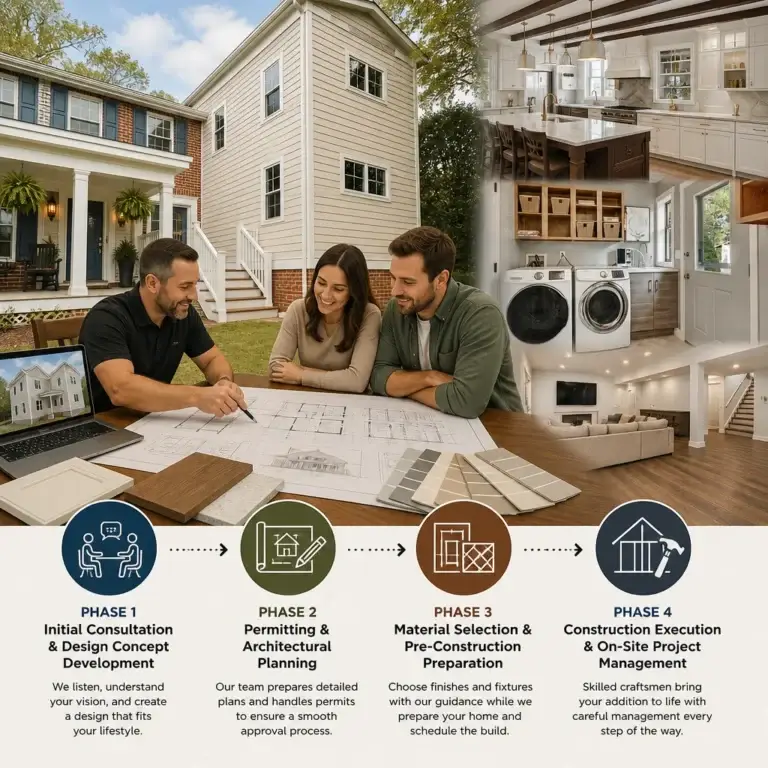
Initial consultation: We meet at your home and listen. We understand what you’re trying to accomplish, how long you plan to stay, and what your budget framework looks like. We ask detailed questions about site conditions, utility locations, and functional needs. This conversation typically takes 1-2 hours and is completely free.
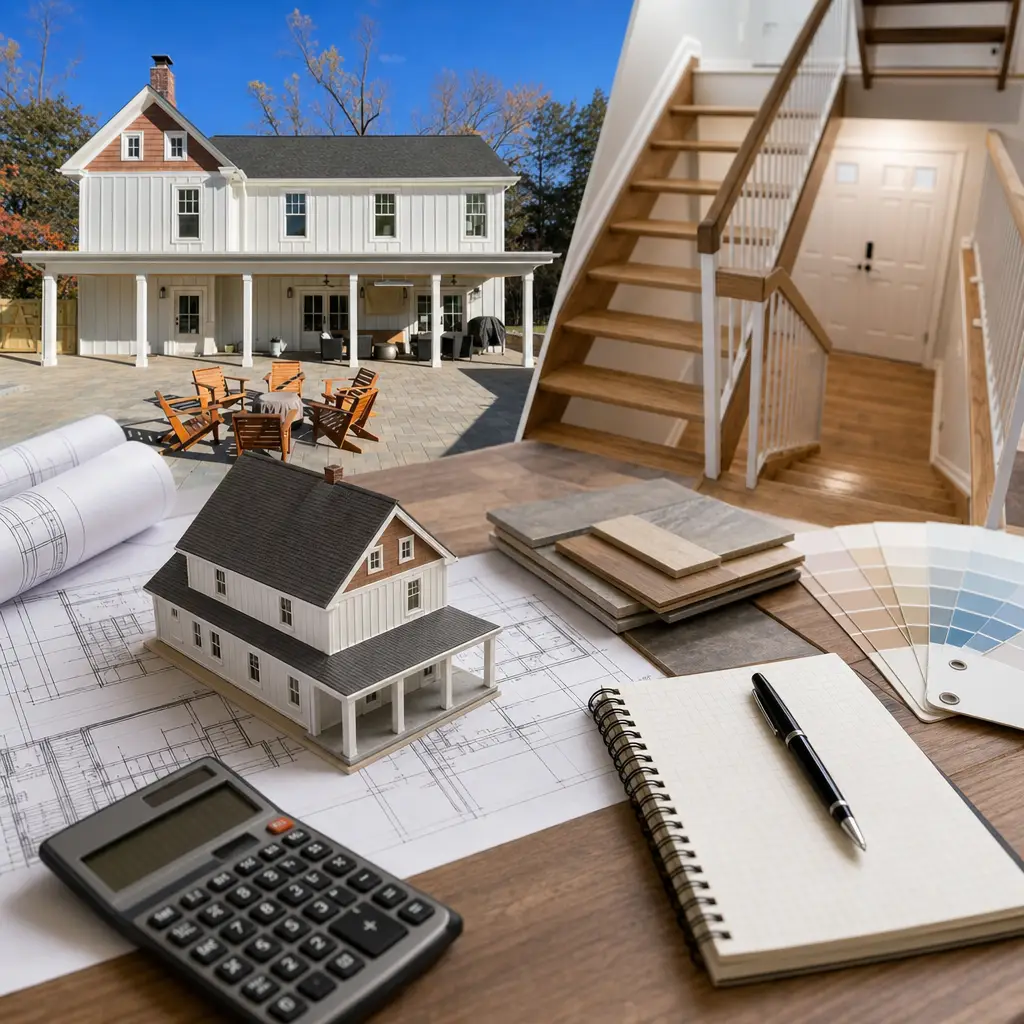
Preliminary concept development: Our design team sketches initial options that meet your functional needs and work within your site constraints. We identify any red flags (difficult soil conditions, limited utility access, trees to preserve) early. We provide a preliminary cost estimate range based on your choices.
Detailed design: Once you’re comfortable with the direction and budget ballpark, we develop construction documents with specific materials, finishes, and specifications. We conduct site surveys and utility locates. We prepare permit application materials.
Final pricing: Based on detailed designs and current material pricing, we prepare a fixed-price contract. This document specifies every material selection, finish, and scope detail. We review it line-by-line so you understand exactly what you’re paying for.
Permit phase: We obtain all required permits before construction begins. This is coordinated, not delayed until work is underway.
Construction execution: You have one point of contact and one team. Regular updates keep you informed about progress, timeline, and any decisions needed.
This process creates protection through clarity. Each phase builds on the previous one with increasing specificity. By the time you sign a contract, there’s no mystery about what you’re getting or what it costs.
We find that homeowners who’ve been through this process feel genuinely comfortable and confident, even though the project is substantial. That comfort comes from information and transparency.
Why Choosing the Right Contractor Protects Your Budget
Not all contractors approach budgeting the same way. Your choice of partner directly affects your final cost and experience.
Contractors who work with loose estimates and undefined scope typically end up with budget overruns. They estimate optimistically, encounter real-world conditions they hadn’t considered, and then present change orders. Their low initial estimate looked attractive, but your final bill was 20-30% higher.
Contractors who communicate poorly create expensive misunderstandings. You approve something thinking it includes one thing; they build something else. By the time you notice, it’s expensive to correct.
Contractors without design expertise often choose inefficient or costly solutions because they’re approaching the project from a construction-only perspective. A designer thinking through spatial flow from the beginning creates better outcomes with fewer revisions.
Contractors without strong vendor relationships pay more for materials, and those costs get passed to you. Established relationships and volume allow us to negotiate better pricing that benefits our clients.
We protect your budget through experience, process, and accountability. Our design-build approach means design and construction work together toward efficiency rather than fighting each other. Our detailed upfront contracts mean no surprises. Our experience delivering additions throughout Northern Virginia means we’ve encountered most conditions and can estimate realistically.
Most importantly, our reputation depends on delivering what we promise. We’ve built our business on relationships with homeowners who refer their friends and neighbors. That reputation only exists because we consistently deliver quality within budget and on time.
When you’re evaluating contractors for your addition, ask for references from recent clients. Ask specifically about budget accuracy. Ask whether the contractor delivered on timeline. Ask whether the homeowner felt respected and well-communicated with throughout the project. These conversations reveal a lot about which contractors protect their clients’ budgets and which ones create stress.
Your addition is a significant investment in your home and life. Choosing the right contractor isn’t just about getting a good price. It’s about partnering with someone who understands your goals, communicates clearly, manages your budget responsibly, and delivers quality workmanship. That partnership makes the entire process more pleasant and the result something you’ll genuinely enjoy for years to come.
If you’re considering a home addition in Northern Virginia, we’d welcome the opportunity to discuss your project and help clarify your budget questions. Reach out to schedule your initial consultation. There’s no obligation, and you’ll walk away with clearer understanding of what’s possible and what it costs.
Contact us Today For a Free Estimate !
Frequently Asked Questions (FAQ)
What’s included in your upfront pricing, and why do you provide detailed quotes before work begins?
We believe homeowners deserve complete transparency, so our upfront quotes include labor, materials, permits, design work, and project management fees. We’ve found that detailed pricing from the start eliminates surprises and helps you make confident decisions about your budget. Our design-build process lets us control costs by coordinating all aspects of your project in-house rather than juggling separate contractors.
How much should we budget for a home addition in Northern Virginia?
The cost depends on your project scope, but our homeowners typically invest between $150 to $400+ per square foot for quality additions that match their home’s standards. We recommend scheduling a consultation so we can assess your specific space, design preferences, and local permit requirements to give you an accurate range. Basement finishing, kitchen upgrades, and structural complexity all influence your final investment.
Can we finance a home addition, and what options have worked best for your clients?
Many of our clients use home equity lines of credit, cash-out refinances, or construction loans to fund their projects. We work with you throughout the financing process and can adjust our timeline to align with your funding schedule. Our transparent budgeting makes it easier for lenders to understand your project scope and approve competitive financing terms.