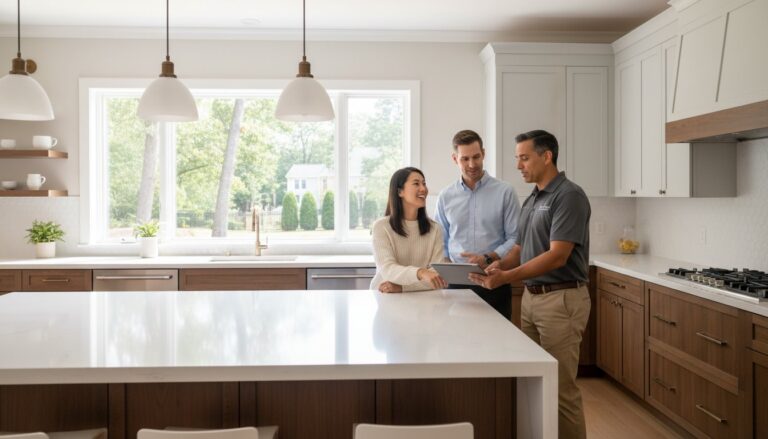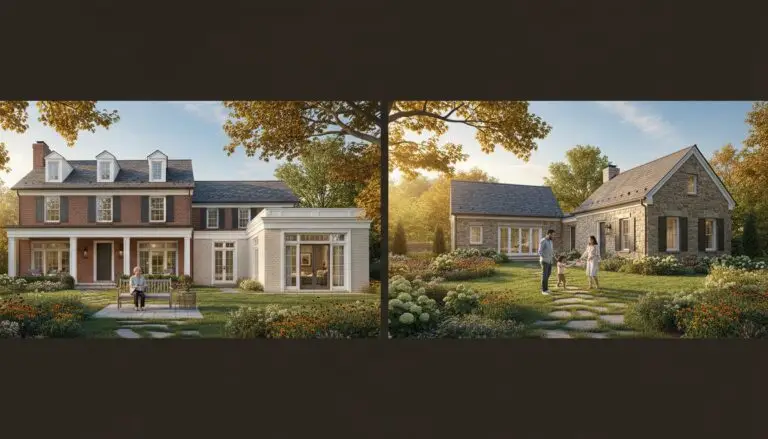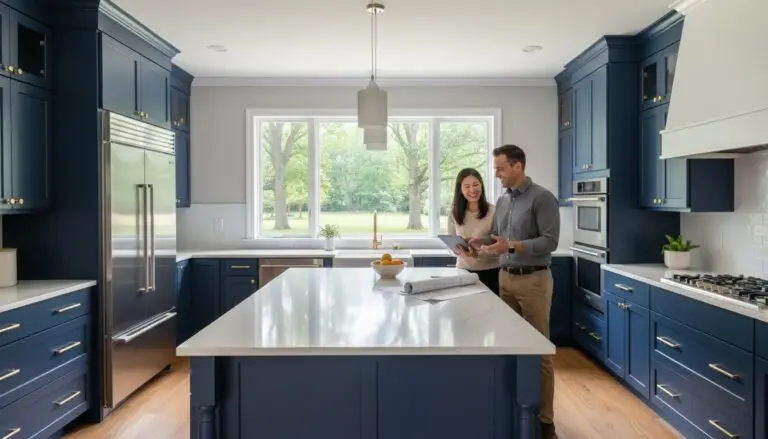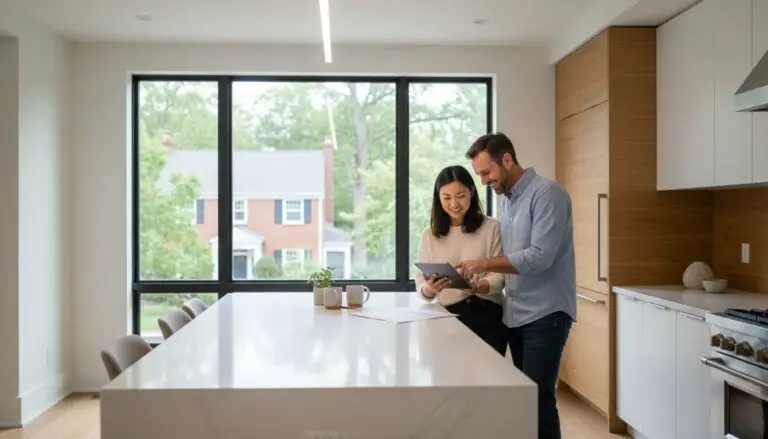
What if your backyard could generate a 32% return on investment while simultaneously solving your family’s space crisis? Building a high end mother in law house is no longer just about adding a spare bedroom; it’s a strategic real estate move that can increase your total property value by an average of $157,000 in the 2026 market. We know that the thought of tackling complex zoning laws or facing a construction nightmare feels overwhelming. You want to support your family without sacrificing your own privacy or enduring months of chaotic home life.
We agree that your peace of mind is just as important as the final floor plan. This guide provides a clear roadmap to designing a luxury suite that feels like a natural extension of your home rather than a disruptive after-thought. You’ll learn exactly how to navigate local permits, select premium finishes that last, and implement our signature stress-free build process. From initial sketches to the final walkthrough, we’ll show you how to create a sophisticated multigenerational space that delivers both comfort and long-term financial security.
Key Takeaways
- Understand the 2026 shift toward Accessory Dwelling Units (ADUs) and how they redefine luxury multigenerational living for modern families.
- Learn how to evaluate your property’s footprint to choose between a seamless vertical addition or a private, detached backyard cottage.
- Navigate complex zoning restrictions in Fairfax County and Annandale to ensure your high-end mother in law house is fully compliant and adds maximum property value.
- Discover essential universal design features, such as curbless showers and wider doorways, that prioritize long-term comfort and elegant aging-in-place.
- Explore how a professional design-build partnership eliminates remodeling nightmares by managing costs and construction through one expert, stress-free point of contact.
What Is a Mother-in-Law House? Understanding ADUs and Suites
A mother in law house is technically known as an Accessory Dwelling Unit (ADU). It’s a secondary, self-contained living space located on the same lot as a primary residence. By 2026, industry analysts expect multigenerational living to reach record highs, driven by a desire for family connection and rising housing costs. These structures aren’t just extra rooms; they’re sophisticated living spaces designed for long-term comfort and independence.
Homeowners often confuse an “in-law suite” with a “detached mother in law house.” A suite typically lives within the existing home’s footprint, such as a walk-out basement or a converted wing. A detached unit is a standalone cottage or carriage house. This distinction matters for “aging in place” luxury. A separate building offers total autonomy for parents while keeping them just a few steps away from the main family hub. It provides the privacy seniors crave without the isolation of a traditional assisted living facility.
The Rise of Accessory Living Units (ALUs)
Technical terms like ALU and ADU often overlap in Northern Virginia building codes. While an ADU is the broad category, many planners use ALU to describe units specifically designed for long-term residency rather than short-term guests. Homeowners are moving away from simple guest rooms in favor of these dwellings because they offer full kitchens and private laundry facilities. This shift helps modern urban planning by increasing residential density while preserving the aesthetic of established neighborhoods. It’s a smart way to maximize land use in high-demand areas.
Key Benefits for Northern Virginia Homeowners
Investing in a custom-built unit offers more than just extra square footage. It’s a strategic move for your property’s future. Consider these specific advantages:
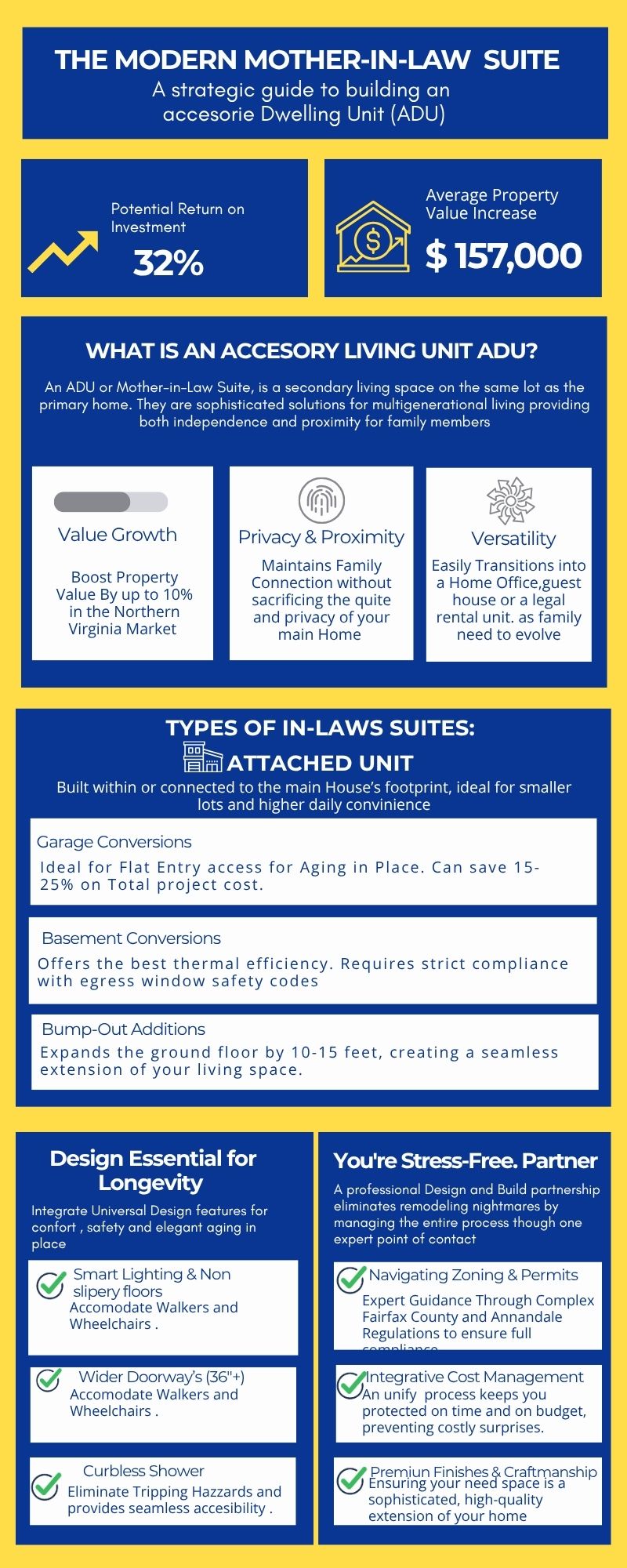
- Value Growth: High-end ADUs can boost your property’s resale value by 10% based on recent 2024 market assessments in Fairfax and Loudoun counties.
- Privacy: You maintain family proximity without sacrificing the daily quiet of your own home.
- Versatility: These spaces easily transition into premium home offices or legal rental units if family needs change over time.
Elite Contractor Services acts as your partner throughout this process. We ensure your new addition meets all local zoning requirements while delivering the high-end finish your family deserves. Our goal is a seamless transition that eliminates the stress of complex construction projects. We focus on meticulous project management to ensure your vision becomes a functional reality on time and on budget.
Types of In-Law Suites: Attached vs. Detached Solutions
Deciding on the right footprint for your mother in law house depends on your specific property constraints and long term goals. Most homeowners choose between expanding their current structure or building a separate unit. A typical detached suite requires at least 400 to 600 square feet of available land to remain functional. If your lot is smaller than 5,000 square feet, building vertically or converting existing space is often the most practical path.
Construction costs vary significantly based on the foundation and utility needs. You’ll find that garage conversions can save you 15% to 25% on total project costs because the primary shell already exists. However, you must ensure the existing slab can handle the plumbing requirements for a full bathroom and kitchenette. We analyze these variables early to prevent the common remodeling nightmares that occur when structural limits aren’t respected.
- Basement Conversions: These offer the best thermal efficiency but require 100% compliance with 2024 egress window safety codes.
- Garage Conversions: Ideal for flat-entry access, which is vital for aging-in-place residents.
- Cost-to-Benefit: Detached units often yield a 65% to 80% return on investment according to 2023 real estate data, whereas attached additions provide higher daily convenience.
Attached Home Additions
Bump-out additions expand your ground floor by 10 to 15 feet, creating a suite that feels like a natural extension of the living room or kitchen. For homeowners on narrow lots, second-story suites maximize square footage without shrinking the backyard. We focus on a seamless architectural blend; this means matching your existing 4-inch lap siding and roof pitches exactly. Our team helps you evaluate your property’s potential to ensure the new addition looks original to the home.
Detached Accessory Living Units (DADUs)
The “Backyard Cottage” provides the highest level of independence for both the homeowner and the resident. These separate structures offer total privacy with their own entrances and outdoor spaces. You’ll need to account for utility trenching, as running new sewer and water lines can add $6,000 to $12,000 to your budget depending on the distance from the main house. Despite the higher upfront cost, a detached mother in law house offers a distinct separation of lives that many families find invaluable for long-term harmony.
Costs, Zoning, and Permits: Navigating the ‘Zoning Maze’
Building a high-end mother in law house involves more than just architectural vision; it requires a calculated approach to local bureaucracy. Many homeowners in Annandale and broader Fairfax County find themselves trapped in “remodeling nightmares” because they underestimated the 6-month permit backlog or ignored specific setback requirements. We act as your administrative partner, managing every filing and inspector meeting to ensure your project stays on track. By handling the heavy lifting of the permit phase, we provide the peace of mind that your investment is legally protected and built to the highest standards.
Northern Virginia Zoning Standards in 2026
Fairfax County updated its Accessory Dwelling Unit (ADU) ordinances recently, and the 2026 standards require meticulous attention to detail. Most residential lots now require a minimum 8-foot side setback and a 25-foot rear setback for detached structures. Legislative updates from 2025 have streamlined the process for units under 800 square feet, but occupancy remains strictly regulated. In most Fairfax districts, at least one resident of the primary or secondary dwelling must be 55 years or older or have a documented disability. We verify these lot-specific constraints before the first shovel hits the ground to prevent costly mid-project work stops.
Budgeting for High-End Construction
For a premium, detached mother in law house in 2026, homeowners should anticipate a total investment ranging from $325,000 to $500,000. This budget accounts for superior finishes and structural integrity that matches your primary residence. It’s helpful to break these figures into two categories:
- Hard Costs (80%): This includes premium materials, specialized labor, and high-efficiency HVAC systems designed for independent climate control.
- Soft Costs (20%): This covers architectural drawings, civil engineering fees, and Fairfax County permit bonds which often total $15,000 or more for complex builds.
Choosing a “bargain” contractor often leads to budget overruns exceeding 30% due to poor planning or failed inspections. Most of our clients secure their projects through Home Equity Lines of Credit (HELOCs) or specific construction-to-permanent loans. These financial tools offer the flexibility needed for high-end customizations while maintaining a predictable payment schedule throughout the build process.
Design Essentials: Luxury Meets Universal Accessibility
Building a mother in law house requires a meticulous balance between high-end aesthetics and “forever home” functionality. You aren’t just adding a room; you’re creating a self-contained sanctuary that needs to work as well in twenty years as it does today. We prioritize Universal Design to ensure the space remains usable for decades without requiring costly future retrofits. This includes installing 36-inch wide doorways and zero-threshold curbless showers. These features eliminate trip hazards and accommodate mobility aids while maintaining a sleek, spa-like feel in the bathroom.
A truly elite suite provides a full-service experience. It’s not enough to have a bed and a bath. Including a private kitchenette with induction cooktops and a compact laundry stack transforms the unit into a legitimate residence. This independence reduces the stress of shared living and ensures your loved ones feel empowered in their own space. We focus on a stress-free transition by handling every technical detail, from specialized plumbing to separate HVAC zones for personalized climate control.
The ‘Aging-in-Place’ Checklist
Safety doesn’t have to look clinical. We select non-slip flooring with a Coefficient of Friction (COF) rating of 0.60 or higher. This provides essential grip underfoot without sacrificing the beauty of luxury vinyl plank or matte porcelain tile. Smart home integration is another pillar of modern safety. Voice-activated lighting and automated thermostats allow for easy adjustments without physical strain. We also emphasize “daylighting” strategies. Maximizing natural light through oversized windows can improve circadian rhythms and mental well-being for seniors by 25% compared to poorly lit spaces.
Interior Design for Small Spaces
Small footprints require smart engineering to avoid a cramped atmosphere. An open-concept layout can make a 600-square-foot mother in law house feel like 1,000 square feet by removing visual barriers between the living and dining areas. Custom floor-to-ceiling cabinetry is a must-have for those downsizing from a larger family home. These bespoke solutions offer 30% more storage capacity than standard retail units. We ensure every finish, from the stone countertops to the hardware, mirrors the elegance of your primary residence. This consistency protects your home’s resale value and creates a unified aesthetic across your entire property.
The Elite Design-Build Process: Your Stress-Free Partner
Building a mother in law house involves complex zoning, structural shifts, and utility tie-ins that can easily overwhelm a homeowner. The Design-Build model simplifies this by keeping every phase of the project under one roof. You won’t have to mediate between a separate architect and a builder, which often leads to miscommunication and finger-pointing. This single point of accountability helps eliminate the 15% budget creep commonly seen in traditional “bid-build” scenarios. We take proactive steps to prevent remodeling nightmares by identifying structural hurdles during our initial feasibility study, ensuring your project stays on track.
Elite Contractor Services delivers high-end results through a methodical approach:
- Consultation: We define your specific goals, budget constraints, and aesthetic preferences.
- Design: Our team creates detailed 3D renderings so you can visualize the space before we break ground.
- Flawless Execution: We manage every permit, inspection, and trade specialist to ensure the build meets our rigorous quality standards.
Our commitment to staying on time and on budget isn’t just a slogan; it’s a core signature of our brand. We provide a detailed scope of work and a clear contract upfront so there are no surprises during the construction phase.
From Concept to Flawless Completion
Our in-house designers ensure the aesthetic of your new mother in law house matches your existing home’s architecture perfectly. We understand that construction is intrusive. That’s why we implement a strict “Clean Worksite” policy where our crews spend the final 20 minutes of every day tidying the area. We maintain clear communication through regular project updates, so you’re always informed about the status of your home’s transformation.
Start Your Home Transformation Today
Your journey begins with a free estimate where we evaluate your site’s unique requirements and local building codes. We don’t just provide a quote; we partner with you to refine your vision into a functional, elegant reality. Whether you’re looking for a modern studio or a traditional cottage, we have the expertise to deliver a stunning result. Schedule your consultation with Elite Contractor Services to begin planning your custom addition with a team that values honesty and craftsmanship.
Build Your Multigenerational Legacy Today
Building a mother in law house represents one of the most significant investments you’ll make for your family’s future and your property’s equity. You’ve learned how navigating 2026 zoning laws and incorporating universal design ensures your new space remains functional for decades. Choosing between a detached ADU and an attached suite depends on your specific lot requirements and budget goals. Elite Contractor Services is an award-winning Design-Build Firm. We’re fully licensed and insured in Northern Virginia, providing you with a guaranteed “On Time and On Budget” delivery. You don’t have to worry about the typical remodeling nightmares that plague many homeowners. Our team handles the entire permit process and construction phase so you can focus on welcoming your loved ones home. Start Your Stress-Free Home Addition with Elite Contractor Services. Your dream of a perfect family retreat is well within reach.
Frequently Asked Questions
Is a mother-in-law house legal in Fairfax County, VA?
Yes, building a mother in law house is legal in Fairfax County under the Accessory Living Unit (ALU) regulations updated in July 2021. You’ll need an administrative permit for interior units or a special permit for detached structures. These 2021 rules removed the previous age and disability requirements, allowing any homeowner to create a secondary living space as long as they follow the 800 square foot limit.
How much does it cost to build a mother-in-law suite in 2026?
You should budget between $185,000 and $360,000 for a high-quality suite in 2026. Costs vary based on whether the unit is a home addition or a standalone structure. Detached builds typically cost $280 to $410 per square foot because they require new foundations and utility trenching. We provide a detailed scope of work to ensure your project stays on budget and avoids common remodeling nightmares.
Does a mother-in-law house increase property taxes?
Adding a mother in law house will increase your property taxes because it raises the overall assessed value of your land and improvements. Most homeowners see a 22% to 34% increase in their annual assessment after completing a detached unit. While the tax bill is higher, the investment often pays for itself through a 35% boost in resale value or potential rental income, providing long-term financial peace of mind.
What is the difference between an ADU and a guest house?
The presence of a full kitchen is the main factor that separates an ADU from a guest house. An ADU is a self-contained living space with permanent facilities for sleeping, sanitation, and cooking. A guest house usually lacks a stove or full-sized oven, functioning only as a temporary sleeping area. Local zoning laws in Northern Virginia strictly define these structures based on the specific appliances installed in the unit.
Can I rent out my mother-in-law suite to a non-family member?
You can rent your suite to non-family members in most parts of Virginia, provided you follow local zoning ordinances. Fairfax County allows you to rent an ALU to any two people, regardless of their relationship to you. You must obtain a residential rental license and ensure the unit meets all 2024 safety codes. This flexibility makes the project a smart investment for homeowners looking for extra monthly cash flow.
How long does it typically take to build a detached in-law suite?
A detached suite typically takes 7 to 11 months to complete from the initial design phase. The first 3 months involve architectural drawings and the county permitting process. Actual construction usually spans 4 to 8 months, depending on weather and material availability. Our team manages every step of this timeline to ensure a stress-free experience and a flawless finished product that meets our high-end standards.
What are the square footage limits for a mother-in-law house in Virginia?
Square footage limits vary by county, but many Virginia jurisdictions cap these units at 800 square feet or 40% of the primary dwelling’s area. In Fairfax, the 800 square foot limit is standard for most residential lots. If your lot is larger than two acres, you might be eligible for a larger footprint through a special exception. We’ll help you navigate these specific codes to maximize your available living space.
Do I need a separate meter for utilities in an in-law suite?
You don’t need a separate utility meter, but installing one is a professional choice for managing costs. A separate electric sub-meter costs roughly $650 to $1,300 to install during the construction phase. This allows you to track exactly how much energy the suite uses. It’s especially helpful if you plan to rent the space or want to keep utility expenses transparent between family members.